When the Tongue Carries Its Heart to Heaven: Subhanallah wa Bihamdihi
حين يحمل اللسانُ قلبَه إلى السماء
At dawn and at dusk, an architect grieving his father repeats two remembrances a hundred times, and the house on paper gains a window.
بقلم المهندس المعماري عماد درويش4 دقائق قراءة
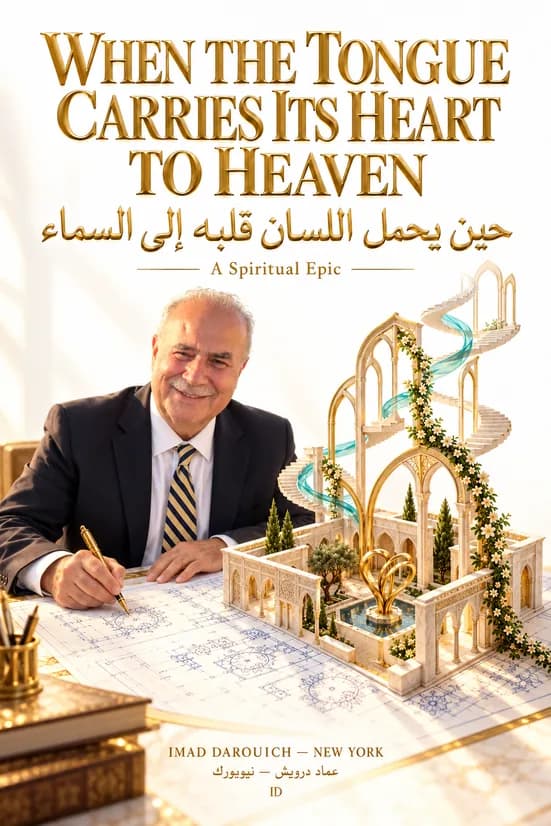
Sahih al-Bukhari 6403 and Sahih Muslim 2691 report from Abu Hurayrah that saying there is no god but Allah alone, without partner, one hundred times a day brings the reward of freeing ten slaves; Sahih Muslim 2692 describes the reward for saying subhanallah wa bihamdihi 100 times morning and evening. Imad's prose poem, in Arabic and English, quotes both hadiths, then follows an architect who repeats them at his drafting table while grieving his father.
Two Great Hadiths
تنويه: نص أدبي مستلهم من حديثان عظيمان
قال رسول الله ﷺ:The Messenger of Allah ﷺ said:
«مَنْ قَالَ: لَا إِلَهَ إِلَّا اللَّهُ، وَحْدَهُ لَا شَرِيكَ لَهُ، لَهُ الْمُلْكُ وَلَهُ الْحَمْدُ، وَهُوَ عَلَى كُلِّ شَيْءٍ قَدِيرٌ،“Whoever says: ‘There is no deity but Allah alone, with no partner; His is the dominion and His is the praise, and He has power over all things,’
فِي يَوْمٍ مِائَةَ مَرَّةٍ، كَانَتْ لَهُ عَدْلَ عَشْرِ رِقَابٍ،one hundred times in a day will receive a reward equivalent to freeing ten slaves.
وَكُتِبَتْ لَهُ مِائَةُ حَسَنَةٍ، وَمُحِيَتْ عَنْهُ مِائَةُ سَيِّئَةٍ،One hundred good deeds will be recorded for him, and one hundred sins will be erased.
وَكَانَتْ لَهُ حِرْزًا مِنَ الشَّيْطَانِ يَوْمَهُ ذَلِكَ حَتَّى يُمْسِيَ،He will be protected from Satan that day until evening.
وَلَمْ يَأْتِ أَحَدٌ بِأَفْضَلَ مِمَّا جَاءَ بِهِ، إِلَّا أَحَدٌ عَمِلَ أَكْثَرَ مِنْ ذَلِكَ».No one will bring anything better than what he has brought, except someone who does more than that.”
رواه البخاري ومسلم.Reported by al-Bukhari and Muslim.
وعن أبي هريرة رضي الله عنه، قال: قال رسول الله ﷺ:Abu Hurayrah, may Allah be pleased with him, reported that the Messenger of Allah ﷺ said:
«مَنْ قَالَ حِينَ يُصْبِحُ وَحِينَ يُمْسِي:“Whoever says in the morning and in the evening:
سُبْحَانَ اللَّهِ وَبِحَمْدِهِ، مِائَةَ مَرَّةٍ،‘Glory be to Allah, and praise be to Him,’ one hundred times,
لَمْ يَأْتِ أَحَدٌ يَوْمَ الْقِيَامَةِ بِأَفْضَلَ مِمَّا جَاءَ بِهِ،no one will bring anything better on the Day of Resurrection than what he has brought,
إِلَّا أَحَدٌ قَالَ مِثْلَ مَا قَالَ، أَوْ زَادَ عَلَيْهِ».except someone who says the same or more.”
رواه مسلم.Reported by Muslim.
صوره المجازية تأملات، وليست وصفًا للغيب أو إضافةً إلى الوعد النبويNote: A literary work inspired by the two hadiths in the image; its metaphors are reflections, not descriptions of the unseen or additions to the prophetic promise.
عند الفجر، جلستُ أمام مخطط بيتٍ لم يُبنَ.At dawn, I sat before the plans of a house never built.
كانت الغرف واسعة. وكان صدري أضيق من باب.The rooms were spacious. My chest was narrower than a door.
رسمتُ نافذةً، فدخلت منها ذكرى أبي.I drew a window, and the memory of my father entered through it.
رسمتُ درجًا، فتوقفت يدي. إلى أين يصعد رجلٌ يحمل أنقاضه؟I drew a staircase, then my hand stopped. Where does a man ascend when he carries his own ruins?
على الطاولة، تراكمت حسابات الحديد والحجر.On the table, calculations of steel and stone piled up.
وفي داخلي، كان الخوف يحسب ما تبقّى مني.Within me, fear was calculating how much of me remained.
فتحتُ شفتيّ:I parted my lips:
لا إله إلا الله، وحده لا شريك له، له الملك وله الحمد، وهو على كل شيء قدير.There is no deity but Allah alone, with no partner; His is the dominion and His is the praise, and He has power over all things.
تعثّر صوتي في البداية؛ كان الحزن قد ترك أثاثه في حلقي.My voice faltered at first; grief had left its furniture in my throat.
ثم خرجت الكلمات، كلمةً كلمة، كمن يفتح بيتًا أغلقه الغياب.Then the words emerged, one by one, like someone opening a house sealed by absence.
عند «له الملك»، ارتخت يدي فوق الورق.At “His is the dominion,” my hand relaxed upon the paper.
كم أتعبتني حراسة أشياء لم أملك بقاءها.How exhausting it had been to guard things whose permanence I never owned.
وعند «له الحمد»، تذكّرت يد أبي؛ كيف كانت تضع الخبز أمامنا قبل أن تأكل.At “His is the praise,” I remembered my father’s hand, placing bread before us before he ate.
بكيتُ. وبقي الحمد في فمي.I wept. Praise remained upon my lips.
كانت الدموع تعبره، كما يعبر المطر نقشًا محفورًا في الحجر.Tears passed through it as rain passes over words carved into stone.
واصلتُ الذكر.I continued the remembrance.
كلما عاد قلبي إلى خسارته، أعدتُه برفقٍ إلى الكلمات.Whenever my heart returned to its loss, I gently brought it back to the words.
حتى بلغتُ المائة؛ وكان في داخلي مكانٌ أستطيع أن أتنفّس فيه.Until I reached a hundred; within me, there was room to breathe.
وحين أقبل المساء، رجعتُ إلى الطاولة نفسها.When evening arrived, I returned to the same table.
ظلّ البيت على الورق. وظلّ أبي بعيدًا عن يدي.The house remained on paper. My father remained beyond the reach of my hand.
لكنني استطعتُ أن أتذكره دون أن ينهار السقف كله.But I could remember him without the entire ceiling collapsing.
وقلتُ:And I said:
سبحان الله وبحمده.Glory be to Allah, and praise be to Him.
خرجت الكلمات صغيرةً من فمي؛ واتّسع لها المساء.The words left my mouth softly; the evening made room for them.
كرّرتها، ورفعتُ معها تعب يومي؛ ذلك الذي لا يظهر في الصور.I repeated them, lifting with them the weariness of my day, the kind photographs never show.
أنا المعماري؛ أعرف كم يحتاج الحجر إلى سند.I am an architect; I know how much stone needs support.
وفي تلك الليلة، انتبهتُ إلى القلب الذي تركتُه طويلًا يحمل نفسه.That night, I noticed the heart I had left for so long to bear its own weight.
وضعتُ القلم. أكملتُ الذكر. ثم دعوتُ لأبي.I set down the pen. I completed the remembrance. Then I prayed for my father.
لم أطلب من الذاكرة أن تغلق أبوابها.I did not ask memory to close its doors.
سألتُ الله أن يمنحني رحمةً تتّسع لما يدخل منها.I asked Allah for mercy spacious enough to hold whatever entered through them.
في الصباح التالي، أضفتُ نافذةً إلى المخطط.The following morning, I added a window to the plans.
وكان الضوء يحتاج إليها.The light needed it.
ثم فتحتُ نافذتي أنا.Then I opened my own window.
ومن بين ضجيج نيويورك، بدأتُ يومي بكلماتٍ أعرفها منذ صغري.Amid the noise of New York, I began my day with words I had known since childhood.
هذه المرة، كنتُ حاضرًا حين قلتُها.This time, I was present when I spoke them.
Forgiveness through remembrance is also the subject of When the Sea Became a Door, and the Duha prayer is the subject of The Grand Tribunal of Duha. More reflections are in the faith and spirit collection.
بقلم
Architect Imad Darouich
المهندس المعماري عماد درويش
مهندس معماري وكاتب ومؤسس 3DEPICS، يقيم في نيويورك. يكتب أدبًا ملحميًا يعبر الحدود واللغات والجغرافيا، حيث تلتقي الفلسفة بالعمارة، والروحانية بالتاريخ، والذاكرة بالخيال.