I Sat Before al-Ghazali
جلستُ أمام الغزالي
Dozing over a book by al-Ghazali, an architect dreams he sits before the scholar and asks why knowing what is right has not made him do it.
بقلم المهندس المعماري عماد درويش7 دقائق قراءة
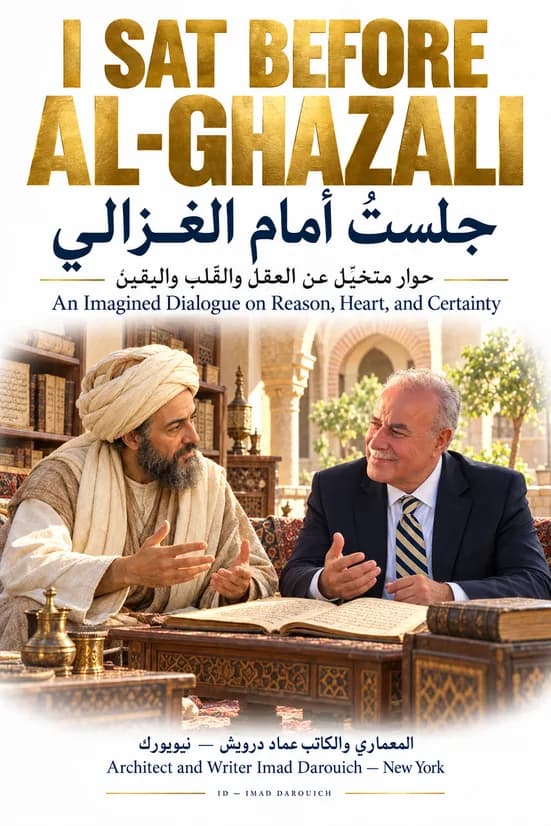
Al-Ghazali (about 1058 to 1111) was a Persian Muslim scholar who gave up his career in Baghdad after a spiritual crisis in 1095 and later told, in Deliverance from Error, how he came through doubt. Imad's imagined dialogue turns the theme of al-Ghazali on knowledge and action toward an architect's own life; the words are Imad's, quoted from no book.
A Note
تنويه
هذا لقاءٌ أدبي متخيَّل بيني وبين الإمام أبي حامد الغزالي. الحوار من تأليفي، مستوحى من موضوعات المعرفة واليقين وإصلاح النفس، وليس نقلًا عن كتبه.This is an imagined literary meeting between Imam Abu Hamid al-Ghazali and me. I wrote the dialogue, drawing on themes of knowledge, certainty, and self-reform; it is not quoted from his books.
The Introduction
المقدّمة
في نيويورك، كنت أراجع رسمًا لبيتٍ جديد.In New York, I was reviewing the drawings for a new house.
وضعت النوافذ حيث يدخل الضوء.I placed the windows where the light would enter.
وقوّيت الأعمدة لتحمل السقف.I strengthened the columns to carry the roof.
ثم توقّفت.Then I stopped.
أعرف كيف أجعل البيت صالحًا للسكن.I know how to make a house fit to live in.
فلماذا لا أعرف كيف أسكن نفسي بسلام؟Why, then, do I not know how to live peacefully within myself?
كان على مكتبي كتابٌ للغزالي.A book by al-Ghazali lay on my desk.
أغلقته، وأسندت رأسي إلى الكرسي.I closed it and leaned my head against the chair.
وفي غفوةٍ قصيرة، رأيتني في غرفةٍ بسيطة.In a brief sleep, I found myself in a simple room.
طاولةٌ خشبيّة.A wooden table.
كتابٌ مفتوح.An open book.
ورجلٌ ينتظر أن أجلس.And a man waiting for me to sit.
عرفته.I recognised him.
كان الغزالي.It was al-Ghazali.
The Meeting
اللقاء
قلت: أنا عماد. معماريٌّ وكاتب.I said, “I am Imad. An architect and a writer.”
أبني بيوتًا، وأكتب عن الإنسان.“I build houses and write about the human beings.”
لكنني جئت اليوم أسألك عن نفسي.“But today I have come to ask you about myself.”
أشار إلى المقعد.He gestured towards the chair.
قال: ما الذي يتعبك؟He asked, “What troubles you?”
قلت: أعرف كثيرًا مما ينبغي أن أفعله.I said, “I know much of what I ought to do.”
ولا أفعله دائمًا.“And I do not always do it.”
أكتب عن الرحمة، ثم يغلبني الغضب.“I write about mercy, then anger overcomes me.”
وأمدح التواضع، ثم يؤلمني أن يتجاهلني أحد.“I praise humility, then it hurts when someone overlooks me.”
هل معرفتي كاذبة؟“Is my knowledge false?”
قال: معرفتك تحتاج إلى عمل.He said, “Your knowledge needs action.”
أنت تعرف أن العمود ضعيف.“You know that a column is weak.”
لكن معرفتك وحدها لا تقوّيه.“But knowing that does not strengthen it.”
عليك أن تنزل إلى موقع البناء.“You must go down to the building site.”
قلت: وموقع البناء هنا؟I asked, “And where is the building site here?”
قال: حياتك.He said, “Your life.”
حين تغضب.“When you grow angry.”
حين تُظلَم.“When you are wronged.”
وحين تملك القدرة على ظلم غيرك.“And when you have the power to wrong someone else.”
هناك يظهر ما تعلّمته.“That is where what you have learned becomes visible.”
قلت: أحيانًا أدافع عن الحقّ بقسوة.I said, “Sometimes I defend what is right harshly.”
قال: وحين ينتهي الخلاف، ماذا تريد؟He asked, “And when the disagreement ends, what do you want?”
أن يفهم الآخر؟“For the other person to understand?”
أم أن يعترف بأنك انتصرت؟“Or to admit that you have won?”
سكتُّ.I fell silent.
تذكّرت نقاشًا خرجت منه راضيًا عن حجّتي.I remembered an argument I had left pleased with my reasoning.
وكان الرجل الآخر قد خرج مجروحًا.The other man had left wounded.
قلت: أردتُ أن يسمعني.I said, “I wanted him to hear me.”
قال: وهل سمعتَه؟He asked, “And did you hear him?”
نظرتُ إلى الكتاب المفتوح.I looked at the open book.
لم أجد ما أختبئ خلفه.I found nothing to hide behind.
قلت: كنت أنتظر أن يسكت، لأكمل كلامي.I said, “I was waiting for him to stop so I could continue speaking.”
قال: ابدأ من هنا.He said, “Begin here.”
في اللقاء القادم، اسمعه حتى ينتهي.“At your next meeting, hear him out.”
قد يبقى رأيك كما هو.“Your opinion may remain the same.”
لكنّك ستعرف الإنسان الذي تخالفه.“But you will know the person with whom you disagree.”
قلت: وأين مكان العقل في كلّ هذا؟I asked, “And where does reason belong in all this?”
هل عليّ أن أتوقّف عن السؤال كي أطمئن؟“Must I stop questioning to find peace?”
قال: اسأل.He said, “Ask.”
واطلب الدليل.“And seek evidence.”
وراجع ما تظنّه صحيحًا.“Examine what you believe to be true.”
لكن لا تجعل السؤال عذرًا لتؤجّل واجبًا تعرفه.“But do not use a question as an excuse to delay a duty you already know.”
قلت: لم أفهم.I said, “I do not understand.”
قال: تستطيع أن تناقش معنى الرحمة طويلًا.He said, “You can discuss the meaning of mercy at length.”
لكن إن كان أمامك جائع، فأطعمه.“But if someone hungry stands before you, feed them.”
ثم عد إلى سؤالك.“Then return to your question.”
لا تجعل الإنسان ينتظر حتى تنتهي من تعريفه.“Do not make a person wait until you have finished defining them.”
قلت: أخاف من الشكّ.I said, “I am afraid of doubt.”
أخشى أن أسأل، فأفقد ما أؤمن به.“I fear that if I question, I will lose what I believe.”
قال: ما السؤال الذي تخافه الآن؟He asked, “What question frightens you now?”
قلت: هل أحبّ الخير حقًّا؟I said, “Do I truly love goodness?”
أم أحبّ احترام الناس لي حين أفعله؟“Or do I love the respect people give me when I do it?”
قال: افعل خيرًا لا يعرفون به.He said, “Do something good that they will never know about.”
ثم راقب نفسك.“Then observe yourself.”
هل تكفيك منفعة من ساعدته؟“Is the benefit to the person you helped enough for you?”
أم تتألّم لأن أحدًا لم يصفّق؟“Or does it hurt that no one applauded?”
قلت: وقد أجد في نفسي ما يخجلني.I said, “I may find something shameful within myself.”
قال: عندها ستعرف ما يحتاج إلى إصلاح.He said, “Then you will know what needs mending.”
قلت: أنا أبٌ أيضًا.I said, “I am a father too.”
أحبّ أولادي.“I love my children.”
وأتعب من أجلهم.“And I work hard for them.”
لكنني أعود أحيانًا منهكًا.“But sometimes I come home exhausted.”
فأمنح الغرباء حسن الكلام.“I give strangers my kindest words.”
وأترك لأهلي بقيّة صبري.“And leave my family whatever patience remains.”
طال صمته.He was silent for a while.
ثم قال: هل يعرفون كم تحبّهم؟Then he asked, “Do they know how much you love them?”
قلت: بالتأكيد.I said, “Certainly.”
قال: وهل يشعرون بذلك حين تدخل الباب؟He asked, “And do they feel it when you walk through the door?”
أخفضتُ رأسي.I lowered my head.
رأيت باب بيتي.I saw my front door.
وسمعت نبرة صوتي في بعض الأمسيات.And heard the tone of my voice on certain evenings.
قلت: ماذا أفعل؟I asked, “What should I do?”
قال: أخبرهم أنك متعب، دون أن تجعلهم يدفعون ثمن تعبك.He said, “Tell them you are tired without making them pay for your exhaustion.”
وإن آذيتهم، اعتذر.“And if you hurt them, apologise.”
محبّتك لا تُغنيهم عن اعتذارك.“Your love does not remove their need for your apology.”
قلت: ظننتُ أنني سأخرج من لقائنا بسرٍّ عظيم.I said, “I thought I would leave our meeting with a great secret.”
لكنك تعيدني إلى أشياء أعرفها.“But you keep returning me to things I already know.”
قال: وهل فعلتها؟He asked, “And have you done them?”
توقّفت عند سؤاله.His question stopped me.
كم مرّةً بحثت عن فكرةٍ جديدة.How often I had searched for a new idea.
كي لا أواجه واجبًا قديمًا.So I would not have to face an old duty.
رسالةً لم أردّ عليها.A message I had not answered.
وعدًا لم أُنجزه.A promise I had not kept.
واعتذارًا انتظرت أن يطلبه صاحبه.An apology I had waited for the injured person to request.
كانت واضحةً كلّها.They were all clear.
أنا الذي جعلتها معقّدة.I was the one who had made them complicated.
قلت: وما اليقين إذن؟I asked, “Then what is certainty?”
كيف أعرف أنني اقتربت منه؟“How do I know I have drawn nearer to it?”
قال: لا تنتظر أن تختفي أسئلتك كلّها.He said, “Do not wait for all your questions to disappear.”
انظر أيضًا إلى ما يتغيّر فيك.“Look also at what changes within you.”
هل تستطيع الاعتراف بخطئك أسرع؟“Can you admit your mistake sooner?”
هل تنصف من لا تحبّه؟“Can you be fair to someone you dislike?”
هل تحفظ أمانةً حين يسهل أن تخونها؟“Can you honour a trust when betraying it would be easy?”
قلت: هذا طريقٌ طويل.I said, “That is a long road.”
قال: نعم.He said, “Yes.”
ولهذا تحتاج إلى الله.“That is why you need God.”
تطلب عونه.“You ask for His help.”
وتعمل.“And you act.”
ثم تعود إذا تعثّرت.“And return when you stumble.”
نهضتُ لأودّعه.I rose to say goodbye.
قلت: كنت أظنّ أنني جئت لأسمع جوابًا.I said, “I thought I had come to hear an answer.”
والآن أشعر أنني مطالبٌ بتغيير حياتي.“Now I feel called to change my life.”
قال: ابدأ بشيءٍ تستطيع فعله اليوم.He said, “Begin with something you can do today.”
لا تعد نفسك بإصلاح العمر كلّه هذه الليلة.“Do not promise yourself you will mend your entire life tonight.”
ثم أشار إلى الرسم الذي ظهر بين يديّ.Then he pointed to the drawing that had appeared in my hands.
قال: أنت لا تبني البيت دفعةً واحدة.He said, “You do not build a house all at once.”
لكنّك تعرف أين تضع الحجر الأول.“But you know where to lay the first stone.”
The Ending
الخاتمة
استيقظتُ في نيويورك.I woke in New York.
كان الرسم أمامي.The drawing lay before me.
وكتاب الغزالي بجانبه.And al-Ghazali’s book beside it.
لم أكتب فورًا عن اللقاء.I did not immediately write about the meeting.
أمسكتُ هاتفي.I picked up my phone.
اتّصلتُ بمن كنت أؤجّل الاعتذار إليه.I called the person to whom I had been postponing an apology.
قلت: آذيتك بكلامي.I said, “My words hurt you.”
وكان عليّ أن أسمعك.“And I should have listened to you.”
ثم سكتُّ.Then I fell silent.
هذه المرّة، تركتُه يتكلّم.This time, I let him speak.
ظلّ البيت على الورق.The house remained on paper.
لكنّ حجرًا وُضع في حياتي.But a stone had been laid in my life.
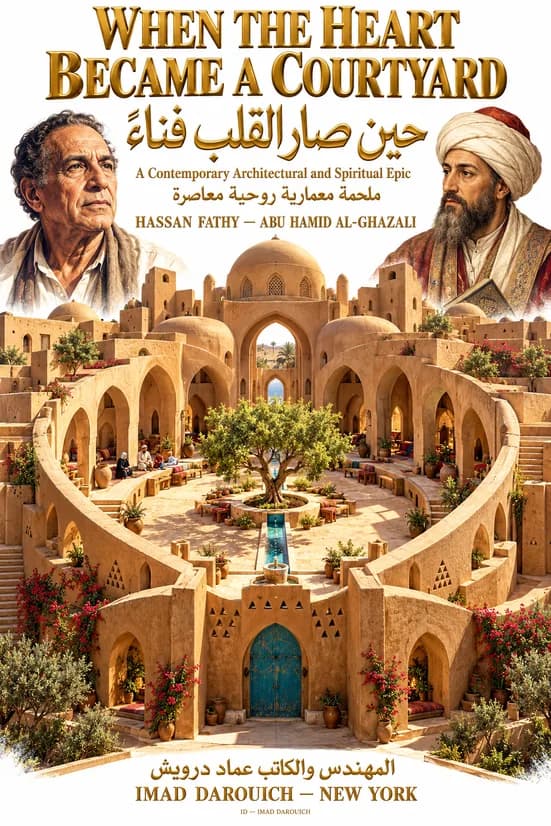
Imad pairs al-Ghazali with Hassan Fathy in When the Heart Became a Courtyard, and the scholar's stories are gathered in The Strangest Stories of Imam Al-Ghazali. His book on another Persian master of the inner life is Jalal al-Din Rumi: The Epic of the Man Who Made Love a Path to God.
بقلم
Architect Imad Darouich
المهندس المعماري عماد درويش
مهندس معماري وكاتب ومؤسس 3DEPICS، يقيم في نيويورك. يكتب أدبًا ملحميًا يعبر الحدود واللغات والجغرافيا، حيث تلتقي الفلسفة بالعمارة، والروحانية بالتاريخ، والذاكرة بالخيال.