When Stone Bowed to Mercy: Mohamed Makiya and Abd al-Qadir al-Jilani
حين انحنى الحجرُ للرحمة
Imad draws an arch and imagines who will pass beneath it, wet, weary or turned away elsewhere, and asks the stone to learn how to welcome them.
بقلم المهندس المعماري عماد درويش4 دقائق قراءة
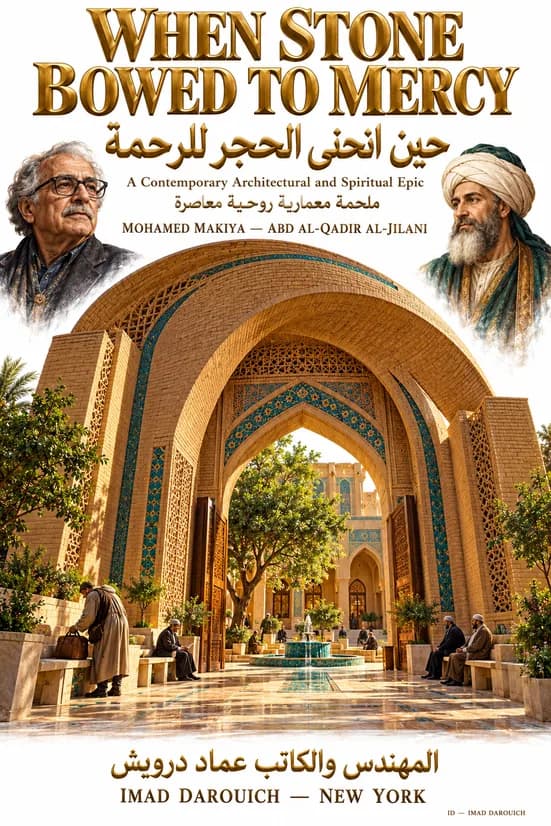
Mohamed Makiya (1914 to 2015) was an Iraqi architect who founded Iraq's first department of architecture at the University of Baghdad and designed the city's al-Khulafa Mosque, and Abd al-Qadir al-Jilani (died about 1166) was a Hanbali jurist and Sufi teacher in Baghdad. Imad's poem joins the two in reflection, reading Baghdad's brick and courtyards and asking what mercy demands of the person who builds.
المعماري محمد مكّيّة والشيخ عبد القادر الجيلانيArchitect Mohamed Makiya and Sheikh Abd al-Qadir al-Jilani
ملحمة معمارية روحية معاصرةA Contemporary Architectural and Spiritual Epic
A Note
تنويه
رؤيا أدبية تجمع التأمّل في عمارة محمد مكّيّة والإرث الروحي لعبد القادر الجيلاني؛ الربط من رؤية الكاتب، ولا يفترض لقاءً أو تعاونًا، ولا يتضمّن أقوالًا منسوبةً إليهما.A literary vision joining reflections on Mohamed Makiya’s architecture and Abd al-Qadir al-Jilani’s spiritual legacy; the connection belongs to the writer, implies no encounter or collaboration, and includes no quotations attributed to either.
The Introduction
المقدمة
أنا عماد درويش.I am Imad Darouich.
أرفع القوسَ على الورقة، ثم أتخيّل مَن سيعبر تحته.I raise an arch upon the page, then imagine who will pass beneath it.
قد يأتي بثوبٍ مبلّل.They may arrive in wet clothes.
وقد يأتي باسمٍ أثقلَ من قدرتِه على شرحه.They may arrive with a name heavier than their ability to explain it.
وقد يصل بعد أن أُغلقت في وجهه أبواب.They may arrive after doors have been closed in their face.
أريد أن يعرف هذا القوسُ كيف يستقبل.I want this arch to know how to welcome.
The Epic
الملحمة
عند مكّيّة، أتأمّل المادّةَ وهي تحمل ذاكرةَ المدينة.With Makiya, I contemplate material carrying the city’s memory.
طابوقةٌ إلى جوار طابوقة.Brick beside brick.
يتكرّر الإيقاعُ، وينشأ الجدار.The rhythm repeats, and a wall emerges.
في سطحه ظلالٌ دقيقة.Fine shadows lie upon its surface.
وفي امتداده أثرُ أيدٍ عرفت كيف تبني.Across its span remain the traces of hands that knew how to build.
أشعر بأن بغدادَ تستطيع أن تظهر في تفصيل.I feel that Baghdad can appear within a detail.
في حافّة قوس.In the edge of an arch.
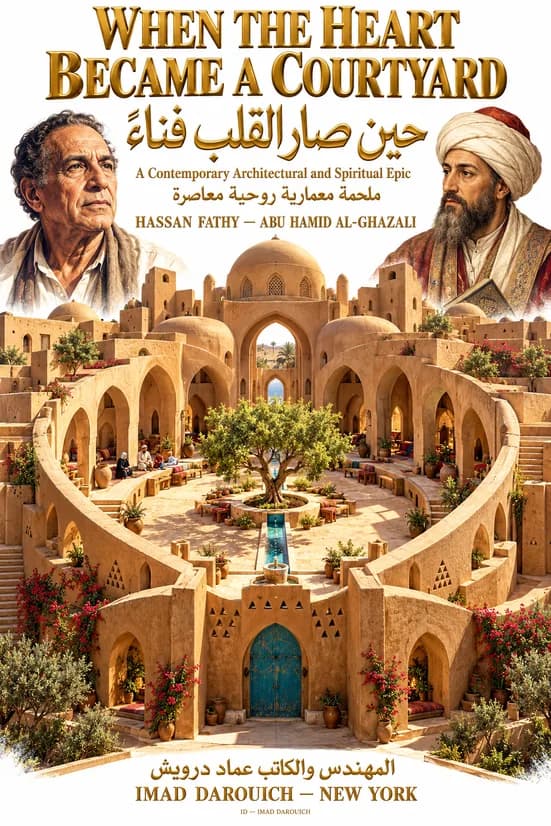
وفي فناءٍ يحفظ للسماء موضعًا.In a courtyard keeping a place for the sky.
وفي بابٍ يصل الحاضرَ بما بقي من الذاكرة.In a door connecting the present to what remains of memory.
لكنّ الذاكرةَ تحتاج إلى حياةٍ تجري فيها.Yet memory needs life moving within it.
أرسم الفناء.I draw the courtyard.
وأتخيّل الكلامَ الذي سيملؤه.I imagine the conversations that will fill it.
أطفالًا يقتربون من الماء.Children approaching the water.
ومسنًّا يختار الظلّ.An elderly person choosing shade.
وقادمًا يبحث بعينيه عن موضعٍ يجلس فيه.An arriving person searching with their eyes for somewhere to sit.
ثم أتأمّل الإرثَ الروحي للجيلاني.Then I contemplate al-Jilani’s spiritual legacy.
أعود إلى السؤال الذي يسبق المظهر:I return to the question preceding appearance:
ماذا صنعت معرفتي في قلبي؟What has my knowledge done within my heart?
هل صرتُ أقدرَ على سماع حاجة الإنسان؟Have I become more able to hear a person’s need?
أم صرتُ أشرح له، بإتقان، لماذا لا أستطيع مساعدته؟Or have I become skilled at explaining why I cannot help?
هنا ينحني شيءٌ في داخلي.Here, something within me bows.
أرى أن الرحمةَ تحتاج إلى فعلٍ محدّد.I see that mercy needs a definite act.
مقعدٍ يُضاف.A seat added.
وعتبةٍ تُعدَّل.A threshold altered.
وممرٍّ يُفتح.A passage opened.
وسؤالٍ يُطرح قبل أن يصبح الخطأُ حجرًا.A question asked before a mistake becomes stone.
بين ذاكرة مكّيّة وتأمّلي الروحي، يصبح البناءُ امتحانًا للعناية.Between Makiya’s memory and my spiritual reflection, building becomes a test of care.
فقد أحفظ شكلَ القوس، وأُهمل مَن يعبره.I may preserve the arch’s form and neglect who passes beneath it.
وقد أُحسن كتابةَ المعنى، وأترك تطبيقَه لغيري.I may express a meaning well and leave its realization to someone else.
أريد أن تلتقي يدي بما أؤمن به.I want my hand to meet what I believe.
أن تظهر الأمانةُ في حساب الحمل.For integrity to appear in the load calculation.
والرحمةُ في توزيع المكان.And mercy in the arrangement of space.
والتواضعُ حين أصغي إلى مَن سيستخدمه.And humility when I listen to those who will use it.
أعرف أن الجدارَ لا يشعر.I know a wall does not feel.
لكنّ مَن يبنيه يستطيع أن يشعر.But the person building it can.
ومن هذه القدرة تبدأ مسؤوليّتي.From that capacity, my responsibility begins.
The Ending
الخاتمة
يا ربّ، أعنّي أن أترك في عملي أثرًا من الرحمة التي أرجوها لنفسي.O Lord, help me leave in my work a trace of the mercy I hope for myself.
من مكّيّة، أتأمّل مدينةً تبقى حيّةً في مادّتها.Through Makiya, I contemplate a city remaining alive within its material.
ومن الجيلاني، أتأمّل حاجةَ القلب إلى مراجعة نفسه.Through al-Jilani, I contemplate the heart’s need to examine itself.
ثم أعود إلى القوس.Then I return to the arch.
أحسبه حتى يكون آمنًا.I calculate it until it is safe.
وأترك تحته بابًا واسعًا.Beneath it, I leave a wide door.
سيأتي إنسانٌ لا أعرف قصّتَه.A person whose story I do not know will arrive.
أريده أن يجد موضعًا يضع فيه حقيبتَه.I want them to find somewhere to set down their bag.
وأن يجلس قليلًا.And sit for a while.
دون أن يُطالب بتبرير تعبِه.Without being asked to justify their weariness.
عندها أرجو أن يكون الحجرُ قد حمل شيئًا من نيّتي.Then I hope the stone has carried something of my intention.
Light and shade as a kind of mercy return in A House of Light and Shadow: Islamic Architecture and the School of the Soul, and another architect is joined to a spiritual voice in A Minaret Within the Human Being. More Arab architects are studied in Workshop 19: Ten Influential Arab Architects.
بقلم
Architect Imad Darouich
المهندس المعماري عماد درويش
مهندس معماري وكاتب ومؤسس 3DEPICS، يقيم في نيويورك. يكتب أدبًا ملحميًا يعبر الحدود واللغات والجغرافيا، حيث تلتقي الفلسفة بالعمارة، والروحانية بالتاريخ، والذاكرة بالخيال.