When the Heart Became a Courtyard: Hassan Fathy and al-Ghazali
حين صار القلبُ فناءً
An architect draws a courtyard at the heart of a house, then asks, with Hassan Fathy and al-Ghazali, what he has left open in his own heart.
بقلم المهندس المعماري عماد درويش4 دقائق قراءة
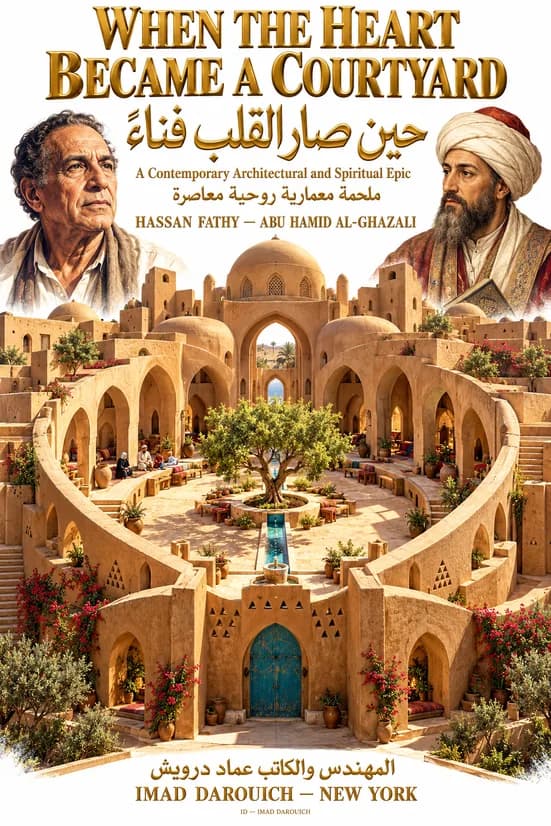
Hassan Fathy (1900 to 1989) was an Egyptian architect who revived mud brick, the Nubian vault and the enclosed courtyard that cools a house without machines; al-Ghazali (about 1058 to 1111) was a Persian Muslim scholar who wrote The Revival of the Religious Sciences. Imad's reflection joins the Hassan Fathy courtyard house to al-Ghazali's questions about intention, asking an architect why he enlarges a hall and whom its height serves.
A Note
تنويه
رؤيا أدبية تجمع التأمّل في عمارة حسن فتحي وإرث الإمام الغزالي الروحي؛ الربط بينهما من رؤية الكاتب، ولا يفترض لقاءً أو تعاونًا.A literary vision joining reflections on Hassan Fathy’s architecture and Imam al-Ghazali’s spiritual legacy; the connection belongs to the writer and implies no encounter or collaboration.
The Introduction
المقدمة
أنا عماد درويش.I am Imad Darouich.
أعرف كيف أُغلق بيتًا على أهله.I know how to enclose a home around its people.
وأتعلّم كيف أفتحه على الطمأنينة.And I am learning how to open it toward peace.
الجدارُ يرتفع في أيّام.A wall rises in days.
أمّا السكينة، فتحتاج أن تجد مكانها بين ما نريد وما نحتاج.Serenity must find its place between what we desire and what we need.
أرسم فناءً في قلب البيت.I draw a courtyard at the heart of the house.
ثم أسأل: ماذا تركتُ مفتوحًا في قلبي؟Then I ask: What have I left open within my heart?
The Epic
الملحمة
عند حسن فتحي، يعود الترابُ إلى اليد.With Hassan Fathy, earth returns to the hand.
يُعجن.It is mixed.
يُشكَّل.It is shaped.
ويأخذ طريقَه إلى الجدار.And finds its way into the wall.
أرى المادّةَ القريبة وقد اكتسبت قدرةً على الحماية.I see a nearby material acquire the power to protect.
قوسٌ يحمل.An arch bears weight.
وقبّةٌ تجمع المكان تحتها.A dome gathers the space beneath it.
وفناءٌ يمنح الهواءَ طريقًا.A courtyard gives air a path.
أفكّر في البيت الذي يعرف مناخَه.I think of a house that knows its climate.
أين تقسو الشمس؟Where is the sun harsh?
ومن أين تأتي النسمة؟From where does the breeze arrive?
ومتى تحتاج الأسرةُ إلى ظلٍّ يجمعها؟When does the family need shade that brings them together?
هذه المعرفةُ تجعل الأرضَ شريكةً في البناء.This knowledge makes the earth a partner in building.
ثم أفتح بابَ التأمّل عند الغزالي.Then I open the door to contemplation through al-Ghazali.
أراجع النيّة التي سبقت الرسم.I examine the intention that preceded the drawing.
لماذا أُكبّر هذه القاعة؟Why am I enlarging this hall?
ومَن سيستفيد من ارتفاعها؟Who will benefit from its height?
هل أبحث عن راحة الساكن، أم عن اتّساع صورتي في عينه؟Am I seeking the resident’s comfort, or a larger image of myself in their eyes?
يصعب هذا السؤال.This question is difficult.
فقد يلبس الغرورُ هيئةَ طموح.For vanity can take the form of ambition.
وقد أُسمّي الزيادةَ جمالًا، لأنني أخشى البساطة.I may call excess beauty because I fear simplicity.
هنا أضع القلمَ قليلًا.Here I put down the pencil for a while.
أنظر إلى الفراغ الذي ملأتُه.I look at the space I have filled.
ثم أتخيّل حياةَ صاحبه.Then I imagine its owner’s life.
أين سيجلس حين يتعب؟Where will they sit when tired?
كيف سيحفظ خصوصيّةَ أسرته؟How will they preserve their family’s privacy?
وهل يستطيع صيانةَ ما وضعتُه بين يديه؟Can they maintain what I have placed in their hands?
النيّةُ تبدأ في القلب، وتظهر آثارُها في التفاصيل.Intention begins in the heart, and its effects appear in the details.
في حافّةٍ آمنة.In a safe edge.
وماءٍ لا يُهدر.Water that is not wasted.
ومادّةٍ تُختار بعلم.A material chosen with knowledge.
وتكلفةٍ يعرفها صاحبُ البيت قبل أن يحمل عبءَها.And a cost the homeowner understands before bearing its burden.
بين تراب فتحي وتأمّل الغزالي، أرى الزينةَ تعود إلى حجمها.Between Fathy’s earth and reflection through al-Ghazali, I see ornament return to its proper scale.
يبقى للجمال حقُّه.Beauty retains its rightful place.
وتبقى للحياة أولويّتُها.And life retains its priority.
أريد بيتًا لا يُرهق صاحبه كي يحافظ على صورته.I want a house that does not exhaust its owner to preserve its image.
بيتًا يشيخ برفق.A house that ages gently.
تُصلَح فيه الأشياء.Where things can be repaired.
ويستطيع ساكنُه أن يفهم ما يحتاج إليه.And its occupant can understand what it needs.
أريد أن يدخل منه الصباح.I want morning to enter it.
وأن تجد الأسرةُ فيه مكانًا للكلام.And the family to find a place within it to speak.
ومكانًا للصمت أيضًا.And a place for silence too.
فالروحُ تحتاج أحيانًا إلى سقفٍ هادئ، وإلى سماءٍ تُرى من الفناء.For the soul sometimes needs a quiet roof and a sky visible from the courtyard.
The Ending
الخاتمة
يا ربّ، أصلح نيّتي قبل أن تستقيم خطوطُها.O Lord, set my intention right before its lines become straight.
واجعل ما أعرفه نافعًا لمَن سيعيشون أثرَه.Make what I know useful to those who will live with its consequences.
من حسن فتحي، أتأمّل بيتًا ينشأ من معرفة الأرض وأهلها.Through Hassan Fathy, I contemplate a house arising from knowledge of the land and its people.
ومن الغزالي، أتأمّل يدًا تراجع قلبَها قبل أن تعمل.Through al-Ghazali, I contemplate a hand examining its heart before it acts.
ثم أعود إلى الفناء.Then I return to the courtyard.
أضع فيه شجرة.I place a tree within it.
وأترك حولها مكانًا للجلوس.And leave room around it to sit.
عند المساء، سيجتمع أهلُ البيت.At evening, the household will gather.
قد لا يعرفون كم سؤالًا سبق هذا الظلّ.They may never know how many questions came before this shade.
لكنّهم سيجدون موضعًا يتّسع لهم.Yet they will find a place spacious enough for them.
وأرجو أن يتّسع قلبي، مثلَه، لما يستحقُّ أن يبقى.And I pray that my heart, like it, may have room for what deserves to remain.
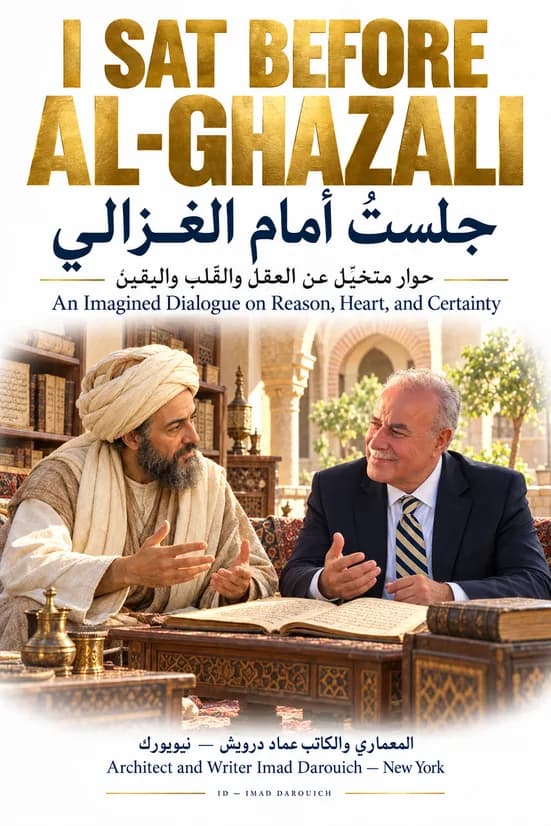
Imad sits down with al-Ghazali himself in I Sat Before al-Ghazali, and the scholar's life is told in The Epic of Imam Al-Ghazali. Sacred space read from within Islamic architecture is the subject of A House of Light and Shadow: Islamic Architecture and the School of the Soul.

بقلم
Architect Imad Darouich
المهندس المعماري عماد درويش
مهندس معماري وكاتب ومؤسس 3DEPICS، يقيم في نيويورك. يكتب أدبًا ملحميًا يعبر الحدود واللغات والجغرافيا، حيث تلتقي الفلسفة بالعمارة، والروحانية بالتاريخ، والذاكرة بالخيال.