A Minaret Within the Human Being: Abdel-Wahed El-Wakil and al-Sha'rawi
مئذنةٌ داخل الإنسان
Imad raises a minaret on paper, then looks down at the door, the threshold and the tired person who must pass beneath it.
بقلم المهندس المعماري عماد درويش4 دقائق قراءة
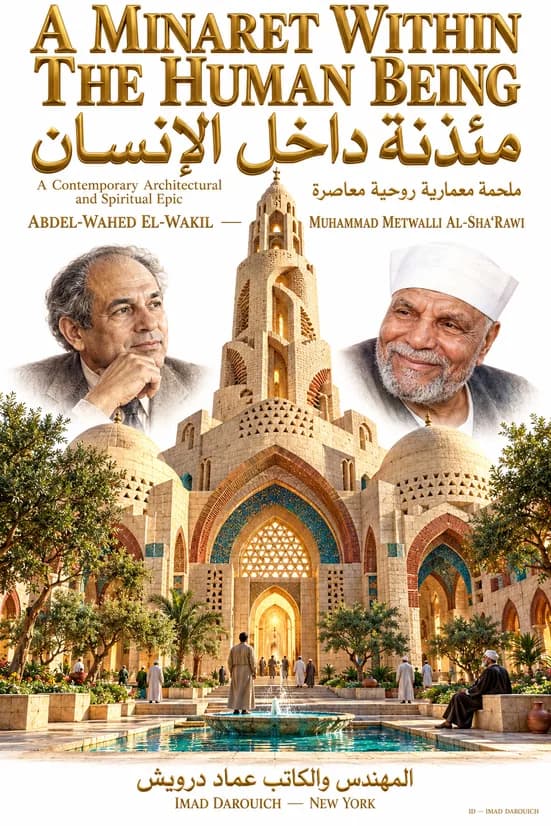
Abdel-Wahed El-Wakil, an Egyptian architect born in 1943 and a pupil of Hassan Fathy, has designed more than fifteen mosques in Saudi Arabia, and Sheikh Muhammad Metwalli al-Sha'rawi (1911 to 1998) was an Egyptian preacher known for explaining the Qur'an in simple words. Imad's minaret poem joins the two in reflection only, asking what a mosque's height means if its door, floor and sound fail the weary.
المعماري عبد الواحد الوكيل والشيخ محمد متولّي الشعراويArchitect Abdel-Wahed El-Wakil and Sheikh Muhammad Metwalli al-Sha‘rawi
ملحمة معمارية روحية معاصرةA Contemporary Architectural and Spiritual Epic
A Note
تنويه
رؤيا أدبية تجمع التأمّل في عمارة عبد الواحد الوكيل والحضور الديني للشيخ الشعراوي؛ الربط من رؤية الكاتب، ولا يفترض لقاءً أو تعاونًا، ولا يتضمّن اقتباساتٍ منسوبةً إليهما.A literary vision joining reflections on Abdel-Wahed El-Wakil’s architecture and Sheikh al-Sha‘rawi’s religious presence; the connection belongs to the writer, implies no encounter or collaboration, and includes no quotations attributed to either.
The Introduction
المقدمة
أنا عماد درويش.I am Imad Darouich.
أرفع مئذنةً على الورق.I raise a minaret upon the page.
يبلغ رأسُها أعلى الرسم.Its summit reaches the drawing’s highest point.
ثم أنظر إلى الباب عند أسفلها.Then I look at the door beneath it.
هناك سيصل إنسانٌ يحمل ما لا يظهر في الواجهة.There, a person will arrive carrying what the façade cannot reveal.
وقد يدخل مستقيمَ الظهر، وقلبُه منحنٍ تحت التعب.They may enter with a straight back and a heart bowed beneath exhaustion.
The Epic
الملحمة
في عمارة الوكيل، أتأمّل القوسَ وقد احتفظ بذاكرة الصنعة.In El-Wakil’s architecture, I contemplate an arch retaining the memory of craft.
قطعةٌ تسند قطعة.One piece supports another.
وتصل القوّةُ إلى الأرض عبر نظامٍ يعرف مادّتَه.Force reaches the ground through a system that knows its material.
أرى القبّةَ ترتفع.I see the dome rise.
تجمع الفراغ، وتمنح العينَ مركزًا.It gathers space and gives the eye a center.
لكنّني أبحث تحتها عن موضع الإنسان.Yet beneath it I search for the human being’s place.
أين يقف القادمُ حين يخلع حذاءه؟Where does the arriving person stand while removing their shoes?
كيف يصل المسنُّ إلى الصفّ؟How does the elderly person reach the row?
وهل يجد المتعبُ مقعدًا يحفظ له المشاركة؟Can the weary person find a seat that preserves their participation?
هذه التفاصيلُ تدخل في معنى الوقار.These details enter the meaning of dignity.
فالمكانُ يعلّم الجسدَ كيف يُعامل.For a place teaches the body how it will be treated.
بابٌ سهل.An easy door.
وأرضٌ مأمونة.Safe ground.
وماءٌ يصل دون مشقّة.Water reached without hardship.
كلُّها عباراتٌ تقولها العمارةُ قبل الكلام.All are statements architecture makes before speech.
ثم أتأمّل حضورَ الشيخ الشعراوي.Then I contemplate Sheikh al-Sha‘rawi’s presence.
أفكّر في الكلمة الدينية حين تدخل يومَ الإنسان.I think of religious speech entering a person’s day.
يأتي السامعُ بعلمه المحدود.The listener arrives with limited knowledge.
وبسؤالٍ قد يخجل من طرحه.And a question they may feel ashamed to ask.
وبهمٍّ لم يجد له اسمًا.And a burden for which they have found no name.
أريد للكلمة أن تمنحه طريقًا إلى الفهم.I want the word to give them a path toward understanding.
وأريد للمكان أن يمنحه قدرةً على الإصغاء.I want the place to give them the ability to listen.
فالصوتُ الذي يتكسّر تحت السقف يُتعب المعنى.For a voice shattered beneath the roof exhausts meaning.
والضوءُ الذي يؤذي العين يُبعدها عن الكتاب.Light that hurts the eye draws it away from the book.
والازدحامُ الذي يسدُّ الطريق يحوّل الوصولَ إلى قلق.Crowding that blocks the path turns arrival into anxiety.
أراجع السقفَ من أجل الكلمة.I review the roof for the sake of the word.
وأراجع النافذةَ من أجل القارئ.I review the window for the reader.
وأوسّع الممرَّ من أجل مَن يحتاج إلى وقتٍ أطول.I widen the passage for someone who needs more time.
بين عمارة الوكيل وتأمّلي في حضور الشعراوي، تصبح المئذنةُ سؤالًا في داخلي.Between El-Wakil’s architecture and my reflection on al-Sha‘rawi’s presence, the minaret becomes a question within me.
ما قيمةُ ارتفاعها إن بقيت أخلاقي قريبةً من الغرور؟What is the value of its height if my character remains close to vanity?
وما قيمةُ اتّساع القاعة إن ضاق صدري بسؤال إنسان؟What is the value of a spacious hall if my heart narrows before a person’s question?
أضع القلم.I set down the pencil.
أراجع النيّة.I examine my intention.
فالعمارةُ التي أرسمها ستخرج من يدي.For the architecture I draw will leave my hand.
أمّا أثرُ ما قصدتُه، فسيمضي معها.But the effect of what I intended will travel with it.
The Ending
الخاتمة
يا ربّ، اجعل في علمي تواضعًا، وفي عملي رحمةً، وفيما أبنيه نفعًا.O Lord, place humility in my knowledge, mercy in my work, and benefit in what I build.
من الوكيل، أتأمّل صنعةً تحمل امتدادَ الذاكرة.Through El-Wakil, I contemplate a craft carrying memory forward.
ومن حضور الشعراوي، أتأمّل مسؤوليّةَ مَن يُقرّب المعنى إلى الناس.Through al-Sha‘rawi’s presence, I contemplate the responsibility of bringing meaning closer to people.
ثم أعود إلى المئذنة.Then I return to the minaret.
أُكمل ارتفاعَها.I complete its height.
وعند الباب، أُخفّض العتبة.At the door, I lower the threshold.
أريد للنظر أن يصعد.I want the gaze to rise.
وللقدم أن تعبر بسلام.And the foot to pass safely.
ولمَن يدخل أن يجد في المكان ما يُعينه، قبل أن يجد ما يُدهشه.And for whoever enters to find something that helps them before finding something that astonishes them.
عندها أشعر بأن شيئًا في داخلي ارتفع أيضًا.Then I feel that something within me has risen too.
El-Wakil's work fills Abdel-Wahed El-Wakil: When Architecture Becomes Memory, his teacher is the subject of Somewhere I Can Stop Leaving: A Poem About Hassan Fathy and Home, and another architect is joined to a spiritual teacher in When Stone Bowed to Mercy.
بقلم
Architect Imad Darouich
المهندس المعماري عماد درويش
مهندس معماري وكاتب ومؤسس 3DEPICS، يقيم في نيويورك. يكتب أدبًا ملحميًا يعبر الحدود واللغات والجغرافيا، حيث تلتقي الفلسفة بالعمارة، والروحانية بالتاريخ، والذاكرة بالخيال.