When Absence Rented a Room in My Chest: Beethoven and Van Gogh
حين استأجر الغيابُ غرفةً في صدري
On a night of mourning in New York, Beethoven and Van Gogh come to sit with an architect beside an empty chair.
بقلم المهندس المعماري عماد درويش4 دقائق قراءة
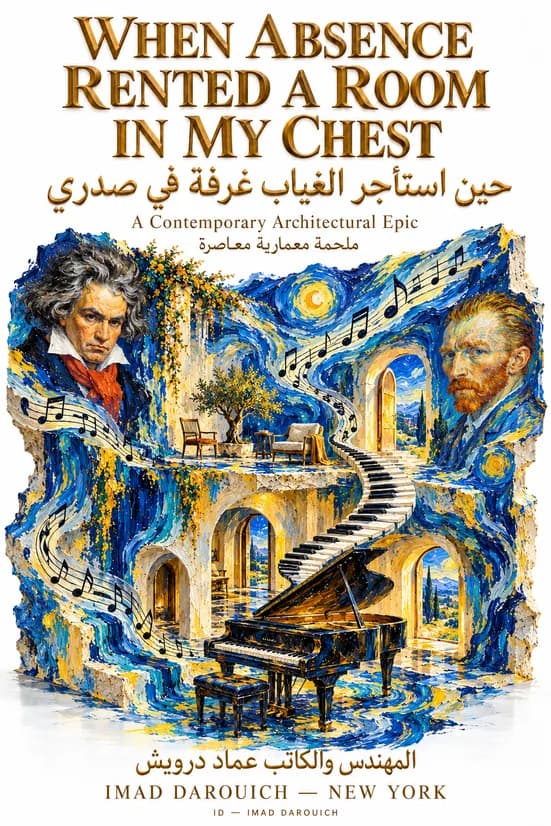
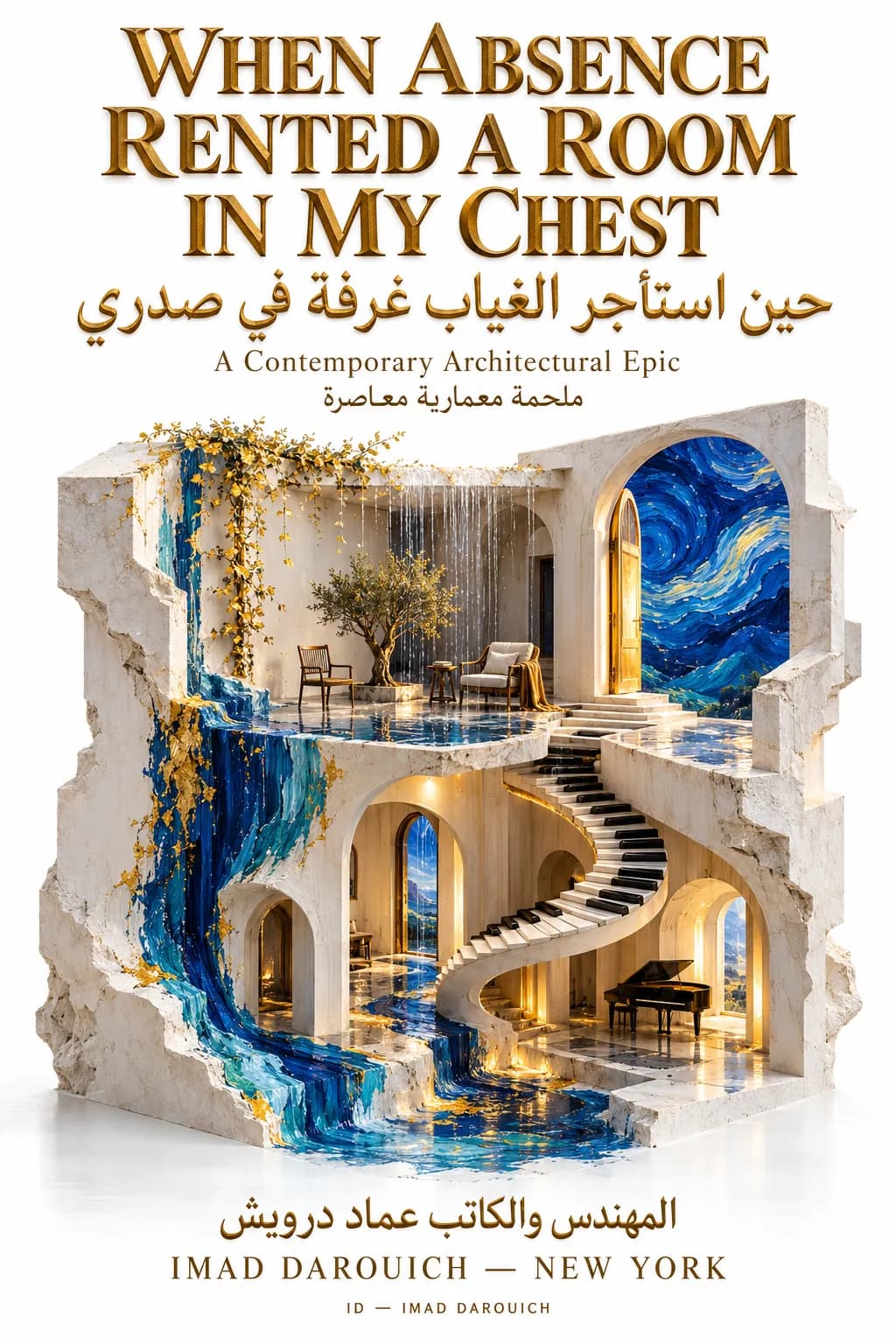
Ludwig van Beethoven (1770 to 1827) kept composing as his hearing failed, and Vincent van Gogh (1853 to 1890) painted The Starry Night in 1889. Imad's imagined night brings Beethoven and Van Gogh into his New York room after a loss: their music and paint bring back the door of an old home for a moment, and the architect ends by drawing a courtyard open to the rain.
A Note
تنويه
هذه رؤيا أدبية متخيّلة تجمع موسيقى بيتهوفن وألوان فان غوخ؛ وما يرد فيها من لقاء وحوار هو من الخيال.This is an imagined literary vision joining Beethoven’s music and Van Gogh’s colors; its encounter and dialogue are fictional.
The Beginning
البداية
في نيويورك، أغلقتُ بابي، وجلستُ أستمع إلى ما لم أستطع قوله.In New York, I closed my door and sat listening to what I could not say.
كنتُ أظنّ أن الحزن يحتاج إلى كلمات. حتى جاءت الموسيقى، وأزاحت الكرسي من تحت اللغة.I thought grief needed words. Then music arrived and pulled the chair from beneath language.
أربع ضربات على باب صدري.Four blows against the door of my chest.
فتحتُ. دخل بيتهوفن، يحمل سلّمًا بلا درجات.I opened it. Beethoven entered, carrying a staircase without steps.
وخلفه فان غوخ، بثيابٍ تقطر منها سماء زرقاء.Behind him came Van Gogh, his clothes dripping a blue sky.
لم يسألاني عمّن فقدتُ.They did not ask whom I had lost.
نظرا إلى الكرسي الفارغ، وفهما.They looked at the empty chair and understood.
The Epic
الملحمة
قال بيتهوفن: أين تضع الأصوات التي تؤلمك؟Beethoven asked: Where do you put the sounds that hurt you?
أشرتُ إلى صدري.I pointed to my chest.
وضع أذنه على الجدار. ثم جلس يعزف ما عجزتُ عن دفنه.He pressed his ear against the wall. Then he sat down to play what I had been unable to bury.
أما فان غوخ، فاقترب من النافذة ورسمها مفتوحةً على الجدار المجاور.Van Gogh approached the window and painted it open on the neighboring wall.
قلتُ: أنا معماري. أعرف أن الجدار لا يُفتح بفرشاة.I said: I am an architect. I know a brush cannot open a wall.
قال: وتعرف أيضًا أن البيت يبدأ بخطٍّ لا يستطيع أحدٌ السكن فيه.He replied: And you also know a house begins with a line no one can live inside.
سكتُّ.I fell silent.
كانت يداه تبنيان ليلًا يمكن التنفّس فيه.His hands were building a night we could breathe in.
ارتفعت الموسيقى. وانحنت شوارع المدينة خلف الزجاج، كأن نيويورك تصغي بركبتيها.The music rose. Beyond the glass, the city’s streets bent, as though New York were listening on its knees.
رأيتُ باب بيتنا القديم.I saw the door of our old home.
مددتُ يدي إلى المقبض. خرجتْ من الخشب رائحةُ خبز.I reached for the handle. The scent of bread rose from the wood.
ثم سمعتُ اسمي، كما كان يُنادى قبل أن تعلّمني الغربةُ تقديم نفسي.Then I heard my name as it used to be called, before exile taught me to introduce myself.
كدتُ أدخل.I almost stepped inside.
لكن النغمة تبدّلت، وعاد البابُ لونًا على الحائط.But the note changed, and the door became paint on the wall again.
قلتُ لهما: أعيداه.I said to them: Bring it back.
توقّفت الفرشاة. وبقيت يدُ بيتهوفن فوق المفتاح.The brush stopped. Beethoven’s hand hovered over the key.
في تلك الوقفة، فهمتُ لماذا يؤلمنا الفن.In that pause, I understood why art hurts us.
يمنح الغائبَ جسدًا للحظة، ثم يتركنا نحتضن الهواء.It gives the absent a body for a moment, then leaves us embracing air.
بكيتُ.I wept.
لم تكن دموعي انهيارًا. كانت ماءً وجد أخيرًا طريقه خارج الأساسات.My tears were no collapse. They were water finally finding its way out of the foundations.
ومن بين النغمات، خرج دعاءٌ كنتُ أحمله طويلًا.From between the notes came a prayer I had carried for so long.
يا ربّ، لقد ضاق صدري بما أحببتُ؛ وسّعه، ولا تُنقص المحبة.O Lord, my chest has grown too narrow for all I have loved; widen it, and leave the love whole.
حين رفعتُ رأسي، كان فان غوخ قد رسم كرسيًا ثانيًا.When I raised my head, Van Gogh had painted a second chair.
قلتُ: لمن؟I asked: For whom?
قال: لك. أنت واقفٌ عند باب الفقد منذ زمن.He said: For you. You have been standing at the door of loss for so long.
جلستُ.I sat down.
للمرة الأولى، تركتُ الغائبَ في مكانه، ومنحتُ نفسي مكانًا إلى جواره.For the first time, I let the absent remain in their place and gave myself a place beside them.
The Ending
الخاتمة
مع الفجر، رحل الرجلان. بقي على الطاولة أثرُ لون، وفي الغرفة صمتٌ أستطيع احتماله.At dawn, the two men left. A trace of paint remained on the table, and the room held a silence I could bear.
فتحتُ دفتر الرسم.I opened my sketchbook.
رسمتُ بيتًا. وفي قلبه فناءٌ مكشوف للسماء.I drew a house. At its heart, a courtyard open to the sky.
وحين سألني أحدهم لماذا تركتُ هذا الجزء بلا سقف، قلتُ:When someone asked why I had left that part without a roof, I said:
هنا يجلس الذين أحببتُهم.Here sit those I have loved.
هنا يصل المطر إليهم، وإليّ.Here the rain reaches them, and me.
Van Gogh's night sky is the subject of The Night the Stars Refused to Remain Still and of The Sky That Turns Within Me, and music that begins where sound ends runs through The Silent Symphony.
بقلم
Architect Imad Darouich
المهندس المعماري عماد درويش
مهندس معماري وكاتب ومؤسس 3DEPICS، يقيم في نيويورك. يكتب أدبًا ملحميًا يعبر الحدود واللغات والجغرافيا، حيث تلتقي الفلسفة بالعمارة، والروحانية بالتاريخ، والذاكرة بالخيال.