
The Man Classified as a Wall: Goya and Rodin
الرجلُ الذي صُنِّف جدارًا
Sent to inspect wall number seven, an architect finds a man holding up the ceiling; Goya paints him, Rodin models him seated, and the supports go in.
بقلم المهندس المعماري عماد درويش4 دقائق قراءة
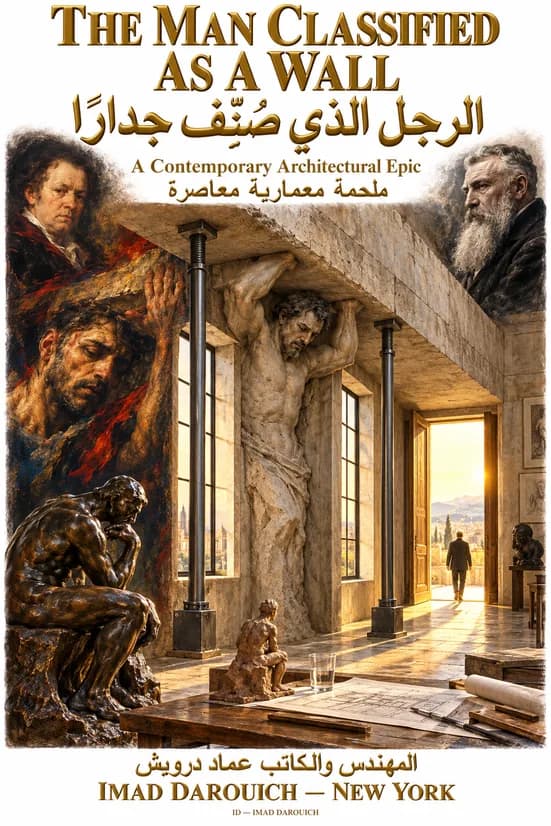
Francisco Goya (1746 to 1828) was a Spanish painter and printmaker, and Auguste Rodin (1840 to 1917) was a French sculptor considered a founder of modern sculpture. Imad's imagined story brings Goya and Rodin to a corridor where an official has filed a man as load-bearing wall number seven: Goya paints the strain that passers-by never looked at, and Rodin models the man sitting down.
A Note
تنويه
حكاية متخيّلة تجمع الرسّام فرانسيسكو غويا والنحّات أوغست رودان؛ اللقاء والحوار والأحداث من الخيال.An imagined story bringing together the painter Francisco Goya and the sculptor Auguste Rodin; the encounter, dialogue, and events are fictional.
The Introduction
المقدمة
أرسلوني لفحص جدارٍ يمنع توسيع الممرّ.I was sent to inspect a wall obstructing the widening of a corridor.
في المخطّط، كان خطًّا سميكًا.On the plan, it was a thick line.
وفي المكان، كان رجلًا.On site, it was a man.
واقفًا بين نافذتين، يحمل السقفَ على كتفيه.Standing between two windows, carrying the ceiling on his shoulders.
سألتُ الموظّف: منذ متى يقف هنا؟I asked the official: How long has he been standing here?
قال: منذ استُخدم المبنى.He said: Since the building came into use.
قلتُ: وما اسمُه؟I asked: What is his name?
قلّب الأوراق.He shuffled the papers.
قال: جدارٌ حامل، رقم سبعة.He said: Load-bearing wall, number seven.
The Epic
الملحمة
اقتربتُ من الرجل.I approached the man.
كان الغبارُ قد استقرَّ في شعره.Dust had settled in his hair.
وعلى كتفه آثارُ طبقاتٍ من الدهان.His shoulder bore traces of many coats of paint.
سألته: هل تستطيع الكلام؟I asked: Can you speak?
حرّك شفتيه.He moved his lips.
قال: الماء.He said: Water.
ذهبتُ أبحث عن كوب.I went to find a cup.
اعترض الموظّف.The official objected.
قال: لا تُبلّل الجدار قبل الفحص.He said: Do not wet the wall before inspection.
في غرفةٍ قرب الممرّ، وجدتُ غويا يرسم.In a room beside the corridor, I found Goya painting.
أمامه وجوهُ الذين مرّوا بالرجل.Before him were the faces of those who had passed the man.
بعضُهم ينظر إلى ساعته.Some were looking at their watches.
وبعضُهم يعدُّ المال.Some were counting money.
وفي كلّ وجهٍ عينان؛ لم تتّجه واحدةٌ منهما إلى الكتفين.Every face had two eyes; not one was turned toward the shoulders.
قلتُ: تعالَ وارسمه.I said: Come and paint him.
حمل غويا لوحته إلى الممرّ.Goya carried his canvas into the corridor.
رسم اليدَ المشدودة فوق الرأس.He painted the hand braced above the head.
والعروقَ التي يضغط عليها السقف.And the veins strained beneath the ceiling.
ثم وضع اللوحةَ إلى جوار المخطّط.Then he placed the painting beside the plan.
صار الموظّفُ ينظر من ورقةٍ إلى أخرى.The official looked from one sheet to the other.
قال: اللوحةُ تُبالغ.He said: The painting exaggerates.
في تلك اللحظة، سقطت قطرةُ عرقٍ على حذائه.At that moment, a drop of sweat fell onto his shoe.
مسحها بمنديل.He wiped it away with a tissue.
ثم طلب نقلَ اللوحة.Then he requested that the painting be removed.
دخل رودان، يحمل كتلةً صغيرةً من الطين.Rodin entered carrying a small lump of clay.
وقف أمام الرجل، طويلًا.He stood before the man for a long time.
سأله: أين يؤلمك؟He asked: Where does it hurt?
قال الرجل: حيث لا أستطيع أن أضع يدي.The man said: Where I cannot place my hand.
نظر رودان إلى ذراعيه المرفوعتين.Rodin looked at his raised arms.
ثم بدأ يصنع رجلًا جالسًا.Then he began shaping a seated man.
قدمين تستقرّان على الأرض.Feet resting on the ground.
ظهرًا ينحني بإرادته.A back bending by its own will.
ويدًا تستطيع أن تلامس الوجه.And a hand able to touch the face.
تابع الرجلُ أصابعَ رودان.The man followed Rodin’s fingers.
قال بصوتٍ خافت: كنتُ أجلس هكذا.He said softly: I used to sit like that.
The Turning
التحوّل
فتحتُ حقيبةَ أدواتي.I opened my tool bag.
قستُ السقفَ، وحدّدتُ مواضعَ الدعامات.I measured the ceiling and marked the positions for supports.
قال الموظّف: المطلوبُ إزالته، لا إنقاذه.The official said: You were asked to remove him, not save him.
قلتُ: رفعُ الحمل عنه أوّلُ العمل.I said: Taking the load off him is the first step.
أحضرنا الدعامات.We brought the supports.
ثبّتُّ الأولى.I secured the first.
رسم غويا ما يحدث.Goya painted what was happening.
وثبّتُّ الثانية.I secured the second.
ووقف رودان تحت ذراع الرجل، ينتظر هبوطها.Rodin stood beneath the man’s arm, waiting for it to come down.
حين حملت الدعاماتُ السقف، بقي الرجلُ رافعًا يديه.When the supports took the ceiling’s weight, the man kept his hands raised.
قلتُ: تستطيع الآن.I said: You can now.
لم يتحرّك.He did not move.
كان جسدُه قد تعلّم أن الخوفَ من الراحة يحمي الآخرين.His body had learned that fearing rest protected everyone else.
اقترب رودان، وأمسك يده برفق.Rodin stepped closer and gently took his hand.
أنزلها قليلًا.He lowered it a little.
لم يسقط السقف.The ceiling did not fall.
أنزل الأخرى.He lowered the other.
ارتجفت ركبتاه.His knees trembled.
أجلسناه.We helped him sit.
The Ending
الخاتمة
جاء الموظّف يحمل استمارةَ تحديث.The official came with an update form.
قال: ما تصنيفُه الجديد؟He asked: What is his new classification?
ناولْتُ الرجلَ الماء.I handed the man some water.
شرب ببطء.He drank slowly.
ثم وضع الكوبَ بيديه على الطاولة.Then he set the cup on the table with both hands.
سألتُه: ما اسمُك؟I asked: What is your name?
قاله.He said it.
كتبته في المكان الذي كان فيه الرقمُ سبعة.I wrote it where the number seven had been.
يا ربّ، كم من إنسانٍ مررنا به، وظننّاه جزءًا من المبنى.O Lord, how many people have we passed, believing them to be part of the building.
علّق غويا لوحته قرب المدخل.Goya hung his painting beside the entrance.
ووضع رودان الرجلَ الجالسَ تحتها.And Rodin placed the seated figure beneath it.
أمّا صاحبُ الاسم، فطلب أن يرى الخارج.The man who now had a name asked to see outside.
فتحتُ الباب.I opened the door.
خطا خطوةً، ثم التفتَ إلى السقف.He took a step, then glanced back at the ceiling.
كان ثابتًا.It was steady.
أخذ خطوتَه الثانية.He took his second step.
Another inspector meets two architects in The Building Accused of Moving, and The Human at the Heart of Design: Organic Architecture as an Invitation to Life makes the case for the person inside the building. More readings of painters and sculptors are in the literature and art collection.
بقلم
Architect Imad Darouich
المهندس المعماري عماد درويش
مهندس معماري وكاتب ومؤسس 3DEPICS، يقيم في نيويورك. يكتب أدبًا ملحميًا يعبر الحدود واللغات والجغرافيا، حيث تلتقي الفلسفة بالعمارة، والروحانية بالتاريخ، والذاكرة بالخيال.