The Museum That Opened a Door in a Cloud: The Lucas Museum
المتحف الذي فتح بابًا في الغيمة
A cloud comes down among the trees of Los Angeles, opens a door, and asks each visitor what they have lost.
بقلم المهندس المعماري عماد درويش3 دقائق قراءة
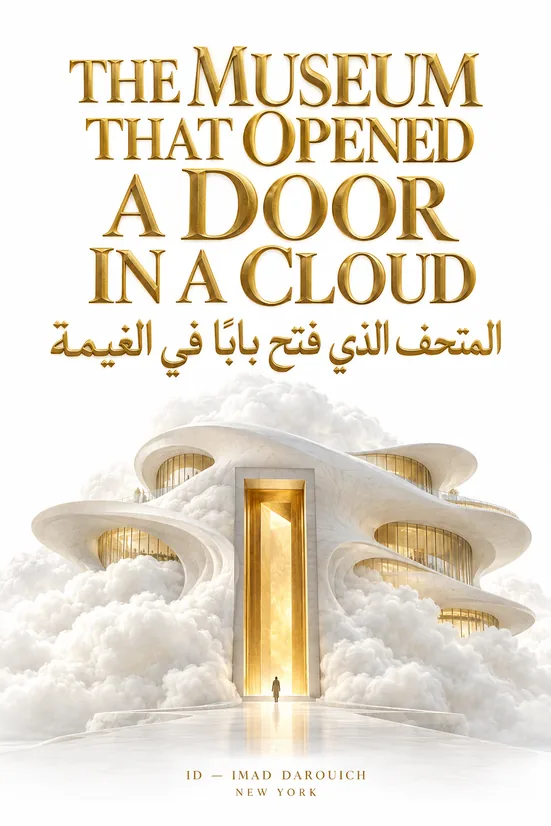
The Lucas Museum of Narrative Art, founded by George Lucas and Mellody Hobson, opened in Exposition Park, Los Angeles, on September 22, 2026, in a building designed by Ma Yansong of MAD. Imad's fable imagines the Lucas Museum of Narrative Art as a cloud that comes down into the city and follows a child, a woman and a man who each find inside it a picture to start speaking from.
A Note
تنويه
افتُتح متحف لوكاس للفن السردي في لوس أنجلوس في الثاني والعشرين من سبتمبر ٢٠٢٦، داخل مبنى صمّمه ما يانسونغ من مكتب MAD. وما يلي ملحمة متخيّلة تستلهم المكان، لا وصفًا حرفيًا له.The Lucas Museum of Narrative Art opened in Los Angeles on September 22, 2026, in a building designed by Ma Yansong of MAD. What follows is an imagined epic inspired by the place, rather than a literal description of it.
The Epic
الملحمة
في صباحٍ ما، ضاعت من المدينة حكاياتها.One morning, the city lost its stories.
كانت الوجوه في الشوارع تعرف أسماءها،Faces in the streets still knew their names,
لكنها نسيت لماذا تضحك.But they had forgotten why they laughed.
وكان الأطفال يرسمون أبوابًا على الورق،Children drew doors on paper,
ثم يسألون الكبار: أين تذهب الأبواب إذا لم تُفتح؟Then asked the grown-ups: Where do doors go when no one opens them?
لم يجب أحد.No one answered.
حتى هبطت غيمة بين الأشجار.Until a cloud came down among the trees.
لم تُمطر.It did not rain.
رفعت جسدها عن الأرض، وفتحت بابًا.It lifted its body from the ground and opened a door.
دخل طفل يحمل رسمةً ممزقة.A child entered with a torn drawing.
دخلت امرأة تحمل صوت أمّها وقد نسيَت ملامحها.A woman entered carrying her mother’s voice, though she had forgotten her face.
ودخل رجل ظلّ سنوات يقول: «أنا بخير»،And a man entered who had spent years saying, “I’m fine,”
حتى صدّقته الجدران وكذّبه قلبه.Until the walls believed him and his heart called him a liar.
في الداخل، لم تسألهم الصور عن تذاكرهم.Inside, the images did not ask for their tickets.
سألتهم عمّا فقدوا.They asked what they had lost.
أشار الطفل إلى الورقة.The child pointed to his paper.
فخرج الخطّ الممزق منها، وصار طريقًا.The torn line rose from it and became a road.
تبعته المرأة، فسمعت صوت أمّها يناديها باسمٍ لم ينطق به أحد منذ طفولتها.The woman followed it and heard her mother call her by a name no one had spoken since childhood.
أما الرجل، فوقف أمام صورة لا تتحرك.The man stopped before a picture that did not move.
رأى فيها بيتًا بناه بيديه.In it he saw a house he had built with his own hands.
ورأى الباب الذي أغلقه يوم رحل.And the door he had closed on the day he left.
مدّ يده إلى الصورة.He reached toward the picture.
لم يلمس البيت.He did not touch the house.
لكن يده تذكّرت ملمس المفتاح.But his hand remembered the feel of the key.
عندها فهمت المدينة ما حدث.Then the city understood what had happened.
لم تهبط الغيمة لتُخفي السماء.The cloud had not come down to hide the sky.
هبطت كي يجد كلّ إنسان صورةً يستطيع أن يبدأ منها الكلام.It had come so each person might find an image from which to begin speaking.
The Ending
الخاتمة
خرج الطفل، وقد وصل طرفَي الورقة.The child came out, having joined the two halves of his paper.
خرجت المرأة، وهي تردّد اسمها القديم.The woman came out, repeating her childhood name.
وخرج الرجل، وفي كفّه حركة فتح باب.The man came out with the motion of opening a door still in his hand.
منذ ذلك اليوم، إذا رسم أحدهم بابًا في لوس أنجلوس،From that day on, whenever someone drew a door in Los Angeles,
لم يسأله الناس: هل هذا بيت؟People no longer asked, “Is this a house?”
سألوه: من تنتظر أن يعود؟They asked, “Who are you waiting to come home?”
The Metropolitan Museum's new wing has its own fable in The Wing That Refused to Be an Addition, and a building in the Los Angeles area is read at book length in The Epic of the Stadium of Light: SoFi Stadium. More are in the buildings and cities collection.
بقلم
Architect Imad Darouich
المهندس المعماري عماد درويش
مهندس معماري وكاتب ومؤسس 3DEPICS، يقيم في نيويورك. يكتب أدبًا ملحميًا يعبر الحدود واللغات والجغرافيا، حيث تلتقي الفلسفة بالعمارة، والروحانية بالتاريخ، والذاكرة بالخيال.