Hassan Fathy: The Village That Refused to Inhabit the Plan
حسن فتحي: القرية التي رفضت أن تسكن المخطط
Cement sits as judge, mud brick takes the stand, and the poor of Gourna ask Hassan Fathy how often he sat down with them.
بقلم المهندس المعماري عماد درويش10 دقائق قراءة
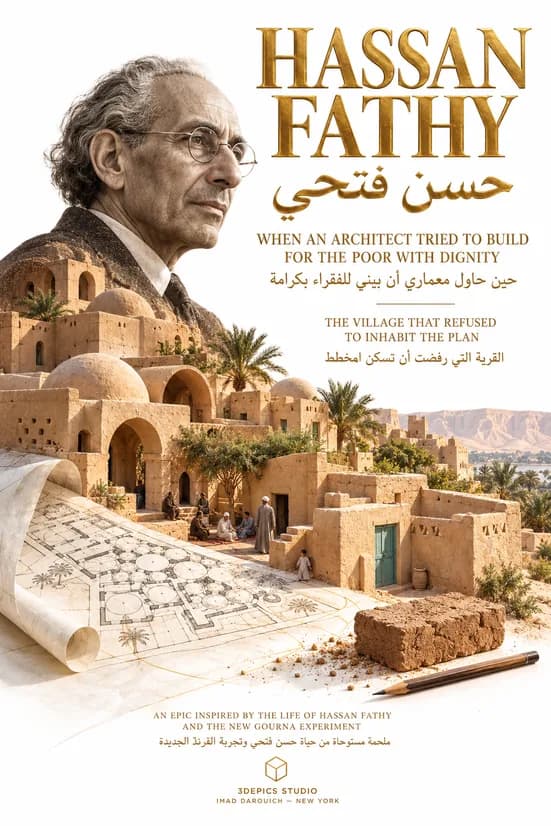
New Gourna village was built between 1946 and 1952 on the West Bank of the Nile at Luxor, where Hassan Fathy designed mud-brick houses, a mosque and a market to rehouse the people of old Gourna, who strongly resisted the move. Imad's epic follows the project into an imagined court where cement presides, mud brick testifies and, at the end, the villagers themselves take the judge's seat.
When an Architect Tried to Build for the Poor with Dignity
حين حاول معماري أن يبني للفقراء بكرامة
An Epic Inspired by the Life of Hassan Fathy and the New Gourna Experiment
ملحمة مستوحاة من حياة حسن فتحي وتجربة القرنة الجديدة
تنويهDisclaimer
تستند هذه الملحمة إلى حياة المعماري المصري حسن فتحي وإلى الوقائع التاريخية المرتبطة بمشروع القرنة الجديدة قرب الأقصر، الذي بدأ في أربعينيات القرن العشرين.This epic draws upon the life of Egyptian architect Hassan Fathy and the historical events surrounding the New Gourna project near Luxor, begun in the 1940s.
أما المحكمة والحوارات والمشاهد الواردة في النص، فهي معالجة أدبية متخيلة تستكشف أبعاد التجربة المعمارية والإنسانية.The trial, dialogue, and scenes in this text are part of an imaginative literary interpretation created to explore the architectural and human dimensions of that experiment.
في صباح حار من عام 1945، وصل إلى مكتب حسن فتحي ملف بني اللون.On a hot morning in 1945, a brown file arrived at Hassan Fathy’s office.
كان ثقيلًا.It was heavy.
ليس لكثرة أوراقه.Not because it contained many papers.
بل لأن قرية كاملة كانت محبوسة داخله.But because an entire village was imprisoned inside it.
كُتب على الغلاف:Upon its cover was written:
القرنة القديمة.OLD GOURNA.
قرية قائمة فوق منطقة المقابر الأثرية في الأقصر.A village standing over the archaeological tombs of Luxor.
تريد الحكومة نقل سكانها.The government wants its residents relocated.
المطلوب:Required:
بناء قرية جديدة.Build a new village.
بتكلفة قليلة.At low cost.
وفي أسرع وقت.As quickly as possible.
فتح حسن فتحي الملف.Hassan Fathy opened the file.
خرجت منه مئات الأسماء.Hundreds of names emerged from it.
رجال.Men.
نساء.Women.
أطفال.Children.
حرفيون.Craftspeople.
وعائلات عاشت قرب الجبل أجيالًا.And families who had lived near the mountain for generations.
لم يرَ أرقامًا.He did not see numbers.
رأى بشرًا.He saw human beings.
وفي أسفل الصفحة، وجد سؤالًا لم تكتبه الوزارة:At the bottom of the page, he found a question the ministry had not written:
كيف تنقل إنسانًا من مكانه؟How do you move a human being from their place?
هل تحمل جسده؟Do you carry the body?
أم تحمل ذاكرته أيضًا؟Or must you carry the memory as well?
في تلك الليلة، استُدعي حسن فتحي إلى محكمة مواد البناء.That night, Hassan Fathy was summoned before the Court of Building Materials.
جلس الإسمنت على منصة القضاء.Cement sat upon the judge’s platform.
كان رماديًا.It was gray.
وصلبًا.Hard.
وحوله وقف الحديد والزجاج والطوب المحروق.Around it stood steel, glass, and fired brick.
دخل حسن فتحي.Hassan Fathy entered.
كان يحمل قالبًا من الطين.He carried a block of earth.
ضحكت المحكمة.The court laughed.
سأل الإسمنت:Cement asked:
هل جئت لتبني قرية؟Have you come to build a village?
أم لتدفنها؟Or to bury it?
وضع حسن فتحي قالب الطين فوق الطاولة.Hassan Fathy placed the earthen brick upon the table.
قال:He said:
هذه ليست حفنة تراب.This is not a handful of dirt.
هذه مادة يعرفها الناس.This is a material the people know.
تخرج من أرضهم.It comes from their land.
وتحميهم من حرارتها.And protects them from its heat.
قال الحديد:Steel said:
لكن الفقراء يريدون مباني حديثة.But the poor want modern buildings.
أجاب حسن فتحي:Hassan Fathy replied:
الفقراء يريدون بيوتًا جيدة.The poor want good homes.
وليس من حقنا أن نبيعهم شكل الحداثة ونتركهم يدفعون ثمنها عمرًا كاملًا.We have no right to sell them the appearance of modernity and make them pay for it throughout their lives.
اقترب الطوب الطيني من منصة الشهود.The mud brick approached the witness stand.
كان صغيرًا.It was small.
ومتشقق الأطراف.Its edges were cracked.
سألته المحكمة:The court asked:
ماذا تستطيع أن تحمل؟What can you carry?
قال:It answered:
أحمل جدارًا.I can carry a wall.
وأحمل قوسًا.I can carry an arch.
وإذا عرفت اليد كيف ترتبني، أحمل قبةً أيضًا.And if the hand knows how to arrange me, I can carry a dome as well.
قال الإسمنت:Cement said:
ومن سيعلم الأيدي؟Who will teach the hands?
قال حسن فتحي:Hassan Fathy replied:
هناك أيدٍ لم تنسَ بعد.There are hands that have not yet forgotten.
سافر إلى النوبة.He traveled to Nubia.
بحث عن البنّائين الذين ما زالوا يعرفون بناء القباب والأقبية بالطوب الطيني.He sought builders who still knew how to construct domes and vaults with mud brick.
لم تكن تلك التقنيات بحاجة إلى أخشاب مكلفة لتشكيل السقوف.Those techniques did not require expensive timber formwork for their roofs.
كان البنّاء يضع قالبًا فوق قالب.The builder placed one brick above another.
يميل الصف قليلًا.Tilting each course slightly.
ثم يرتفع القبو من الجدار.Then the vault rose from the wall.
بلا آلة كبيرة.Without a great machine.
وبلا مادة جاءت من مصنع بعيد.Without material brought from a distant factory.
كانت المعرفة تسكن اليد.Knowledge lived within the hand.
لكنها لم تكن مكتوبة في دفتر المناقصات.But it was not written in the tender documents.
عاد حسن فتحي إلى الأقصر.Hassan Fathy returned to Luxor.
رسم قريةً لا صفوفًا من الصناديق.He designed a village, not rows of boxes.
رسم شوارع ضيقة تمنح الظل.He drew narrow streets that offered shade.
وساحات تجمع الناس.Courtyards that gathered people.
ومدرسة.A school.
ومسرحًا.A theater.
وسوقًا.A market.
ومسجدًا.A mosque.
وبيوتًا تختلف باختلاف العائلات.And houses that varied with the families.
لم يرد نسخةً واحدة تتكرر.He did not want one repeated model.
فالإنسان ليس رقمًا يتكرر.A human being is not a number to be repeated.
بدأت القرية ترتفع من الأرض.The village began to rise from the earth.
كانت الجدران بلون التراب.The walls were the color of the soil.
وكانت القباب تبدو كأن الأرض تتنفس.The domes appeared as though the earth were breathing.
دخل الهواء من الأفنية.Air entered through the courtyards.
وتحرك الظل مع الشمس.Shadows moved with the sun.
وبدا للحظة أن الحلم ممكن.For a moment, the dream seemed possible.
لكن ملف المشروع لم يبقَ في مكتب المعماري.But the project file did not remain in the architect’s office.
دخل ممرات الإدارة.It entered the corridors of administration.
انتقل من طاولة إلى أخرى.It moved from one desk to another.
وفي كل مرة، فُقد منه بيت.Each time, a house disappeared from it.
طلب موظف توقيعًا.One official requested a signature.
وطلب آخر ميزانيةً لم تصل.Another requested a budget that never arrived.
وطلب ثالث سرعةً لا تسمح بها الحرفة.A third demanded a speed the craft could not provide.
كان المشروع يبني جدارًا في الموقع.The project built one wall on the site.
وتبني الإدارة أمامه جدارين.The administration built two walls before it.
ثم وصل أهل القرنة.Then the people of Gourna arrived.
لم يدخلوا المخطط كما تدخل الخطوط إلى الورق.They did not enter the plan as lines enter paper.
جاؤوا بذاكرتهم.They came with their memories.
وبمخاوفهم.With their fears.
وبأعمالهم.With their livelihoods.
وبقبور آبائهم.And with the graves of their ancestors.
نظروا إلى القرية الجديدة.They looked at the new village.
كانت جميلة.It was beautiful.
لكن الجمال لم يكن السؤال الوحيد.But beauty was not the only question.
بعضهم لم يُرِد مغادرة بيته القديم.Some did not want to leave their old homes.
وبعضهم لم يثق بالمشروع.Some did not trust the project.
وبعضهم احتاج بيتًا يلائم طريقة عيش لم يفهمها المخطط تمامًا.Some needed a house suited to a way of life the plan did not fully understand.
في تلك الليلة، عادت المحكمة.That night, the court returned.
لكن الإسمنت لم يكن القاضي هذه المرة.But Cement was no longer the judge.
جلس الفقير على منصة القضاء.The Poor Man sat upon the judge’s platform.
لم يكن له وجه واحد.He did not have one face.
كان يحمل وجوه القرية كلها.He carried all the faces of the village.
سأل حسن فتحي:He asked Hassan Fathy:
قلت إنك تبني لي.You said you were building for me.
فكم مرة جلست معي؟How many times did you sit with me?
قال حسن فتحي:Hassan Fathy answered:
أردت أن أمنحك بيتًا كريمًا.I wanted to give you a dignified home.
قال الرجل:The man said:
الكرامة لا تُمنح.Dignity is not given.
ولا يرسمها معماري وحده.Nor can an architect draw it alone.
الكرامة تبدأ حين تسألني كيف أعيش.Dignity begins when you ask me how I live.
قال حسن فتحي:Hassan Fathy replied:
كنت أحارب من أجلك.I was fighting for you.
قال الرجل:The man answered:
كنت تحارب المواد المكلفة.You were fighting expensive materials.
وتحارب الإدارة.You were fighting the administration.
وتحارب عمارةً نسيت المناخ.You were fighting an architecture that had forgotten climate.
لكن الإنسان ليس معركةً تفوز بها نيابةً عنه.But a human being is not a battle you can win on his behalf.
يجب أن يكون شريكًا فيها.He must be a partner in it.
دخل البيت غير المكتمل إلى المحكمة.The unfinished house entered the court.
لم يكن له باب.It had no door.
وكان نصف قبته مفتوحًا على السماء.Half of its dome was open to the sky.
سألته المحكمة:The court asked:
من هدمك؟Who destroyed you?
قال البيت:The house answered:
لم يهدمْني أحد.No one destroyed me.
لقد توقفوا فقط عن إكمالي.They simply stopped completing me.
وهذه طريقة أكثر بطئًا للموت.And that is a slower way to die.
سأل حسن فتحي:Hassan Fathy asked:
هل فشلت؟Did I fail?
قال البيت:The house answered:
فشل المشروع في أن يصبح القرية التي حلمت بها.The project failed to become the village you imagined.
لكن السؤال الذي طرحته لم يفشل.But the question you raised did not fail.
هل يجب أن يكون بيت الفقير قبيحًا لأن ميزانيته صغيرة؟Must the poor person’s house be ugly because its budget is small?
هل يجب أن تأتي مواد البناء من مصانع لا يستطيع تحمل تكلفتها؟Must building materials come from factories he cannot afford?
هل التقدم يعني أن ننسى ما عرفته أيدي أجدادنا؟Does progress require us to forget what the hands of our ancestors knew?
وهل يستطيع المعماري أن يبني للناس من دون أن يبني معهم؟Can an architect build for people without building with them?
صمتت المحكمة.The court fell silent.
حتى الإسمنت خفض رأسه.Even Cement lowered its head.
فهو لم يكن مذنبًا.It was not guilty.
والطين لم يكن بريئًا دائمًا.Nor was earth always innocent.
لا توجد مادة أخلاقية بذاتها.No material is moral by itself.
العدالة تسكن طريقة استخدامها.Justice lives in how it is used.
صدر الحكم.The verdict was delivered.
قالت المحكمة:The court declared:
وُجد حسن فتحي مذنبًا.Hassan Fathy is found guilty.
مذنبًا بأنه صدّق أن الجمال حق للفقراء.Guilty of believing that beauty belongs to the poor.
مذنبًا بأنه أعاد الطين إلى طاولة العمارة الحديثة.Guilty of returning earth to the table of modern architecture.
ومذنبًا بأنه كشف أن البيت الرخيص قد يكون مكلفًا إذا أهان ساكنه.And guilty of revealing that an inexpensive house may be costly if it humiliates its resident.
سأل حسن فتحي:Hassan Fathy asked:
وما العقوبة؟What is the sentence?
قالت المحكمة:The court answered:
أن تبقى قريتك ناقصة.Your village will remain incomplete.
وأن تظل فكرتك تطارد المعماريين بعد رحيلك.And your idea will continue haunting architects after you are gone.
لم تكتمل القرنة الجديدة كما أرادها.New Gourna was not completed as he intended.
توقفت أجزاء من المشروع.Parts of the project stopped.
وتغيرت مبانٍ.Buildings were altered.
وتدهور بعضها مع الزمن.Some deteriorated over time.
لكن القرية لم تختفِ.But the village did not disappear.
بقي المسجد.The mosque remained.
وبقي المسرح.The theater remained.
وبقيت القباب تحمل آثار الأيدي التي بنتها.The domes continued carrying the traces of the hands that built them.
وبقي المشروع مفتوحًا كجرح في ضمير العمارة.The project remained open like a wound in architecture’s conscience.
توفي حسن فتحي عام 1989.Hassan Fathy died in 1989.
لكنه ترك سؤال القرنة وراءه.But he left the question of Gourna behind.
دخل السؤال مدارس العمارة.The question entered schools of architecture.
وعبر القارات.It crossed continents.
ووصل إلى أجيال تبحث عن بناء أكثر إنسانية واستدامة.It reached generations seeking more humane and sustainable ways of building.
عاد العالم إلى الطين.The world returned to earth.
لا لأنه مادة فقيرة.Not because it was a poor material.
بل لأنه أدرك مقدار المعرفة المختبئة داخله.But because it recognized the knowledge hidden within it.
وعاد إلى الأفنية والظلال والتهوية الطبيعية.It returned to courtyards, shade, and natural ventilation.
لا بوصفها زينةً تراثية.Not as heritage decoration.
بل حلولًا صنعتها قرون من التجربة.But as solutions shaped by centuries of experience.
هذه هي ملحمة حسن فتحي.This is the epic of Hassan Fathy.
لم ينتصر فيها المعماري بالكامل.The architect did not completely triumph within it.
ولم تُهزم القرية بالكامل.Nor was the village completely defeated.
بقي الاثنان داخل سؤال واحد.Both remained inside a single question.
لمن نبني؟For whom do we build?
وبأي مواد؟With what materials?
ومن يملك حق تعريف البيت الجيد؟Who has the right to define a good home?
لا ندرس حسن فتحي لكي نغطي كل مبنى بقبة.We do not study Hassan Fathy to cover every building with a dome.
ولا لكي نعود إلى الماضي هربًا من المستقبل.Nor do we return to the past to escape the future.
ندرسه لنتعلم كيف نستخرج من التراث معرفةً حيّة.We study him to learn how living knowledge can be drawn from heritage.
ندرس المناخ.We study climate.
والمادة.Material.
والحرفة.Craft.
والتكلفة.Cost.
وكرامة الإنسان.And human dignity.
لكننا نتعلم أيضًا درس القرنة الأصعب.But we also learn Gourna’s most difficult lesson.
لا يكفي أن تحب الناس.It is not enough to love the people.
يجب أن تسمعهم.You must hear them.
لا يكفي أن تصمم لهم.It is not enough to design for them.
يجب أن تصمم معهم.You must design with them.
فالبيت لا يصبح بيتًا عندما ينتهي المعماري من رسمه.A house does not become a home when the architect finishes drawing it.
يصبح بيتًا عندما يتعرف الساكن إلى نفسه داخله.It becomes a home when its resident recognizes himself within it.
ضع يدك على التراب.Place your hand upon the earth.
لا تسأل كم هو رخيص.Do not ask how cheap it is.
اسأل كم ذاكرةً يحمل.Ask how much memory it carries.
ثم اجلس مع الإنسان الذي ستبني له.Then sit with the person for whom you will build.
لا تفتح مخططك أولًا.Do not open your plan first.
افتح أذنك.Open your ear.
فقد تكون أول مادة يحتاج إليها المشروع ليست الطين.The first material a project needs may not be earth.
بل الإصغاء.It may be listening.
Fathy returns in an imagined working session, Who Can Afford to Live in Your Dream?, and in the poem Somewhere I Can Stop Leaving. His apprentice has a book of his own, Abdel-Wahed El-Wakil: When Architecture Becomes Memory.
بقلم
Architect Imad Darouich
المهندس المعماري عماد درويش
مهندس معماري وكاتب ومؤسس 3DEPICS، يقيم في نيويورك. يكتب أدبًا ملحميًا يعبر الحدود واللغات والجغرافيا، حيث تلتقي الفلسفة بالعمارة، والروحانية بالتاريخ، والذاكرة بالخيال.