Frank Lloyd Wright: When the Waterfall Became Part of the House
فرانك لويد رايت: حين أصبح الشلال جزءًا من البيت
The Kaufmanns expected a house facing their waterfall; Frank Lloyd Wright set it over the falls and made the sound of water part of the rooms.
بقلم المهندس المعماري عماد درويش5 دقائق قراءة
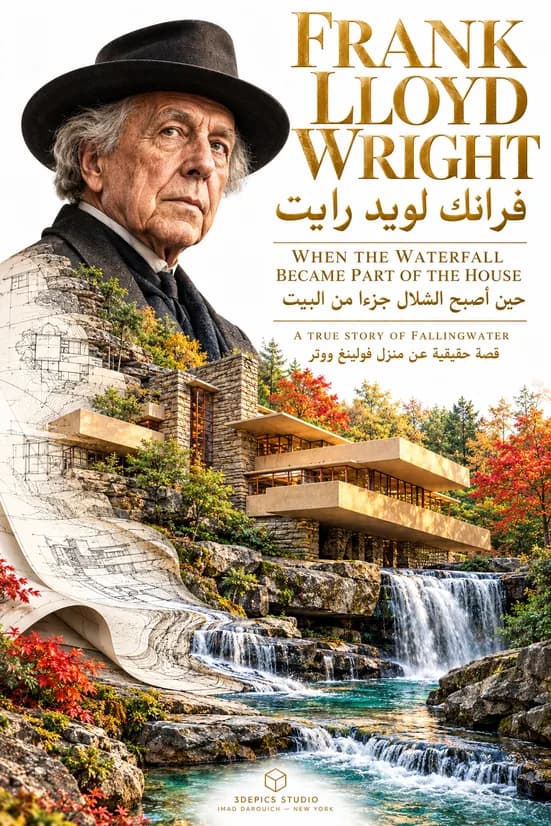
Fallingwater is the house Frank Lloyd Wright designed in 1935 for the Kaufmann family, built partly over a waterfall on Bear Run in southwestern Pennsylvania; the family began using it in 1937 and the guest wing was finished in 1939. Imad tells Fallingwater history as a true story without invented scenes, from the rocks taken into the house to its opening to the public.
تنويهDisclaimer
هذه قصة حقيقية مستندة إلى حياة المعماري الأمريكي فرانك لويد رايت وتصميمه لمنزل فالينغ ووتر.This is a true story based on the life of American architect Frank Lloyd Wright and his design for Fallingwater.
لم تُضف إليها حوارات أو أحداث متخيلة.No fictional dialogue or events have been added.
وُلد فرانك لويد رايت عام 1867.Frank Lloyd Wright was born in 1867.
آمن بأن المبنى لا يجب أن يُفرض على المكان.He believed that a building should not be imposed upon its site.
يجب أن ينتمي إليه.It should belong to it.
أطلق على فكرته اسم العمارة العضوية.He called his philosophy organic architecture.
عمارة تجمع الإنسان والطبيعة والبناء.An architecture uniting human life, nature, and structure.
في عام 1935، تلقى رايت تكليفًا جديدًا.In 1935, Wright received a new commission.
أرادت عائلة كوفمان منزلًا لقضاء العطلات.The Kaufmann family wanted a weekend home.
كان الموقع في بنسلفانيا.The site was in Pennsylvania.
غابة كثيفة.A dense forest.
صخور كبيرة.Massive rocks.
ومياه تعبر المكان بقوة.And water moving powerfully through the landscape.
كان هناك شلال.There was a waterfall.
اعتادت العائلة الجلوس قربه.The family often spent time beside it.
كان الشلال قلب الموقع.The waterfall was the heart of the site.
كان الحل المعتاد واضحًا.The conventional solution was obvious.
بناء المنزل مقابل الشلال.Place the house opposite the waterfall.
فتح النوافذ نحوه.Open the windows toward it.
وتحويله إلى منظر جميل.Turn it into a beautiful view.
لكن رايت اختار شيئًا مختلفًا.But Wright chose something different.
وضع المنزل فوق الشلال.He placed the house above the waterfall.
لم يجعل الطبيعة صورة معلقة أمام السكان.He did not turn nature into a picture hanging before the residents.
جعلهم يعيشون داخل صوتها.He made them live within its sound.
بدأ التصميم من الصخور.The design began with the rocks.
بعضها دخل إلى قلب المنزل.Some entered the heart of the house.
أصبح جزءًا من الأرضية.They became part of the floor.
وجزءًا من الموقد.And part of the hearth.
ارتفعت الجدران الحجرية من الموقع نفسه.Stone walls rose from the site itself.
وامتدت الشرفات الخرسانية فوق المياه.Concrete terraces extended above the water.
ظهرت كطبقات صخرية جديدة.They appeared like new layers of rock.
لم تكن الشرفات زينة.The terraces were not decoration.
كانت مساحات للحياة.They were spaces for living.
فتحت الداخل نحو الغابة.They opened the interior toward the forest.
ومحت الحدود بين البيت والمشهد.And blurred the boundary between house and landscape.
بدأ البناء عام 1936.Construction began in 1936.
اكتمل المنزل الرئيسي عام 1938.The main house was completed in 1938.
ثم اكتمل بيت الضيوف عام 1939.The guest house was completed in 1939.
لم يكن المشروع سهلًا.The project was not easy.
احتاجت الشرفات المعلقة إلى حلول إنشائية جريئة.The cantilevered terraces required bold structural solutions.
كان على الخرسانة أن تبدو خفيفة.The concrete had to appear weightless.
وكان على البيت أن يطفو فوق الماء.The house had to hover above the water.
لكنّه لم ينفصل عن الأرض.Yet it could not separate from the earth.
جمع رايت بين التناقضين.Wright united these opposites.
الحجر ثقيل.Stone is heavy.
والشرفة تمتد بحرية.The terrace extends freely.
الجدران تحمي.Walls provide shelter.
والزجاج يفتح المكان.Glass opens the space.
المنزل ثابت.The house is still.
لكن الماء لا يتوقف.But the water never stops.
في الداخل، يبقى صوت الشلال حاضرًا.Inside, the sound of the waterfall remains present.
لا يحتاج الساكن إلى رؤيته دائمًا.The resident does not always need to see it.
يكفي أن يسمعه.It is enough to hear it.
أصبح الصوت جزءًا من العمارة.Sound became part of the architecture.
وأصبحت الرطوبة والضوء والفصول جزءًا من التجربة.Moisture, light, and the seasons became part of the experience.
يتغير البيت مع الصباح.The house changes with the morning.
ويتغير مع المطر.It changes with the rain.
ويتغير مع الخريف والثلج.It changes with autumn and snow.
لا يقف ضد الزمن.It does not stand against time.
يعيش داخله.It lives within it.
أصبح فالينغ ووتر أحد أشهر المنازل في العالم.Fallingwater became one of the most famous houses in the world.
لكنه لم يبدأ برغبة في صنع رمز.But it did not begin with the desire to create an icon.
بدأ بفهم المكان.It began with understanding the site.
أين تتحرك المياه؟Where does the water move?
أين تستقر الصخور؟Where do the rocks rest?
من أين يدخل الضوء؟Where does the light enter?
وكيف يستطيع الإنسان أن يسكن هنا من دون أن يطرد الطبيعة؟And how can a human being live here without displacing nature?
توفي فرانك لويد رايت عام 1959.Frank Lloyd Wright died in 1959.
ترك وراءه أكثر من ألف تصميم.He left behind more than a thousand designs.
ونُفذ منها أكثر من خمسمئة.More than five hundred were realized.
لكن فالينغ ووتر بقي أحد أوضح تعبيراته.But Fallingwater remained one of his clearest statements.
المبنى لا يحتاج إلى تقليد الطبيعة.A building does not need to imitate nature.
يحتاج إلى فهم قوانينها.It needs to understand its laws.
وفي عام 1963، قدم إدغار كوفمان الابن المنزل إلى هيئة الحفاظ على غرب بنسلفانيا.In 1963, Edgar Kaufmann Jr. entrusted the house to the Western Pennsylvania Conservancy.
وفي العام التالي، فُتح للجمهور.The following year, it opened to the public.
أصبح المنزل الذي بُني لعائلة واحدة ذاكرةً مشتركة.The house built for one family became a shared memory.
وفي عام 2019، أُدرج ضمن مواقع فرانك لويد رايت المسجلة على قائمة التراث العالمي لليونسكو.In 2019, it became part of the Frank Lloyd Wright sites inscribed on the UNESCO World Heritage List.
هذه هي قوة فالينغ ووتر.This is the power of Fallingwater.
لم يُبنَ المنزل قرب الشلال.The house was not built beside the waterfall.
ولم يُبنَ أمامه.It was not built in front of it.
لقد بُني معه.It was built with it.
لا ندرس رايت لكي ننسخ شرفاته.We do not study Wright to copy his terraces.
ندرس طريقته في رؤية الموقع.We study his way of seeing the site.
نتعلم أن التصميم يبدأ قبل رسم الجدران.We learn that design begins before walls are drawn.
يبدأ بالاستماع.It begins with listening.
إلى الأرض.To the land.
إلى الماء.To the water.
إلى الضوء.To the light.
وإلى الإنسان الذي سيعيش في المكان.And to the human being who will inhabit the place.
انظر إلى الموقع.Look at the site.
لا تسأل أين ستضع المبنى فقط.Do not ask only where you will place the building.
اسأل ماذا يريد المكان أن يصبح.Ask what the place wants to become.
لا تجعل الطبيعة خلفيةً لمشروعك.Do not make nature a background for your project.
اجعلها شريكًا فيه.Make it a partner.
فقد يستطيع المعماري أن يبني بيتًا فوق الشلال.An architect may build a house above a waterfall.
لكن الإنجاز الحقيقي أعمق من ذلك.But the true achievement is deeper.
أن يبني من دون أن يُسكت الماء.To build without silencing the water.
In July 2019 UNESCO added Fallingwater to the World Heritage List with seven other Wright buildings. Wright's life is in Frank Lloyd Wright: The Architect Who Made the House Grow from the Earth, his New York museum in The Guggenheim Epic: When the Museum Became a Path Within the Human, and an imagined Wright meets Hassan Fathy in The House That Refused Its Address.
بقلم
Architect Imad Darouich
المهندس المعماري عماد درويش
مهندس معماري وكاتب ومؤسس 3DEPICS، يقيم في نيويورك. يكتب أدبًا ملحميًا يعبر الحدود واللغات والجغرافيا، حيث تلتقي الفلسفة بالعمارة، والروحانية بالتاريخ، والذاكرة بالخيال.