The Museum That Crossed the Street: LACMA's David Geffen Galleries
ملحمة المتحف الذي عبر الشارع
A museum that refuses to be a box stretches over Wilshire Boulevard, and Imad walks it chapter by chapter, from concrete and light to the shade below.
بقلم المهندس المعماري عماد درويش9 دقائق قراءة
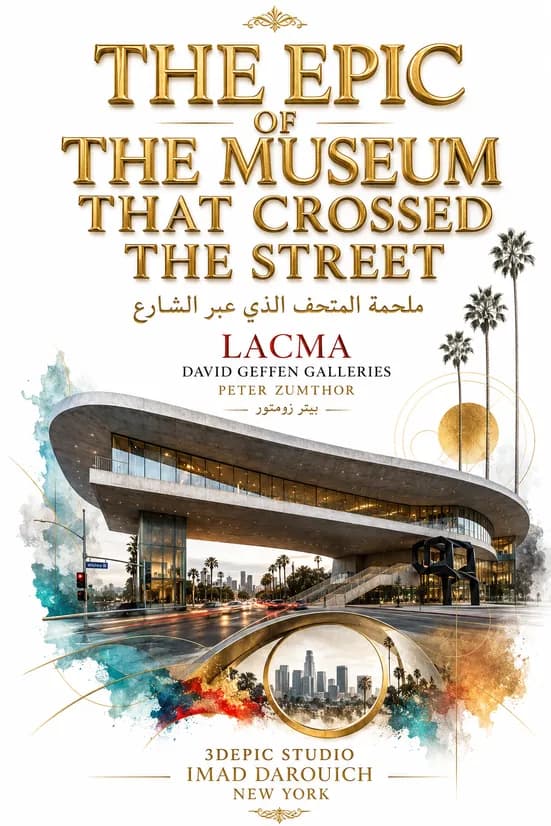
The David Geffen Galleries at the Los Angeles County Museum of Art (LACMA), designed by Peter Zumthor, are a single-level concrete and glass building that stretches across Wilshire Boulevard; they opened to members on April 19, 2026. Imad's epic walks its length in ten chapters, from the museum that refused to be a box to the shaded ground it gave back to the city.
Introduction
مقدمة
في لوس أنجلوس، المدينة التي صنعت صورًا أكثر مما صنعت ذكريات، ظهر مبنى أراد أن يغيّر معنى المتحف.In Los Angeles, the city that created more images than memories, a building appeared determined to change the meaning of the museum.
لم يقف المبنى بهدوء على قطعة أرض.The building did not quietly occupy a parcel of land.
بل امتدّ فوق المدينة، وعبر شارع ويلشير، كأن العمارة قررت أن تخطو خارج حدودها.Instead, it stretched across the city and crossed Wilshire Boulevard, as though architecture had decided to step beyond its boundaries.
إنها David Geffen Galleries، القلب الجديد للمجموعة الدائمة في متحف مقاطعة لوس أنجلوس للفنون، LACMA.These are the David Geffen Galleries, the new home of the permanent collection at the Los Angeles County Museum of Art, LACMA.
صممها المعماري السويسري بيتر زومتور، الحائز جائزة بريتزكر، بعد رحلة طويلة من التصميم والبناء والنقاش.They were designed by Swiss architect and Pritzker Prize laureate Peter Zumthor, following a long journey of design, construction, and debate.
وفي التاسع عشر من أبريل عام 2026، فُتحت أبوابها، وبدأ فصل جديد في تاريخ المتحف.On April 19, 2026, their doors opened, beginning a new chapter in the museum’s history.
لكن قصة هذا المبنى أكبر من تاريخ افتتاحه.Yet the story of this building is larger than its opening date.
إنها قصة سؤال:It is the story of a question:
هل يجب أن يكون المتحف صندوقًا يحتوي الفن؟Must a museum be a box that contains art?
أم يمكن أن يصبح هو نفسه رحلةً بين الفن والمدينة والضوء والإنسان؟Or can it become a journey between art, city, light, and humanity?
الفصل الأول، المتحف الذي رفض الصندوقChapter One, The Museum That Refused the Box
عرف القرن العشرون المتحف ككتلة واضحة.The twentieth century knew the museum as a clearly defined mass.جدران، مدخل، قاعات، ثم خروج.Walls, entrance, galleries, then exit.لكن زومتور بدأ من فكرة مختلفة.Zumthor began with a different idea.لم يرد بناء نصبٍ يعلن سلطته على الفن.He did not want to build a monument declaring authority over art.أراد مبنى منخفضًا، أفقيًا، يتحرك فوق الأرض كخط طويل.He wanted a low, horizontal building moving above the ground like a long line.لهذا ظهرت الكتلة كجسم عضوي هائل.Thus the structure emerged as an enormous organic body.لا واجهة أمامية تقليدية تحكمه.No conventional front façade governs it.ولا محور ملكي يفرض على الزائر كيف يدخل وكيف يرى.Nor does a royal axis dictate how the visitor must enter or see.هنا تبدأ فلسفة المبنى:Here the philosophy of the building begins:المتحف لا يأمر الإنسان.
The museum does not command the human being.بل يدعوه إلى الاكتشاف.It invites discovery.الفصل الثاني، تسعمئة قدم من المغامرةChapter Two, Nine Hundred Feet of Adventureيمتد المبنى الأفقي قرابة تسعمئة قدم.The horizontal building extends roughly nine hundred feet.وهذه المسافة ليست مجرد رقم هندسي.This distance is not merely an engineering figure.إنها إعلان بأن المتحف لم يعد غرفة كبيرة.It is a declaration that the museum is no longer simply a large room.إنه مسار.It is a path.إنه زمن يمشي فيه الإنسان.It is time through which the human being walks.الزائر لا يشعر أنه يصعد إلى قصر للفنون.The visitor does not feel that they are ascending into a palace of art.بل يشعر أنه يدخل جسدًا معماريًا ممتدًا.Instead, one feels as though entering an extended architectural body.
مرة يقترب من الزجاج.At times, one approaches glass.
ومرة يدخل عمق الخرسانة.At others, one enters the depth of concrete.
ومرة يلتقي الضوء.And sometimes, one encounters light.
وهكذا يصبح المشي جزءًا من المعرض.Walking itself becomes part of the exhibition.
الفصل الثالث، حين عبر المتحف شارع ويلشيرChapter Three, When the Museum Crossed Wilshire Boulevard
هنا تحدث اللحظة الأكثر جرأة.Here occurs the building’s boldest moment.
المتحف يعبر شارع ويلشير.The museum crosses Wilshire Boulevard.
الشارع لم يعد حدًا يفصل العمارة.The street is no longer a boundary dividing architecture.
أصبح جزءًا من تكوينها.It became part of its composition.
السيارات تمر في الأسفل.Cars move below.والفن يمتد في الأعلى.Art stretches above.وبين الاثنين تظهر صورة نادرة للمدينة الحديثة.Between them appears a rare image of the modern city.الحركة اليومية في الأسفل.Daily movement below.والذاكرة الإنسانية في الأعلى.Human memory above.كأن زومتور يقول:As though Zumthor were saying:المدينة ليست خارج المتحف.The city is not outside the museum.المدينة إحدى قاعاته الكبرى.The city is one of its great galleries.الفصل الرابع، الخرسانة التي أصبحت نحتًاChapter Four, When Concrete Became Sculptureالمادة الأساسية واضحة وقوية.
The primary material is clear and powerful.الخرسانة المعمارية.Architectural concrete.لكن الخرسانة هنا ليست مجرد هيكل يحمل المبنى.Yet here concrete is not merely a structure supporting the building.إنها جلد المبنى وذاكرته وثقله.It is the building’s skin, memory, and weight.الحواف الطويلة والمنحنية تجعل الكتلة أقرب إلى قطعة نحت ضخمة.The long, curving edges make the mass resemble a monumental sculpture.هناك شيء بدائي في الخرسانة.There is something primordial in concrete.وشيء مستقبلي في الشكل.And something futuristic in the form.وهنا يولد التناقض الجميل.Here a beautiful contradiction is born.مادة ثقيلة تصنع إحساسًا بالحركة.A heavy material creates a sense of movement.كتلة ضخمة تبدو وكأنها تطفو.A massive form seems to float.
والعمارة الناجحة تبدأ أحيانًا عندما تجعل المادة تقول عكس طبيعتها.Successful architecture sometimes begins when material is made to speak against its own nature.
الفصل الخامس، الضوء مادة البناء الخفيةChapter Five, Light, the Invisible Building Material
لوس أنجلوس مدينة الضوء.Los Angeles is a city of light.
وزومتور لم يحاول الهروب منه.Zumthor did not try to escape it.
الجدران الزجاجية الكبيرة تسمح بعلاقة مستمرة بين الداخل والخارج.Large glass walls sustain a continuous relationship between interior and exterior.
ترى المدينة من داخل الفن.You see the city from within art.
وترى شيئًا من حياة المتحف من الخارج.And from outside, you glimpse something of the museum’s life.
تتغير القاعات مع تغير ساعات النهار.The galleries change as the hours of daylight change.
فالضوء ليس مصباحًا إضافيًا.Light is not an additional lamp.
إنه مادة معمارية.It is an architectural material.
مادة لا وزن لها.A material without weight.
لكنها تستطيع تغيير وزن المكان كله.Yet it can transform the weight of an entire space.
الفصل السادس، متحف بلا طريق إجباريChapter Six, A Museum Without a Mandatory Path
أحد أكثر أفكار المشروع أهمية هو رفض المسار الواحد.One of the project’s most important ideas is its rejection of a single prescribed route.
لا يريد المبنى أن يقول:The building does not wish to say:
ابدأ هنا.Begin here.
ثم اذهب إلى هناك.Then go there.
ثم انتهِ هنا.Then finish here.
المجموعة تُعرض على مستوى رئيسي واحد، وتُتاح للزائر طرق متعددة للحركة والاكتشاف.The collection is presented on one principal level, allowing visitors multiple paths of movement and discovery.
إنها فكرة معمارية.It is an architectural idea.
لكنها أيضًا فكرة فلسفية.Yet it is also philosophical.
فالتاريخ ليس طريقًا مستقيمًا.History is not a straight road.
والفن ليس سلمًا نصعده من حضارة إلى أخرى.Art is not a staircase we climb from one civilization to another.
كل باب يمكن أن يصبح بداية.Every doorway can become a beginning.
وكل لوحة يمكن أن تغيّر اتجاه الرحلة.Every painting can change the direction of the journey.
الفصل السابع، حين جلست الحضارات على مستوى واحدChapter Seven, When Civilizations Sat on One Level
هنا تصبح العمارة موقفًا ثقافيًا.Here architecture becomes a cultural position.
تصميم المبنى الأفقي يسمح بعرض فنون مناطق وعصور متعددة دون أن تمنح العمارة طابقًا أعلى لحضارة وطابقًا أدنى لأخرى.The horizontal design allows art from different regions and eras to be presented without architecture assigning one civilization a higher floor and another a lower one.
المصري القديم يمكن أن يلتقي الحديث.Ancient Egypt can encounter the modern.
والآسيوي يمكن أن يتحاور مع الأوروبي.Asian art can converse with European art.
والأمريكي يمكن أن يقف قرب ذاكرة بعيدة عنه آلاف الأميال.American art can stand near a memory born thousands of miles away.
المحيط الهادئ والهندي والأطلسي والبحر المتوسط أصبحت أطرًا لخلق علاقات جديدة بين الأعمال.The Pacific, Indian, and Atlantic Oceans and the Mediterranean became frameworks for creating new relationships among works.
وهكذا لا يصبح المتحف كتاب تاريخ مغلقًا.The museum no longer becomes a closed history book.
بل محادثة مفتوحة بين البشر.It becomes an open conversation among human beings.
الفصل الثامن، ثلاثة أفدنة ونصف تحت الفنChapter Eight, Three and a Half Acres Beneath Art
حين ارتفع مستوى صالات العرض، حدث شيء مهم في الأسفل.When the gallery level rose, something important happened below.تحررت الأرض.The ground was liberated.نشأت نحو ثلاثة أفدنة ونصف من المساحات الخارجية العامة المظللة.About three and a half acres of shaded public outdoor space emerged.وهذه واحدة من أجمل مفارقات المشروع.This is one of the project’s most beautiful paradoxes.لكي يبني المتحف مساحة للفن، لم يلتهم الأرض.To create space for art, the museum did not simply consume the ground.بل أعاد جزءًا منها إلى الناس.It returned part of it to the people.هناك أعمال فنية.There are artworks.وهناك حدائق.There are gardens.وهناك ظل.There is shade.وهناك إنسان يستطيع أن يكون قريبًا من المتحف دون أن يدخل قاعة واحدة.
And there is a person who can be close to the museum without entering a single gallery.هنا تتحول العمارة من مبنى إلى فضاء مدني.Here architecture transforms from building into civic space.الفصل التاسع، ستة آلاف عام داخل جسد واحدChapter Nine, Six Thousand Years Within One Bodyتحتضن الصالات الجديدة رحلة فنية تمتد عبر نحو ستة آلاف عام من الإبداع الإنساني.The new galleries embrace an artistic journey spanning roughly six thousand years of human creativity.وتبلغ مساحة العرض في David Geffen Galleries نحو 110,000 قدم مربعة.The David Geffen Galleries contain approximately 110,000 square feet of exhibition space.لكن القيمة الحقيقية ليست في عدد الأقدام المربعة.Yet the true value does not lie in the number of square feet.بل في السؤال الذي يمكن لهذه المساحة أن تطرحه.It lies in the question this space can ask.ماذا يحدث حين تلتقي حضارات لم تلتقِ في التاريخ؟What happens when civilizations that never met in history encounter one another?ماذا يحدث عندما ننظر إلى الفن بلا حدود قومية ثابتة؟
What happens when we look at art without rigid national boundaries?هنا يصبح المتحف مختبرًا للذاكرة.Here the museum becomes a laboratory of memory.والعمارة هي الجهاز الذي يدير التجربة.Architecture is the instrument conducting the experiment.الفصل العاشر، هل المبنى نفسه عمل فني؟Chapter Ten, Is the Building Itself a Work of Art?هذا هو السؤال الأخير.This is the final question.عندما نقف أمام LACMA الجديد، أين ينتهي النحت وتبدأ العمارة؟When we stand before the new LACMA, where does sculpture end and architecture begin?هل السقف المنحني مجرد سقف؟Is the curving roof merely a roof?هل الخرسانة مجرد مادة؟Is concrete merely a material?هل الجسر فوق ويلشير مجرد حل وظيفي؟Is the bridge over Wilshire merely a functional solution?ربما تكمن قوة المشروع في أنه يرفض الإجابة السهلة.
Perhaps the project’s power lies in refusing an easy answer.زومتور لم يصمم صندوقًا جميلًا للفن.Zumthor did not design a beautiful box for art.لقد حاول أن يجعل الإنسان يشعر بالمكان قبل أن يفسره.He attempted to make the human being feel the place before explaining it.وهذه إحدى أعمق وظائف العمارة.This is one of architecture’s deepest functions.أن تسبق الكلمات.To precede words.أن تجعل الجسد يفهم قبل العقل.To make the body understand before the mind.وأن تجعل الإنسان يتوقف لحظة ويسأل:And to make a person stop for a moment and ask:ماذا فعل هذا المكان بي؟What has this place done to me?الخاتمة، حين أصبح المتحف مدينةConclusion, When the Museum Became a Cityفي التاسع عشر من أبريل 2026، افتُتحت David Geffen Galleries رسميًا.
On April 19, 2026, the David Geffen Galleries officially opened.لكن العمارة الحقيقية لا تبدأ يوم قص الشريط.But true architecture does not begin on ribbon-cutting day.تبدأ عندما يدخل أول إنسان.It begins when the first person enters.وعندما يجلس آخر في الظل تحت المبنى.When another sits in the shade beneath it.وعندما تعبر سيارة شارع ويلشير تحت الفن.When a car crosses Wilshire beneath art.وعندما يقف طفل أمام عمل عمره آلاف السنين.When a child stands before an artwork thousands of years old.عندها فقط يتحول الإسمنت إلى ذاكرة.Only then does concrete become memory.والزجاج إلى عين.Glass becomes an eye.والضوء إلى لغة.Light becomes a language.والمتحف إلى مدينة صغيرة داخل المدينة.And the museum becomes a small city within the city.
ربما لهذا لم يبنِ بيتر زومتور مبنى يطلب منا أن ننظر إليه فقط.Perhaps this is why Peter Zumthor did not build a structure that merely asks us to look at it.
لقد بنى سؤالًا طويلًا من الخرسانة والزجاج.He built a long question in concrete and glass.
سؤالًا يمتد تسعمئة قدم.A question extending nine hundred feet.
يعبر أحد أشهر شوارع لوس أنجلوس.Crossing one of Los Angeles’s most famous boulevards.
ويقول لكل من يمر تحته أو داخله:And saying to everyone who passes beneath or within it:
الفن لا يحتاج دائمًا إلى جدار يفصله عن الحياة.Art does not always need a wall separating it from life.
أحيانًا يكفي أن نعطيه جسرًا ليعبر إليها.Sometimes, we need only give it a bridge to cross into it.
Zumthor's care for stone and wood also runs through The Earth Has a Memory That Rises, his life is told in Peter Zumthor: The Epic of Material, Memory, and Silence, and another Los Angeles landmark is read in Walt Disney Concert Hall, Los Angeles: A Building That Became Music.
بقلم
Architect Imad Darouich
المهندس المعماري عماد درويش
مهندس معماري وكاتب ومؤسس 3DEPICS، يقيم في نيويورك. يكتب أدبًا ملحميًا يعبر الحدود واللغات والجغرافيا، حيث تلتقي الفلسفة بالعمارة، والروحانية بالتاريخ، والذاكرة بالخيال.