Who Can Afford to Live in Your Dream? An Imagined Meeting with Hassan Fathy
مَن يستطيع أن يسكن حلمك؟
A New York architect shows Hassan Fathy a beautiful house its owner cannot afford, and leaves with five notes and one question for the family.
By Architect Imad Darouich6 min read
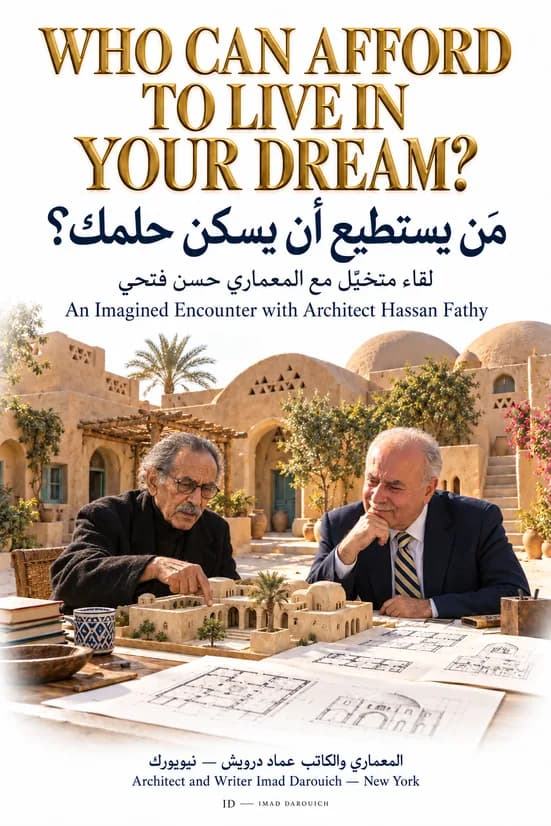
Hassan Fathy (1900 to 1989) was an Egyptian architect whose book Architecture for the Poor, published by the University of Chicago in 1973, tells how he built a village in mud brick with traditional masons. Imad's imagined meeting brings the ideas of Architecture for the Poor to a house on his own desk in New York: cost before the façade, shade before air conditioning, and the family before the architect's name.
A Note
تنويه
هذا لقاء متخيَّل بيني وبين المعماري حسن فتحي. الحوار من تأليفي؛ أمّا موضوعه فيستند إلى اهتمامه بالبناء بالمواد المحلية، والحرف التقليدية، والراحة المناخية، وإسكان محدودي الدخل.This is an imagined meeting between architect Hassan Fathy and me. The dialogue is my own; its subject draws on his concern for local materials, traditional craftsmanship, climatic comfort, and housing for people with limited incomes.
The Introduction
المقدّمة
كنت في مكتبي بنيويورك، أراجع تصميمًا لبيت.I was in my New York office, reviewing a house design.
الواجهة جميلة.The façade was beautiful.
لكنّ تقدير الكلفة أقلقني.But the cost estimate troubled me.
كلّ تعديلٍ جعل البيت أجمل.Every revision made the house more beautiful.
وأبعد عن قدرة صاحبه.And further beyond its owner’s means.
نظرت إلى الرسم.I looked at the drawing.
وسألت نفسي: لمن أصمّم؟And asked myself: Whom am I designing for?
في تلك الليلة، تخيّلت حسن فتحي يجلس أمامي.That night, I imagined Hassan Fathy sitting across from me.
لم أقدّم له صورة الواجهة.I did not show him the façade.
قدّمت له الكلفة.I showed him the cost.
The Meeting
اللقاء
قلت: يا أستاذ حسن، هذا بيتٌ جميل، لكن صاحبه قد لا يستطيع بناءه.I said, “Professor Fathy, this is a beautiful house, but its owner may be unable to build it.”
قال: ومتى عرفت ذلك؟He asked, “When did you discover that?”
قلت: بعد أن اكتمل التصميم.I said, “After the design was complete.”
قال: إذن عليك أن تعود إلى البداية.He said, “Then you must return to the beginning.”
لقد جعلت المال مشكلةً تأتي بعد العمارة.“You have treated money as a problem that comes after architecture.”
مع أنّه أحد شروطها الأولى.“Yet it is one of its first conditions.”
قلت: أخشى أن يصبح البيت فقيرًا في شكله.I said, “I fear the house will look impoverished.”
قال: ما الذي ستستغني عنه؟He asked, “What will you remove?”
قلت: بعض الكسوات المكلفة.I said, “Some expensive finishes.”
وبعض المساحات الزائدة.“And some unnecessary space.”
قال: وماذا ستحافظ عليه؟He asked, “And what will you preserve?”
قلت: الضوء. الهواء. الخصوصية. جودة التنفيذ.I said, “Light. Air. Privacy. Quality of construction.”
قال: ابدأ بهذه.He said, “Begin with those.”
صاحب البيت سيعيش فيه كلّ يوم.“Its owner will live in it every day.”
لن يعيش في صورة واجهته.“He will not live inside a photograph of its façade.”
فتحت المخطّط.I opened the plan.
قلت: من أين نبدأ؟I asked, “Where do we begin?”
قال: أين الشمس؟He asked, “Where is the sun?”
أشرت إلى الجهات.I pointed out the directions.
قال: وأين يجلس أهل البيت في أشدّ ساعات الحرّ؟He asked, “And where does the family sit during the hottest hours?”
نظرت إلى غرفةٍ واسعة تواجه شمس العصر.I looked at a large room facing the afternoon sun.
قلت: هنا.I said, “Here.”
قال: وكيف ستحميهم؟He asked, “How will you protect them?”
قلت: بالتكييف.I said, “With air conditioning.”
قال: افحص التصميم أولًا.He said, “Examine the design first.”
هل تستطيع تظليل النافذة؟“Can you shade the window?”
هل تحتاج إلى كلّ هذا الزجاج؟“Do you need all this glass?”
هل يمكن تغيير موضع الغرفة؟“Can the room be moved?”
التجهيزات تساعد البيت.“Equipment helps a house.”
لكن لا تجعلها تصلح كلّ خطأٍ في رسمه.“But do not make it correct every mistake in its drawing.”
قلت: وهل أبني بالطين كما فعلتَ؟I asked, “Should I build with earth as you did?”
قال: أين ستبني؟He asked, “Where will you build?”
قلت: لم أحسم الموقع بعد.I said, “I have not settled on a site yet.”
قال: إذن لا تحسم المادة.He said, “Then do not settle on the material.”
اعرف المناخ.“Understand the climate.”
والأرض.“The ground.”
وما تسمح به القوانين.“And what the regulations permit.”
ومَن يعرف تنفيذ هذا البناء وصيانته.“And who knows how to build and maintain it.”
لا تنقل الحلّ لأنك أحببت صورته.“Do not transplant a solution because you loved its appearance.”
افهم لماذا نجح في مكانه.“Understand why it worked where it belonged.”
ثم ابحث عمّا يصلح لمكانك.“Then seek what suits your own place.”
قلت: لكنّ الناس قد يرفضون المادة المحلية.I said, “But people may reject a local material.”
قد يرونها علامة فقر.“They may see it as a sign of poverty.”
قال: هل سألتهم؟He asked, “Have you asked them?”
قلت: أتوقّع ذلك.I said, “I expect that.”
قال: التوقّع لا يكفي.He said, “Expectation is not enough.”
قد يقلقهم المطر.“They may worry about rain.”
أو الصيانة.“Or maintenance.”
أو أن تفرض عليهم بيتًا لا يريدونه.“Or that you will impose a house they do not want.”
اسمع اعتراضهم كاملًا.“Listen to their entire objection.”
ثم قدّم دليلًا وحلًّا.“Then offer evidence and a solution.”
لا تطلب منهم أن يسكنوا اقتناعك أنت.“Do not ask them to live inside your own conviction.”
قلت: أنا المعماري. أليس عليّ أن أعرف ما يحتاجونه؟I said, “I am the architect. Should I not know what they need?”
قال: تعرف كيف تصمّم.He said, “You know how to design.”
لكنّهم يعرفون حياتهم.“But they know their lives.”
مَن يعمل في البيت؟“Who works at home?”
مَن يحتاج غرفةً هادئة؟“Who needs a quiet room?”
هل يعيش معهم والدٌ مسنّ؟“Does an elderly parent live with them?”
كيف يستقبلون الضيوف؟“How do they receive guests?”
وأين يضعون أشياءهم؟“And where do they keep their belongings?”
قلت: هذه تفاصيل صغيرة.I said, “These are small details.”
قال: هذه هي الأيام التي سيسكنونها.He said, “These are the days they will inhabit.”
أشرت إلى درجٍ منحني في الرسم.I pointed to a curved staircase in the drawing.
قلت: هذا أجمل جزءٍ في المشروع.I said, “This is the most beautiful part of the project.”
قال: وهل يستطيع الوالد المسنّ استخدامه؟He asked, “Can the elderly father use it?”
قلت: بصعوبة.I said, “With difficulty.”
قال: وأين غرفته؟He asked, “And where is his room?”
قلت: في الطابق الأعلى.I said, “Upstairs.”
لم يقل شيئًا.He said nothing.
سحبت الورقة نحوي.I pulled the sheet towards me.
وبدأت أبحث له عن غرفةٍ في الطابق الأرضي.And began looking for a ground-floor room for him.
للمرّة الأولى، رأيت الرجل في المخطّط.For the first time, I saw the man in the plan.
كنت أرى الدرج قبله.Before that, I had seen only the staircase.
قلت: وكيف أُبقي للمشروع شخصيّته؟I asked, “How do I preserve the project’s character?”
قال: ماذا تقصد بشخصيّته؟He asked, “What do you mean by its character?”
قلت: ما يجعل الناس يعرفون أنّني صمّمته.I said, “What makes people recognise that I designed it.”
نظر إلى اسمي في أسفل اللوحة.He looked at my name at the bottom of the sheet.
ثم قال: اسمك موجود.Then he said, “Your name is already there.”
أين صاحب البيت؟“Where is the owner?”
نظرت إلى الغرف.I looked at the rooms.
كانت مرتّبة.They were orderly.
لكنني لم أسأله أين يحبّ أن يجلس.But I had not asked him where he liked to sit.
ولا زوجته عمّا يتعبها في المطبخ.Nor his wife what made working in the kitchen difficult.
ولا أولاده أين يدرسون.Nor his children where they studied.
كنت أعرف شكل البيت.I knew the shape of the house.
وأعرف أهله أقلّ مما ينبغي.And knew too little about its people.
قلت: أخشى أن أُعيد العمل كلّه.I said, “I fear I will have to redo everything.”
قال: الآن تعيد خطوطًا.He said, “Now you would be changing lines.”
بعد البناء، سيعيدون حياتهم حول أخطائك.“After construction, they would be rearranging their lives around your mistakes.”
وضعت قلمي على الطاولة.I set my pencil on the table.
لم تكن الجملة قاسية.The sentence was not cruel.
كانت دقيقة.It was precise.
The Ending
الخاتمة
انتهى اللقاء المتخيَّل.The imagined meeting ended.
وبقي أمامي عملٌ حقيقي.Real work remained before me.
كتبت خمس ملاحظات على الرسم:I wrote five notes on the drawing:
الميزانية قبل اعتماد التصميم.Establish the budget before approving the design.
دراسة الشمس والظلّ.Study sun and shade.
غرفة مناسبة للوالد المسنّ.Provide a suitable room for the elderly father.
مراجعة المواد وكلفة صيانتها.Review materials and their maintenance costs.
جلسة مع الأسرة قبل الرسم التالي.Meet the family before making the next drawing.
ثم نظرت إلى الواجهة الجميلة.Then I looked at the beautiful façade.
لم أمزّقها.I did not tear it up.
لكنني توقّفت عن اعتبارها جوابًا كاملًا.But I stopped treating it as a complete answer.
وكان أوّل سؤالٍ سأطرحه على صاحب البيت:And the first question I would ask the owner was:
كيف تريد أن تعيش هنا؟“How do you want to live here?”
The village behind the book is told in The Village That Refused to Inhabit the Plan, and Tatiana Bilbao: When Housing Becomes a Right, Not a Privilege carries the question into our time. Charles Correa: The Architect Who Returned Architecture to the Earth follows an Indian architect known for his care for the urban poor.
Written by
Architect Imad Darouich
المهندس المعماري عماد درويش
Architect, author and founder of 3DEPICS, based in New York. He writes epic literature that crosses borders, languages and geographies, where philosophy meets architecture, spirituality meets history and memory meets imagination.