Who Does the City Belong To? An Encounter with Jane Jacobs
لمن تنتمي المدينة؟ لقاء مع جين جاكوبس
An architect admiring a rendering of glass towers meets Jane Jacobs, who asks where the old man on the real sidewalk is supposed to sit.
بقلم المهندس المعماري عماد درويش6 دقائق قراءة
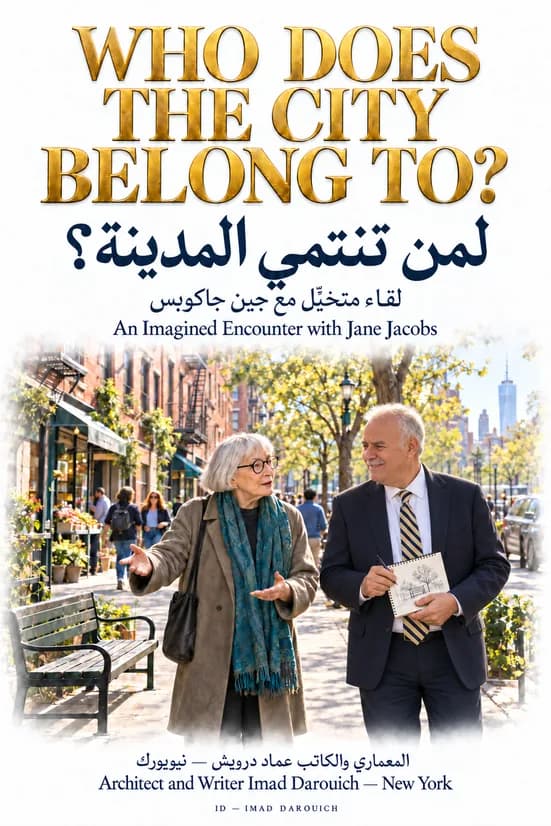
Jane Jacobs (1916-2006) was an American-Canadian writer and activist whose book The Death and Life of Great American Cities (1961) argued that urban renewal did not respect the needs of city dwellers; she fought Robert Moses' plans for her own Greenwich Village. In Imad's imagined encounter, a walk past a New York building site becomes a lesson in Jane Jacobs urban planning: benches, crossing times, small shops and rents.
A Note
تنويه
جين جاكوبس كاتبة ومفكّرة في المدن، وليست معمارية. اخترتُها لهذا اللقاء لأنها تضع أمام المعماري سؤالًا حقيقيًا: ماذا يفعل تصميمه بحياة الناس؟ الحوار الآتي متخيَّل، وليس اقتباسًا من أقوالها.Jane Jacobs was a writer and urban thinker, rather than an architect. I chose her for this encounter because she confronts architects with a real question: What does their design do to people’s lives? The following dialogue is imagined, not quoted from her.
The Introduction
المقدّمة
كنت أمشي في نيويورك، أمام موقع بناءٍ كبير.I was walking in New York, past a large construction site.
على السياج صورةٌ للمشروع المقبل.A picture of the future development hung on the fence.
أبراجٌ لامعة.Gleaming towers.
أشجارٌ مرتّبة.Neatly arranged trees.
وأشخاصٌ صغار، لا يبدو أن أحدًا منهم متعب.And tiny people, none of whom seemed tired.
نظرت إلى الرصيف الحقيقي.I looked at the real sidewalk.
عاملٌ يأكل واقفًا.A worker eating on his feet.
امرأةٌ تدفع عربة طفل.A woman pushing a stroller.
ورجلٌ مسنّ يبحث عن مكانٍ يجلس فيه.And an elderly man searching for somewhere to sit.
قلت بصوتٍ خافت: المدينة في الصورة أجمل.I murmured, “The city in the picture is more beautiful.”
سمعت امرأةً بجانبي تقول:I heard a woman beside me say:
وأين سيجلس هذا الرجل فيها؟“And where will that man sit in it?”
التفتُّ.I turned.
وفي هذا اللقاء الذي صنعه خيالي، كانت جين جاكوبس.In this encounter created by my imagination, it was Jane Jacobs.
The Meeting
اللقاء
قلت: أنا معماري. كنت أتأمّل المشروع.I said, “I am an architect. I was studying the project.”
قالت: وأنا كنت أتأمّل الرصيف.She said, “And I was studying the sidewalk.”
قلت: ألا تعجبك الأبراج؟I asked, “Do you dislike the towers?”
قالت: لم أسألك عن ارتفاعها.She said, “I did not ask about their height.”
سألتك عن الرجل الذي لا يجد مقعدًا.“I asked about the man who cannot find a seat.”
نظرت إليه مرّةً أخرى.I looked at him again.
كان يستند إلى السياج.He was leaning against the fence.
قلت: يمكن إضافة مقاعد.I said, “Benches could be added.”
قالت: جيد.She said, “Good.”
ابدأ بإنسانٍ تستطيع رؤيته.“Begin with a person you can see.”
مشينا حتى واجهة متجرٍ مغلق.We walked to a shuttered storefront.
قلت: ربما سيأتي مكانه متجرٌ أجمل.I said, “Perhaps a more beautiful shop will replace it.”
قالت: ماذا كان يبيع؟She asked, “What did it sell?”
قلت: لا أعرف.I said, “I do not know.”
قالت: ومَن كان يشتري منه؟She asked, “And who shopped there?”
قلت: لا أعرف.I said, “I do not know.”
قالت: إذن نحتاج إلى معرفةٍ أكثر قبل أن نسمّي اختفاءه تحسينًا.She said, “Then we need to know more before calling its disappearance an improvement.”
تخيّلتُ بقالةً صغيرة.I imagined a small grocery store.
يشتري منها جارٌ مسنّ خبزه.An elderly neighbour buying bread there.
ويستطيع الوصول إليها مشيًا.And being able to reach it on foot.
ثم تخيّلت واجهةً أفخم.Then I imagined a grander storefront.
لا يبيع صاحبها شيئًا يحتاجه ذلك الرجل.Its owner selling nothing that the man needed.
بقي الشارع في مكانه.The street remained in place.
لكنّ يوم الرجل صار أصعب.But the man’s day had become harder.
قلت: المدينة تحتاج إلى التجديد.I said, “The city needs renewal.”
قالت: بالتأكيد.She said, “Certainly.”
لكن حدّد ما الذي يحتاج إلى إصلاح.“But identify what needs fixing.”
هل المبنى خطر؟“Is the building unsafe?”
هل الشقق رطبة؟“Are the apartments damp?”
هل الرصيف ضيّق؟“Is the sidewalk narrow?”
أم أنّ المكان لا يعجبك من نافذة السيارة؟“Or do you simply dislike how the place looks from a car window?”
قلت: أحيانًا نبدأ بالصورة العامّة.I said, “Sometimes we begin with the overall image.”
قالت: اقترب حتى ترى التفاصيل.She said, “Come closer until you can see the details.”
قد تجد مشكلةً لم تظهر في الصورة.“You may find a problem the image did not reveal.”
وقد تجد حياةً لم يحسب لها التصميم حسابًا.“And you may find a life the design failed to consider.”
توقّفنا عند تقاطع.We stopped at an intersection.
انتظر الرجل المسنّ الضوء.The elderly man waited for the signal.
وحين بدأ العبور، تغيّر الضوء قبل أن يبلغ الطرف الآخر.When he began crossing, the signal changed before he reached the other side.
أسرعتُ نحوه.I hurried towards him.
وصلنا إلى الرصيف معًا.We reached the sidewalk together.
قلت: يحتاج هذا التقاطع إلى وقت عبورٍ أطول.I said, “This intersection needs a longer crossing time.”
قالت: الآن تتكلّم عن مشكلةٍ محدّدة.She said, “Now you are speaking about a specific problem.”
قلت: ليست مشكلةً معمارية وحدها.I said, “It is not solely an architectural problem.”
قالت: صحيح.She said, “Correct.”
ولهذا لا تُبنى المدينة بقرار شخصٍ واحد.“That is why a city cannot be built by one person’s decision.”
تحتاج إلى من يصمّم.“It needs designers.”
ومن يدير الشارع.“Those who manage the street.”
ومن يعرفه لأنه يعبره كلّ يوم.“And those who know it because they cross it every day.”
قلت: لكن سماع الجميع قد يؤخّر المشروع.I said, “But hearing everyone may delay the project.”
قالت: وقد يكشف خطأً قبل أن تصبّه في الخرسانة.She said, “And it may reveal a mistake before you pour it into concrete.”
قلت: والناس قد يختلفون.I said, “And people may disagree.”
قالت: سيختلفون.She said, “They will.”
صاحب المطعم يريد مكانًا للتوصيل.“The restaurant owner wants space for deliveries.”
والأمّ تريد رصيفًا تستطيع عبوره بعربة طفلها.“The mother wants a sidewalk she can navigate with her stroller.”
والجار يريد أن ينام.“The neighbour wants to sleep.”
لن يحلّ الرسم الجميل هذا الخلاف وحده.“A beautiful drawing will not resolve that conflict on its own.”
عليك أن تفهمه.“You have to understand it.”
ثم تجعل قراراتك واضحةً وقابلةً للنقاش.“Then make your decisions clear and open to discussion.”
قلت: وماذا عن المباني القديمة؟I asked, “And what about old buildings?”
هل نحافظ عليها جميعًا؟“Should we preserve them all?”
قالت: افحصها.She said, “Examine them.”
بعضها يحتاج إلى إصلاحٍ عميق.“Some need extensive repair.”
وبعضها لا يصلح للاستعمال المطلوب.“Some cannot accommodate the intended use.”
لكن اسأل أيضًا: مَن يستطيع دفع إيجار البديل؟“But also ask: Who can afford the replacement’s rent?”
قلت: تقصدين أنّ كلفة البناء تغيّر مَن يبقى؟I asked, “You mean construction costs change who can remain?”
قالت: ضع هذا السؤال في دراسة المشروع.She said, “Put that question into the project study.”
إذا صار المكان أجمل، لكن أهله لم يعودوا قادرين على العيش فيه، فعليك أن تحسب ما خسرته المدينة أيضًا.“If the place becomes more beautiful, but its residents can no longer afford to live there, you must also account for what the city has lost.”
عدنا إلى صورة المشروع.We returned to the project image.
هذه المرّة، رأيت ما لم أبحث عنه أولًا.This time, I noticed what I had not looked for before.
أين يدخل عامل التوصيل؟Where does the delivery worker enter?
أين ينتظر؟Where does he wait?
هل هناك طريقٌ واضح للكرسي المتحرّك؟Is there a clear route for a wheelchair?
هل يجد الطفل ظلًّا؟Can a child find shade?
وهل يستطيع شخصٌ أن يجلس دون أن يشتري شيئًا؟And can someone sit without buying anything?
قلت: هذه الأسئلة ستغيّر الطابق الأرضي كلّه.I said, “These questions would change the entire ground floor.”
قالت: وربما تجعل البرج جارًا أفضل.She said, “And perhaps make the tower a better neighbour.”
قلت: اعتدتُ أن أنظر إلى المبنى من بعيد.I said, “I am used to looking at a building from a distance.”
قالت: جرّب أن تصل إليه حاملًا أكياسًا.She said, “Try approaching it while carrying bags.”
أو وأنت متعب.“Or when you are tired.”
أو حين تمطر.“Or when it rains.”
ثم افتح الباب.“Then open the door.”
ستعرف أشياء لا تخبرك بها الواجهة.“You will discover things the façade cannot tell you.”
نظرتُ إلى مدخلٍ قريب.I looked at a nearby entrance.
ثلاث درجاتٍ رخامية.Three marble steps.
جميلةٌ في الصورة.Beautiful in a photograph.
وصعبةٌ على الرجل الذي ساعدتُه.And difficult for the man I had helped.
The Ending
الخاتمة
حين انتهى اللقاء المتخيَّل، لم أحمل رسمًا جديدًا.When the imagined meeting ended, I carried no new drawing.
حملت دفترًا صغيرًا.I carried a small notebook.
في صفحته الأولى كتبت:On its first page, I wrote:
راقب المكان قبل أن تغيّره.Observe the place before changing it.
اسأل مَن يستخدمه.Ask those who use it.
احسب كلفة القرار على حياتهم.Account for the cost of your decision to their lives.
وفي الصفحة الثانية، رسمت مقعدًا.On the second page, I drew a bench.
بجانبه مساحةٌ لكرسيٍّ متحرّك.Beside it, space for a wheelchair.
وفوقه ظلّ.Above it, shade.
ثم رفعت رأسي إلى البرج.Then I looked up at the tower.
كان ما يزال عاليًا.It was still tall.
لكنّني، أخيرًا، بدأت التصميم من الأرض.But at last, I had begun designing from the ground.
Who can still live in a district once it succeeds is the question of Meatpacking & the High Line: When the City Became an Open Text, and handing city design to residents is the subject of Yona Friedman: The City Written by Its Inhabitants. More cities are in the buildings and cities collection.
بقلم
Architect Imad Darouich
المهندس المعماري عماد درويش
مهندس معماري وكاتب ومؤسس 3DEPICS، يقيم في نيويورك. يكتب أدبًا ملحميًا يعبر الحدود واللغات والجغرافيا، حيث تلتقي الفلسفة بالعمارة، والروحانية بالتاريخ، والذاكرة بالخيال.