The City That Banned the Scream: Edvard Munch and Käthe Kollwitz
المدينةُ التي منعتِ الصرخة
Officials tape the mouth of a painted scream and file the weeping inside the walls as an insulation fault, until an architect asks for the doors to open.
بقلم المهندس المعماري عماد درويش4 دقائق قراءة
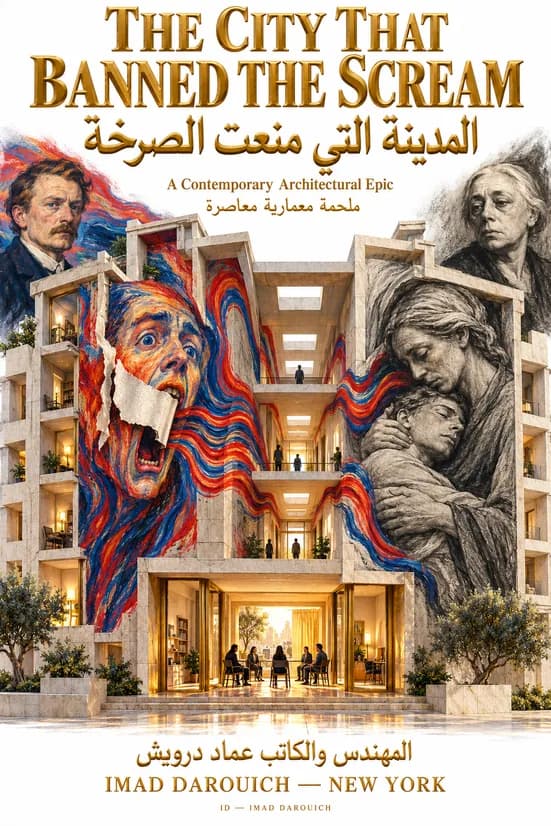
Edvard Munch (1863-1944) was the Norwegian painter of The Scream (1893), and Käthe Kollwitz (1867-1945) was a German artist whose prints and drawings show the effects of poverty, hunger and war; she lost her younger son, Peter, in the First World War. Imad's Kafkaesque story puts Edvard Munch and Käthe Kollwitz in one apartment block, where an architect sent to fix the insulation listens to the walls instead.
A Note
تنويه
حكاية كافكاوية متخيّلة تجمع إدفارد مونك وكاثه كولفيتس؛ اللقاء والحوار والأحداث من الخيال.An imagined Kafkaesque story bringing together Edvard Munch and Käthe Kollwitz; the encounter, dialogue, and events are fictional.
The Introduction
المقدمة
استدعوني لفحص مبنى يشكو سكّانه من صوتٍ داخل الجدران.I was summoned to inspect a building whose residents reported a sound inside its walls.
حملتُ أدواتي وصعدتُ.I took my tools and went upstairs.
كان الصوتُ يشبه بكاءً يحاول ألّا يُسمَع.The sound resembled weeping trying not to be heard.
وضعتُ يدي على الجدار.I placed my hand against the wall.
ارتجف.It trembled.
في تقرير الإدارة، كانت الشكوى مسجّلةً تحت عنوان: «خللٌ في العزل».In the management report, the complaint was filed under: “Insulation failure.”
The Epic
الملحمة
طلب الموظّف أن أُغلّف الجدران بطبقةٍ إضافية.The official asked me to cover the walls with another layer.
سألته: هل دخلتَ الشقق؟I asked: Have you entered the apartments?
قال: لا ضرورة. لدينا قياسُ الصوت.He said: No need. We have measured the sound.
طرقتُ الباب الأوّل.I knocked on the first door.
فتح إدفارد مونك.Edvard Munch opened it.
خلفه لوحةٌ لوجهٍ يفتح فمه، وسماءٌ حمراء تنحني فوقه.Behind him stood a painting of a face with its mouth open, a red sky bending above it.
لكن الغرفةَ كانت صامتة.Yet the room was silent.
قلتُ: من أين يأتي الصوت؟I asked: Where does the sound come from?
أشار إلى اللوحة.He pointed to the painting.
كان الموظّفون قد غطّوا فمَ الوجه بشريطٍ أبيض.The officials had covered the figure’s mouth with white tape.
قال مونك: منذ أغلقوه، صارت الجدرانُ تصرخ.Munch said: Since they sealed it, the walls have been screaming.
اقتربتُ.I stepped closer.
تحت الشريط، تحرّك الحجرُ كأنّه صدرٌ يختنق.Beneath the tape, the stone moved like a chest struggling for breath.
نزعتُ طرف الشريط.I peeled back its edge.
اندفع الصوتُ إلى الممرّ.The sound rushed into the corridor.
فتح الموظّف دفتر المخالفات.The official opened his violation ledger.
قال: تجاوزتم الحدَّ المسموح.He said: You have exceeded the permitted limit.
قلتُ: حدَّ ماذا؟I asked: The limit of what?
قال: التعبير عن الضرر.He said: The expression of harm.
في نهاية الممرّ، انفتح بابٌ آخر.At the end of the corridor, another door opened.
كانت كاثه كولفيتس جالسةً أمام رسمٍ لأمّ تحتضن جسدَ ابنها.Käthe Kollwitz sat before a drawing of a mother holding her son’s body.
لم يخرج من الغرفة صوت.No sound came from the room.
دخل الموظّف، ونظر إلى الرسم.The official entered and looked at the drawing.
قال: هكذا أفضل.He said: This is better.
رفعت كولفيتس عينيها إليه.Kollwitz raised her eyes toward him.
ثم أشارت إلى ذراعي الأمّ.Then she pointed to the mother’s arms.
كانتا مشدودتين حول الابن، كأنّهما آخرُ جدارين يحميانه.They were clasped around her son as though they were the last two walls protecting him.
قالت: اقترب.She said: Come closer.
اقترب.He came closer.
قالت: ضع يدك هنا.She said: Place your hand here.
لم يفعل.He did not.
كنتُ أنا مَن مدَّ يده.I was the one who reached out.
لامستُ الورقة.I touched the paper.
شعرتُ بثقلٍ لم أعرف أين أضعه.I felt a weight I did not know where to put.
أنا معماري. حسبتُ أحمالَ السقوف كثيرًا.I am an architect. I have calculated the loads of roofs many times.
لكنني وقفتُ عاجزًا أمام ما تحمله ذراعان.Yet I stood helpless before what two arms could carry.
قالت كولفيتس: اكتب هذا في تقريرك.Kollwitz said: Put this in your report.
The Turning
التحوّل
عدتُ إلى الجدار.I returned to the wall.
لم أطلب موادَّ للعزل.I did not request insulation materials.
طلبتُ فتح الأبواب.I asked for the doors to be opened.
خرج السكّانُ واحدًا بعد آخر.The residents emerged one after another.
رجلٌ لم ينم منذ أيام.A man who had not slept for days.
امرأةٌ تحمل رسالةً لم تستطع قراءتها وحدها.A woman carrying a letter she had been unable to read alone.
طفلٌ يسأل لماذا يتكلّم الجميعُ همسًا.A child asking why everyone spoke in whispers.
جلسوا في الممرّ.They sat in the corridor.
بدأ الرجلُ بالكلام.The man began to speak.
وقرأت المرأةُ رسالتها.The woman read her letter.
وبكى الطفلُ حين فهم.And the child cried when he understood.
راقبتُ الجدار.I watched the wall.
كان ارتجافُه يهدأ.Its trembling was easing.
للمرة الأولى، وجدت الأصواتُ مَن يحملها خارج الحجر.For the first time, the voices found someone to carry them beyond the stone.
The Ending
الخاتمة
في المساء، كتبتُ تقريري.That evening, I wrote my report.
«الجدرانُ سليمة.“The walls are sound.
الغرفُ ضيّقةٌ على ما يخفيه سكّانها.The rooms are too small for what their inhabitants conceal.
يُوصى بتحويل الطابق الأرضي إلى غرفةٍ مشتركة، فيها مقاعدُ تتواجه، وبابٌ يبقى مفتوحًا».It is recommended that the ground floor become a shared room, with seats facing one another and a door that remains open.”
رفض الموظّف التقرير.The official rejected the report.
قال: المطلوبُ معالجةُ الصوت.He said: You were asked to address the sound.
نظرتُ إلى لوحة مونك، وقد انكشف فمُها.I looked at Munch’s painting, its mouth uncovered.
ثم إلى أمّ كولفيتس، وما زالت تحتضن ابنها.Then at Kollwitz’s mother, still holding her son.
يا ربّ، أعنّا على سماع الوجع قبل أن نتعلّم إسكاتَه.O Lord, help us hear suffering before we learn to silence it.
أخذتُ نسخةً من التقرير إلى السكّان.I took a copy of the report to the residents.
وفي الصباح، نزل أحدهم بكرسيّ.The next morning, one of them came downstairs with a chair.
ثم جاءت امرأةٌ بكرسيٍّ ثانٍ.Then a woman came with a second chair.
عند الظهر، امتلأت الغرفة.By noon, the room was full.
وفي الأعلى، سكت الجدار.Upstairs, the wall fell silent.
Imad reads Munch's best-known painting on its own in Munch's The Scream: A Bridge at the Edge of the Soul, and pain carried in a woman's body is the subject of Frida Kahlo: When the Body Became a House That Refused to Collapse. A clerk tries to stamp out sunlight in An Application to License the Sun.
بقلم
Architect Imad Darouich
المهندس المعماري عماد درويش
مهندس معماري وكاتب ومؤسس 3DEPICS، يقيم في نيويورك. يكتب أدبًا ملحميًا يعبر الحدود واللغات والجغرافيا، حيث تلتقي الفلسفة بالعمارة، والروحانية بالتاريخ، والذاكرة بالخيال.