 3DEPICS
The Epic of Umar ibn Al-Khattab
ملحمة عمر بن الخطاب
He took the leadership, but his heart never sat on a throne: a short epic of Umar and his fear of injustice.
By Architect Imad DarouichUpdated 2 min read
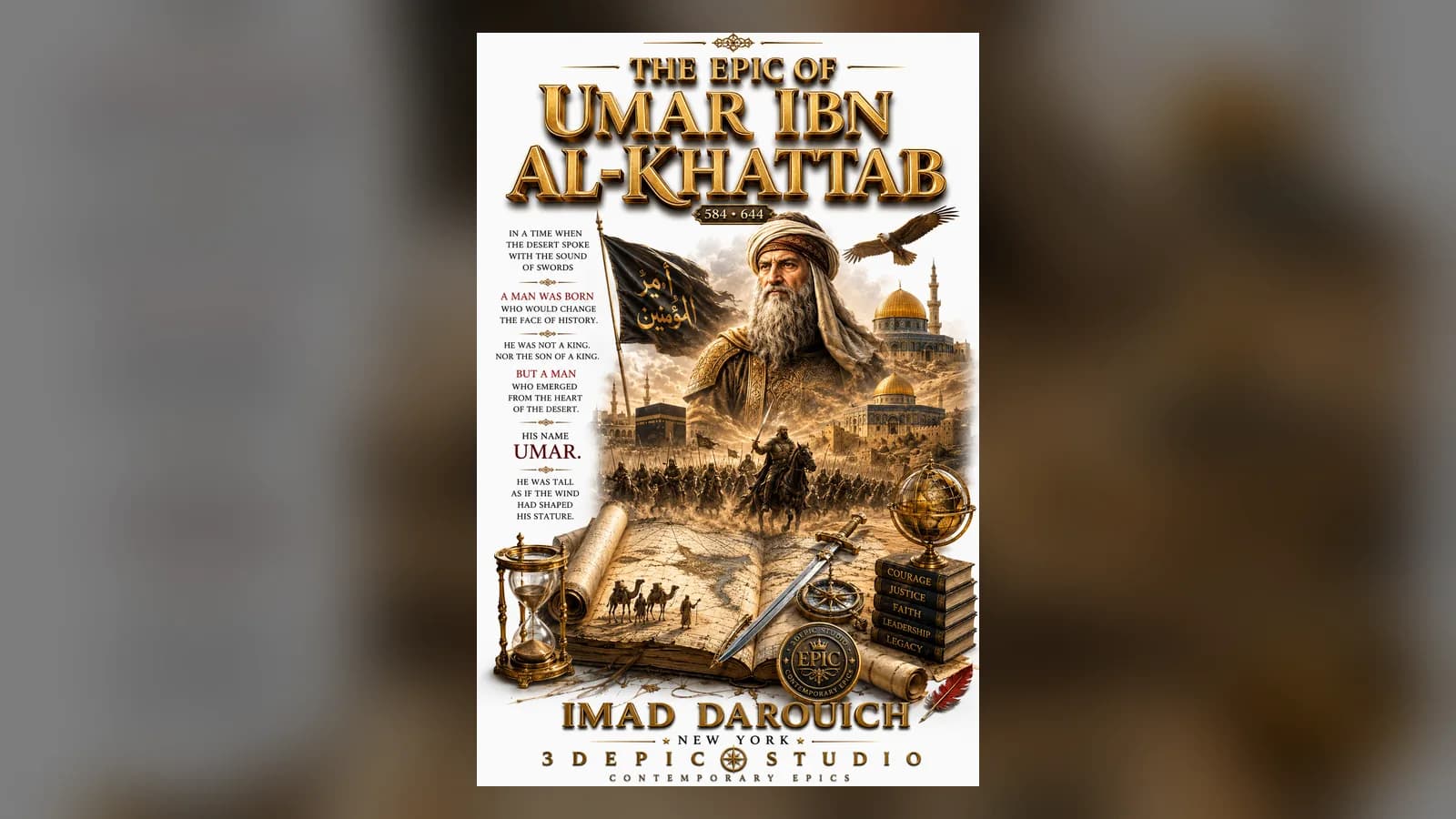
This Umar ibn Al-Khattab poem follows a man born in a desert that spoke with swords, hard as rock in his youth, until words from the Qur'an broke something inside him. After the Prophet's death he carries the nation without sitting on a throne, walks the night alone listening for hungry children, fears for a mule stumbling in Iraq, and becomes a scale of justice.
في زمنٍ كانت فيه الصحراء تتكلم بصوت السيوفIn a time when the desert spoke with the sound of swords
وُلد رجل سيغيّر وجه التاريخ.A man was born who would change the face of history.
لم يكن ملكًا.He was not a king.
ولا ابن ملك.Nor the son of a king.
بل رجلًاBut a man
خرج من قلب الصحراء.Who emerged from the heart of the desert.
اسمهHis name
عمر.Umar.
كان طويل القامةHe was tall
كأن الريح صنعت قامته.As if the wind had shaped his stature.
وقوي الصوتHis voice was powerful
كأن الصحراء تسكن في صدره.As if the desert lived within his chest.
في شبابهIn his youth
كان شديدًا.He was fierce.
شديدًا كالصخر.As hard as rock.
حتى جاء يومUntil one day
غيّر كل شيء.Everything changed.
يوم سمع كلماتThe day he heard words
لم تكن مثل كلام البشر.Unlike the speech of men.
كلماتWords
من القرآن.From the Qur’an.
في تلك اللحظةIn that moment
انكسر شيء في داخله.Something inside him broke.
وُلِد عمر جديد.A new Umar was born.
عمرUmar
لم يعد يقاتل الحقيقة.No longer fought the truth.
بل صارBut became
حارسها.Its guardian.
مرت السنوات.Years passed.
ومات النبي.The Prophet passed away.
وبقيت الأمةAnd the nation remained
تبحث عن رجلSearching for a man
يحمل ثقلها.To carry its weight.
فكان عمر.And it was Umar.
جلس على الحكمHe took the leadership
لكن قلبهYet his heart
لم يجلس على العرش.Never sat upon a throne.
كان يمشي في الليلHe walked in the night
وحده.Alone.
يسمع بكاء الأطفال.Hearing the cries of children.
ويقول جملةAnd he said a sentence
لم يقلها ملك قبله.No king had said before.
لو عثرت بغلة في العراقIf a mule stumbled in Iraq
لسألني الله عنهاGod would ask me about it
يا عمر.O Umar.
لم يكن يخاف الجيوش.He did not fear armies.
بل كان يخافBut he feared
العدل.Justice.
فتح المدنHe opened cities
لكن قلبهBut his heart
بقي بسيطًا.Remained simple.
كان ينامHe slept
تحت شجرة.Under a tree.
لا حراس حوله.With no guards around him.
فقال أحدهمAnd someone said
جملة خالدة:A timeless sentence:
حكمت فعدلت فأمنت فنمت.You ruled with justice, so you were safe and slept.
وفي صباحٍ هادئAnd on a quiet morning
دخل رجلA man entered
يحمل خنجرًا.Carrying a dagger.
وفي لحظةIn a moment
سقط عمر.Umar fell.
لكن التاريخBut history
لم يسقط معه.Did not fall with him.
لأن بعض الرجالFor some men
حين يموتونWhen they die
يصبحونThey become
فكرة.An idea.
وعمرAnd Umar
لم يكن مجرد رجل.Was never just a man.
كان ميزانًا.He was a scale.
ميزانA scale
يقيس العدل في التاريخ.Measuring justice in history.
بقلم المهندس المعماري عماد درويشBy Architect Imad Darouich · New York
For more lives from the dawn of Islam, read Muhammad: The Human Prophet Who Built a Nation and The Epic of Imam Ali ibn Abi Talib's Diwan, both in the faith and spirit collection.

Written by
بقلم المهندس المعماري عماد درويش
Architect and author based in New York. He writes contemporary epics: long-form books about architects, buildings, cities and faith, in Arabic and English.