Suleymaniye Tekkiye Poem: Sinan's Courtyard in Damascus
التكية السليمانية في دمشق
Imad's poem for the Ottoman complex on the Barada, where striped arches and courtyard fountains turn stone into prayer.
By Architect Imad Darouich2 min read
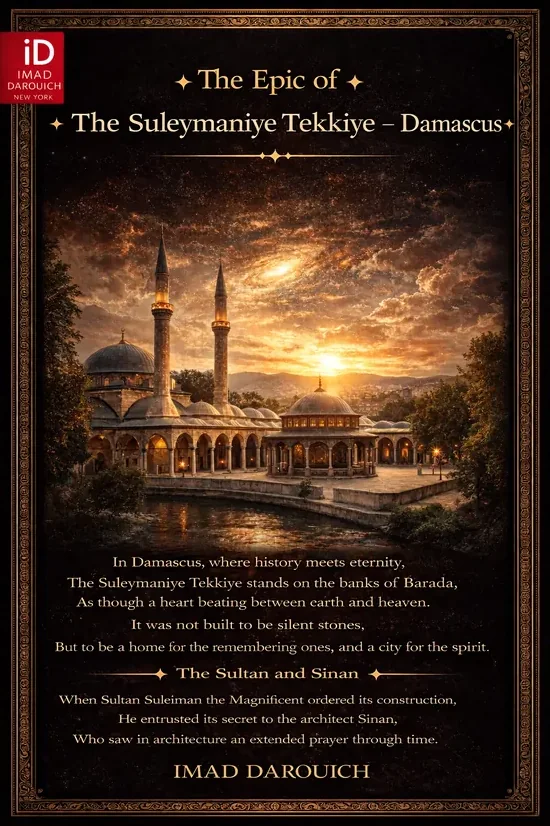
Imad wrote this Suleymaniye Tekkiye poem for the Ottoman complex on the right bank of the Barada River in Damascus. Commissioned by Sultan Suleiman the Magnificent, its western building was raised between 1554 and 1559 to plans by Mimar Sinan, with walls of alternating light and dark stone. The poem moves through the arches, the fountains and the columns to the meeting of Damascus and Anatolia.
في دمشق، حيث يلتقي التاريخ بالخلود،In Damascus, where history meets eternity,
تقف التكية السليمانية على ضفاف بردى،The Suleymaniye Tekkiye stands on the banks of Barada,
كأنها قلب نابض بين الأرض والسماء.As though a heart beating between earth and heaven.
لم تُبنَ لتكون حجارةً صامتة،It was not built to be silent stones,
بل لتكون بيتًا للذاكرين، ومدينةً للروح.But to be a home for the remembering ones, and a city for the spirit.
The Sultan and Sinan
السلطان وسنان
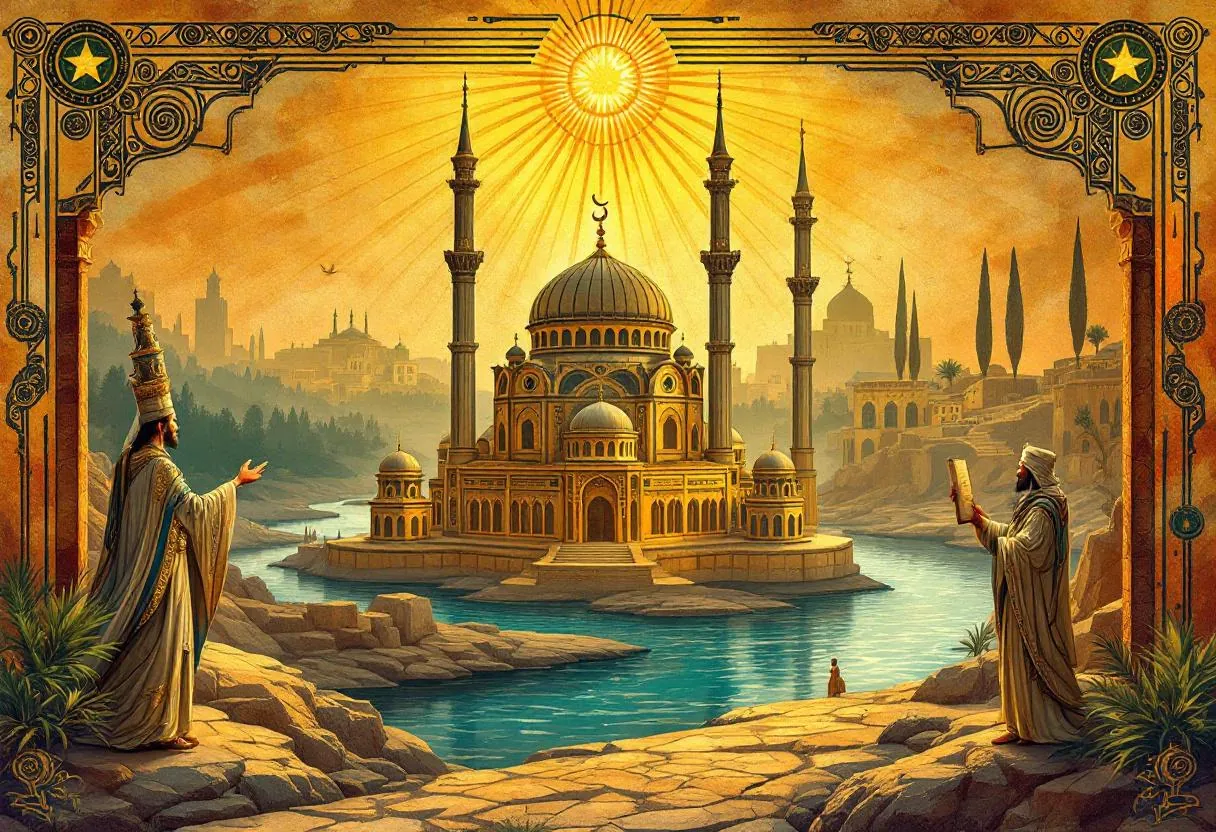
حين أمر السلطان سليمان القانوني بإنشائها،When Sultan Suleiman the Magnificent ordered its construction,
سلّم سرّها إلى المعماري سنان،He entrusted its secret to the architect Sinan,
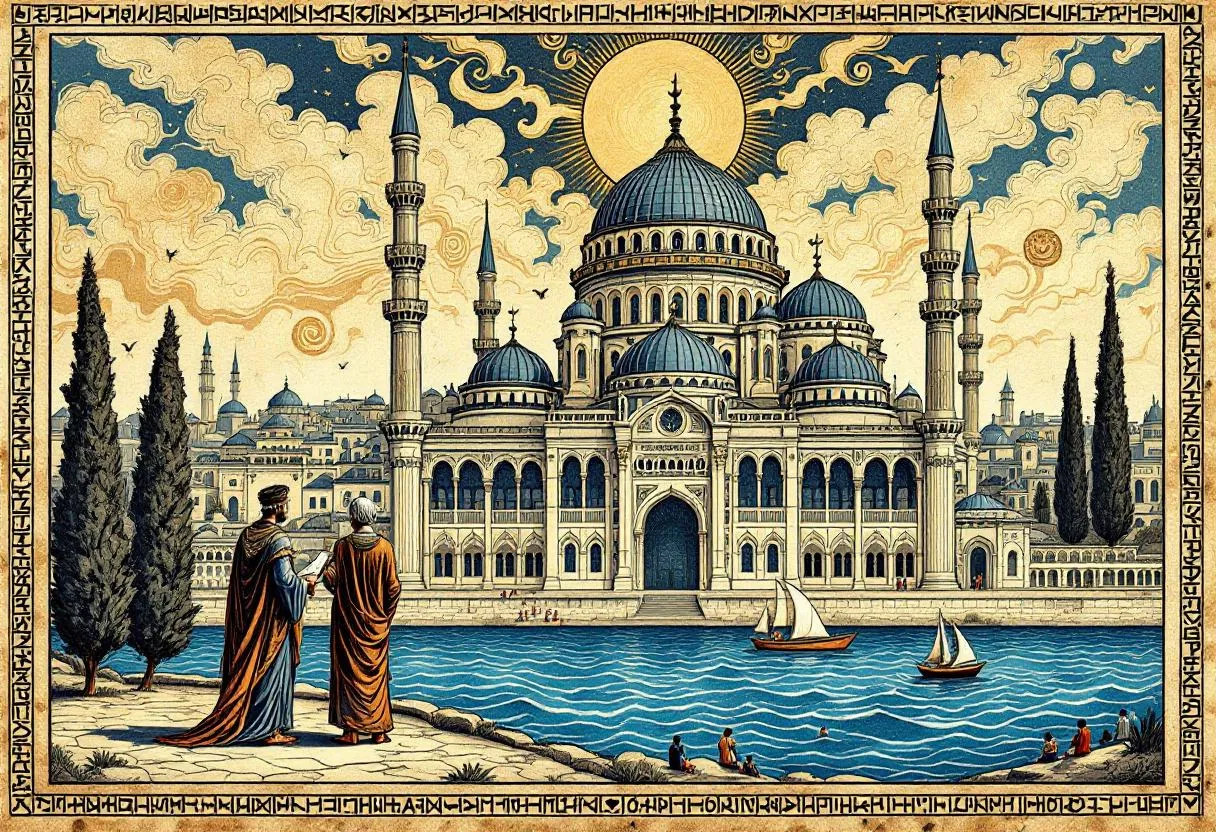
الذي رأى في العمارة صلاةً ممتدة عبر الزمن.Who saw in architecture a prayer stretched across time.
ليست مجرد بناء سياسي،It was not merely a political structure,
بل رسالة أن الفن يمكن أن يكون عبادة،But a message that art itself can be worship,
وأن الجمال طريق إلى الله.And that beauty is a path to God.
The Arches and the Water
الأقواس والماء
أقواسها المخططة بالأبيض والأسود،Its arches striped in black and white,
ليست زينة، بل حوار بين النور والظل.Are not ornaments, but a dialogue between light and shadow.
في وسط الساحة، تعزف النوافير موسيقى خفية،In the courtyard, fountains play hidden music,
كل قطرة ماء تهمس باسم الله.Every drop of water whispers the name of God.
The Columns and Eternity
الأعمدة والأبدية
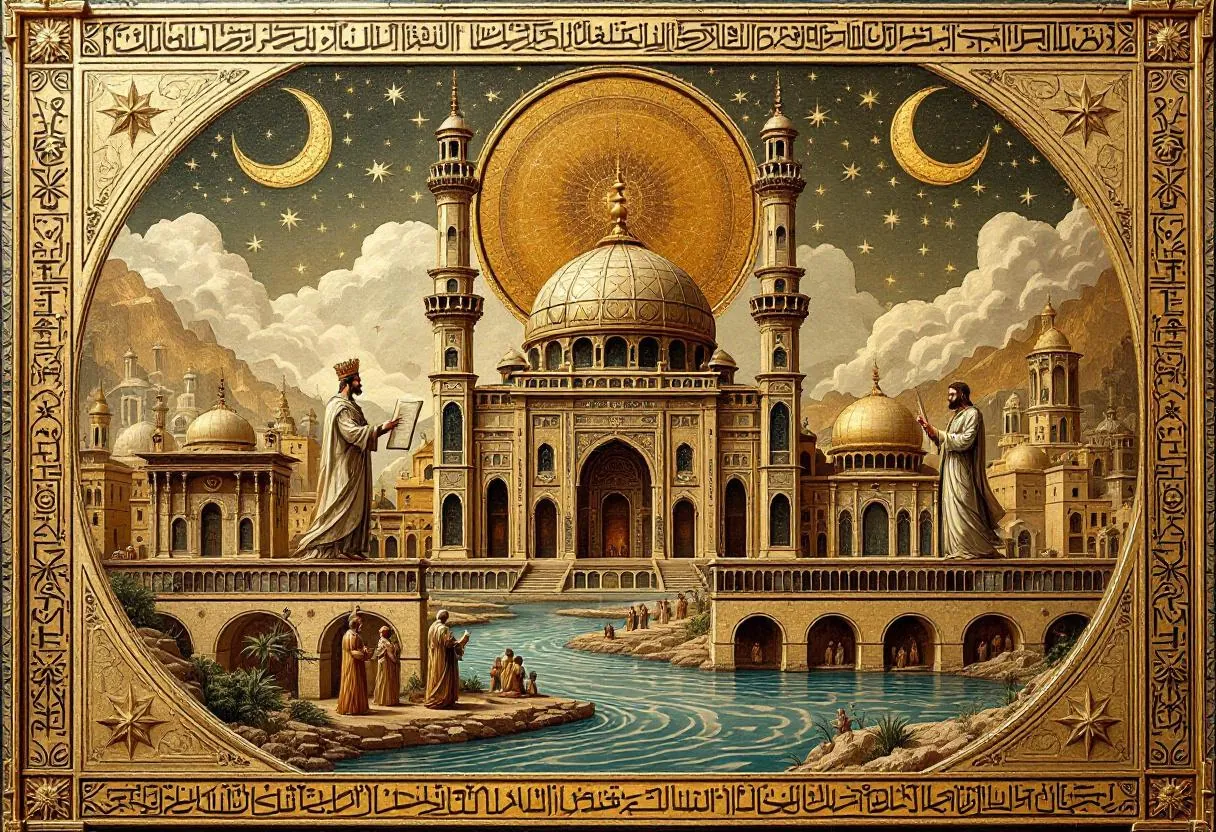
الأعمدة المرفوعة نحو السماء،The columns rising toward the sky,
تذكّر الداخل بحديث النبي ﷺ:Remind the visitor of the saying of the Prophet ﷺ:
«إن الله جميل يحب الجمال»“Indeed, Allah is Beautiful and He loves beauty.”
كأن كل عمودٍ في التكية تسبيحة،As if every column in the tekkiye is a glorification,
وكل قوسٍ آية من كتابٍ مفتوح.And every arch a verse from an open book.
Damascus and Anatolia
دمشق والأناضول
التكية السليمانية ليست فقط عثمانية،The Suleymaniye Tekkiye is not merely Ottoman,
وليست فقط شامية،Nor only Damascene,
بل هي جسر بين الأناضول والشرق،But a bridge between Anatolia and the East,
بين الحضارة والروح،Between civilization and spirit,
بين الإنسان والسماء.Between man and the heavens.
Conclusion
الخاتمة
اليوم، وبعد قرون، ما تزال التكية واقفة،Today, centuries later, the tekkiye still stands,
تصلي بحجارتها كما يصلي الناس في ساحتها.Praying with its stones as people pray in its courtyard.
إنها درسٌ أبديّ:It is an eternal lesson:
أن العمارة حين تسكنها الروح،That when architecture is inhabited by the spirit,
تصبح ذكرًا لا ينتهي،It becomes an unending remembrance,
ونهرًا لا ينضب من الجمال.And a river of beauty that never dries.
Sinan's great mosque in Istanbul, the Süleymaniye, is one of the stops in Workshop 13: Ten Countries and Their Most Celebrated Mosques, and this complex in Damascus, with its dome, courtyard, and lodging and kitchen for pilgrims, is read as architecture of mercy in The Epic of Tekkiyeh Suleimaniyah: When Architecture Became a Refuge for the Stranger, in the buildings and cities collection.

Written by
Architect Imad Darouich
المهندس المعماري عماد درويش
Architect, author and founder of 3DEPICS, based in New York. He writes epic literature that crosses borders, languages and geographies, where philosophy meets architecture, spirituality meets history and memory meets imagination.