A Dome Bears a Name, the Ground Bears Everyone: Sinan's Süleymaniye Mosque
قبّةٌ تحملُ اسمًا، وأرضٌ تحملُ الجميع
Above Istanbul the dome carries a sultan's name; at its door come the hungry, the student and the sick, and Imad asks what the building owes them.
By Architect Imad Darouich4 min read
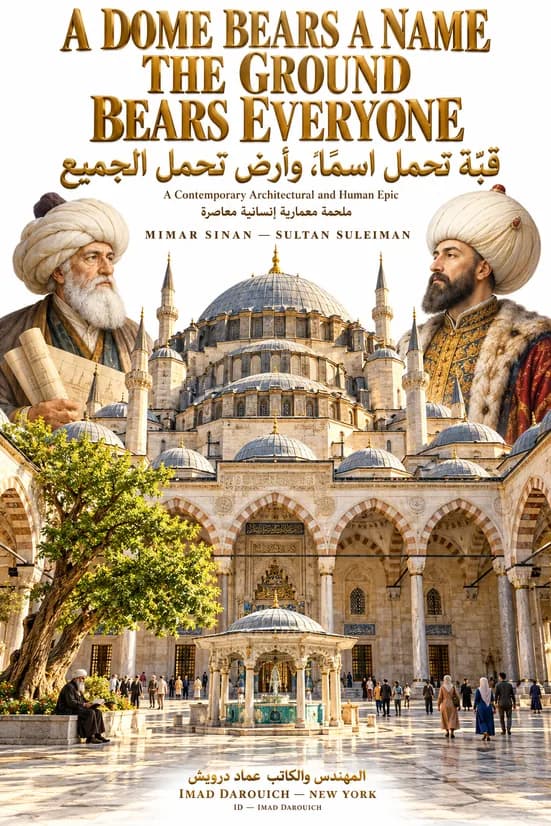
The Süleymaniye Mosque in Istanbul was commissioned by Sultan Suleiman the Magnificent and designed by his imperial architect Mimar Sinan; its inscription gives 1550 for the foundation and 1557 for the inauguration, and its complex held madrasas, a public kitchen and a hospital. Imad's poem stands between patron and architect and asks what the dome owes the hungry, the student and the sick who come to its door.
المعماري سنان والسلطان سليمان القانونيArchitect Mimar Sinan and Sultan Suleiman the Magnificent
ملحمة معمارية إنسانية معاصرةA Contemporary Architectural and Human Epic
A Note
تنويه
رؤيا أدبية تستلهم جامع السليمانية ومجمّعه في إسطنبول، الذي صمّمه سنان برعاية السلطان سليمان؛ الصور والتأويلات للكاتب، وليست أقوالًا منسوبةً إليهما.A literary vision inspired by Istanbul’s Süleymaniye Mosque and its complex, designed by Sinan under Sultan Suleiman’s patronage; its imagery and interpretations belong to the writer and are not quotations attributed to them.
The Introduction
المقدمة
أنا عماد درويش.I am Imad Darouich.
أنظر إلى القبّة، فأرى إرادةً صارت حجرًا.I look at the dome and see an intention made stone.
ثم أخفض عينيَّ إلى الأرض.Then I lower my eyes to the ground.
هناك يُختبَر ما أرادته اليدُ التي أمرت، واليدُ التي رسمت.There, the intentions of the hand that commissioned and the hand that drew are tested.
فوق المدينة يرتفع الاسم.Above the city, the name rises.
وعند الباب تصل الحياةُ بأسمائها الكثيرة.At the door, life arrives with its many names.
The Epic
الملحمة
سليمان يمنح المشروعَ رعايتَه.Suleiman gives the project his patronage.
وسنان يمنح الحجرَ طريقًا إلى الارتفاع.Sinan gives stone a path toward height.
لكنّ المسافةَ بين القرار والقبّة طويلة.Yet the distance between the decision and the dome is long.
فيها حسابٌ يتكرّر.Within it, calculations are repeated.
وحجرٌ يُرفع.A stone is lifted.
ومفصلٌ ينتظر أن يُحكم.A joint waits to be secured.
وأكتافٌ تحمل ما سيبدو للعين ساكنًا.And shoulders carry what will appear still to the eye.
أرى القوّةَ حين تُنظَّم حول بناء.I see strength organized around a building.
وأتساءل عمّا ستمنحه حين يكتمل.I ask what it will offer when complete.
تعلو القبّة.The dome rises.
تتوزّع الأحمالُ، ويظلُّ القلبُ الداخليُّ متّسعًا.Loads are distributed, and the interior heart remains spacious.
يدخل الضوءُ من النوافذ.Light enters through the windows.
يتنقّل بين الحجر والوجوه.It moves between stone and faces.
من جاء مثقلًا يرى أمامه مكانًا للوقوف.Someone arriving burdened sees a place to stand.
ومن جاء للصلاة يجد للأرض قربًا، وللسقف بُعدًا.Someone arriving to pray finds the ground close and the roof distant.
بينهما ينحني الجسد.Between them, the body bows.
تضع الجبهةُ نفسَها على الأرض.The forehead rests upon the ground.
وفي تلك الحركة الصغيرة، يصير الارتفاعُ كلُّه خلفيّةً للخشوع.Within that small movement, the entire height becomes a setting for devotion.
أتأمّل المجمّع حول الجامع.I contemplate the complex around the mosque.
تتّسع فكرةُ البناء لتشمل المعرفةَ والرعايةَ والطعام.The idea of building expands to include learning, care, and food.
هنا يصبح للأمر السياسيّ أثرٌ يمكن أن تلمسه الحياة.Here, political authority has an effect life can touch.
لا تكفي صورةُ القائد فوق التاريخ.The leader’s image upon history is not enough.
هناك مَن يصل جائعًا.Someone arrives hungry.
ومَن يريد أن يتعلّم.Someone wants to learn.
ومَن يحتاج إلى عناية.Someone needs care.
هذه الأجسادُ تمنح الرعايةَ معناها الحقيقي.These bodies give patronage its real meaning.
أقف بين سنان وسليمان بفكرتي، لا بشخصي.I stand between Sinan and Suleiman through my reflection, not in person.
أسأل المعماريَّ عن المكان الذي تركه للناس.I ask the architect about the space he left for people.
وأسأل القائدَ عن الناس الذين شملهم قرارُه.I ask the leader about the people included in his decision.
فالبناءُ يستطيع أن يُخلّد اسمًا.For a building can preserve a name.
ويستطيع أيضًا أن يُخفّف يومًا عن إنسان.It can also ease a person’s day.
أريد أن يلتقي الأمران دون أن يبتلع الاسمُ أصحابَ الحياة.I want both to meet without the name swallowing those who live.
أنا أعرف قيمةَ السقف حين يطمئنّ تحته طفل.I know a roof’s value when a child feels safe beneath it.
وأعرف قيمةَ الساحة حين يجد المسنُّ موضعًا يستريح فيه.I know a square’s value when an elderly person finds a place to rest.
وأعرف قيمةَ الماء حين يصل إلى اليد التي تحتاجه.I know water’s value when it reaches the hand that needs it.
من هذه الأشياء أقرأ أثرَ القيادة.Through these things I read leadership’s impact.
ومن دقّة تحقيقها أقرأ أمانةَ المعماري.Through the precision of their realization I read the architect’s integrity.
The Ending
الخاتمة
يا ربّ، اجعل القدرةَ بابًا للخدمة، واجعل المعرفةَ أمينةً على مَن تحتاج إليهم.O Lord, make power a door to service, and make knowledge faithful to those who need it.
من سنان، أتأمّل نظامًا يجعل الارتفاعَ ممكنًا.Through Sinan, I contemplate an order that makes height possible.
ومن رعاية سليمان، أتأمّل مسؤوليّةَ القرار الذي يستطيع أن يمنح مدينةً مؤسّساتها.Through Suleiman’s patronage, I contemplate the responsibility of a decision capable of giving a city its institutions.
ثم أعود إلى ورقتي.Then I return to my page.
أرسم القبّة.I draw the dome.
وتحتها أرسم الناسَ بأحجامهم الحقيقية.Beneath it, I draw people at their true scale.
أترك للضوء طريقًا.I leave a path for light.
وللعابر مدخلًا.An entrance for the passerby.
وللمتعب مقعدًا.A seat for the weary.
فالاسمُ قد يبقى منقوشًا فوق الباب.For the name may remain engraved above the door.
لكنّ قيمةَ الباب تظهر في مَن يستطيعون عبورَه.Yet the door’s value appears in those able to pass through it.
Sinan appears again beside Peter Zumthor in The Earth Has a Memory That Rises and late in his life in The Dome That Summoned Its Architect to Trial. The Tekkiye he planned for Suleiman in Damascus is read in The Epic of Tekkiyeh Suleimaniyah, and the Süleymaniye returns in Workshop 13: Ten Countries and Their Most Celebrated Mosques.
Written by
Architect Imad Darouich
المهندس المعماري عماد درويش
Architect, author and founder of 3DEPICS, based in New York. He writes epic literature that crosses borders, languages and geographies, where philosophy meets architecture, spirituality meets history and memory meets imagination.