When the Mirror Asked for Another Face: A Poem About Looking in the Mirror
حين طلبت المرآةُ وجهاً آخر
A man looks in his mirror and finds a locked door where his face should be, with the child he once turned away behind it.
By Architect Imad Darouich3 min read
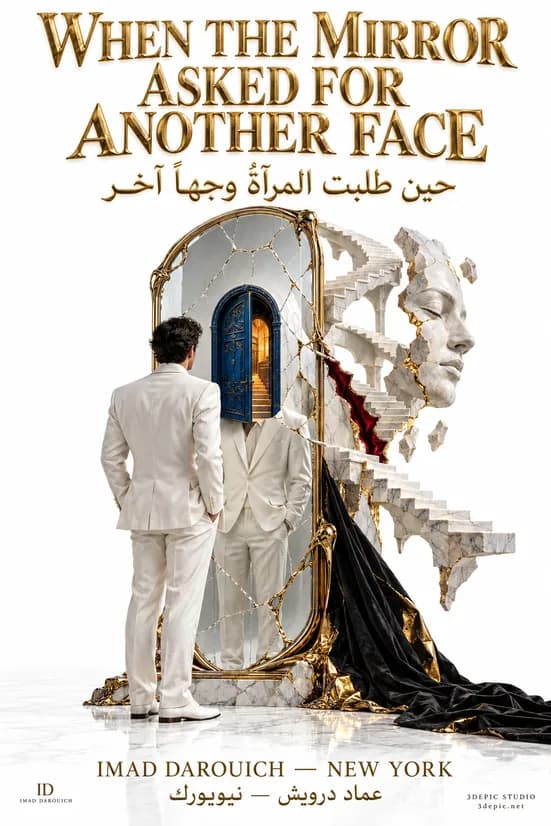
When the Mirror Asked for Another Face is a poem about looking in the mirror, written by Imad Darouich as a fable in Arabic and English. A man in spotless white comes home and finds no face in the glass, only an iron door and a child he once drove out in winter. His own face then spreads over the walls and ceiling until, at dawn, he goes to find the boy and make amends.
تنويه: ملحمة تخييلية تتخذ من المرآة رمزاً للضمير، وتسأل عمّا يبقى من وجه الإنسان حين يفصل مظهره عن أفعاله.Note: A fictional epic using the mirror as a symbol of conscience, asking what remains of a human face when appearances part ways with deeds.
عاد إلى بيته بثيابٍ ناصعة البياض.He returned home in spotless white.
وعلى كُمّه عطرُ الذين صافحوه خوفاً.His sleeve carried the perfume of those who shook his hand in fear.
علّق معطفه، فتنفّس الجدارُ بضيقٍ مفاجئ.He hung his coat; the wall drew a strained breath.
واقترب من المرآة ليُصلح ربطة عنقه.He approached the mirror to straighten his tie.
ظهرت الربطةُ، وظهر القميصُ، وغاب الوجه.The tie appeared, the shirt appeared; the face was missing.
مكانَه، كان بابٌ حديديٌّ مغلقٌ بإحكام.In its place stood a tightly locked iron door.
مسح الزجاجَ، فسمع طرقاً من الداخل.He wiped the glass and heard knocking within.
نقر بأصابعه، فردّت أصابعُ أصغرُ منها.He tapped; smaller fingers tapped back.
تراجع خطوةً، فتقدّم البابُ نحو عينيه.He stepped back; the door advanced toward his eyes.
ومن ثقبه، رآه طفلٌ بلا سؤال.Through its keyhole, a child watched him without a question.
عرف الطفلَ الذي طرده ذات شتاء.He recognized the child he had driven away one winter.
يومها، أغلق البابَ كي يحفظ الدفء.That day, he had shut the door to preserve the warmth.
الآن، كان البردُ يخرج من صورته.Now the cold was pouring from his reflection.
غطّى المرآةَ بقماشٍ ثقيلٍ أسود.He covered the mirror with heavy black cloth.
فانتفخ القماشُ كصدرٍ يحاول أن يتنفّس.The cloth swelled like a chest struggling to breathe.
ثم ظهر وجهُه على جدار الغرفة.Then his face appeared on the bedroom wall.
بفمٍ صغيرٍ لا يتّسع لاعتذارٍ واحد.Its mouth was too small to hold a single apology.
وفي السقف، انفتحت عيناه بلا جفنين.In the ceiling, his eyes opened without eyelids.
صار البيتُ رأساً، وصار داخله سجيناً.The house became a head, and he its prisoner.
أشعل المصابيحَ، فازدادت ملامحُه وضوحاً.He switched on the lights; his features grew clearer.
أطفأها، فظلّت عيناه وحدهما مضيئتين.He switched them off; only his eyes remained lit.
لم يجد زاويةً لا يراه منها.He found no corner from which he could not see himself.
جلس على الأرض، وسقطت عنه ابتسامته.He sat on the floor; his smile fell away.
كانت صلبةً، وأحدثت رنّةً كقطعة نقود.It was solid and rang like a coin.
مدَّ يده إليها، فلم يعرفها.He reached for it and did not recognize it.
كم وجهاً صافح بهذه القطعة الباردة؟How many faces had he greeted with this cold piece?
وكم وجعاً مرَّ تحتها دون ارتجاف؟How much suffering had passed beneath it without a tremor?
عند الفجر، رفع القماشَ عن المرآة.At dawn, he lifted the cloth from the mirror.
كان البابُ هناك، والطفلُ لم يعد.The door remained; the child was gone.
للمرّة الأولى، خاف أن يتأخّر.For the first time, he feared being too late.
خرج يبحث عن العنوان الذي محاه.He went searching for the address he had erased.
وجد بيتاً ضيّقاً، وصبيّاً أطولَ قليلاً.He found a cramped home and a slightly taller boy.
وقف أمامه دون ربطة عنقٍ هذه المرّة.This time, he stood before him without a tie.
وقال: ظلمتُك، وجئتُ أردُّ إليك حقَّك.He said: I wronged you; I have come to restore what is yours.
لم تفتح الكلماتُ بابَ المغفرة فوراً.The words did not open forgiveness’s door at once.
ظلَّ الصبيُّ واقفاً، وتركه ينتظر.The boy remained standing and let him wait.
فتعلّم أخيراً كيف يثقل الوقوفُ بالباب.At last, he learned the weight of standing at a door.
وحين عاد، لم يركض نحو المرآة.When he returned, he did not rush to the mirror.
جلس يكتب أسماءَ الذين ظلمهم.He sat down to write the names of those he had wronged.
وكانت القائمةُ أطولَ من ليلته.The list was longer than his night.
وعند السطر الأخير، سمع الزجاجَ يتنفّس.At the final line, he heard the glass breathe.
رفع رأسه، فرأى وجهه دون ابتسامة.He raised his head and saw his face without a smile.
لم يكن أجملَ، لكنّه استطاع النظر.It was no lovelier, but he could bear to look.
فالمرآةُ لم تكن تطلب وجهاً آخر.The mirror had never wanted another face.
كانت تنتظر أن يعود صاحبُه إنساناً.It had waited for its owner to become human again.
The mirror stands in for conscience here, as the suitcase does in Imad's poem about conscience walking out of the body. The Last Court of Mirrors puts judgment itself on trial, and The White Book shows each reader what they hid.
Written by
Architect Imad Darouich
المهندس المعماري عماد درويش
Architect, author and founder of 3DEPICS, based in New York. He writes epic literature that crosses borders, languages and geographies, where philosophy meets architecture, spirituality meets history and memory meets imagination.