The Play Without a Script: When Life Is a Stage
المسرحية بلا نص
Actors open their drawers to find no script, and an old theater spends one night finding out who decides how a story ends.
By Architect Imad Darouich11 min read
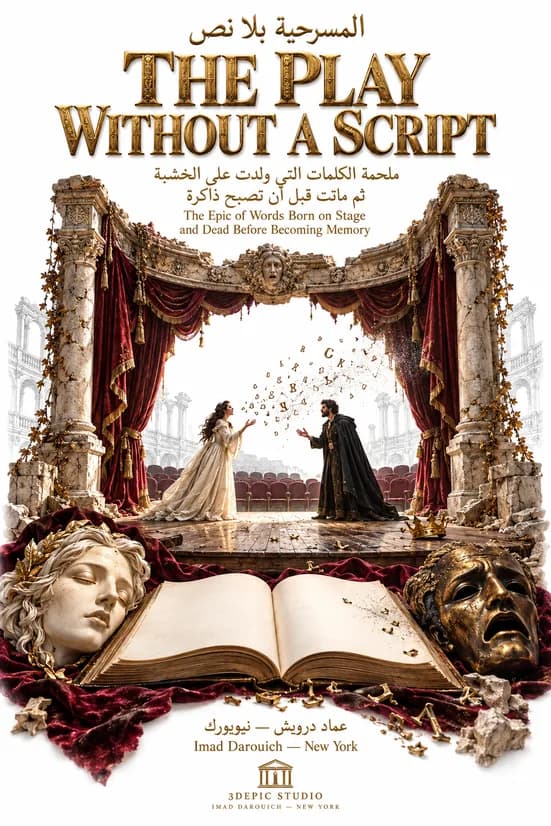
All the world's a stage, says Jaques in Shakespeare's As You Like It, comparing a human life to a play. The Play Without a Script takes the life is a stage poem one step further, in Arabic and English: in an old theater the actors find their drawers empty, and over ten chapters they invent a king, refuse their roles, tear up the playwright's pages and look for a last line.
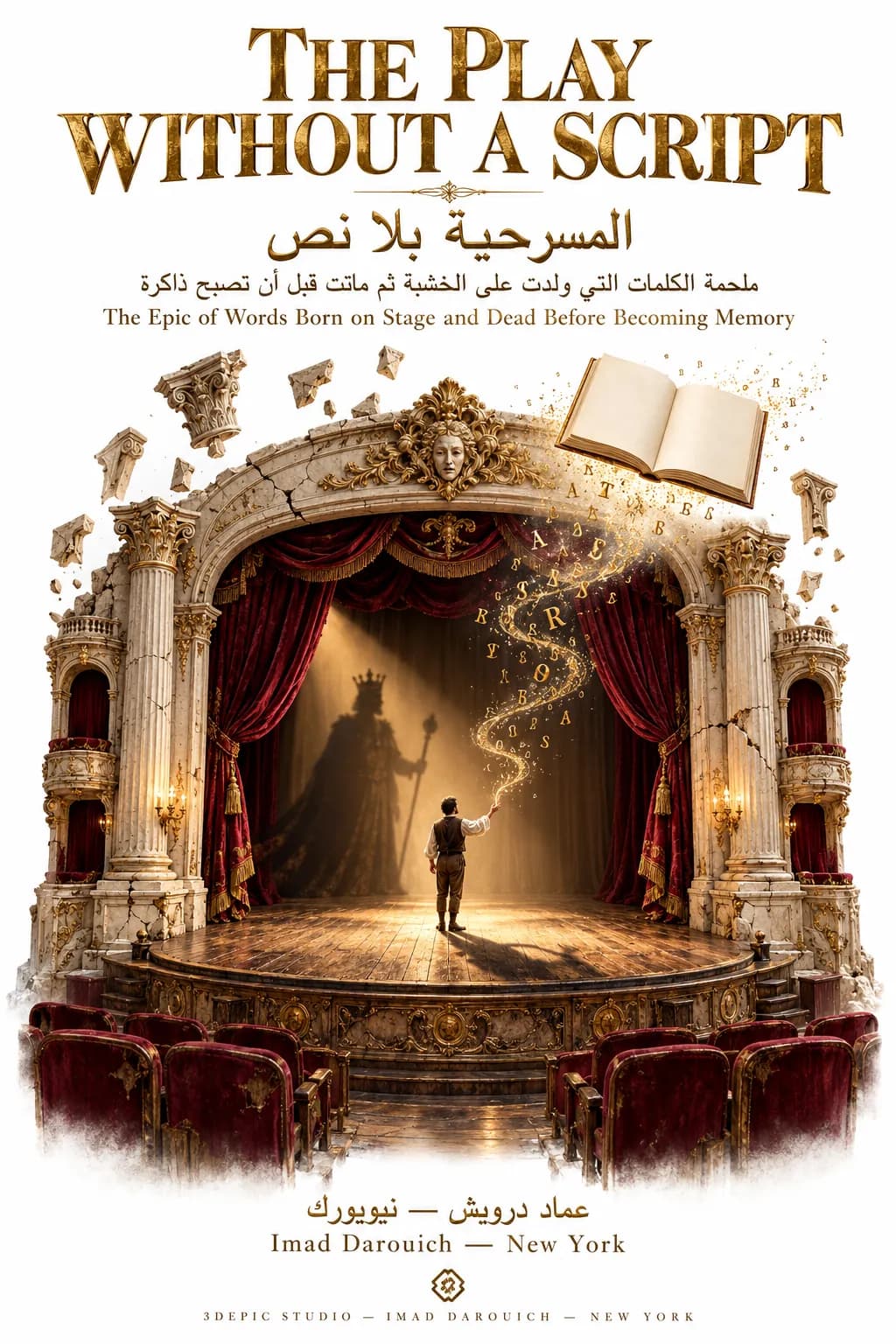
The Epic of Words Born on Stage and Dead Before Becoming Memory
ملحمة الكلمات التي وُلدت على الخشبة ثم ماتت قبل أن تصبح ذاكرة
البداية: The Beginning
كان المسرح أقدم من معظم بيوت المدينة.The theater was older than most houses in the city.واجهته متعبة، أعمدته متشققة، وستارته الحمراء تحمل غبار مئة عام من التصفيق.Its façade was weary, its columns cracked, and its red curtain carried the dust of a hundred years of applause.في ذلك المسرح مات ملوك وهميون.
In that theater, imaginary kings had died.وعاشت نساء لم يوجدن قط.Women who never existed had lived.وقامت حروب انتهت قبل أن يخرج الجمهور إلى الشارع.Wars had begun and ended before the audience stepped outside.لكن شيئًا واحدًا كان دائمًا موجودًا:Yet one thing had always existed:النص.The script.كان النص هو القدر.The script was destiny.يعرف الممثل متى يحب.The actor knew when to love.ومتى يخون.When to betray.ومتى يبكي.When to weep.ومتى يموت.
And when to die.حتى جاءت ليلة تغيّر فيها كل شيء.Until one night, everything changed.وصل الممثلون إلى غرفهم.The actors arrived in their dressing rooms.فتحوا الأدراج.They opened the drawers.كانت فارغة.They were empty.بحثوا عن النصوص.They searched for their scripts.لم يجدوا شيئًا.They found nothing.دخل المخرج.The director entered.كان يحمل ملفًا أبيض.He carried a white folder.فتحه أمامهم.
He opened it before them.لم تكن فيه صفحة واحدة.There was not a single page inside.قال أحد الممثلين:One actor asked:«أين النص؟»“Where is the script?”ابتسم المخرج.The director smiled.وقال:And said:«لقد بدأ.»“It has already begun.”
Chapter One: The Page That Refused to Be Written
الفصل الأول: الورقة التي رفضت أن تُكتب
أعطى المخرج كل ممثل ورقة بيضاء.The director gave every actor a blank sheet.
قال:He said:
«هذه شخصيتك.»“This is your character.”
نظروا إلى الأوراق.They stared at the pages.
قالت الممثلة الأولى:The first actress asked:
«لكنها فارغة.»“But it is blank.”
قال:He replied:
«وأنتِ أيضًا.»“So are you.”
ساد الصمت.Silence followed.
لأول مرة اكتشف الممثلون أنهم كانوا يعيشون داخل جمل كتبها آخرون.For the first time, the actors realized they had always lived inside sentences written by others.
كان أحدهم شجاعًا لأن الكاتب كتب له الشجاعة.One had been brave because a playwright had written courage for him.
وكان الآخر شريرًا لأن الصفحة أمرته بالشر.Another had been evil because the page commanded him to be evil.
أما الآن، فلا أحد يعرف من يكون.Now, no one knew who he was.
قال المخرج:The director said:
«الليلة لن تمثلوا شخصيات.»“Tonight you will not portray characters.”
«الليلة ستبحثون عنها.»“Tonight you will search for them.”
Chapter Two: The Curtain That Rose upon Nothing
الفصل الثاني: الستارة التي ارتفعت على لا شيء
امتلأت القاعة.
The hall filled.انطفأت الأنوار.The lights went dark.رن الجرس.The bell rang.ارتفعت الستارة.The curtain rose.كان على الخشبة عشرة ممثلين.Ten actors stood on stage.لا ديكور.No scenery.لا موسيقى.No music.لا كلمات.No words.نظر الجمهور إليهم.The audience looked at them.ونظروا إلى الجمهور.
They looked back.مرت دقيقة.A minute passed.ثم دقيقتان.Then two.بدأ الجمهور يتحرك في مقاعده.The audience shifted in their seats.وفجأة قالت امرأة من الصف الخامس:Suddenly, a woman in the fifth row called out:«ابدؤوا!»“Begin!”نظر أحد الممثلين إليها.One actor looked at her.وقال:And said:«نحن بدأنا منذ اللحظة التي شعرتِ فيها أن علينا أن نبدأ.»“We began the moment you felt we should begin.”ضحك الجمهور.
The audience laughed.قال ممثل آخر:Another actor said:«لماذا ضحكتم؟»“Why did you laugh?”توقف الضحك.The laughter stopped.وهكذا وُلد المشهد الأول.And so the first scene was born.لم يكتبه مؤلف.No playwright had written it.كتبه التوتر بين الخشبة والمقاعد.It was written by the tension between stage and seats.
Chapter Three: The Man Who Invented His Past
الفصل الثالث: الرجل الذي اخترع ماضيه
تقدم ممثل عجوز.An old actor stepped forward.
قال:He said:
«أنا ملك.»“I am a king.”
صرخ ممثل شاب:A young actor shouted:
«كاذب.»“Liar.”
توقف العجوز.The old man stopped.
لم يكن يعرف هل هو ملك فعلًا.He did not know whether he truly was a king.
فلا نص يثبت ذلك.There was no script to prove it.
قال:He said:
«كنت ملكًا.»“I was a king.”
سأله الشاب:The young man asked:
«متى؟»“When?”
قال العجوز:The old man replied:
«قبل أن تبدأ المسرحية.»“Before the play began.”
ضحك الجمهور.The audience laughed.
لكن العجوز لم يضحك.The old actor did not.
جلس على الأرض.He sat on the floor.
وبدأ يروي مملكة لم تكن موجودة.He began describing a kingdom that had never existed.
أنهارها.Its rivers.
قصورها.Its palaces.
حروبه.Its wars.
ابنه الذي خانه.The son who betrayed him.
والملكة التي ماتت وهي تنتظره.And the queen who died waiting for him.
وبعد عشر دقائق كان الجمهور يبكي على مملكة لم توجد إلا منذ عشر دقائق.Ten minutes later, the audience was mourning a kingdom that had existed for only ten minutes.
وهنا حدثت المعجزة الأولى:And there occurred the first miracle:
الكذبة التي تُروى بصدق قد تبني وطنًا داخل الخيال.A fiction told truthfully can build a homeland inside imagination.
Chapter Four: The Actress Who Refused Her Role
الفصل الرابع: الممثلة التي رفضت دورها
اقتربت ممثلة من العجوز.An actress approached the old man.
قال لها:He told her:
«أنتِ ابنتي.»“You are my daughter.”
قالت:She replied:
«لا.»“No.”
ارتبك.He hesitated.
في المسرح التقليدي كان النص سيحسم الأمر.In traditional theater, the script would have settled the matter.
لكن النص لم يكن موجودًا.But there was no script.
قال:He insisted:
«أعرفك.»“I know you.”
قالت:She answered:
«لكنني لا أعرفك.»“But I do not know you.”
ومن هذه الجملة البسيطة وُلد صراع كامل.From that simple sentence, an entire conflict was born.
هل الشخصية هي ما يقوله الإنسان عن نفسه؟Is a character what a person says about himself?
أم ما يقوله الآخرون عنه؟Or what others say about him?
قال العجوز:The old man said:
«أنا أبوك لأنني أتذكرك.»“I am your father because I remember you.”
قالت:She replied:
«وأنا لست ابنتك لأنني لا أتذكرك.»“And I am not your daughter because I do not remember you.”
ساد صمت ثقيل.A heavy silence fell.
وفجأة لم تعد المسرحية عن ملك وابنته.Suddenly, the play was no longer about a king and his daughter.
أصبحت عن الذاكرة نفسها.It had become about memory itself.
Chapter Five: The Death That Was Never Planned
الفصل الخامس: موت لم يكن مقررًا
في منتصف العرض، سقط أحد الممثلين.Halfway through the performance, one actor fell.لم يعرف الجمهور إن كان يمثل.The audience did not know whether he was acting.ولم يعرف الممثلون أيضًا.
Neither did the actors.اقتربت منه ممثلة.An actress approached him.قالت:She said:«انهض.»“Get up.”لم يتحرك.He did not move.همست:She whispered:«ليس من حقك أن تموت.»“You have no right to die.”فتح عينيه.He opened his eyes.قال:He said:«ولماذا؟»
“Why not?”قالت:She replied:«لأن موتك غير مكتوب.»“Because your death is not written.”ابتسم.He smiled.«ولا حياتي مكتوبة.»“Neither is my life.”ثم أغلق عينيه.Then he closed his eyes.وفجأة أصبح السؤال مرعبًا:Suddenly the question became terrifying:إذا لم يوجد نص، فمن يقرر النهاية؟If there is no script, who decides the ending?
Chapter Six: The Audience Climbs Onto the Stage
الفصل السادس: الجمهور يصعد إلى الخشبة
وقف رجل من الجمهور.A man in the audience stood.
قال:He said:
«هذا هراء.»“This is nonsense.”
رد ممثل:An actor replied:
«اصعد وأصلحه.»“Come up and fix it.”
ضحك الناس.People laughed.
لكن الرجل صعد فعلًا.But the man actually climbed onto the stage.
وقف تحت الضوء.He stood beneath the spotlight.
سأله الممثل:The actor asked:
«من أنت؟»“Who are you?”
قال الرجل اسمه.The man gave his name.
قال الممثل:The actor replied:
«هذا اسمك خارج المسرح.»“That is your name outside the theater.”
«من أنت هنا؟»“Who are you here?”
لم يعرف الرجل.The man did not know.
وفي تلك اللحظة فهم الجمهور شيئًا غريبًا.At that moment, the audience understood something strange.
نحن نعرف أسماءنا.We know our names.
وظائفنا.Our professions.
عناويننا.Our addresses.
لكن إذا نزعتَ هذه الأشياء كلها…But if all these things are removed…
فمن يبقى؟Who remains?
Chapter Seven: The Revolt of the Characters
الفصل السابع: ثورة الشخصيات
بدأ الممثلون يتمردون على بعضهم.The actors began rebelling against one another.قال أحدهم:One said:«نحتاج إلى قصة.»“We need a story.”قال آخر:Another replied:«القصة سجن.»
“A story is a prison.”قالت ممثلة:An actress said:«نحتاج إلى نهاية.»“We need an ending.”رد آخر:Another answered:«النهاية استبداد.»“An ending is tyranny.”تحولت الخشبة إلى جمهورية صغيرة بلا دستور.The stage became a tiny republic without a constitution.كل ممثل يريد أن يكون بطلًا.Every actor wanted to be the protagonist.كل شخصية تريد أن تصبح مركز الحكاية.Every character wanted to become the center of the story.وفجأة اكتشفوا أن الحرية المطلقة لا تصنع دائمًا الفن.Suddenly, they discovered that absolute freedom does not always create art.أحيانًا تصنع الضجيج.
Sometimes it creates noise.فالحدود ليست دائمًا سجنًا.Limits are not always prisons.أحيانًا تكون الحدود هي الشكل الذي يسمح للمعنى أن يولد.Sometimes limits are the form that allows meaning to be born.
Chapter Eight: The Playwright Who Arrived Too Late
الفصل الثامن: المؤلف الذي دخل متأخرًا
فُتح باب المسرح الخلفي.The backstage door opened.دخل رجل يحمل رزمة أوراق.A man entered carrying a stack of papers.قال:He said:«توقفوا.»“Stop.”نظر الجميع إليه.
Everyone looked at him.قال:He continued:«أنا المؤلف.»“I am the playwright.”ساد الصمت.Silence.رفع النص.He raised the manuscript.«هذه المسرحية الحقيقية.»“This is the real play.”اقترب منه أحد الممثلين.One actor approached him.أخذ الأوراق.He took the pages.قرأ الصفحة الأولى.He read the first page.ثم نظر إلى الجمهور.
Then he looked at the audience.وقال:And said:«لكننا أصبحنا أشخاصًا آخرين.»“But we have become different people.”مزق الصفحة.He tore the page.صرخ المؤلف.The playwright shouted.لكن ممثلة قالت:An actress said:«لقد وصلت متأخرًا.»“You arrived too late.”«الشخصيات تعلّمت العيش من دونك.»“The characters have learned to live without you.”
Chapter Nine: The Night the Theater Devoured Its Script
الفصل التاسع: الليلة التي أكل فيها المسرح نصه
تناثرت الأوراق على الخشبة.The pages scattered across the stage.
أخذ الهواء يحركها.The air began moving them.
صفحات تحت أقدام الممثلين.Pages beneath the actors’ feet.
صفحات فوق المقاعد.Pages over the seats.
صفحة علقت بالستارة.One page caught on the curtain.
وأخرى سقطت في كأس ماء.Another fell into a glass of water.
لم يعد النص نصًا.The script was no longer a script.
صار مادة.It became matter.
ورقًا.Paper.
حطامًا.Debris.
ذكرى لمسرحية لم تحدث.The memory of a play that never happened.
نظر المؤلف إلى أوراقه.The playwright looked at his pages.
ثم إلى الممثلين.Then at the actors.
وفهم للمرة الأولى أن النص الذي لا يُعاش ليس مسرحًا.For the first time, he understood that a script not lived is not theater.
إنه احتمال.It is a possibility.
أما المسرح الحقيقي فيولد عندما يدخل الاحتمال جسدًا بشريًا.Real theater begins when possibility enters a human body.
Chapter Ten: The Last Line
الفصل العاشر: الجملة الأخيرة
اقتربت الساعة من منتصف الليل.
Midnight approached.كان الجمهور ما يزال في مقاعده.The audience remained seated.لم يعرف أحد كيف تنتهي المسرحية.No one knew how the play should end.حتى المخرج لم يعرف.Not even the director.وقف جميع الممثلين في صف واحد.All the actors stood in a line.نظروا إلى الجمهور.They looked at the audience.ثم قال أحدهم:Then one said:«نحتاج إلى جملة أخيرة.»“We need one final line.”قال آخر:Another replied:«لماذا؟»
“Why?”قال:He answered:«لكي يعرفوا أن المسرحية انتهت.»“So they will know the play is over.”جاء صوت من آخر القاعة:A voice came from the back of the hall:«وإذا لم تقولوا شيئًا؟»“What if you say nothing?”نظر الممثلون إلى بعضهم.The actors looked at one another.ثم جلسوا.Then they sat down.لم يقولوا شيئًا.They said nothing.مرت دقيقة.A minute passed.ثم دقيقتان.
Then two.ثم خمس.Then five.وأخيرًا بدأ رجل واحد بالتصفيق.Finally, one man began to applaud.تبعه آخر.Another joined him.ثم القاعة كلها.Then the entire hall.أُسدل الستار.The curtain fell.لكن لم يعرف أحد:Yet no one knew:هل انتهت المسرحية لأن الستارة نزلت؟Did the play end because the curtain fell?أم لأن الجمهور قرر أنها انتهت؟Or because the audience decided it had ended?
النهاية: The Ending
في صباح اليوم التالي، عاد عامل التنظيف.The next morning, the cleaner returned.
وجد الخشبة مغطاة بالأوراق الممزقة.He found the stage covered with torn pages.
جمعها واحدة واحدة.He collected them one by one.
وجد صفحة بيضاء بين الأوراق.Among them, he found a blank page.
قلبها.He turned it over.
لم يكن عليها شيء.There was nothing on it.
وضعها في جيبه.He put it in his pocket.
وعندما عاد إلى بيته، وضعها على الطاولة.When he returned home, he placed it on the table.
ظل ينظر إليها طويلًا.He stared at it for a long time.
ثم كتب جملة واحدة:Then he wrote a single sentence:
«ربما نحن أيضًا نعيش مسرحية بلا نص.»“Perhaps we too are living a play without a script.”
ثم توقف.Then he stopped.
لم يعرف ماذا يكتب بعدها.He did not know what to write next.
وهنا كانت الفكرة كلها.And that was the entire idea.
نحن ندخل الحياة دون أن نستلم الحوار.We enter life without receiving the dialogue.
لا أحد يعطينا الصفحة التالية.No one gives us the next page.
نرتجل الحب.We improvise love.
نرتجل الخوف.We improvise fear.
نرتجل الفشل.We improvise failure.
ونرتجل الشجاعة عندما تفاجئنا الكارثة.And we improvise courage when catastrophe surprises us.
نقول كلمات ثم نندم عليها.We speak words and later regret them.
نصمت حين كان يجب أن نتكلم.We remain silent when we should have spoken.
وندخل مشاهد لم نستعد لها.We enter scenes for which we never rehearsed.
ثم يأتي يوم نغادر فيه الخشبة.Then comes a day when we leave the stage.
ويبقى السؤال معلقًا تحت الضوء:And one question remains suspended beneath the light:
هل كنا ممثلين في قصة كُتبت لنا؟Were we actors in a story written for us?
أم كنا نكتب أنفسنا ونحن نمثل؟Or were we writing ourselves while we performed?
ربما أعظم مسرحية ليست تلك التي تحفظ كلماتها.Perhaps the greatest play is not the one whose lines are memorized.
بل تلك التي تجعل الإنسان مسؤولًا عن الكلمة التالية.It is the one that makes the human being responsible for the next line.
فالحياة لا تعطينا نصًا كاملًا.Life does not hand us a complete script.
إنها تعطينا خشبة، ووقتًا محدودًا، وبعض الضوء.It gives us a stage, limited time, and a little light.
ثم تقول لنا: الآن… تكلموا.Then it tells us: Now… speak.
The Play Without Actors, Imad's ebook fable of an old theater with an empty stage, is its closest companion, and The Cemetery Without Graves follows the same ten-chapter form. More fables are in the human story collection.
Written by
Architect Imad Darouich
المهندس المعماري عماد درويش
Architect, author and founder of 3DEPICS, based in New York. He writes epic literature that crosses borders, languages and geographies, where philosophy meets architecture, spirituality meets history and memory meets imagination.