When the House Spat Out Its Owner: A Poem About Greed
حين لفظَ البيتُ صاحبَه
A palace built on a stolen well, a closed bakery and unpaid wages rejects its owner and opens its rooms to the people he took them from.
By Architect Imad Darouich4 min read
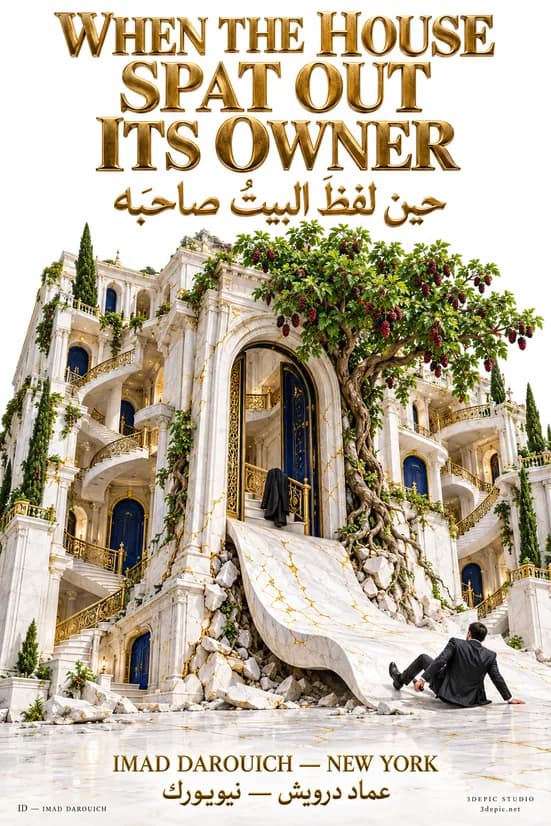
When the House Spat Out Its Owner is a poem about greed, a fable by Imad Darouich in Arabic and English. A rich man walks into the palace he built with money taken from the poor, and every material remembers where it came from: the marble grinds, the gold tap coughs like the old woman whose well he took, the railing holds a builder's unpaid wage. In the end the house casts him out and lets its rightful people in.
تنويه: ملحمة تخييلية عن رجلٍ بنى قصره بأموال سلبها من الفقراء؛ فتتمرّد مواد البناء، ويكتشف أنَّ الملكية لا تُسكت حقوق أصحابها.Note: A fictional epic about a man who built his palace with wealth taken from the poor. Its materials rebel, revealing that ownership cannot silence those whose rights were stolen.
دخل قصره قبل وصول الأثاث بساعات.He entered his palace hours before the furniture arrived.
أراد أن يسمع صدى اسمه وحده.He wanted to hear his name echo alone.
داس الرخامَ، فصدر عنه صوتُ طحن.He stepped on the marble; it made a grinding sound.
كأنَّ تحت البلاطة ضرساً لم يُخلع.As though an unpulled tooth lay beneath it.
توقّف، فعاد الصمتُ مرتباً كما اشتراه.He stopped; silence returned, orderly as purchased.
وفي الصالة، جرّب المقعدَ المذهّبَ الكبير.In the hall, he tested the great gilded chair.
فهبط تحته قدرَ ركبةٍ كلَّ دقيقة.It sank beneath him a knee’s depth each minute.
نهض مذعوراً، فاستعاد المقعدُ ارتفاعه الأصلي.He sprang up; the chair regained its height.
لم يكن يريد حملَ هذا الرجل.It did not want to bear this man.
مدَّ يده نحو صنبورٍ من الذهب.He reached toward a faucet made of gold.
خرج الماءُ، ثم انقطع عند أصابعه.Water flowed, then stopped at his fingers.
وفي الحوض، سمع سعالَ امرأةٍ عجوز.From the basin, he heard an old woman coughing.
تذكّر بئرَها الذي ابتلعه سورُ القصر.He remembered her well, swallowed by the palace wall.
أغلق الصنبورَ، فاستمرَّ السعالُ داخل الأنابيب.He closed the faucet; coughing continued through the pipes.
صعد الدرجَ بحثاً عن غرفةٍ هادئة.He climbed the stairs seeking a quiet room.
لكنَّ الدرجَ احتفظ بالطابق في مكانه.But the staircase kept the floor beyond his reach.
كلّما صعد، نمت درجةٌ تحت قدميه.With every step, another grew beneath his feet.
صار الوصولُ عملاً لا ينتهي أبداً.Arrival became a task that never ended.
عندها، رنَّ هاتفه باسم عامل البناء.Then his phone rang with the builder’s name.
رفض الاتصالَ، فاهتزَّ الدرابزينُ بين يديه.He rejected the call; the railing shook in his hands.
كانت أجرةُ العاملِ معلّقةً في الحديد.The worker’s unpaid wages were lodged in the iron.
نزل، فوجد المائدةَ طويلةً إلى حدّ الجوع.He descended to find the table impossibly long.
في طرفها، طبقٌ يحمل وجبتَه الساخنة.At its far end, a plate held his hot meal.
مشى نحوه، فابتعد الطرفُ بمقدار خطوته.He walked toward it; it receded with each step.
ومِن الخشب، انبعثت رائحةُ خبزٍ محترق.From the wood rose the smell of burnt bread.
كان يعرف المخبزَ الذي أغلقه بالدَّين.He knew the bakery he had closed through debt.
في تلك اللحظة، توقّف عن طلب الراحة.At that moment, he stopped seeking comfort.
صار يريد الخروجَ بأيّ ثمنٍ ممكن.Now he wanted out at any price.
ركض نحو الباب، فوجده أصغرَ منه.He ran toward the door; it was smaller than him.
انحنى، فضاق حتى صار فتحةَ رسالة.He bent down; it narrowed to a letter slot.
أخرج سندَ الملكية من جيب معطفه.He pulled the title deed from his coat.
ولوّح بالختم كمن يشهر آخرَ أسلحته.He brandished its seal like a final weapon.
اقتربت الجدرانُ كي تقرأ الورقة جيداً.The walls drew closer to read the paper.
ثم عطست، فتطاير الختمُ غباراً أحمر.Then they sneezed; the seal scattered as red dust.
بقي اسمُه وحيداً فوق ورقةٍ فارغة.His name remained alone upon an empty sheet.
وفي الخارج، تجمّع الذين خسروا بيوتهم.Outside gathered those who had lost their homes.
جاؤوا يتبعون أصواتاً خرجت من القصر.They had followed sounds coming from the palace.
امرأةٌ سمعت غليانَ قدرها القديم.A woman had heard her old pot boiling.
ورجلٌ عرف صريرَ سرير أبيه.A man had recognized his father’s creaking bed.
وطفلةٌ جاءت تبحث عن شجرة التوت.A girl had come seeking the mulberry tree.
حين لامست يدُها الجدارَ، اخضرَّ الحجر.When her hand touched the wall, the stone turned green.
واندفع غصنٌ من مكان جرس الباب.A branch burst from the doorbell’s place.
اتّسع المدخلُ، ومرَّ الناسُ دون تزاحم.The entrance widened; people passed through without crowding.
أما صاحبه، فارتفعت الأرضُ تحت حذائه.Beneath its owner, the floor rose under his shoes.
حملته ببطءٍ، كشيءٍ ابتلعه البيتُ خطأً.It carried him slowly, like something the house had swallowed by mistake.
ثم ألقته خارجاً، وأبقت معطفه بالداخل.Then it cast him out, keeping his coat inside.
كان في جيبه أجرُ عامل البناء.The builder’s wages were in its pocket.
جلس على الرصيف، يسمع الحياةَ خلفه.He sat on the pavement, hearing life behind him.
كانت الغرفُ تتّسع كلّما دخلها أهلُها.The rooms expanded as their rightful inhabitants entered.
وفي يد الطفلة، نضجت حبّةُ توت.In the girl’s hand, a mulberry ripened.
مدَّ الرجلُ كفَّه، ثم سحبها ببطء.The man extended his palm, then slowly withdrew it.
للمرّة الأولى، انتظر أن يُعطى.For the first time, he waited to be given.
Imad's poem about a shadow tells of another home under threat, and his poem about rizq looks at provision from the other side. The Epic of Preserving the Blessing shows how Damascene households honored bread and water.
Written by
Architect Imad Darouich
المهندس المعماري عماد درويش
Architect, author and founder of 3DEPICS, based in New York. He writes epic literature that crosses borders, languages and geographies, where philosophy meets architecture, spirituality meets history and memory meets imagination.