Twenty-Six Windows into Time: The Louvre's Islamic Art in Washington
ستٌّ وعشرون نافذةً على الزمن
At the Louvre's Islamic art show in Washington, an architect imagines a maker stepping out of a vessel's shadow to ask who still learns his craft.
By Architect Imad Darouich4 min read
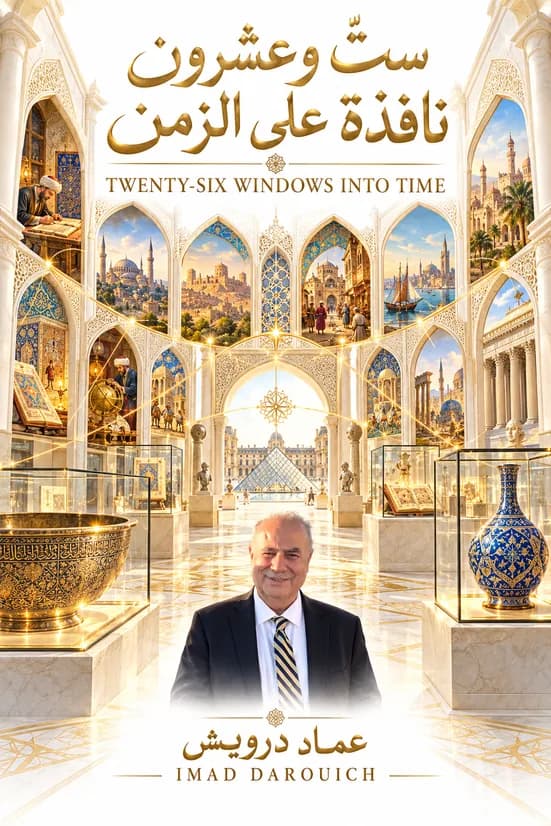
From the Louvre: Masterpieces of Islamic Art brings 26 works, made between the seventh and nineteenth centuries in lands from Spain to India, to the Smithsonian's National Museum of Asian Art in Washington from 26 September 2026 to 18 January 2027. Imad's prose poem, in Arabic and English, imagines a walk through the show, a maker stepping out of a vessel's shadow, and a table where children learn the crafts.
تنويه: ملحمة أدبية مستوحاة من معرض «من اللوفر: روائع الفن الإسلامي». الزيارة والحوار والمشاهد المتخيّلة ليست توثيقًا لأحداث فعلية.Note: A literary epic inspired by “From the Louvre: Masterpieces of Islamic Art.” The visit, dialogue, and imagined scenes are not a record of actual events.
دخلتُ المعرض في واشنطن، وفي يدي خريطةٌ صغيرة.I entered the exhibition in Washington with a small map in my hand.
حسبتُ أنّها ستدلّني على القاعات.I thought it would guide me through the galleries.
لكنّ أول قطعةٍ جعلتني أبحث عن الطريق إلى قرنٍ آخر.But the first object made me search for a passage into another century.
خلف الزجاج، استقرّ إناءٌ كأنّه انتهى لتوّه من انتظار صاحبه.Behind the glass rested a vessel, as though it had only just finished waiting for its owner.
اقتربتُ. رأيتُ الزخرفة، ثم رأيتُ ما أخفته الزخرفة عن النظرة الأولى.I drew closer. I saw the ornament, then what the ornament had concealed from my first glance.
يدًا أتعبها العمل.A hand worn by labor.
مصباحًا تأخّر صاحبه في إطفائه.A lamp its owner had stayed too late to extinguish.
ونافذةَ ورشةٍ طلع فيها الفجر قبل أن تكتمل القطعة.And a workshop window where dawn arrived before the object was finished.
أنا الذي أرسم واجهات الأبنية، وقفتُ أمام سطحٍ صغير يتّسع لمدينة.I, who draw the façades of buildings, stood before a small surface that could hold a city.
كانت خطوطه تتشابك بدقّة.Its lines intertwined with precision.
كلّ خطٍّ يعرف أين ينحني، وأين يترك للآخر مجالًا.Each line knew where to bend and where to make room for another.
تذكّرتُ مدنًا تضيق بأهلها، وسألتُ: كيف تعلّم المعدنُ ما نسيناه؟I remembered cities that leave no room for their people and asked: How had metal learned what we had forgotten?
تابعتُ السير.I walked on.
ستٌّ وعشرون قطعةً. وبينها مسافاتٌ تكفي لعبور أعمارٍ كاملة.Twenty-six objects. Between them, distances wide enough for entire lifetimes.
قرأتُ أسماء الأماكن على البطاقات.I read the place names on the labels.
كانت قصيرةً على الورق.They were brief on paper.
لكنّ كلّ اسمٍ فتح شارعًا، وأقام سوقًا، وأعاد صوتَ مطرقةٍ إلى الصباح.Yet each name opened a street, raised a market, and returned the sound of a hammer to the morning.
ثم قرأتُ عن الرحلات.Then I read about the journeys.
مكانُ الصنع. والانتقال. والوصول.The place of making. The passage. The arrival.
توقّفتُ عند الفراغ بين سطرين.I stopped at the space between two lines.
كم يدًا حملت هذا الشيء؟How many hands had carried this thing?
وكم عينًا رأته قبل عيني؟How many eyes had seen it before mine?
لم أكن أعرف.I did not know.
فتركتُ السؤال مفتوحًا، كما يترك المعماريّ نافذةً لضوءٍ لم يصل بعد.So I left the question open, as an architect leaves a window for light that has not yet arrived.
وفي خيالي، خرج الصانع من ظلّ القطعة.In my imagination, its maker stepped out from its shadow.
كان على ثوبه غبارٌ. وفي أصابعه صبرٌ لا يشبه صبرَنا.There was dust on his clothing, and in his fingers a patience unlike ours.
سألني: ماذا بقي من عملي؟He asked me: What remains of my work?
قلتُ: انظر. يعبر الناسُ البلدان ليقفوا أمامه.I said: Look. People cross countries to stand before it.
نظر إلى الزجاج طويلًا.He looked at the glass for a long time.
ثم سأل: وهل يتعلّم أحدٌ كيف يصنع؟Then he asked: And does anyone learn how to make it?
لم أجد جوابًا يكفيني.I could find no answer that satisfied me.
في تلك اللحظة، اقترب طفلٌ مع أبيه.At that moment, a child approached with his father.
أشار إلى تفصيلٍ صغير وقال: كيف فعلوا هذا؟He pointed to a tiny detail and said: How did they do that?
رفع الصانعُ رأسه.The maker raised his head.
كأنّ السؤال أعاد إليه اسمه.As though the question had given him back his name.
فهمتُ عندها ما ينبغي أن يعود معنا من المعرض.Then I understood what we should carry home from the exhibition.
أن نضع ورقةً أمام ذلك الطفل.To place a sheet of paper before that child.
أن نريه كيف تبدأ الدائرة.To show him how a circle begins.
وكيف تتكرّر حتى تصير نظامًا، ثم تترك للخيال طريقًا.How it repeats until it becomes a pattern, then leaves a path for imagination.
أن يجد الحرفيُّ مكانًا يجلس فيه، ويقول: تعال، سأريك.To give the craftsperson a place to sit and say: Come, I will show you.
هناك تبدأ الشراكة التي أحلم بها.There begins the partnership I dream of.
حول طاولةٍ تحمل أدواتٍ، وبين بشرٍ يمنح بعضهم بعضًا وقتًا.Around a table holding tools, among people giving one another their time.
باريسُ تُرسل أثرًا.Paris sends an object.
واشنطنُ تفتح قاعة.Washington opens a gallery.
ونحن نفتح درسًا يستطيع طفلٌ أن يدخله.And we open a lesson a child can enter.
هكذا يمتدّ الطريق أبعد من الرحلة التي انتهت داخل صندوق.Thus the road stretches beyond the journey that ended inside a crate.
ويواصل الصانعُ عمله بأصابعَ لم يعرفها.And the maker continues his work through fingers he never knew.
قبل خروجي، عدتُ إلى القطعة الأولى.Before leaving, I returned to the first object.
كان الإناءُ ساكنًا.The vessel was still.
لكنّي سمعتُ الورشة.But I could hear the workshop.
سمعتُ الأدوات، والنَّفَس، وخطوةَ رجلٍ يبتعد قليلًا ليرى ما صنع.I heard the tools, the breathing, the step of a man moving back to see what he had made.
طويتُ خريطة القاعات.I folded the gallery map.
وفي ذهني بدأتُ أرسم مكانًا آخر.In my mind, I began drawing another place.
له بابٌ واسع.It had a wide door.
وطاولةٌ طويلة.And a long table.
ومقعدٌ فارغٌ ينتظر أوّل من يسأل:And an empty chair waiting for the first person to ask:
كيف فعلوا هذا؟How did they do this?
Another exhibition, in Chatou, is the subject of When the Heart Opened Its Doors, and Imad's book Workshop 15: Islamic Art and Architecture Through Ten New York Institutions follows Islamic art across New York. The Louvre in Paris appears in The Upside-Down Star: A Poem at the Louvre's Inverted Pyramid.
Written by
Architect Imad Darouich
المهندس المعماري عماد درويش
Architect, author and founder of 3DEPICS, based in New York. He writes epic literature that crosses borders, languages and geographies, where philosophy meets architecture, spirituality meets history and memory meets imagination.