The Room That Would Not Recognize Its Occupant: Matisse and Mondrian
الغرفةُ التي لم تعترف بساكنها
An architect comes home to find his flat split into black, blue and yellow boxes, and a bell rings each time he steps out of line.
By Architect Imad Darouich4 min read
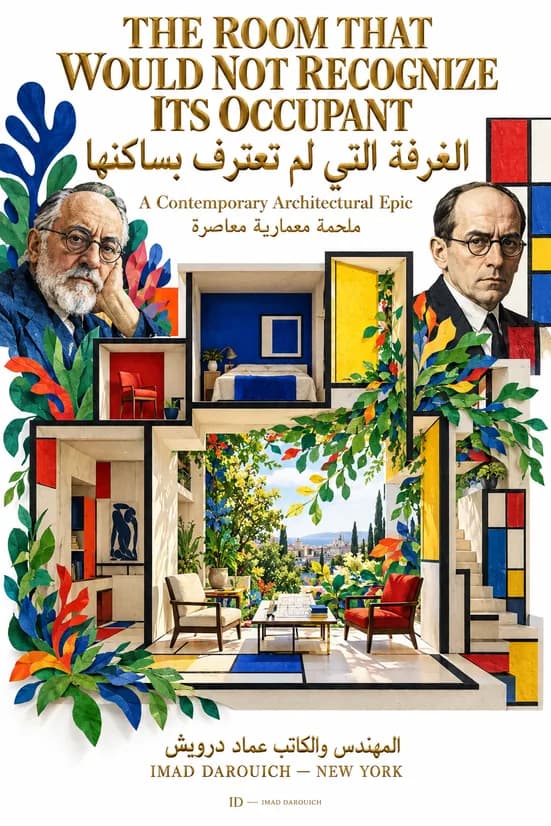
Piet Mondrian (1872 to 1944), the Dutch painter of black grids and primary colors, spent his last years in New York, and Henri Matisse (1869 to 1954) turned in his final decade to shapes cut from painted paper. Imad's Kafkaesque story brings Matisse and Mondrian into his New York apartment after the building management has divided it into colored boxes, and together they redraw the room around a human body.
A Note
تنويه
حكاية كافكاوية متخيّلة تجمع هنري ماتيس وبيت موندريان؛ اللقاء والحوار والأحداث من الخيال.An imagined Kafkaesque story bringing together Henri Matisse and Piet Mondrian; the encounter, dialogue, and events are fictional.
The Introduction
المقدمة
حين عدتُ إلى شقّتي في نيويورك، وجدتُ البابَ أقصر منّي.When I returned to my apartment in New York, I found the door shorter than I was.
انحنيتُ ودخلتُ.I bent down and entered.
على الطاولة رسالةٌ من إدارة المبنى:On the table lay a letter from building management:
«أُعيد تنظيمُ المساحات. يُرجى التكيّف».“The spaces have been reorganized. Please adapt.”
كان كرسيّي داخل مربّعٍ أسود.My chair stood inside a black square.
وسريري داخل مستطيلٍ أزرق.My bed lay inside a blue rectangle.
أمّا النافذة، فصارت خانةً صفراء لا تُفتح.The window had become a yellow box that would not open.
The Epic
الملحمة
وقفتُ بين الأثاث، أحاول الوصول إلى المطبخ.I stood among the furniture, trying to reach the kitchen.
كلما وضعتُ قدمي خارج مربّع، رنّ جرس.Whenever I stepped outside a square, a bell rang.
جاء الموظّف.The official arrived.
قال: حركتُك لا توافق التقسيم.He said: Your movement does not conform to the layout.
قلتُ: التقسيمُ لا يوافق جسدي.I said: The layout does not conform to my body.
دوّن ملاحظة.He made a note.
«الساكنُ يعترض على أبعاده».“The occupant objects to his dimensions.”
في الغرفة المجاورة، كان موندريان يرسم خطوطًا سوداء.In the adjoining room, Mondrian was painting black lines.
عرضتُ عليه المخطّط.I showed him the plan.
تأمّله، ثم نظر إلى قدميَّ المحصورتين.He studied it, then looked at my confined feet.
قال: أخذوا التوازنَ من اللوحة، وحوّلوه إلى تعليمات.He said: They took balance from the painting and turned it into instructions.
مدَّ خطًّا على الورقة.He extended a line across the paper.
اتّسع الممرّ.The passage widened.
تحرّكتُ خطوةً بلا جرس.I took a step without a bell.
تنفّستُ.I breathed.
لكن الموظّف عاد يحمل مسطرة.But the official returned carrying a ruler.
أعاد الخطَّ إلى مكانه.He moved the line back into place.
قال: يُمنع تعديلُ المساحة بعد اعتمادها.He said: Altering the space after approval is prohibited.
سألته: ولو تعذّرت الحياةُ فيها؟I asked: Even if living in it becomes impossible?
قال: الحياةُ ليست ضمن المخطّط.He said: Life is not included in the plan.
جلستُ على الأرض.I sat on the floor.
رأيتُ طرفَ ورقةٍ حمراء يخرج من تحت الباب.I saw the edge of a red paper slip beneath the door.
ثم ورقةً خضراء.Then a green one.
دخل ماتيس، يحمل مقصًّا وحزمةَ ألوان.Matisse entered, carrying scissors and a bundle of colors.
نظر إلى النافذة المغلقة.He looked at the sealed window.
قصَّ شكلَ ورقة شجر، وألصقه على أصفرها.He cut out the shape of a leaf and pasted it onto its yellow surface.
تحرّكت الورقة.The leaf moved.
هَبَّ هواءٌ خفيف.A faint breeze stirred.
قصَّ ورقةً ثانية.He cut out a second leaf.
امتدَّ غصنٌ إلى داخل الغرفة.A branch reached into the room.
اقتربتُ من النافذة.I approached the window.
شممتُ رائحةَ حديقةٍ لم تكن في المخطّط.I smelled a garden that had not appeared in the plan.
فتح الموظّف دفتره.The official opened his ledger.
قال: هذه زيادةٌ غير مرخّصة.He said: This is an unauthorized addition.
رفع ماتيس الورقةَ الخضراء بين إصبعيه.Matisse held the green paper between his fingers.
قال: زِنْها.He said: Weigh it.
وضعها الموظّف على الميزان.The official placed it on the scales.
لم تتحرّك الإبرة.The needle did not move.
خلفه، اتّسعت الحديقة.Behind him, the garden grew.
The Turning
التحوّل
أخرجتُ أدوات القياس.I took out my measuring tools.
هذه المرّة، بدأتُ بجسدي.This time, I began with my body.
قستُ اتّساع ذراعيَّ.I measured the span of my arms.
والمسافةَ التي أحتاجها كي أجلس، وأقوم، وأستقبل صديقًا.And the distance I needed to sit, stand, and welcome a friend.
رسمتُ كرسيًّا ثانيًا.I drew a second chair.
سأل الموظّف: مَن سيجلس عليه؟The official asked: Who will sit there?
قلتُ: لا أعرف بعد.I said: I do not know yet.
قال: إذن احذفه.He said: Then remove it.
وضعتُ القلم على الطاولة.I placed the pencil on the table.
قلتُ: لن أجعل البيتَ عاجزًا عن استقبال مَن لم يصل.I said: I will not make the house unable to welcome someone who has not yet arrived.
أزاح موندريان خطًّا.Mondrian shifted a line.
وفتح ماتيس بأوراقه مساحةً للضوء.And with his paper shapes, Matisse opened a space for light.
صار للكرسيّ الثاني مكان.The second chair had room.
بقي الموظّف واقفًا في المدخل.The official remained standing in the doorway.
نظرتُ إليه.I looked at him.
قلتُ: تفضّل.I said: Please, come in.
The Ending
الخاتمة
جلس.He sat down.
وضع المسطرةَ على ركبتيه.He laid the ruler across his knees.
سقطت ورقةٌ خضراء قرب قدمه.A green leaf fell beside his foot.
التقطها، ولم يُعدها إلى الملفّ.He picked it up and did not put it in the file.
يا ربّ، اجعل فيما نبنيه مكانًا لمَن يأتي متعبًا.O Lord, let what we build have room for those who arrive weary.
في المساء، علّقتُ المخطّطَ الجديد قرب الباب.That evening, I hung the new plan beside the door.
بقيت فيه خطوطُ موندريان واضحة.Mondrian’s lines remained clear within it.
وكانت ألوانُ ماتيس تعبر بينها.And Matisse’s colors moved between them.
وفي أسفل الورقة، أضفتُ جملةً لم يطلبها أحد:At the bottom of the sheet, I added a sentence no one had requested:
«يُسمح للإنسان أن يتغيّر.“The human being is permitted to change.
وعلى الغرفة أن تتّسع».And the room must make space.”
The same office logic bans a color in The City That Deleted Blue and holds back the sunrise in When Dawn Needed Two Witnesses. Architecture shaped around people is the subject of The Human at the Heart of Design.
Written by
Architect Imad Darouich
المهندس المعماري عماد درويش
Architect, author and founder of 3DEPICS, based in New York. He writes epic literature that crosses borders, languages and geographies, where philosophy meets architecture, spirituality meets history and memory meets imagination.