When the Earth Rose to Become a Face: Kenzo Tange and Isamu Noguchi
حين نهضت الأرضُ لتُصبح وجهًا
From Tange's Hiroshima to Noguchi's carved stone, an architect draws a square that keeps room for memory and for the person crossing it.
By Architect Imad Darouich4 min read
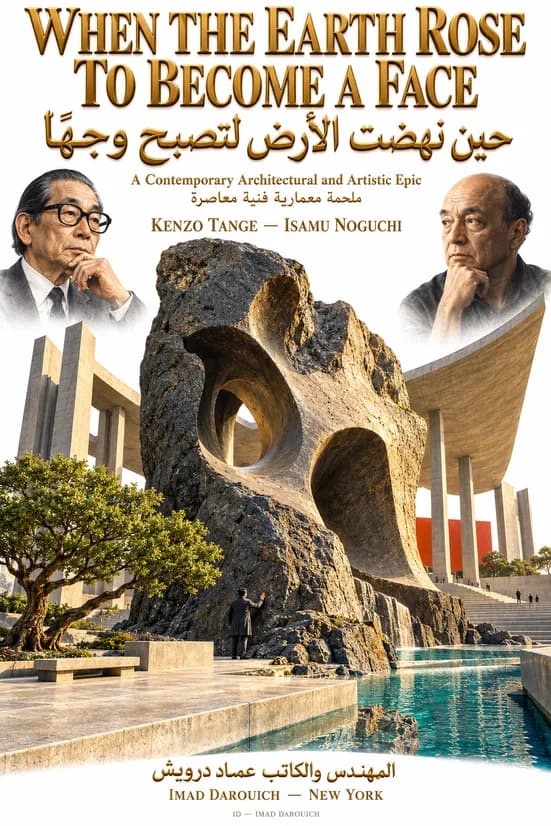
Kenzo Tange designed the Hiroshima Peace Memorial Park on the open ground left by the atomic bomb of 1945, and the sculptor Isamu Noguchi designed the railings of a bridge in the same park in 1951 and 1952. Imad's prose poem places Kenzo Tange and Isamu Noguchi side by side: a city drawn toward the future in the presence of memory, a stone changed only a little by the hand, and a square that notices each passerby.
المعماري كينزو تانغه والفنان إيسامو نوغوتشيArchitect Kenzo Tange and Artist Isamu Noguchi
ملحمة معمارية فنية معاصرةA Contemporary Architectural and Artistic Epic
A Note
تنويه
رؤيا أدبية تستلهم عمارة كينزو تانغه وفنّ إيسامو نوغوتشي؛ الصور والتأويلات للكاتب، وليست أقوالًا منسوبةً إليهما.A literary vision inspired by Kenzo Tange’s architecture and Isamu Noguchi’s art; its imagery and interpretations belong to the writer and are not quotations attributed to them.
The Introduction
المقدمة
أنا عماد درويش.I am Imad Darouich.
حين أرسم مدينةً، تبدأ الورقةُ بيضاء.When I draw a city, the page begins white.
لكن الأرضَ التي سأبني عليها لم تكن يومًا فارغة.Yet the ground upon which I will build has never been empty.
مرّت عليها أقدام.Feet have crossed it.
وحملت بيوتًا.It has carried homes.
وفي بعض مواضعها، بقيت أسماءٌ أطولَ عمرًا من الجدران.In some places, names have outlived the walls.
أضع قلمي، وأصغي إلى ما سبقني.I set down my pencil and listen to what came before me.
The Epic
الملحمة
عند تانغه، أرى المدينةَ تتطلّع إلى هيئةٍ جديدة.With Tange, I see the city reaching toward a new form.
خرسانةٌ واضحة القوّة.Concrete whose strength is evident.
وامتدادٌ يطلب من الهندسة أن تُوسّع قدرتها.And a span asking engineering to expand its capacity.
ترتفع الكتلةُ، وتنتظم الحركةُ من حولها.The mass rises, and movement gathers order around it.
لكنني أتوقّف عند الأرض.Yet I pause at the ground.
عند هيروشيما، يصبح رسمُ المستقبل عملًا في حضرة الذاكرة.In Hiroshima, drawing the future becomes work in the presence of memory.
كيف تمنح الناسَ طريقًا إلى الغد، وتحفظ لما فقدوه موضعًا؟How do you give people a path toward tomorrow while preserving a place for what they have lost?
كيف تفتح الساحة، دون أن تجعل اتّساعها يمحو الأثر؟How do you open a square without letting its breadth erase the trace?
هذه أسئلةٌ أعرف ثقلَها.These are questions whose weight I know.
أنا ابنُ أرضٍ تهدّمت فيها بيوت.I am the son of a land where homes were destroyed.
وأعرف أن إزالةَ الركام لا تُزيل ما يحمله الناجون.I know that clearing rubble does not remove what survivors carry.
لذلك أريد للعمارة أن تعرف أين تقف.So I want architecture to know where it stands.
أن تُتيح للحياة أن تعود.To allow life to return.
وأن تحفظ للذكرى طريقًا داخل هذه العودة.And to preserve a path for memory within that return.
ثم يأتي نوغوتشي إلى الحجر.Then Noguchi comes to stone.
يُغيّر سطحَه قليلًا.He changes its surface a little.
فتظهر هيئةٌ كانت تنتظر العين.And a form appears that had been waiting for the eye.
أرى الخشونةَ قرب النعومة.I see roughness beside smoothness.
وأشعر بمرور اليد على المادّة، دون أن تختفي طبيعتُها.I sense the hand’s passage across the material without its nature disappearing.
هنا يصبح الحجرُ لقاءً.Here, stone becomes an encounter.
بين ما صنعته الأرض، وما استطاع الإنسان أن يكتشفه فيها.Between what the earth made and what a human being could discover within it.
أدور حول المنحوتة.I walk around the sculpture.
يتغيّر ظلُّها.Its shadow changes.
والوجهُ الذي رأيتُه قبل لحظة ينفتح على هيئةٍ أخرى.The face I saw a moment ago opens into another form.
الخطوةُ جزءٌ من الرؤية.The step is part of seeing.
لذلك أتخيّل الساحةَ من موضع العابر.So I imagine the square from the passerby’s position.
طفلٌ يريد أن يقترب.A child wanting to come closer.
وشخصٌ يختار الالتفافَ حول الحجر.And someone choosing to circle the stone.
ومسنٌّ يحتاج إلى مقعدٍ قبل أن يُكمل.And an elderly person needing a seat before continuing.
لكلٍّ منهم زمنٌ في المكان.Each has a time within the place.
وعلى التصميم أن يُفسح لهذه الأزمنة.The design must make room for these different times.
بين اتّساع تانغه وحضور نوغوتشي، أرى الساحةَ تصبح جسدًا للمدينة.Between Tange’s breadth and Noguchi’s presence, I see the square become a body for the city.
الممرّاتُ تمنحها حركة.Paths give it movement.
والحجرُ يمنحها موضعًا للتوقّف.Stone gives it a place to pause.
والناسُ يكتبون عليها ما لا يستطيع المخطّطُ إتمامه.And people write upon it what the plan cannot complete.
أريد لهذا الجسد أن يتنفّس.I want this body to breathe.
بشجرةٍ تجد مكانًا لجذورها.Through a tree finding room for its roots.
وماءٍ يعرف طريقَه بعد المطر.And water finding its course after rain.
وظلٍّ يصل إلى المقعد في الوقت الذي يحتاجه الجالس.And shade reaching the bench when its occupant needs it.
من هذه التفاصيل، يتكوّن وجهُ المدينة.From these details, the city’s face takes form.
The Ending
الخاتمة
يا ربّ، أعنّا أن نبني فوق الأرض بأمانةٍ لما حملته قبلنا.O Lord, help us build upon the earth with fidelity to what it carried before us.
من تانغه، أتأمّل قدرةَ العمارة على جمع الناس حول مستقبلٍ مشترك.Through Tange, I contemplate architecture’s power to gather people around a shared future.
ومن نوغوتشي، أتأمّل قدرةَ الحجر على تغيير انتباهنا إلى المكان.Through Noguchi, I contemplate stone’s power to change our attention to a place.
ثم أرسم ساحة.Then I draw a square.
أحدّد مساراتِها.I mark its paths.
وأترك فيها موضعًا لحجرٍ كبير.And leave a place for a large stone.
قربه مقعد.Beside it, a bench.
وخلفه شجرة.Behind it, a tree.
سيمرُّ الناس.People will pass.
وقد يتوقّف أحدُهم، ويضع يدَه على السطح.Someone may pause and rest a hand upon the surface.
أريد له أن يشعر بأن المدينةَ، بكلِّ اتّساعها، انتبهت إلى وجوده.I want that person to feel that the city, in all its vastness, has noticed their presence.
Tange's career is told in Kenzo Tange: The Man Who Built a Bridge Between Ancient Japan and the City of the Future, his student and collaborator is the subject of Arata Isozaki: When the Ashes Built a Future Without a Style, and both books are in the architects collection.
Written by
Architect Imad Darouich
المهندس المعماري عماد درويش
Architect, author and founder of 3DEPICS, based in New York. He writes epic literature that crosses borders, languages and geographies, where philosophy meets architecture, spirituality meets history and memory meets imagination.