 3DEPICS
The Epic of the Straight Path
ملحمة الصراط المستقيم
Al-Fatiha asks for more than a map: it asks God to take our hands and walk with us.
By Architect Imad DarouichUpdated 2 min read
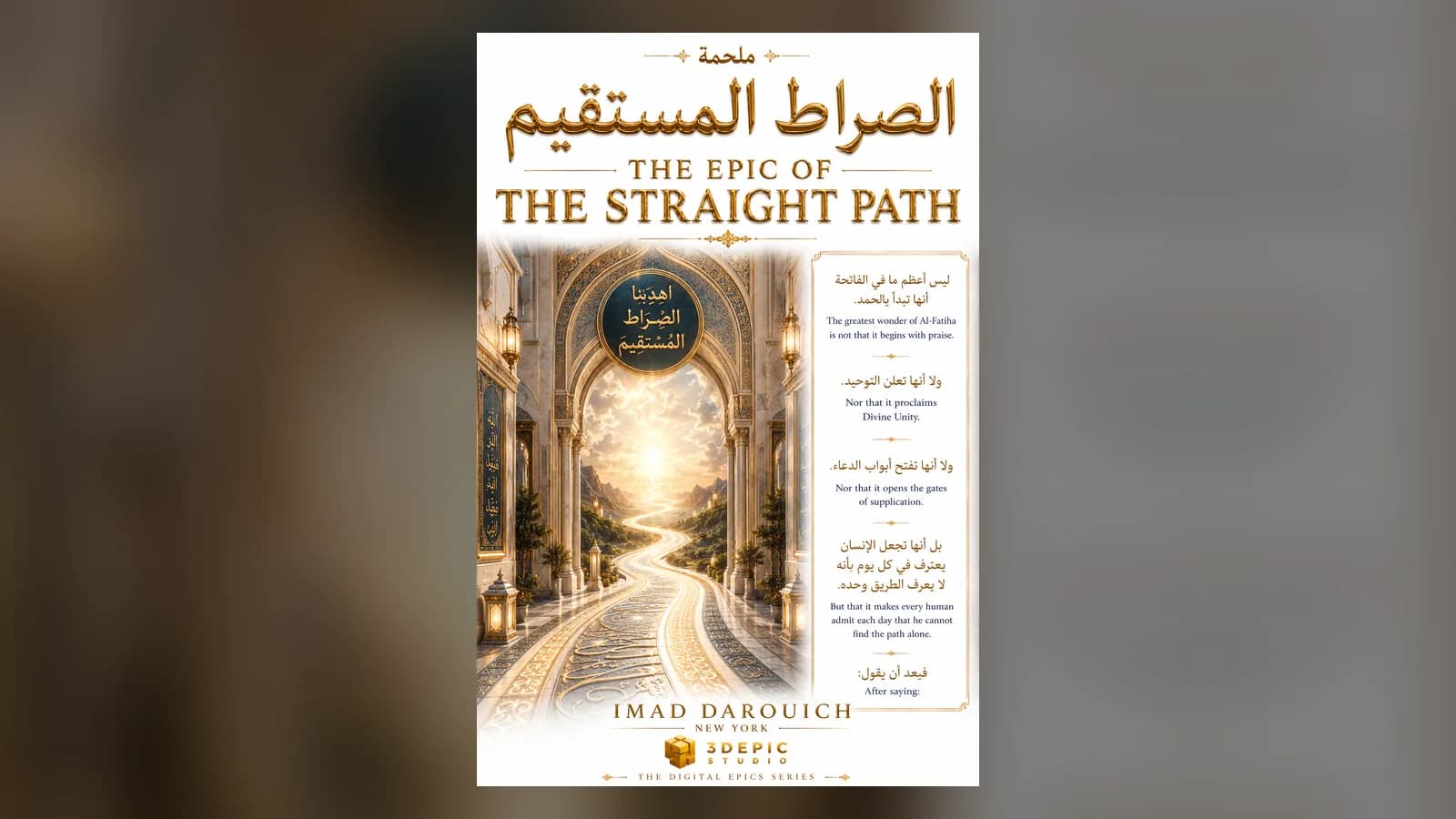
This reflection reads the prayer guide us to the straight path in Surah Al-Fatiha as a daily confession that no one finds the way alone. Imad notes that the verse asks for more than directions: it asks God to walk with us, to straighten the heart when it bends and to carry us when we are weak, because guidance in the Qur'an is care and mercy.
ليس أعظم ما في الفاتحة أنها تبدأ بالحمد.The greatest wonder of Al-Fatiha is not that it begins with praise.
ولا أنها تعلن التوحيد.Nor that it proclaims Divine Unity.
ولا أنها تفتح أبواب الدعاء.Nor that it opens the gates of supplication.
بل أنها تجعل الإنسان يعترف في كل يوم بأنه لا يعرف الطريق وحده.But that it makes every human admit each day that he cannot find the path alone.
فبعد أن يقول:After saying:
إياك نعبد وإياك نستعينYou alone we worship, and You alone we ask for help.
يأتي الاعتراف الأكبر.Comes the greatest confession.
اهدنا الصراط المستقيم.Guide us to the Straight Path.
ليس دلّنا فقط.Not merely “show us.”
وليس أخبرنا فقط.Not merely “tell us.”
وليس ضع أمامنا الخريطة ثم اتركنا.Not “place the map before us and leave us.”
بل خذ بأيدينا.Rather, take our hands.
وامش معنا.And walk with us.
وأقم قلوبنا إذا اعوجّت.And straighten our hearts when they bend.
وأيقظ أرواحنا إذا نامت.And awaken our souls when they sleep.
واحملنا إذا عجزنا.And carry us when we are too weak.
فالهداية في القرآن ليست معلومة.For guidance in the Qur’an is not information.
بل رعاية.It is care.
وليست إشارة طريق.Not a road sign.
بل صحبة رحمة.But the companionship of mercy.
كم من إنسان عرف الطريق فضاع.How many knew the road yet became lost.
وكم من إنسان حفظ الكتب فسقط.How many memorized books yet still fell.
وكم من عالم عرف الحق ولم يستطع السير إليه.How many scholars knew the truth but could not walk toward it.
لذلك لم يقل المؤمن:That is why the believer does not say:
“عرّفنا الصراط المستقيم.”“Teach us the Straight Path.”
بل قال:But instead says:
“اهدنا الصراط المستقيم.”“Guide us to the Straight Path.”
لأن المعرفة بلا عون قد تنكسر.Because knowledge without Divine help can break.
والعقل بلا نور قد يتيه.And reason without light can wander.
والإنسان بلا رحمة قد يسقط عند أول منعطف.And a human without mercy may fall at the first turn.
يا رب…O Lord…
إذا عرفنا الطريق فلا تتركنا لأنفسنا.If we know the path, do not leave us to ourselves.
وإذا سرنا عليه فلا ترفع عنا يد عنايتك.If we walk upon it, do not withdraw Your care.
وإذا تعثرنا فخذ بأيدينا.If we stumble, take us by the hand.
وإذا أظلمت الدنيا أمامنا.And if the world grows dark before us.
فكن أنت النور الذي لا ينطفئ.Be the light that never fades.
فالصراط المستقيم ليس طريقاً إلى الله فقط.For the Straight Path is not merely a road to God.
بل هو الله حين يرحم السائرين إليه.It is God’s mercy accompanying those who journey toward Him.
والفاتحة كلها تختصر في كلمة واحدة.And all of Al-Fatiha can be distilled into one prayer.
لا تتركنا وحدنا.Do not leave us alone.
بقلم المهندس المعماري عماد درويشBy Architect Imad Darouich · New York
For more on Al-Fatiha and the path, read The Epic of Surah Al-Fatiha: The First Light and the Gate of Meaning and Epic of the Ambush on the Straight Path, both in the faith and spirit collection.
Written by
بقلم المهندس المعماري عماد درويش
Architect and author based in New York. He writes contemporary epics: long-form books about architects, buildings, cities and faith, in Arabic and English.