 3DEPICS
Between Walls That Watch and Roofs That Choke the Sky
بين جدرانٍ تراقب وسقوفٍ تخنق السماء
When architecture turned from sheltering people to guarding power, the home itself became the target.
By Architect Imad DarouichUpdated 3 min read
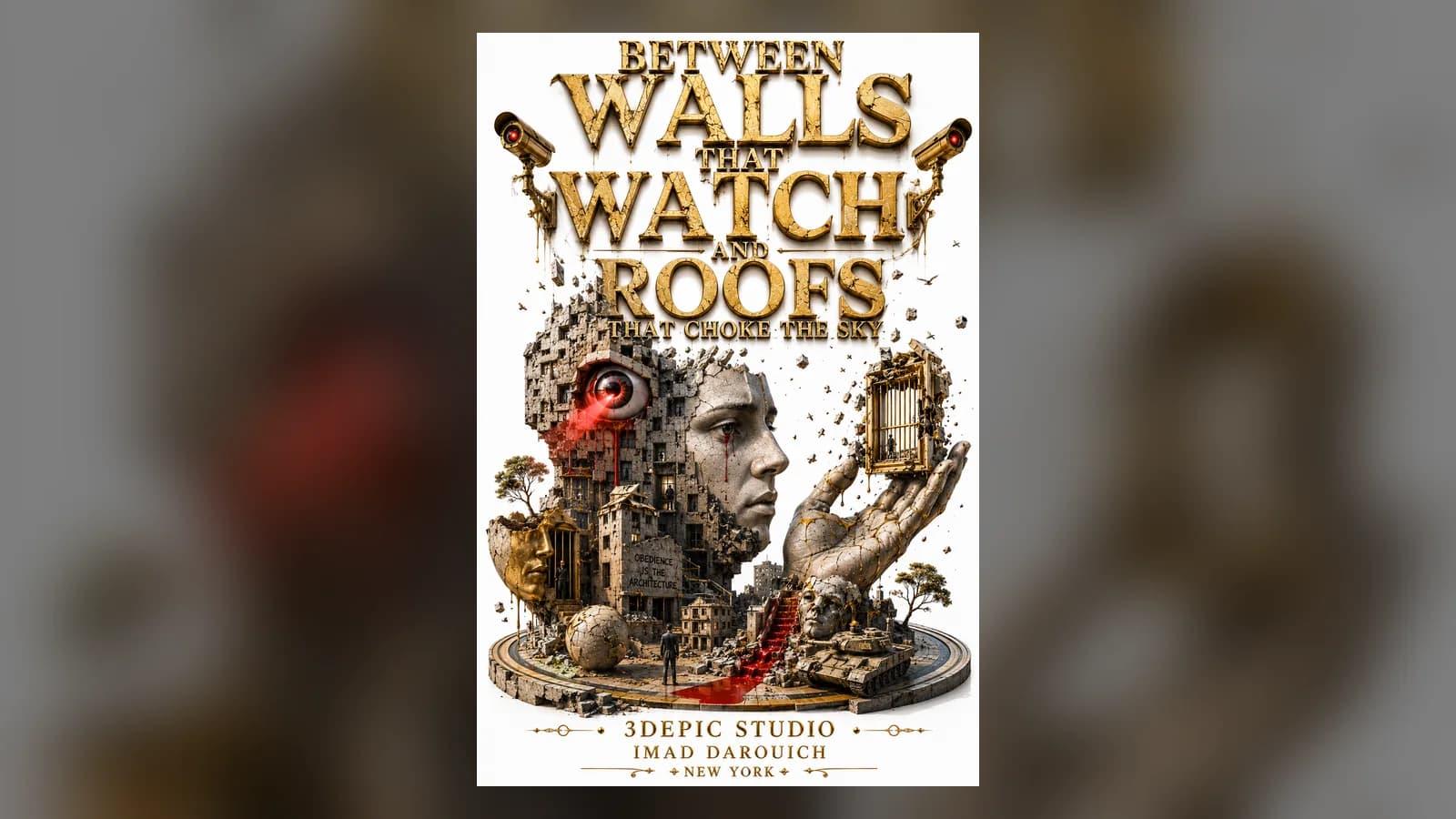
This prose poem on domicide and the architecture of memory starts with the home, older than the state and the palace, the room where civilization began. It then follows the moment architecture stopped protecting people and started guarding power, when walls watched and windows had to close. Imad ends with memory as the one house that no bulldozer can bring down.
في البدء كان البيت.In the beginning, there was the home.
ليس الدولة،Not the state,
ولا القصر،Nor the palace,
ولا الثكنة،Nor the barracks,
ولا الحدود المرسومة بالحبر والدم.Nor borders drawn with ink and blood.
كان البيت.There was the home.
غرفةٌ صغيرة،A small room,
نافذةٌ تستقبل الصباح،A window welcoming the morning,
رائحةُ خبزٍ تتسلل من المطبخ،The smell of bread drifting from the kitchen,
وصوتُ أمٍّAnd a mother’s voice
يُعيد ترتيب العالم كل مساء.Reordering the world every evening.
من البيت بدأت الحضارة.From the home, civilization began.
ومن الفناء الداخليFrom the inner courtyard
وُلدت الحكايات،Stories were born,
وتعلم الأطفال أسماء النجوم،Children learned the names of stars,
وحفظت الجدران أسرار العشاق،And walls preserved the secrets of lovers,
والراحلين،The departed,
والعائدين بعد طول غياب.And those returning after long absence.
لكن شيئاً ما حدث.But something happened.
في مكانٍ ما،Somewhere,
توقفت العمارة عن حماية الإنسان،Architecture stopped protecting people,
وبدأت تحرس السلطة.And began protecting power.
لم تعد الجدران تبنىWalls were no longer built
لتصد الريح،To resist the wind,
بل لتوجه النظر.But to direct the gaze.
ولم تعد النوافذWindows were no longer opened
لتدخل الشمس،To welcome sunlight,
بل لتحدد ما يُرىBut to determine what may be seen
وما يجب ألا يُرى.And what must remain unseen.
كبرت الأبنية،Buildings grew taller,
وصغرت الأرواح.While souls grew smaller.
ارتفعت الأبراج،The towers rose,
وانخفضت المسافات بين الإنسان وخوفه.While the distance between people and fear diminished.
صار الإسمنت لغةً جديدة.Concrete became a new language.
لغةً لا تكتب القصائد،A language that writes no poems,
بل التقارير.Only reports.
لا تحفظ الذكريات،It preserves no memories,
بل السجلات.Only records.
في مدنٍ كثيرة،In many cities,
لم يكن البيت مجرد بناء.The home was never merely a structure.
كان امتداداً للجسد.It was an extension of the body.
وكانت الأزقة شرايينه،The alleys were its arteries,
والساحات قلبه،The squares its heart,
والجيران ذاكرته.And neighbors its memory.
ثم جاء زمنٌThen came an age
أصبح فيه البيت مشتبهاً به.When the home itself became suspect.
صار الحائط شاهداً يجب إسكاتُه.The wall became a witness that must be silenced.
وصارت النافذة عيناً يجب إغلاقها.The window became an eye that must be shut.
وصارت الشرفة صوتاً يجب إسقاطه.The balcony became a voice that must be removed.
وهكذاAnd thus,
لم يُقتل الإنسان وحده.It was not only people who were killed.
قُتل البيت أيضاً.The home was killed as well.
قُتل الممر الذي تعلمنا فيه المشي.The corridor where we learned to walk was killed.
والباب الذي انتظر عودتنا.The door that waited for our return.
والشجرة التي كبرت معنا.The tree that grew beside us.
والنافذة التي كانت تعرف أسماءنا.And the window that knew our names.
هذا هو القتل المعماري.This is architectural killing.
أن يُمحى المكانWhen a place is erased
كي تُمحى الذاكرة.So memory may be erased.
أن يُهدم البيتWhen a home is demolished
كي يضيع الطريق إلى الذات.So the road back to oneself is lost.
لكن البيوت أعند من الخرائط.Yet homes are more stubborn than maps.
وأقوى من الجرافات.Stronger than bulldozers.
وأطول عمراً من الأنظمة.Longer-lived than regimes.
فالبيت الحقيقيFor the true home
لا يقف فوق الأرض فقط.Does not stand only upon land.
بل يقيم داخل الروح.It resides within the soul.
ولهذا ما زلنا نتذكر.That is why we still remember.
نتذكر رائحة الياسمين.We remember the scent of jasmine.
وصوت المطر على السطوح القديمة.The sound of rain on old roofs.
وخطوات الأب العائدة مساءً.A father’s footsteps returning at dusk.
ويد الأم وهي تفتح النافذة للفجر.A mother’s hand opening the window to dawn.
نتذكر لأن الذاكرةWe remember because memory
آخر بيتٍ لا يستطيع أحد هدمه.Is the last house no one can demolish.
ولهذا نكتب.And that is why we write.
نكتب لأن الكلماتWe write because words
تتحول أحياناً إلى بيوت.Sometimes become homes.
ولأن القصائدAnd because poems
يمكن أن تكون أوطاناً مؤقتة.Can become temporary homelands.
ولأن الحجر إذا سقطAnd because when stone falls,
يبقى المعنى واقفاً.Meaning remains standing.
ويبقى البيتAnd the home remains
في مكانٍ ما من القلب،Somewhere within the heart,
ينتظر عودة أصحابه.Waiting for its people to return.
كما تنتظر دمشق مطراً قديماً،As Damascus awaits an old rain,
وكما تنتظر النوافذAnd as windows await
ذلك الضوء الذي يعرف الطريق.The light that still knows the way.
Inspired by the concept of Domicide and the Architecture of Memory 3DEpic Studio • New York
بقلم المهندس المعماري عماد درويشBy Architect Imad Darouich · New York
For more on buildings that hold memory, read Architecture of the Soul: Buildings That Shaped Memory and Cities Without Doors; the first is in the buildings and cities collection.

Written by
بقلم المهندس المعماري عماد درويش
Architect and author based in New York. He writes contemporary epics: long-form books about architects, buildings, cities and faith, in Arabic and English.