 3DEPICS
The Epic of Modernism
ملحمة الحداثة
From Villa Savoye to the Seagram Building, an architect retells how modernism tried to make buildings honest.
By Architect Imad DarouichUpdated 7 min read
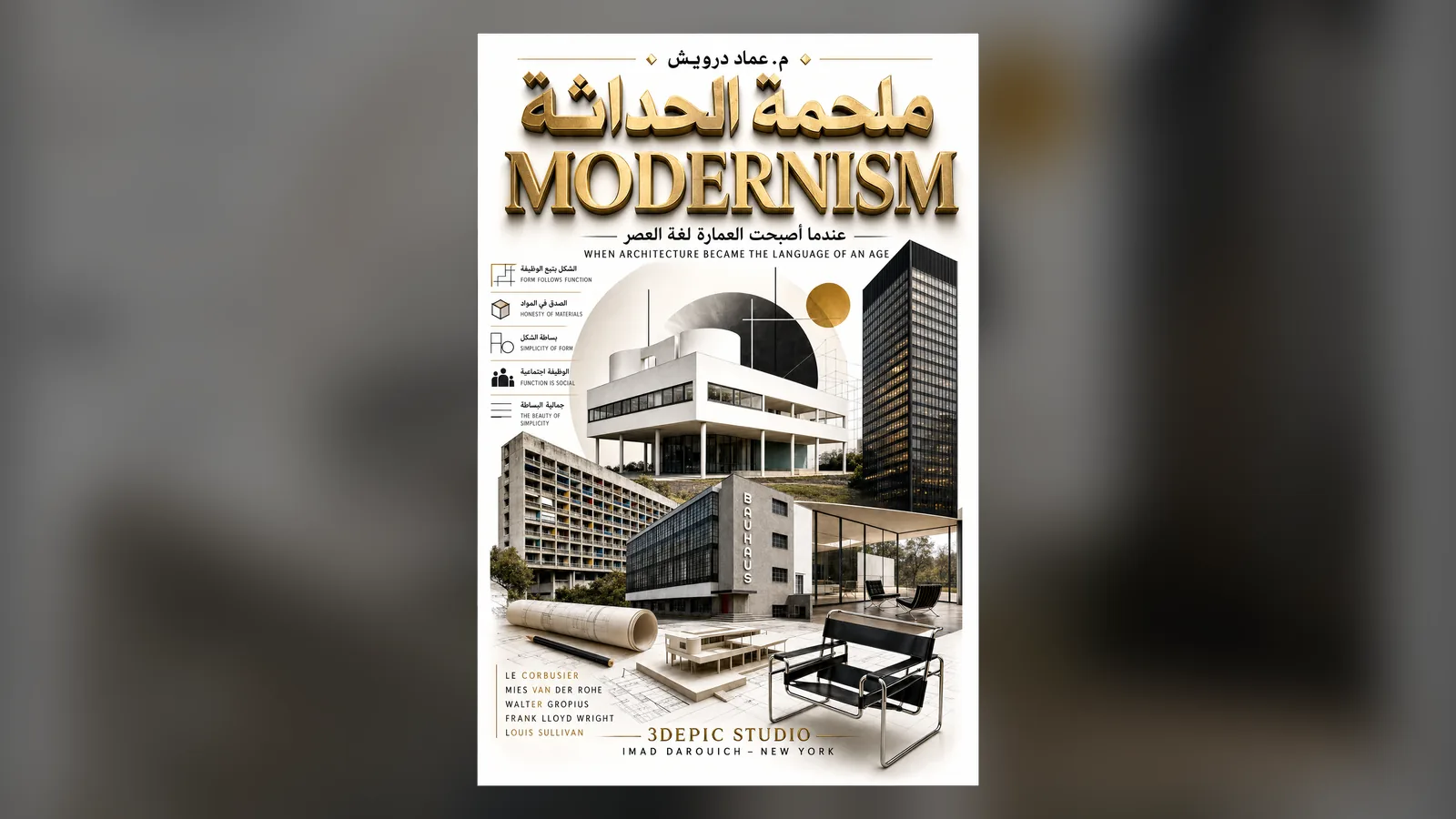
This prose epic walks through the principles of modernist architecture as they took shape in the early twentieth century: form and function, honest materials, simple forms, a social mission and the beauty of less. Imad illustrates each with a building, from Villa Savoye and the Weissenhof Estate to the Seagram Building and the Unité d'Habitation in Marseille, and ends with the questions modernism left behind.
في بدايات القرن العشرين…At the dawn of the twentieth century…
كان العالم يتغيّر بسرعة.The world was changing at extraordinary speed.
الثورة الصناعية قلبت المدن.The Industrial Revolution transformed the cities.
القطارات تشق الأرض.Trains cut across the land.
وناطحات السحاب تصعد إلى السماء.Skyscrapers climbed toward the sky.
والناس يبحثون عن لغة جديدة للبناء.And people searched for a new language of building.
من هنا ولدت الحداثة.From this transformation, Modernism emerged.
لم تكن مجرد أسلوب.It was not merely a style.
بل كانت روح عصر كامل.It was the spirit of an entire age.
أرادت أن تقول:It wanted to declare:
يكفي أن نبني قصورًا مزخرفة.Enough of building ornamented palaces.
يكفي أن نخدع العين بزينة فارغة.Enough of deceiving the eye with empty decoration.
فلنعد إلى الصدق.Let us return to honesty.
إلى البساطة.To simplicity.
إلى الوظيفة.To function.
FIRST PRINCIPLE: FORM AND FUNCTION
المبدأ الأول: الشكل والوظيفة
الخطوط ليست للزينة فقط.Lines are not merely decoration.
بل يجب أن تخدم الإنسان.They must serve the human being.
النافذة تُفتح لتدخل الشمس.A window opens to welcome sunlight.
لا لتختبئ خلف إطار ثقيل.Not to hide behind a heavy frame.
والكرسي وُجد ليمنح الراحة.A chair exists to provide comfort.
لا ليكون عرشًا.Not to become a throne.
كان شعار العصر واضحًا:The spirit of the age was clear:
الشكل يتبع الوظيفة.Form follows function.
لكن العبارة سبقت الحداثة الأوروبية.Yet the phrase preceded European Modernism.
صاغها المعماري الأميركي لويس سوليفان.It was coined by American architect Louis Sullivan.
ثم أصبحت روحًا مركزية في الفكر الحديث.It later became central to modern architectural thought.
فيلا سافوا، 1929–1931.Villa Savoye, 1929–1931.
صممها لو كوربوزييه وبيير جانري.It was designed by Le Corbusier and Pierre Jeanneret.
بيت أبيض يبدو كأنه يطفو.A white house that seems to float.
مرفوع فوق أعمدة رشيقة.Raised upon slender pilotis.
الضوء يتحرك داخله بحرية.Light moves freely through its spaces.
والفراغ يتحرر من ثقل الجدار التقليدي.Space is liberated from the weight of the traditional wall.
وكان لو كوربوزييه يرى البيت:Le Corbusier famously envisioned the house as:
آلةً للسكن.A machine for living in.
لكنها آلة تبحث عن الضوء والنظام والجمال.Yet a machine seeking light, order, and beauty.
SECOND PRINCIPLE: HONESTY OF MATERIALS
المبدأ الثاني: الصدق في المواد
الفولاذ والزجاج والخرسانة…Steel, glass, and concrete…
لم تعد موادًا يجب إخفاؤها.Were no longer materials to be concealed.
لماذا نغطي الحديد كي يبدو حجرًا؟Why cover steel to make it resemble stone?
ولماذا نخفي الخرسانة خلف قناع؟Why hide concrete behind a mask?
المادة تستطيع أن تتحدث باسمها.Material can speak in its own name.
والجمال قد يسكن في حقيقتها.Beauty can reside in its truth.
مبنى سيغرام، 1958.The Seagram Building, 1958.
في قلب نيويورك.In the heart of New York.
صممه ميس فان دير روه بالتعاون مع فيليب جونسون.Designed by Mies van der Rohe with Philip Johnson.
برج من الزجاج والمعدن.A tower of glass and metal.
صار أحد رموز الحداثة الأميركية.It became an icon of American Modernism.
صارم في هندسته.Disciplined in its geometry.
هادئ في حضوره.Quiet in its presence.
وأنيق كقصيدة قصيرة.Elegant as a short poem.
لم يحتج إلى الصراخ.It did not need to shout.
فالنظام كان لغته.Order was its language.
والنسبة كانت موسيقاه.Proportion was its music.
THIRD PRINCIPLE: SIMPLICITY OF FORM
المبدأ الثالث: بساطة الشكل
المربع عدل.The square is balance.
لأنه يوزّع حدوده بوضوح.Because it defines its boundaries with clarity.
والمستطيل نظام.The rectangle is order.
لأنه ينظّم الفراغ والحركة.Because it organizes space and movement.
والخط المستقيم صدق.The straight line is honesty.
لأنه يتجه إلى غايته بلا مواربة.Because it moves toward its purpose without disguise.
والدائرة وحدة.The circle is unity.
لأنها تعود دائمًا إلى ذاتها.Because it always returns to itself.
لكن الحداثة لم تقدّس الشكل لذاته.Yet Modernism did not worship form for its own sake.
كانت تبحث عن نظام خلف الشكل.It searched for an order behind form.
وعن منطق خلف الجمال.And for logic behind beauty.
مستوطنة فايسنهوف، شتوتغارت، 1927.The Weissenhof Estate, Stuttgart, 1927.
كانت معرضًا حيًا للسكن الحديث.It was a living exhibition of modern housing.
قاد تخطيطها ميس فان دير روه.Its overall planning was led by Mies van der Rohe.
وشارك فيها كبار معماريي الحداثة.Leading Modernist architects contributed to it.
منهم لو كوربوزييه وغروبيوس وشارون وغيرهم.Among them were Le Corbusier, Gropius, Scharoun, and others.
لم تكن مجموعة بيوت فقط.It was not merely a collection of houses.
كانت مختبرًا لمستقبل السكن.It was a laboratory for the future of living.
FOURTH PRINCIPLE: THE SOCIAL MISSION
المبدأ الرابع: الوظيفة الاجتماعية
لم تكن الحداثة فنًا للنخبة فقط.Modernism was not intended only for the elite.
كان في داخلها حلم اجتماعي كبير.At its heart was a powerful social dream.
مساكن صحية.Healthy housing.
مدارس مضيئة.Light-filled schools.
مستشفيات أكثر إنسانية.More humane hospitals.
ومدن تستطيع خدمة الملايين.Cities capable of serving millions.
فالعمارة ليست قصرًا مغلقًا.Architecture is not a closed palace.
العمارة حياة يومية.Architecture is everyday life.
الوحدة السكنية في مارسيليا، 1952.Unité d’Habitation in Marseille, 1952.
صممها لو كوربوزييه.Designed by Le Corbusier.
كتلة ضخمة ترتفع فوق الأرض.A monumental block raised above the ground.
لكن داخلها فكرة مدينة.Yet within it lived the idea of a city.
شقق.Apartments.
وخدمات.Services.
ومتاجر.Shops.
ومرافق جماعية.Communal facilities.
وسطح للحياة والرياضة.And a rooftop for recreation and communal life.
كان السؤال أكبر من المبنى.The question was larger than the building.
كيف يمكن للعمارة أن تصنع مجتمعًا؟How can architecture help create a community?
FIFTH PRINCIPLE: THE BEAUTY OF SIMPLICITY
المبدأ الخامس: جمالية البساطة
قال ميس فان دير روه:Mies van der Rohe declared:
الأقل هو الأكثر.Less is more.
لم تكن دعوة إلى الفقر البصري.It was not a call for visual poverty.
بل إلى الانضباط.It was a call for discipline.
أن تحذف ما لا تحتاج إليه.To remove what is unnecessary.
حتى يظهر الضروري.So that the essential may appear.
أن تصمت الزخرفة.To let ornament fall silent.
حتى يتكلم الفراغ.So that space may speak.
أن تقل العناصر.To reduce the elements.
حتى تزداد قوتها.So that their power may increase.
البساطة ليست غيابًا.Simplicity is not absence.
إنها تركيز.It is concentration.
ليست فراغًا.It is not emptiness.
إنها وضوح.It is clarity.
THE ARCHITECTS WHO SHAPED MODERNISM
رجال صنعوا لغة الحداثة
لويس سوليفان أعطى الوظيفة صوتًا.Louis Sullivan gave function a voice.
والتر غروبيوس جمع الفن بالحرفة.Walter Gropius reunited art and craft.
لو كوربوزييه أعاد التفكير في البيت والمدينة.Le Corbusier reimagined the house and the city.
ميس فان دير روه جعل البساطة فخامة.Mies van der Rohe transformed simplicity into elegance.
وفرانك لويد رايت بحث عن الحداثة داخل الطبيعة.Frank Lloyd Wright searched for modernity within nature.
لم يتفقوا على كل شيء.They did not agree on everything.
لكنهم اشتركوا في رفض التقليد الأعمى.But they shared a rejection of blind imitation.
كانوا يريدون عمارةً تخص عصرهم.They wanted an architecture belonging to their own age.
FROM PARIS TO NEW YORK
من باريس إلى نيويورك
وهكذا أصبحت الحداثة ثورة عالمية.And thus Modernism became a global revolution.
عبرت الحدود.It crossed borders.
وعبرت اللغات.It crossed languages.
من باريس إلى نيويورك.From Paris to New York.
ومن برلين إلى شيكاغو.From Berlin to Chicago.
ومن أوروبا إلى الأميركيتين وآسيا وما بعدها.From Europe to the Americas, Asia, and beyond.
تغير البيت.The house changed.
وتغير المكتب.The office changed.
وتغير المصنع.The factory changed.
وتغير شكل المدينة نفسها.The city itself changed.
فيلا سافوا أصبحت بيانًا أبيض.Villa Savoye became a white manifesto.
وسيغرام أصبح قصيدةً عمودية.Seagram became a vertical poem.
ووحدة مارسيليا أصبحت تجربةً اجتماعية.The Marseille Unité became a social experiment.
وفايسنهوف أصبحت مختبرًا للسكن الحديث.Weissenhof became a laboratory of modern housing.
WHEN THE REVOLUTION BECAME A QUESTION
حين تحولت الثورة إلى سؤال
لكن كل ثورة تحمل داخلها سؤالها المضاد.Yet every revolution carries within it a counter-question.
هل أصبحت البساطة أحيانًا برودة؟Did simplicity sometimes become coldness?
هل تحولت اللغة العالمية إلى تشابه عالمي؟Did a universal language become global sameness?
هل نسي بعض المعماريين المكان والتاريخ والذاكرة؟Did some architects forget place, history, and memory?
هل أصبح الزجاج في بعض المدن قناعًا جديدًا؟Did glass itself become a new kind of mask?
من هذه الأسئلة،From these questions,
ستولد لاحقًا ردود جديدة.New responses would later emerge.
وستأتي ما بعد الحداثة.Postmodernism would arrive.
وسيعود الرمز.Symbol would return.
ويعود اللون.Color would return.
وتعود الذاكرة إلى الواجهة.Memory would return to the façade.
فالعمارة لا تستقر طويلًا.Architecture never remains still for long.
كل جواب معماري،Every architectural answer,
يحمل في داخله السؤال التالي.Carries the next question within it.
CONCLUSION
الخاتمة
كانت الحداثة أكثر من واجهات زجاجية.Modernism was more than glass façades.
وأكثر من خطوط مستقيمة.More than straight lines.
وأكثر من خرسانة وفولاذ.More than concrete and steel.
كانت محاولة لإعادة تعريف الحياة نفسها.It was an attempt to redefine life itself.
قالت إن العمارة ليست زخرفةً على جدار.It declared that architecture is not ornament upon a wall.
بل بيتٌ للإنسان.It is a home for humanity.
ومسرحٌ للضوء.A stage for light.
ونظامٌ للحركة.An order for movement.
ومساحةٌ للحرية.A space for freedom.
اليوم…Today…
ما زلنا نرى أثرها في مدننا.We still see its imprint upon our cities.
في كل برج زجاجي.In every glass tower.
وفي كل مسقط مفتوح.In every open plan.
وفي كل مبنى يبحث عن الوضوح.In every building searching for clarity.
لكن أعظم ما تركته الحداثة،Yet Modernism’s greatest legacy
لم يكن شكلًا.Was not a form.
بل سؤالًا.It was a question.
هل يستطيع المبنى أن يكون صادقًا؟Can a building be honest?
هل يستطيع الجمال أن يعيش بلا أقنعة؟Can beauty live without masks?
وهل يستطيع القليل أن يحمل الكثير؟And can less truly contain more?
بقلم المهندس المعماري عماد درويشBy Architect Imad Darouich · New York
For more on the schools and architects who shaped the modern city, read Dialogues with Architectural Schools and The Epic of Le Corbusier; the first is in the ideas and philosophy collection.

Written by
بقلم المهندس المعماري عماد درويش
Architect and author based in New York. He writes contemporary epics: long-form books about architects, buildings, cities and faith, in Arabic and English.