 3DEPICS
The Epic of the Ocean with a Fever
ملحمة البحر الذي أصيب بالحمّى
The sea swallowed our heat for a century in silence, and now it is returning it as storms and rising water.
By Architect Imad DarouichUpdated 11 min read
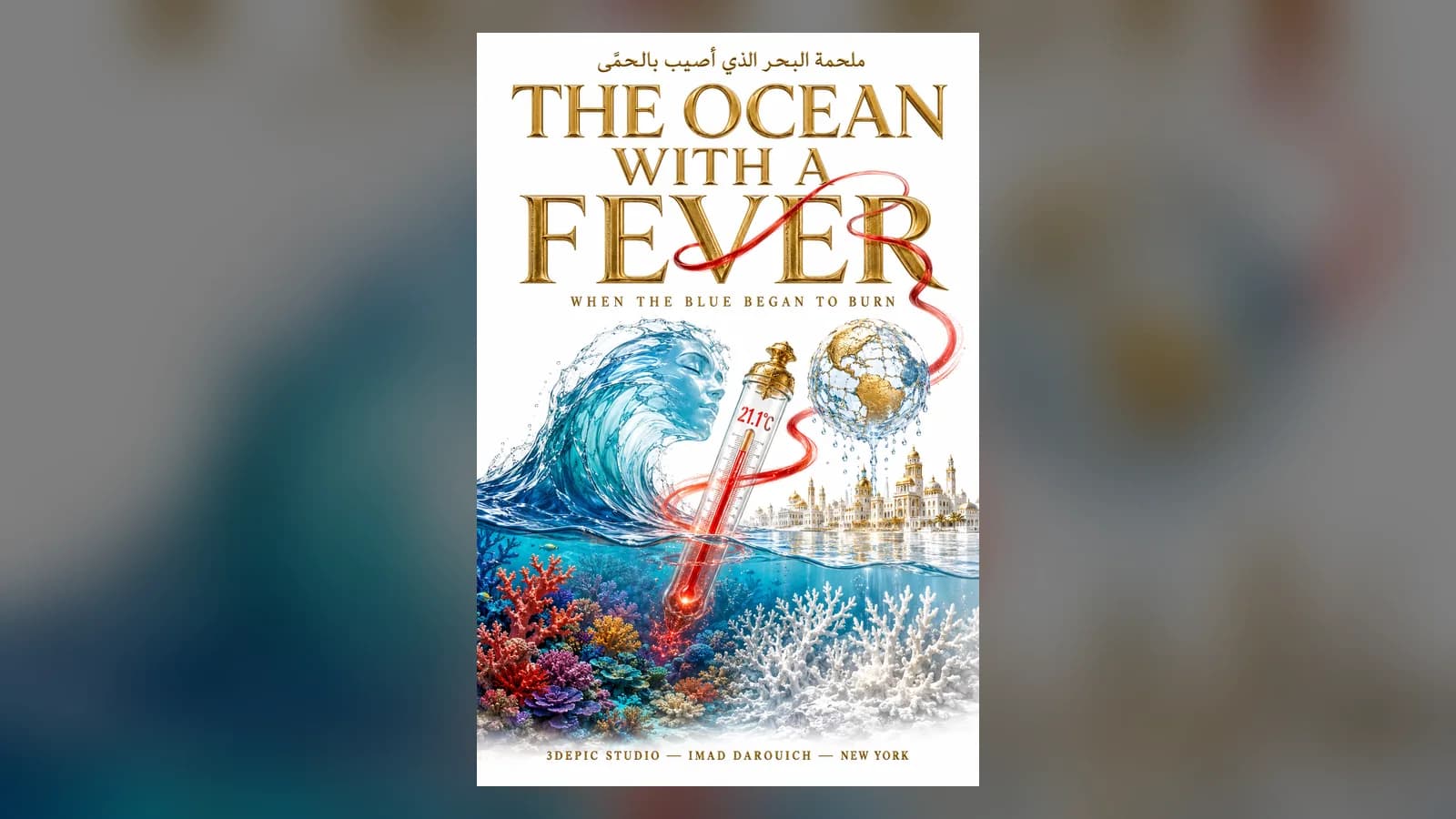
This poem about ocean warming starts from August 2026, when the average surface temperature of the world's oceans reached a record 21.1 degrees Celsius. Imad admits the sea to an imaginary hospital and follows its fever through bleached coral, fish fleeing north, an island slowly disappearing, a fisherman's empty net and a conference of cold words, before writing a prescription to save the blue.
استوديو الملحمة ثلاثية الأبعاد، عماد درويش، نيويورك
The Beginning: When the Blue Began to Burn
البداية: عندما ارتفعت حرارة الأزرق
في البدء، كان البحر ماءً، وكان الماء ذاكرة الأرض الأولى.In the beginning, the sea was water, and water was Earth’s first memory.
حمل السفن، وأطعم المدن، ورسم حدود القارات دون أن يطالب الإنسان بالشكر.It carried ships, nourished cities, and drew the borders of continents without asking humanity for gratitude.
ابتلع حرارة المصانع، ودخان المحركات، وجشع المدن، وظلّ صامتًا كي تبقى اليابسة قابلةً للحياة.It swallowed the heat of factories, the fumes of engines, and the greed of cities, remaining silent so the land could stay habitable.
لكن في أغسطس/آب 2026، ارتفع متوسط حرارة سطح محيطات العالم إلى رقمٍ قياسي بلغ 21.1 درجة مئوية.But in August 2026, the average surface temperature of the world’s oceans reached a record 21.1°C.
لم يكن الرقم خبرًا صغيرًا في نشرة الطقس.The number was not a minor item in a weather report.
كان ميزان حرارةٍ وُضع في فم الكوكب، فأعلن أن الأرض أصيبت بالحمّى.It was a thermometer placed inside the planet’s mouth, announcing that Earth had developed a fever.
أكثر من تسعين في المئة من الحرارة الزائدة الناتجة عن الانبعاثات امتصتها المحيطات.More than ninety percent of the excess heat produced by emissions has been absorbed by the oceans.
والبحر الذي ظلّ طويلًا يحمينا من نارنا، بدأ يعيد إلينا الحرارة على شكل عواصف وحرائق وأمواجٍ مرتفعة.The sea that long protected us from our own fire began returning the heat as storms, wildfires, and rising waves. The Guardian
هنا تبدأ الملحمة، لا عند شاطئٍ جميل، بل داخل جسد البحر المريض.Here the epic begins, not upon a beautiful shore, but within the body of the sickened sea.
Chapter One: The Patient Without a Hospital
الفصل الأول: المريض الذي لا يملك مستشفى
دخل البحر مستشفى الخيال، لكنه كان أكبر من جميع الأسرّة.The ocean entered imagination’s hospital, but it was larger than every bed.
مدّت الممرضة ميزان الحرارة من القطب إلى خط الاستواء، فاحمرّ الزئبق داخل الزجاج.The nurse stretched the thermometer from the poles to the equator, and the mercury turned red inside the glass.
سأل الطبيب البحر: أين يؤلمك؟The doctor asked the ocean: Where does it hurt?
قال: في كل مكانٍ ألقيتم فيه دخانكم ونفاياتكم وصمتكم.It replied: Everywhere you have thrown your smoke, waste, and silence.
قال الطبيب: منذ متى وأنت تشعر بالحمّى؟The doctor asked: How long have you suffered from this fever?
قال البحر: منذ أن ظننتم أن اتساعي يعني أن قدرتي على الاحتمال بلا نهاية.The ocean answered: Since you mistook my vastness for an endless capacity to endure.
بحثوا عن دواءٍ داخل خزائن المستشفى، لكن الوصفة كانت مكتوبةً خارج المبنى.They searched the hospital cabinets for medicine, but the prescription was written outside the building.
خفضوا النار التي أشعلتموها، يهبط ميزان الحرارة.Reduce the fire you have ignited, and the temperature will fall.
Chapter Two: The Ocean That Swallowed Our Fire
الفصل الثاني: المحيط الذي ابتلع نارنا
كلما أحرقت مدينةٌ وقودًا، أرسلت جزءًا من حرارتها نحو البحر.Whenever a city burned fuel, it sent part of its heat toward the sea.
كلما تحرك مصنع، أو أقلعت طائرة، أو ازدحمت طريق، حمل الهواء الفاتورة إلى المحيط.Whenever a factory operated, an airplane departed, or a highway filled, the atmosphere delivered the bill to the ocean.
كان البحر يدفع عنا الثمن دون أن نراه.The ocean paid the price on our behalf without being seen.
امتص الحرارة كما تمتص الأمّ غضب البيت كي ينام أطفالها بهدوء.It absorbed heat as a mother absorbs the anger of a household so her children may sleep peacefully.
لكن الأمهات يتعبن، والمحيطات أيضًا تصل إلى حدودها.Mothers grow weary, and oceans also reach their limits.
لم يعد الماء قادرًا على إخفاء كل ما أودعناه فيه.The water could no longer conceal everything we had deposited within it.
صار يسخن ويتمدد، وتحوّل صبره إلى ارتفاعٍ بطيء يقترب من أبواب المدن الساحلية.It warmed and expanded, and its patience became a slow rise approaching the doors of coastal cities.
Chapter Three: The Coral That Lost Its Colors
الفصل الثالث: المرجان الذي فقد ألوانه
في أعماق البحر، كانت الشعاب المرجانية مدنًا لا تشبه مدن البشر.In the depths, coral reefs were cities unlike those of humanity.
لم تكن لها شوارع، لكن الأسماك كانت تعبر بين أبراجها الملونة.They had no streets, yet fish moved between their colorful towers.
لم تكن لها نوافذ، لكن الضوء كان يدخل إليها مكسورًا بموسيقى الماء.They had no windows, yet light entered them, refracted by the music of water.
وحين ارتفعت الحرارة، بدأت الألوان تنسحب من أجساد المرجان.When temperatures rose, color began retreating from coral bodies.
صار الأحمر شاحبًا، والبرتقالي أبيض، والبنفسجي هيكلًا ينتظر الموت.Red turned pale, orange became white, and violet became a skeleton awaiting death.
لم يكن ابيضاض المرجان جمالًا جديدًا، بل كفنًا ارتدته المدينة البحرية قبل دفنها.Coral bleaching was not a new form of beauty, but a shroud worn by the underwater city before burial.
وعندما تموت الشعاب، لا تموت حجارةٌ صامتة، بل تنهار بيوتٌ ومطاعم وحضاناتٌ لآلاف الكائنات.When reefs die, it is not silent stone that perishes, but homes, feeding grounds, and nurseries for thousands of creatures.
Chapter Four: The Fish That Fled North
الفصل الرابع: السمكة التي هاجرت شمالًا
استيقظت السمكة، فوجدت أن الماء الذي ورثته عن أسلافها لم يعد صالحًا لحياتها.A fish awakened to discover that the waters inherited from its ancestors could no longer sustain it.
سبحت شمالًا تبحث عن برودةٍ كانت يومًا تسكن بيتها.It swam northward, seeking the coolness that once inhabited its home.
تبعتها الحيتان، وتبعتها القوارب، وتبعتها أسئلة الصيادين.Whales followed it, boats followed them, and the fishermen’s questions followed all.
أما الكائنات التي لم تستطع الرحيل، فبقيت تنتظر موتها في ماءٍ يتغير حولها.Creatures unable to migrate remained behind, awaiting death in waters changing around them.
كانت الهجرة البحرية خريطةً جديدة يرسمها المناخ دون استئذان الدول.Marine migration became a new map drawn by climate without consulting nations.
فالأسماك لا تحمل جوازات سفر، والتيارات لا تتوقف عند الحدود.Fish carry no passports, and currents do not stop at borders.
وحين تنتقل الحياة من بحرٍ إلى آخر، تتغير موائد البشر واقتصاداتهم ومدنهم الساحلية.When life moves from one sea to another, human tables, economies, and coastal cities change with it.
Chapter Five: The Island That Began to Disappear
الفصل الخامس: الجزيرة التي بدأت تختفي
كانت الجزيرة صغيرةً، لكنها كانت وطنًا كاملًا لمن وُلد فوقها.The island was small, yet it was an entire homeland to those born upon it.
فيها مقبرة الأجداد، ومدرسة الأطفال، والشجرة التي عُلّقت تحتها أول أرجوحة.It held the ancestors’ cemetery, the children’s school, and the tree from which the first swing had hung.
ثم ارتفع الماء سنتيمترًا بعد سنتيمتر.Then the water rose, centimeter by centimeter.
لم يصل البحر كجيشٍ صاخب، بل تسلل كضيفٍ لا يغادر.The sea did not arrive like a noisy army, but slipped in like a guest who refused to leave.
دخل الآبار فصار الماء مالحًا، ثم أكل الشاطئ، ثم اقترب من البيوت.It entered wells and salted the water, consumed the shore, and approached the homes.
قال سكان الجزيرة: نحن لم نصنع هذه الحرارة، فلماذا يختفي وطننا؟The islanders asked: We did not create this heat, so why is our homeland disappearing?
لكن البحر لا يختار من يعاقب؛ إنه ينفذ قوانين الطبيعة التي كسر الإنسان توازنها.The ocean does not choose whom to punish; it obeys natural laws whose balance humanity has broken.
Chapter Six: The Storm That Drank from the Heated Sea
الفصل السادس: العاصفة التي شربت من البحر الساخن
مرّت العاصفة فوق المحيط، فوجدت ماءً دافئًا ينتظرها.A storm crossed the ocean and found warm water waiting beneath it.
شربت من حرارته، وارتفعت نحو السماء وهي تحمل طاقةً وبخارًا وغضبًا.It drank from that heat and rose into the sky carrying energy, vapor, and fury.
كبرت سحبها، واتسعت رياحها، واشتد دورانها فوق المدن.Its clouds grew, its winds widened, and its rotation intensified above cities.
عندما وصلت إلى الساحل، لم تكن العاصفة التي عرفها السكان في طفولتهم.When it reached the coast, it was not the storm the residents remembered from childhood.
كانت أكثر امتلاءً بالماء، وأكثر قدرةً على اقتلاع السقوف وتحويل الشوارع إلى أنهار.It carried more water and possessed greater power to tear away roofs and transform streets into rivers.
قال الناس إن الطبيعة غضبت.People said nature had become angry.
لكن الطبيعة لم تغضب؛ لقد استجابت للحرارة كما تستجيب الآلة للقانون الذي يحكمها.Nature was not angry; it responded to heat as precisely as a machine obeys its governing law.
Chapter Seven: The Fisherman and the Empty Net
الفصل السابع: الصياد والشبكة الفارغة
خرج الصياد قبل الفجر كما فعل أبوه وجدّه.The fisherman departed before dawn, as his father and grandfather had done.
ألقى الشبكة في المكان نفسه، وانتظر تحت السماء نفسها.He cast his net in the same place and waited beneath the same sky.
لكن البحر لم يعد البحر نفسه.Yet the sea was no longer the same sea.
رفع شبكته، فوجدها خفيفةً كأنها لم تلمس الماء.He pulled up his net and found it light, as though it had never touched the water.
في البيت، كانت أسرته تنتظر سمكًا للبيع وطعامًا للمساء.At home, his family awaited fish to sell and food for the evening.
لم يستطع أن يشرح لهم كيف تتحول درجةٌ واحدة إلى مائدةٍ فارغة.He could not explain how a single degree could become an empty table.
فالرقم الذي يبدو صغيرًا في تقرير العلماء، قد يكون كبيرًا بما يكفي لإفقار قريةٍ كاملة.A number that appears small in a scientific report may be large enough to impoverish an entire village.
Chapter Eight: The City That Built a Wall Against the Water
الفصل الثامن: المدينة التي بنت جدارًا أمام الماء
اجتمع المهندسون ورسموا جدارًا طويلًا يحمي المدينة من البحر.Engineers gathered and designed a long wall to protect the city from the sea.
حسبوا الارتفاع والضغط والعواصف، ووضعوا الخرسانة حيث كان الأطفال يرسمون فوق الرمل.They calculated height, pressure, and storms, placing concrete where children once drew upon the sand.
ارتفع الجدار، فاطمأن الأغنياء خلفه.The wall rose, and the wealthy felt safe behind it.
لكن الماء اتجه نحو الأحياء التي لم تملك المال لبناء جدرانها.But the water turned toward neighborhoods that lacked the wealth to build their own walls.
فهل تصبح الحماية من المناخ امتيازًا لمن يستطيع شراءها؟Will protection from climate become a privilege reserved for those who can afford it?
وهل نبني لكل مدينةٍ جدارًا، أم نطفئ النار التي تدفع البحر نحوها؟Do we build a wall around every city, or extinguish the fire driving the sea toward them?
فالعمارة تستطيع مقاومة الموجة، لكنها لا تستطيع وحدها علاج المحيط.Architecture can resist a wave, but it cannot heal the ocean alone.
Chapter Nine: The Conference of Cold Words
الفصل التاسع: مؤتمر الكلمات الباردة
اجتمع القادة في قاعةٍ مكيّفة ليتحدثوا عن البحر الساخن.Leaders gathered inside an air-conditioned hall to discuss the heated ocean.
وضعت أمامهم التقارير والخرائط والصور والأرقام.Reports, maps, photographs, and numbers were placed before them.
قال الجميع إن الخطر عاجل، ثم طلب بعضهم مزيدًا من الوقت.Everyone declared the danger urgent, then some requested more time.
تحدثوا عن عام 2030، ثم 2040، ثم تركوا الحاضر واقفًا أمام الباب.They spoke of 2030 and then 2040, leaving the present standing outside the door.
وقّعوا تعهداتٍ جميلة، والتُقطت الصور، ثم عادت المصانع إلى دخانها.They signed beautiful pledges, posed for photographs, and the factories returned to their smoke.
كان البحر يستمع من بعيد، ولا يفهم لماذا يحتاج إنقاذه إلى كل هذه الخطب.The ocean listened from afar, unable to understand why its rescue required so many speeches.
فالحرارة لا تقرأ البيانات الختامية، وثاني أكسيد الكربون لا يحترم الوعود.Heat does not read final declarations, and carbon dioxide does not respect promises.
Chapter Ten: A Prescription for Saving the Blue
الفصل العاشر: وصفة إنقاذ الأزرق
علاج البحر ليس سرًا غامضًا مدفونًا في الأعماق.The cure for the ocean is not a mysterious secret buried in the depths.
علينا تقليل حرق الوقود الأحفوري، وتسريع الطاقة النظيفة، وحماية الغابات التي تتنفس معنا.We must reduce fossil-fuel combustion, accelerate clean energy, and protect forests that breathe alongside us.
علينا حماية الشعاب والمانغروف وغابات عشب البحر، فهي مستشفيات الطبيعة وحصون الشواطئ.We must protect coral reefs, mangroves, and kelp forests, for they are nature’s hospitals and the fortresses of coastlines.
علينا أن نصمم مدنًا أقل استهلاكًا، وأن نعامل الماء بوصفه حياةً لا قناةً للنفايات.We must design cities that consume less and treat water as life rather than a channel for waste.
وعلى الدول الغنية أن تعترف بأن من أطلق معظم الدخان يتحمل مسؤوليةً أكبر عن إصلاح الضرر.Wealthy nations must acknowledge that those who emitted most of the smoke bear greater responsibility for repairing the damage.
لا يحتاج البحر إلى شفقتنا، بل إلى تغييرنا.The ocean does not need our pity; it needs our transformation.
وإنقاذه ليس عملًا خيريًا نقدمه للطبيعة، بل دفاعٌ عن مستقبل الإنسان نفسه.Saving it is not charity offered to nature, but a defense of humanity’s own future.
The Ending: The Ocean Returns What It Was Given
الخاتمة: البحر يردّ الأمانة
يا أيها البحر، يا ذاكرة المطر والأنهار والغيوم.O ocean, memory of rain, rivers, and clouds.
حملت سفننا حين كانت الريح دليلنا، وحملت أسلاكنا حين صار الضوء رسائلنا.You carried our ships when wind was our guide, and our cables when light became our messenger.
أطعمتنا، وربطت قاراتنا، ومنحت شعراءنا زرقةً تكفي لكتابة آلاف القصائد.You fed us, connected our continents, and gave our poets enough blue to write a thousand poems.
لكننا عاملنا صمتك كأنه موافقة، واتساعك كأنه غيابٌ للحدود.But we treated your silence as consent and your vastness as the absence of limits.
ألقينا فيك حرارة حضارتنا، ثم استغربنا حين ارتفعت حرارتك.We poured the heat of our civilization into you, then expressed surprise when your temperature rose.
سممنا أنهارك، وخنقنا شواطئك بالبلاستيك، وأضعفنا شعابك، ثم جئنا نسألك لماذا تغيّرت.We poisoned your rivers, choked your shores with plastic, weakened your reefs, and then came asking why you had changed.
لكنّك لم تنتقم.Yet you did not seek revenge.
أنت فقط أعدت إلينا ما وضعناه فيك.You merely returned what we had placed within you.
أعدت الحرارة عواصف، والإهمال فيضانات، والجشع شواطئ تختفي.You returned heat as storms, neglect as floods, and greed as disappearing shores.
واليوم، لم تعد الأمواج تصفق على الرمل.Today, the waves no longer applaud upon the sand.
إنها تطرق أبواب المدن.They are knocking upon the doors of cities.
لا تسأل من يسكن القصر ومن ينام في الخيمة.They do not ask who lives in the palace and who sleeps in the tent.
فحين يمرض البحر، لا تبقى جزيرةٌ بعيدة، ولا مدينةٌ محصّنة إلى الأبد.When the ocean falls ill, no island remains distant and no city stays protected forever.
ضعوا أيديكم على صدره، وستشعرون بحرارة القرن كله.Place your hands upon its chest, and you will feel the fever of an entire century.
اسمعوا هدير الموج، فهو ليس ضجيجًا بلا معنى.Listen to the roar of the waves, for it is not meaningless noise.
إنه صوت المريض الذي ظلّ صامتًا طويلًا، ثم قرر أن يخبر أبناءه بالحقيقة.It is the voice of a patient who remained silent for too long and finally chose to tell its children the truth.
إن أنقذنا البحر، فلن نكون قد أنقذنا الماء وحده.If we save the ocean, we will not have saved water alone.
سننقذ الخبز والهواء والمدينة والسمكة والطفل الذي لم يولد بعد.We will save bread, air, cities, fish, and the child not yet born.
وإذا تجاهلنا حمّاه، فلن يكون البحر هو الذي يغرق.If we ignore its fever, the ocean will not be the one that drowns.
سنكون نحن الغارقين في النتائج التي صنعناها بأيدينا.We will be the ones submerged beneath consequences created by our own hands.
يا بحر، اغفر لنا جهلنا إن تحول إلى معرفة.O ocean, forgive our ignorance if it becomes understanding.
ولا تغفر لنا معرفتنا إن بقيت بلا عمل.But do not forgive our knowledge if it remains without action.
فالأرض لا تحتاج إلى كلماتٍ أكثر عن النجاة.Earth does not need more words about survival.
إنها تحتاج إلى بشرٍ يقررون أن ينجوا معها، لا على حسابها.It needs people who choose to survive with it, not at its expense.
استوديو الملحمة ثلاثية الأبعاد، عماد درويش، نيويورك
بقلم المهندس المعماري عماد درويشBy Architect Imad Darouich · New York
For more on water, earth and memory, read The Four Elements and the Memory of Damascus and The Epic of Noah: Prophet of Water and the Flood; the second is in the faith and spirit collection.
Written by
بقلم المهندس المعماري عماد درويش
Architect and author based in New York. He writes contemporary epics: long-form books about architects, buildings, cities and faith, in Arabic and English.