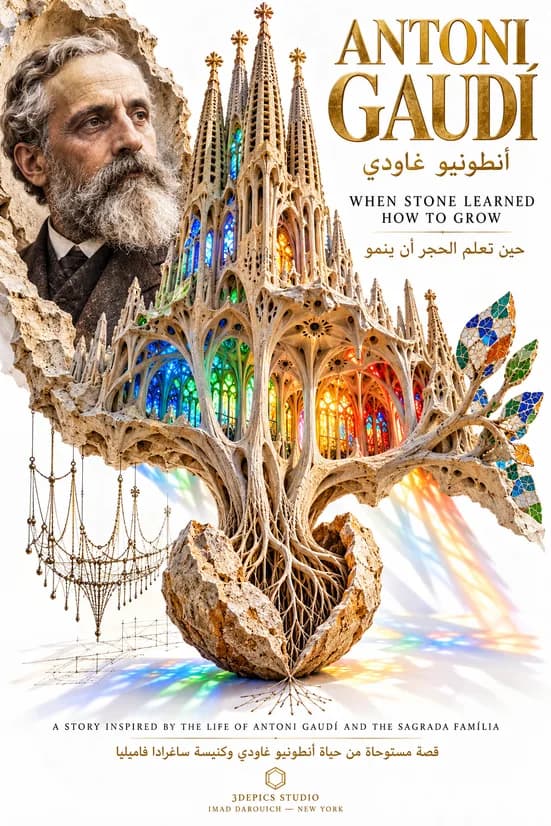
When the Wall Became a String: Daniel Libeskind and Bach
حين صار الجدارُ وترًا
Libeskind's broken walls and Bach's entering voices teach an architect to leave room in a building for voices not yet heard.
By Architect Imad Darouich4 min read
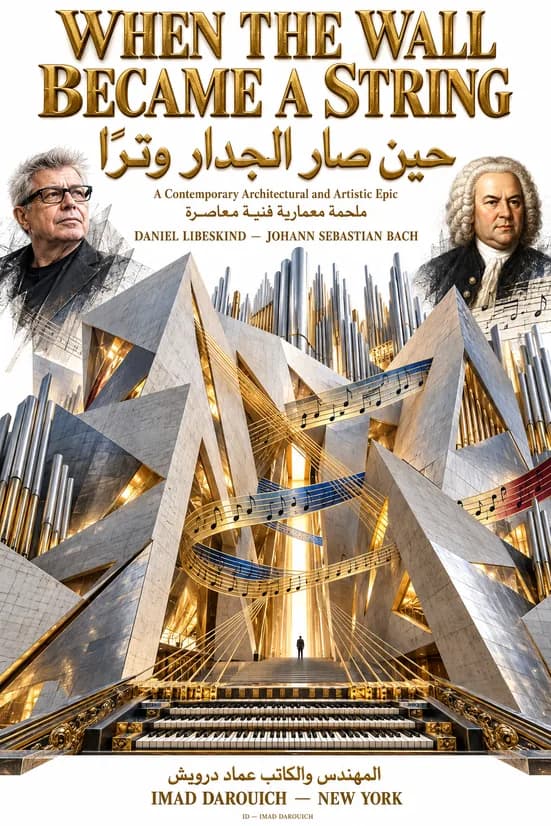
Daniel Libeskind, the Polish-born architect of the Jewish Museum Berlin, was a child accordion virtuoso before he turned to architecture, and Johann Sebastian Bach (1685 to 1750) is known for his mastery of counterpoint. Imad's prose poem hears Daniel Libeskind and Bach together: a wall that changes direction, voices that enter one after another, and a plan that must make room for both.
المعماري دانيال ليبسكيند والموسيقي يوهان سباستيان باخArchitect Daniel Libeskind and Composer Johann Sebastian Bach
ملحمة معمارية فنية معاصرةA Contemporary Architectural and Artistic Epic
A Note
تنويه
رؤيا أدبية تجمع التأمّل في عمارة ليبسكيند وموسيقى باخ؛ الصور والتأويلات للكاتب، وليست أقوالًا منسوبةً إليهما.A literary vision joining reflections on Libeskind’s architecture and Bach’s music; its imagery and interpretations belong to the writer and are not quotations attributed to them.
The Introduction
المقدمة
أنا عماد درويش.I am Imad Darouich.
أعرف الجدارَ حين يفصل.I know the wall when it divides.
وأتعلّم كيف يمكن أن يحمل ما لا نستطيع قوله.And I am learning how it can carry what we cannot say.
في بعض الأماكن، أسمع وقعَ قدمي أكثر من المعتاد.In some places, I hear my footsteps more clearly than usual.
كأن الفراغَ طلب منّي أن أصغي.As though the space has asked me to listen.
The Epic
الملحمة
عند ليبسكيند، ينقطع الخطُّ المستقيم.With Libeskind, the straight line breaks.
يتغيّر اتجاهُ الجدار، فتتغيّر يقظةُ الجسد.The wall changes direction, and the body’s awareness changes.
أمشي بحذر.I walk carefully.
أرفع رأسي إلى شقٍّ يضيء السطح.I raise my head toward a slit illuminating the surface.
الضوءُ قليل، لكنّ أثره واسع.The light is slight, yet its effect is vast.
أرى كيف تستطيع فتحةٌ ضيّقة أن تجعل الجدارَ كلَّه حاضرًا.I see how a narrow opening can make the entire wall present.
ثم أصل إلى فراغٍ لا أملؤه بعيني.Then I reach a void my gaze cannot fill.
أتوقّف.I pause.
أشعر بأن للمكان عمقًا يتجاوز المسافةَ التي أقيسها.I feel the place has a depth beyond the distance I can measure.
أعرف هذا العمقَ من الفقد.I know this depth through loss.
اسمٌ واحدٌ قد يفتح في القلب مساحةً لا تظهر على الجسد.A single name can open a space in the heart that does not appear upon the body.
وأعرفه من الغربة.And I know it through exile.
أقف في مدينةٍ كاملة، وتبقى داخلي نافذةٌ تطلّ على مكانٍ بعيد.I stand within a whole city, while a window inside me still overlooks a distant place.
ثم يبدأ باخ.Then Bach begins.
صوتٌ يقدّم جملتَه.One voice offers its phrase.
يلحقه صوتٌ آخر.Another follows.
يدخل الثالث، وتصبح المسافةُ بينهم بناءً.A third enters, and the distance between them becomes a structure.
أصغي.I listen.
لكلّ صوتٍ مسار.Each voice has a path.
ومع ذلك، يتكوّن منهم اتّساعٌ واحد.Yet together they form a single expanse.
هنا أرى ما تحتاجه المدينة.Here I see what a city needs.
أن تتعدّد فيها الحياة، وتجد طرقًا للتجاور.For life within it to multiply and find ways of living alongside itself.
أن يبقى لكلّ إنسانٍ صوتُه.For each person to retain their voice.
وأن يعرف متى يُفسح لسماع الآخرين.And to know when to make room to hear others.
بين جدار ليبسكيند وأصوات باخ، يصبح الفراغُ جزءًا من التكوين.Between Libeskind’s wall and Bach’s voices, space becomes part of the composition.
وقفةٌ تسمح للجملة أن تُسمَع.A pause allowing the phrase to be heard.
ومساحةٌ تسمح للذكرى أن تبقى.A space allowing memory to remain.
أعود إلى مخطّطي.I return to my plan.
أرى الممرّات كمساراتٍ متزامنة.I see corridors as simultaneous paths.
من يعبر سريعًا.Someone passing quickly.
ومن يتوقّف.Someone pausing.
ومن ينتظر عند الباب.Someone waiting at the door.
عليَّ أن أمنح هذه الحركات نظامًا يتّسع لها.I must give these movements an order spacious enough to hold them.
وأفكّر في الصوت الذي ستصنعه المادّة.And I think of the sound the material will make.
حجرٌ يعيد الخطوة.Stone returning a footstep.
وخشبٌ يخفّف حدّتها.Wood softening its edge.
وسقفٌ قد يجمع الكلام، أو يبدّده.And a roof that may gather speech or scatter it.
فالعمارةُ تصل إلى الأذن أيضًا.For architecture reaches the ear as well.
وقد يبدو المكانُ جميلًا، ويُتعب مَن يحاول الحديث فيه.A place may look beautiful and exhaust someone trying to speak within it.
أريد جمالًا يُحسن الإصغاء.I want a beauty that knows how to listen.
The Ending
الخاتمة
يا ربّ، أعنّا أن نترك في ما نبنيه متّسعًا للأصوات التي لم نسمعها بعد.O Lord, help us leave room within what we build for voices we have not yet heard.
من ليبسكيند، أتأمّل مكانًا يمنح الغيابَ حضورًا.Through Libeskind, I contemplate a place giving absence a presence.
ومن باخ، أتأمّل نظامًا يمنح التعدّدَ وحدة.Through Bach, I contemplate an order giving multiplicity a unity.
ثم أرسم جدارًا.Then I draw a wall.
أحدّد مادّتَه، وأراجع صداها.I specify its material and consider its echo.
وفيه أفتح بابًا.Within it, I open a door.
أريد للواقف خلفه أن يسمع مَن يناديه.I want the person behind it to hear whoever calls.
وأريد للمَنادي أن يجد جوابًا.And I want the caller to find an answer.
عند تلك المسافة بين صوتين، يبدأ المبنى حياته.Within that distance between two voices, the building begins its life.
Libeskind's life and buildings fill Daniel Libeskind: The Architect Who Made Memory Build, When Space Became a Column sets his voids beside the glass of Mies van der Rohe, and more lives in architecture are in the architects collection.
Written by
Architect Imad Darouich
المهندس المعماري عماد درويش
Architect, author and founder of 3DEPICS, based in New York. He writes epic literature that crosses borders, languages and geographies, where philosophy meets architecture, spirituality meets history and memory meets imagination.