When the Dog Put Its Master on Trial: An Abandoned Dog Poem
حين حاكم الكلبُ سيّدَه
Left at a fallen house with a promise to return, a dog keeps waiting until its loyalty becomes the evidence against its master.
By Architect Imad Darouich3 min read
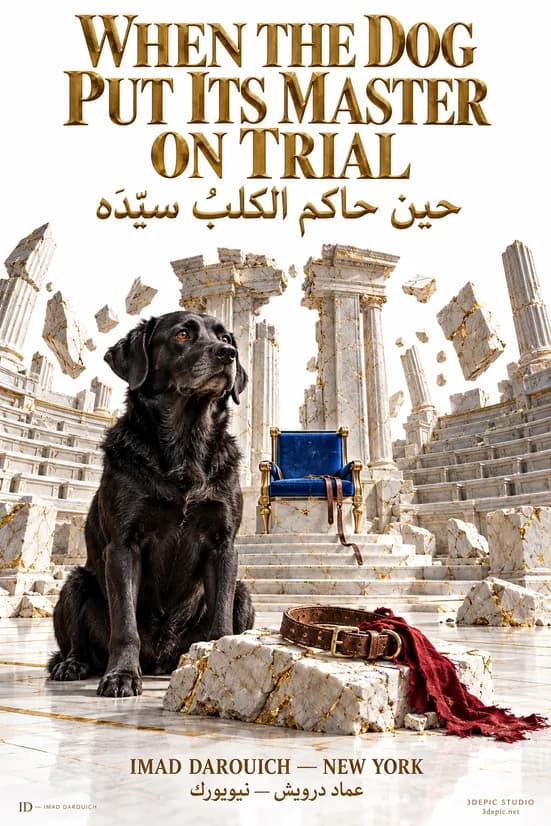
When the Dog Put Its Master on Trial is an abandoned dog poem by Imad Darouich, written as a fable in Arabic and English. A man leaves his dog at the ruins of a house and promises to come back soon. As the dog waits night after night, the rubble rises into a courtroom where a bowl, a leash and a warm patch of earth give evidence, until a passing stranger offers the dog another road.
تنويه: ملحمة تخييلية عن كلبٍ هجره صاحبه؛ يتحوّل انتظاره إلى محاكمةٍ للخذلان، حيث يصبح الوفاءُ دليلاً على مَن خان الأمانة.Note: A fictional epic about an abandoned dog whose waiting becomes a trial of betrayal, with loyalty bearing witness against the one who broke its trust.
تركه عند البيت، وقال: سأعود قريباً.He left it by the house, saying: I’ll be back soon.
فجلس الكلبُ يحرس آخرَ جملةٍ سمعها.The dog sat guarding the last sentence it had heard.
كانت الجدرانُ قد سقطت قبل وصولهما.The walls had fallen before they arrived.
لكنّه اختار موضعَ الباب، وانتظر هناك.But it chose the doorway’s place and waited there.
مرّت شاحنةٌ، فنهض يستقبل صوتَ محرّكها.A truck passed; it rose to greet the engine.
ومرَّ غريبٌ، فتراجع يعتذر عن فرحته.A stranger passed; it stepped back, apologizing for its joy.
كلَّ مساءٍ، كان يترك الطريقَ مفتوحاً.Each evening, it kept the path clear.
وينام جانباً كي لا يعوق العودة.It slept to one side, lest it obstruct the return.
حتى المطرُ مرَّ، ولم ينهض لاستقباله.Even the rain passed without receiving a greeting.
عرف أنَّ سيّدَه لا يمشي حافياً.It knew its master never walked barefoot.
في الليلة السابعة، تحرّك الركامُ حوله.On the seventh night, the rubble moved around it.
ارتفعت حجارةٌ، وانتظمت مقاعدَ بلا جالسين.Stones rose and formed seats with no occupants.
وصار موضعُ الباب منصّةً للمتّهم.The doorway’s place became the defendant’s stand.
هناك انعقدت محكمةٌ لا تحتاج استدعاءً.There convened a court requiring no summons.
كان المتّهمُ غائباً، لكنَّ رائحته حضرت.The defendant was absent, but his scent attended.
حملتها قطعةُ قماشٍ عالقةٌ بطوق الكلب.A scrap caught on the dog’s collar carried it.
وُضعت فوق حجرٍ، فثقلت كأنّها جسد.It was laid upon a stone and weighed like a body.
ثم جاءت الأدلّةُ دون أن يستدعيها أحد.Then the evidence arrived without being called.
صحنٌ يعرف مقدارَ الطعام الذي نقص.A bowl that knew how much food had dwindled.
وحبلٌ حفظ رجفةَ اليد حين أفلتته.A leash that remembered the hand’s tremor as it let go.
ومكانٌ دافئٌ في التراب لم يبرد.And a warm place in the earth that had not cooled.
كان الكلبُ يدفّئه لجسدٍ لن يأتي.The dog kept it warm for a body that would not come.
لم ينبح حين طُلبت منه الشهادة.It did not bark when called to testify.
حرّك ذيله كلّما ذُكر اسمُ صاحبه.It wagged its tail whenever its master’s name was spoken.
فازداد ثقلُ قطعة القماش فوق الحجر.And the scrap grew heavier upon the stone.
كلُّ فرحةٍ صغيرةٍ أضافت دليلاً جديداً.Every small joy added another piece of evidence.
ثم هبّت ريحٌ من جهة الطريق.Then wind rose from the direction of the road.
حملت وقعَ خطواتٍ يشبه الذي يعرفه.It carried footsteps resembling those it knew.
ترك الكلبُ شهادته، وركض نحو الصوت.The dog abandoned its testimony and ran toward the sound.
فبقيت المحكمةُ تنتظر شاهدَها تحت المطر.The court waited for its witness in the rain.
عاد وحده، وفي فمه قفّازٌ قديم.It returned alone, an old glove in its mouth.
وضعه قرب القماش، واستلقى يحرس الاثنين.It laid it beside the scrap and guarded them both.
عندها سقطت الحجارةُ من مقاعدها دفعةً واحدة.Then the stones fell from their seats all at once.
لم تستطع المحكمةُ احتمالَ هذا الدليل.The court could not bear this evidence.
كيف يُدان الغائبُ، وشاهدُه يحمي آثاره؟How could the absent be condemned while the witness protected his traces?
طلع النهارُ على الحكم دون إعلان.Day broke upon the verdict without an announcement.
كان رجلٌ يعبر الطريق إلى عمله.A man was crossing the road to work.
رأى الكلبَ، فتوقّف ووضع حقيبته أرضاً.He saw the dog, stopped, and set down his bag.
جلس بعيداً، وترك بينهما مسافةَ خوف.He sat apart, leaving a distance of fear between them.
لم يمدَّ يده، ولم يُصدر أمراً.He offered no hand and gave no command.
فتح طعامه، وقسّمه على ورقةٍ نظيفة.He opened his food and divided it on clean paper.
اقترب الكلبُ، ثم التفت نحو الركام.The dog approached, then glanced toward the rubble.
فبقي الرجلُ جالساً، حتى انتهى الانتظار.The man remained seated until the waiting ended.
وحين نهض، تبعه الكلبُ ببطءٍ شديد.When he rose, the dog followed very slowly.
كان يتعلّم أنَّ الطريقَ يحمل احتمالاً آخر.It was learning that the road held another possibility.
أما الحكمُ، فبقي محفوراً في الركام:The verdict remained carved into the rubble:
أشدُّ الخيانةِ أن تجعل قلباً ينتظر،The cruelest betrayal is to leave a heart waiting,
وأنت تعرف أنّك لن تعود.Knowing you will never return.
Imad tells another story of a dog and its master in his poem on Schopenhauer and his dog. For more stories of waiting and broken bonds, see When a Father Waits Behind the Door and the human story collection.
Written by
Architect Imad Darouich
المهندس المعماري عماد درويش
Architect, author and founder of 3DEPICS, based in New York. He writes epic literature that crosses borders, languages and geographies, where philosophy meets architecture, spirituality meets history and memory meets imagination.