When Man Bit His Own Name: Schopenhauer and His Dog
حين عضَّ الإنسانُ اسمَه
From the story that Schopenhauer scolded his poodle by calling it human, a poem asks what the word human must do to deserve itself.
By Architect Imad Darouich3 min read
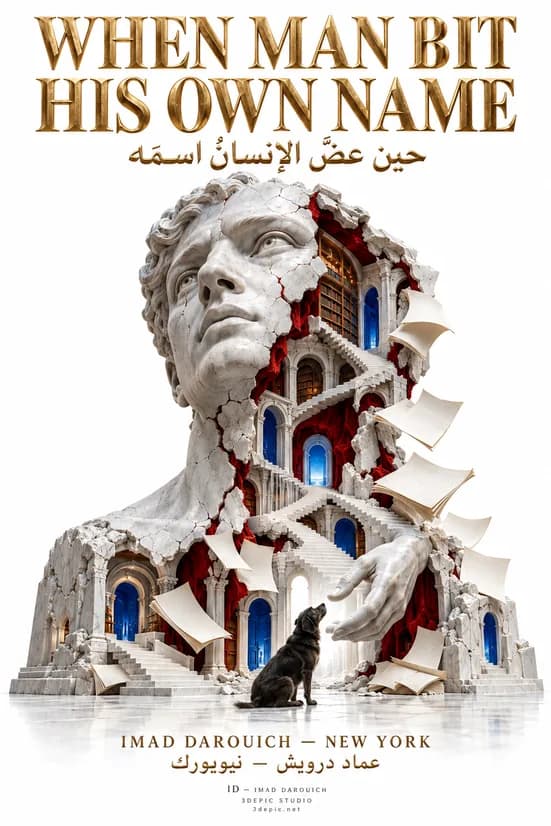
Arthur Schopenhauer (1788 to 1860), the German philosopher of pessimism, lived in Frankfurt from 1833 with a succession of poodles named Atman and Butz. A story often told says he scolded his dog with the words Du Mensch, you human. Imad Darouich's poem about Schopenhauer and his dog starts from that story and asks, in Arabic and English, how the word human can earn its meaning again.
تنويه: تنطلق هذه الملحمة من الحكاية المتداولة عن شوبنهاور، الذي يُقال إنه كان ينهر كلبه بعبارة «أيها الإنسان!». تُؤخذ الحكاية هنا بوصفها مدخلاً أدبياً، دون تأكيد صحتها أو وصف بغض البشر بأنه اضطرابٌ نفسي.Note: This epic draws on the circulating anecdote that Schopenhauer scolded his dog by calling it “You human!” It serves here as a literary starting point, without confirming its accuracy or treating misanthropy as a mental disorder.
في تلك الليلة، انشقَّ فمُ القاموس.That night, the dictionary’s mouth split open.
وخرجت كلمةُ «إنسان» تجرُّ جثّةَ معناها.The word “human” emerged, dragging its meaning’s corpse.
لم ينبح الكلبُ حين سمع الإهانة.The dog did not bark at the insult.
رفع عينيه، فارتبك تاريخٌ من الخطب.It raised its eyes; centuries of speeches faltered.
كان الفيلسوفُ واقفاً بين جدارينِ مرتجفين.The philosopher stood between two trembling walls.
وخلف جبينه، مدينةٌ تأكل سكّانها نياماً.Behind his forehead, a city devoured its sleeping people.
كلُّ نافذةٍ فيها عينُ مخبرٍ ساهر.Every window was a watchful informer’s eye.
وكلُّ بابٍ يستجوب اليدَ التي تطرقه.Every door interrogated the hand that knocked.
هناك، اخترع الإنسانُ ميزاناً بالغَ الدقّة.There, humanity invented scales of exquisite precision.
يزنُ الذهبَ، ولا يشعر بثقل المظلوم.They weighed gold, yet never felt the weight of the wronged.
وبنى للرحمةِ متحفاً من عظام الجائعين.It built mercy a museum from hungry people’s bones.
ثم باع التذاكرَ لأحفاد الذين ماتوا.Then sold tickets to the grandchildren of the dead.
في الساحة، كانت تماثيلُ الفضيلة تصفّق.In the square, statues of virtue applauded.
كلّما مرَّ جلّادٌ بثيابٍ ناصعة البياض.Whenever a torturer passed in spotless white.
وكانت الكلماتُ تغسل أيديها فوق المنابر.Words washed their hands above the pulpits.
والدمُ يصعد من المصارف نحو الأفواه.While blood climbed from the drains toward mouths.
حتى المرآةُ طلبت إعفاءها من الشهادة.Even the mirror begged exemption from testifying.
لقد تعبت من إعادة الوجوه لأصحابها.It was tired of returning faces to their owners.
أما الكلبُ، فاقترب من حذاء صاحبه.The dog approached its master’s shoe.
وشمَّ عليه خوفاً لا تشرحه الفلسفة.And smelled a fear philosophy could not explain.
وضع رأسه فوق القدم التي نهرته.It laid its head upon the foot that had rebuked it.
فانهارت مكتبةٌ كاملة داخل رأس الرجل.An entire library collapsed inside the man’s head.
كم كتاباً يلزم كي نتعلّم الرفق؟How many books must teach us tenderness?
وكم جريمةً يحتملها اسمٌ واحدٌ نبيل؟How many crimes can one noble name endure?
فجأةً، انفتح في الجدار شقٌّ صغير.Suddenly, a small crack opened in the wall.
لم يخرج منه ملاكٌ يحمل تفسيراً.No angel emerged from it bearing an explanation.
دخلت امرأةٌ تحمل خبزاً وماءً دافئاً.A woman entered carrying bread and warm water.
وعند العتبة، جلست قرب رجلٍ مشرّد.At the threshold, she sat beside a homeless man.
كسرت رغيفها، فعاد للرجل اسمُه المنسيّ.She broke her loaf; his forgotten name returned.
ومدَّ يديه، كمن يستعيدهما من قبر.He stretched out his hands as though reclaiming them from a grave.
لم تتوقّف المدينةُ عن طحن الضعفاء.The city did not stop grinding down the weak.
لكنَّ فماً واحداً نجا من جوعه.But one mouth was delivered from hunger.
وتلك الليلة، لم تنم كلمةُ «إنسان».That night, the word “human” did not sleep.
بقيت عند العتبة، تتعلّم كيف تستحقُّ نفسها.It stayed at the threshold, learning how to deserve itself.
وفي الفجر، خرج الإنسانُ يبحث عن اسمه.At dawn, humanity went searching for its name.
وجده يرتجفُ عند بابٍ لم يفتحه.It found it trembling at a door it had never opened.
خلع كبرياءه، وغطّى به كتفي الجائع.It shed its pride and covered the hungry one’s shoulders.
فنهضت الكلمةُ، وعاد الدمُ إلى حروفها.The word rose; blood returned to its letters.
يومها، لم يسأل أحدٌ عن فلسفته.That day, no one asked about its philosophy.
كانت يدُه الممدودةُ أبلغَ من مكتبته.Its outstretched hand spoke louder than its library.
لن يستعيد الإنسانُ اسمَه من القاموس.Humanity will not reclaim its name from the dictionary.
سيستعيده حين يأمنُ الضعيفُ بين يديه.It will reclaim it when the vulnerable are safe in its hands.
Schopenhauer built his philosophy on the work of Immanuel Kant, whose life and ideas fill a book in the ideas and philosophy collection. Imad's abandoned dog poem gives another dog the role of witness.
Written by
Architect Imad Darouich
المهندس المعماري عماد درويش
Architect, author and founder of 3DEPICS, based in New York. He writes epic literature that crosses borders, languages and geographies, where philosophy meets architecture, spirituality meets history and memory meets imagination.