When the Bridal Gift Opened a Door to Freedom: Safiyya bint Huyayy
حين كان المهر بابًا إلى الحرية
Imad reads the hadith of Safiyya bint Huyayy, whose freedom became her bridal gift, and of a wedding feast laid out on a simple mat.
بقلم المهندس المعماري عماد درويش5 دقائق قراءة
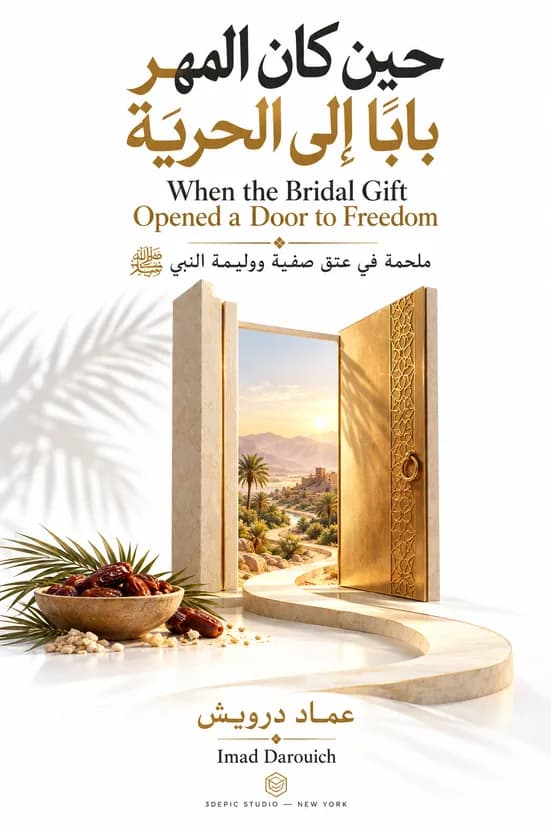
Safiyya bint Huyayy, daughter of the Banu Nadir chief Huyayy ibn Akhtab, was freed and married by the Prophet Muhammad after the Battle of Khaybar in 628; Sahih al-Bukhari 371 records, from Anas ibn Malik, that her freedom was her mahr. Imad's text, in Arabic and English, opens with a note on its sources, then reflects on the Safiyya bint Huyayy marriage and the plain wedding feast of dates and butter.
A Note upon the Threshold of History
تنويهٌ على عتبةِ التاريخ
أقفُ على عتبةِ هذه الملحمة، وفي يدي أمانةُ الرواية.I stand upon the threshold of this epic, entrusted with the account.
فحين أكتبُ عن رسولِ الله ﷺ، أجعلُ التثبّتَ أساسَ البناء.When I write of the Messenger of Allah, I make verification the foundation.
هذه ملحمةٌ عن صفيةَ بنتِ حييّ رضي الله عنها؛ عن عِتقها وزواجها من النبيّ محمد ﷺ عقب خيبر، وعن وليمةٍ أقيمت على طريق العودة إلى المدينة.This epic concerns Safiyya bint Huyayy: her emancipation and marriage to Prophet Muhammad after Khaybar, and the wedding feast held on the journey back to Medina.
أصلُها حديثٌ صحيحٌ رواه أنسُ بنُ مالك، وحفظه البخاريُّ ومسلمٌ في صحيحيهما.Its foundation is an authentic account narrated by Anas ibn Malik and preserved by al-Bukhari and Muslim in their Sahih collections.
وفي الروايةِ ثبتَ العِتقُ، وثبتَ الزواجُ، وجُعلَ العِتقُ صداقًا.The account establishes her emancipation, her marriage, and her freedom as her bridal gift.
وثبتَ أنَّ أمَّ سُلَيمٍ جهّزتها، وأنَّ الصحابةَ جمعوا ما عندهم للوليمة.It also records that Umm Sulaym prepared her for marriage and that the Companions brought what they had for the feast.
تمرٌ، وأَقِطٌ، وسمنٌ؛ اجتمعتْ في الحَيْس، وحُفظَ ذكرُها في الحديث.Dates, dried curds, and clarified butter came together in hais, their mention preserved in the hadith.
هنا أضعُ قدمي على أرضِ الخبر، ثم أرفعُ قلبي إلى أفقِ التأمّل.Here I place my feet upon the ground of the account, then lift my heart toward contemplation.
ما أرويه من الحدث، مرجعُه الحديث.What I recount of the event rests upon the hadith.
وما أنسجُه من نورٍ وأبوابٍ ومناجاة، فهو لغتي الأدبية وتأمّلي الصوفي.The light, doors, and invocations I weave are my literary language and Sufi reflection.
أحفظُ للحديثِ لفظَه، وللتاريخِ حدودَه، وللخيالِ اسمَه.I preserve the hadith’s wording, history’s boundaries, and imagination’s identity.
وأتركُ سرائرَ أصحابِ الحكايةِ في علمِ الله.And I leave the inner lives of those in the account within God’s knowledge.
بهذه الأمانةِ أدخلُ الملحمة:With this fidelity, I enter the epic:
أقرأُ ما ثبتَ، وأتأمّلُ ما يوقظُه في روحي.I read what is established and contemplate what it awakens in my soul.
وأرجو أن تحملَ كلماتي خشوعَ القارئ، وصدقَ الشاهدِ على النصّ.And I hope my words carry a reader’s reverence and fidelity to the text.
التوثيق: صحيح البخاري، الأحاديث 371 و5159 و5169؛ وصحيح مسلم، رواية أنس في كتاب النكاح، المعروضة برقم 1365c في المصدر الإلكتروني.
When the Bridal Gift Opened a Door to Freedom
حين كانَ المَهرُ بابًا إلى الحريّة
أقرأُ خبرَ صفيةَ بنتِ حييّ،I read the account of Safiyya bint Huyayy,
فتنهضُ خيبرُ من سكونِ الحروف.And Khaybar rises from the stillness of the letters.
للوقائعِ زمنُها الثقيل.Events carry the weight of their own time.
وللأسماءِ جذورٌ أعمقُ من سطر.And names have roots deeper than a line.
أمشي بقلبي على حافّةِ الخبر.My heart walks along the edge of the account.
أُصغي إلى ما رواه، وأحفظُ للصمتِ حُرمتَه.I listen to what it tells and honor what it leaves unspoken.
صفيةُ بنتُ حييّ.Safiyya bint Huyayy.
اسمٌ أعبرُ إليه بخُشوع.A name I approach with reverence.
وعند خبرِ زواجِها من النبيّ ﷺ،And at the account of her marriage to the Prophet,
أقفُ طويلًا أمام معنى المَهر.I linger before the meaning of the bridal gift.
أعتقَها، وجعلَ عِتقَها مَهرَها.He freed her and made her freedom her bridal gift.
يا لِعبارةٍ يضيقُ بها السطر،What a phrase for a line to hold,
ويتّسعُ بها بابُ التأمّل.Yet how wide it opens the door to reflection.
أرى في العِتقِ مفتاحًا من نور.In emancipation, I see a key of light.
وفي الكرامةِ أساسًا يحملُ البيت.And in dignity, a foundation that sustains the home.
أنا المعماريُّ؛ أعرفُ ثِقلَ الحجر.I am an architect; I know the weight of stone.
وهنا أتعلّمُ ثِقلَ المعنى.Here, I learn the weight of meaning.
قد يرتفعُ القصرُ فوقَ ألفِ عمود،A palace may rise upon a thousand columns,
وتبقى روحٌ واحدةٌ تبحثُ عن نافذة.While a single soul still searches for a window.
وقد تُفتحُ نافذةٌ في كلمة،And a window may open within a word,
فيدخلُ منها أفقٌ كامل.And an entire horizon enter through it.
يا ربّ، اجعلْ قلبي أهلًا لهذا التأمّل.Lord, make my heart worthy of this reflection.
حين أقرأُ العِتقَ، أرى قيودي.When I read of emancipation, I see my own bonds.
قيدَ الكِبرِ حولَ بصيرتي.Pride binding my inner sight.
وقيدَ القسوةِ على يدي.And hardness binding my hand.
فحرّرْني من نفسي حين تستبدّ.Free me from myself when it becomes a tyrant.
وردّني إلى الرفقِ ردًّا جميلًا.And return me gently to kindness.
ثمّ يأخذني الخبرُ إلى الوليمة.Then the account carries me to the wedding feast.
إلى طريقٍ، وإلى بساطٍ يُبسط.To a road, and a mat spread upon the ground.
من كانَ عنده شيءٌ، جاءَ به.Whoever had something brought it.
هذا يحملُ تمرًا.One brought dates.
وذاك يحملُ سمنًا.Another brought clarified butter.
والأيدي تجمعُ ما تيسّر.And hands gathered what was available.
أرى في هذا المشهدِ عمارةَ الأُنس.In this scene, I see the architecture of fellowship.
كلُّ يدٍ تأتي، توسّعُ المائدة.Every arriving hand makes the table larger.
وكلُّ عطاءٍ صغيرٍ، يجدُ موضعَه.And every small offering finds its place.
على بساطٍ بسيطٍ، يحفظُ الخبرُ وليمةَ النبيّ ﷺ.Upon a simple mat, the account preserves the Prophet’s wedding feast.
وأنا أقرأُ، أشعرُ بفقرِ الزينةِ أمامَ الحضور.As I read, ornament seems poor beside human presence.
كم نُثقِلُ أفراحَنا بما لا يحملُ فرحًا.How often we burden our celebrations with things that carry no joy.
وكم ننسى أنَّ اليدَ الممدودةَ بالخير،And how often we forget that a hand extended in generosity
تُضيءُ من البيتِ ما تعجزُ عنه القناديل.Lights parts of a home that lamps cannot reach.
يا ربّ، باركْ لنا في القليلِ الذي نتقاسمُه.Lord, bless the little that we share.
واجعلْ في رزقِنا نصيبًا للأُنس.And give fellowship a portion of our sustenance.
وفي محبّتِنا سَعَةً للكرامة.And make room for dignity within our love.
وفي ذاكرتِنا أمانةً للتاريخ.And place fidelity to history within our memory.
أعودُ من الخبرِ إلى يومي،I return from the account to my own day,
وفي صدري سؤالٌ يمشي معي:With a question walking beside me:
أيَّ قيدٍ أستطيعُ اليومَ أن أرفع؟Which bond can I lift today?
وأيَّ مائدةٍ أستطيعُ أن أوسّع؟And which table can I make larger?
هكذا أبقى عند عتبةِ المعنى.Thus I remain at the threshold of meaning.
مَهرٌ اسمه العِتق.A bridal gift called freedom.
ووليمةٌ تحملُها الأيدي.And a feast borne by many hands.
ودعاءٌ أرفعُه من قلبي:And a prayer I raise from my heart:
يا ربّ، عمّرْ أرواحَنا بالرحمة.Lord, build our souls with mercy.
حتى يجدَ الإنسانُ في قربِنا،So that a person may find, in our company,
بابًا يُفتح… وكرامةً تُصان.A door that opens… and dignity kept safe.
Imad tells the Prophet's life in the book Muhammad: The Human Prophet Who Built a Nation, and his poem Prophet Muhammad, Peace and Blessings Be Upon Him is in the journal. More reflections are in the faith and spirit collection.
بقلم
Architect Imad Darouich
المهندس المعماري عماد درويش
مهندس معماري وكاتب ومؤسس 3DEPICS، يقيم في نيويورك. يكتب أدبًا ملحميًا يعبر الحدود واللغات والجغرافيا، حيث تلتقي الفلسفة بالعمارة، والروحانية بالتاريخ، والذاكرة بالخيال.