When Conscience Walked Out of the Body: A Poem About Conscience
حين خرج الضميرُ من الجسد
A man wakes free of remorse, finds his conscience leaving with a small suitcase, and follows it to the man he wronged.
بقلم المهندس المعماري عماد درويش4 دقائق قراءة
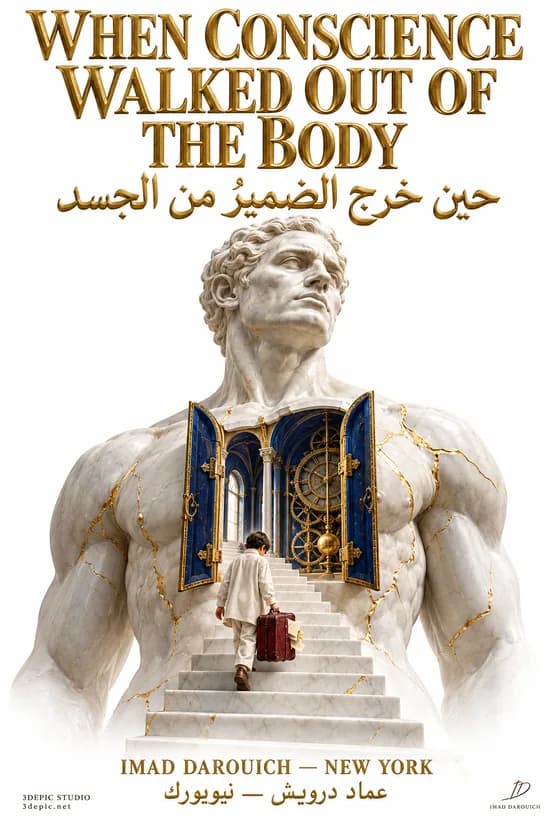
When Conscience Walked Out of the Body is a poem about conscience, a fable by Imad Darouich in Arabic and English. A man wakes up strangely light and finds his conscience, the size of a child, waiting by the door with a suitcase. Money cannot keep it there: the suitcase holds the voice of a man he falsely accused to keep his post, and it leads him on foot to a watchmaker's bench and a confession.
تنويه: ملحمة تخييلية عن رجلٍ يغادره ضميرُه، فيكتشف أنَّ راحةً بلا ندم قد تكون أخطرَ ما يصيب الإنسان.Note: A fictional epic about a man abandoned by his conscience, who discovers that peace without remorse may be the most dangerous affliction of all.
استيقظ خفيفاً، كأنّ عظامه صارت قصباً.He woke feeling light, as though his bones had become reeds.
لأوّل مرّةٍ، لم يزعجه شيءٌ يتذكّره.For the first time, nothing he remembered troubled him.
شرب قهوته، وأعجبه هدوءُ صدره الجديد.He drank his coffee, pleased by his chest’s new stillness.
ثم رأى ضميره جالساً قرب الباب.Then he saw his conscience sitting by the door.
بحجم طفلٍ، وعلى ركبتيه حقيبةٌ صغيرة.It was child-sized, a small suitcase on its knees.
يرتدي قميصاً أوسعَ من جسده النحيل.Its shirt was too large for its slender body.
عرف القميصَ؛ كان آخرَ كذبةٍ قالها.He recognized the shirt; it was his latest lie.
تدلّت أكمامُها حتى لامست أرضَ الغرفة.Its sleeves hung down to the floor.
فتح الرجلُ محفظته دون أن يفكّر.The man opened his wallet without thinking.
فأدار الضميرُ وجهه نحو مقبض الباب.The conscience turned its face toward the door handle.
رفع المبلغَ، ثم عرض نصفَ أملاكه.He increased the sum, then offered half his possessions.
لكنَّ الحقيبةَ انفتحت حين اقتربت النقود.But the suitcase opened as the money approached.
داخلها، كانت رسائلُ لم يقرأها قطّ.Inside were letters he had never read.
ومعها صوتٌ يقول: لم أفعل ذلك.Alongside them, a voice said: I did not do it.
عرف الصوتَ، وأغلق الحقيبةَ بقدمه سريعاً.He knew the voice and quickly shut the suitcase with his foot.
كان لرجلٍ اتّهمه كي يحمي منصبه.It belonged to a man he had accused to protect his position.
خسر الرجلُ عمله، ثم باع أثاثه.The man had lost his job, then sold his furniture.
وهو اشترى مكتباً أوسعَ في الطابق الأعلى.While he bought a larger office upstairs.
وقف الضميرُ، فارتفع الصوتُ داخل الحقيبة.The conscience stood; the voice rose inside the suitcase.
لم يطلب اعتذاراً، بل طلب عنواناً.It asked for no apology; it asked for an address.
كتبه الرجلُ، فامتدَّ الشارعُ تحت الورقة.He wrote it; a street unfolded beneath the paper.
صار المكتبُ رصيفاً، والكرسيُّ محطّةَ حافلات.The desk became pavement, the chair a bus stop.
وكان عليه أن يمشي هذه المرّة.This time, he would have to walk.
حاول الاتصالَ بسائقه، فوجد هاتفه حجراً.He tried calling his driver; his phone was a stone.
وكلَّما توقّف، سمع الحقيبةَ تُسحب أمامه.Whenever he stopped, he heard the suitcase dragging ahead.
عند العنوان، وجد رجلاً يصلح ساعات.At the address, he found a man repairing watches.
يجمع الوقتَ من قطعٍ صغيرةٍ مكسورة.Gathering time from small broken pieces.
رفع الرجلُ عينيه، وعرف زائرَه فوراً.The man looked up and recognized his visitor at once.
ثم عاد إلى ساعةٍ بين أصابعه.Then returned to the watch between his fingers.
كان الصمتُ دقيقاً، كأداةٍ لا تخطئ.The silence was precise, like an unfailing instrument.
وضع الزائرُ مالاً فوق طاولة العمل.The visitor placed money on the workbench.
فدفعه صاحبُها جانباً ليرى التروسَ الصغيرة.Its owner pushed it aside to see the tiny gears.
هناك فهم ما عجزت محفظتُه عنه.There he understood what his wallet could not.
لقد سرق منه اسماً قبل الراتب.He had stolen a name before stealing wages.
قال الحقيقةَ، دون أن يخفّف قبحها.He told the truth without softening its ugliness.
وسجّل اعترافَه كي يسمعه الذين صدّقوه.He recorded his confession for those who had believed him.
ثم خرج ليواجه ما صنعه بنفسه.Then went out to face what he had made.
لم يمنحه الرجلُ وعداً بالمغفرة.The man gave him no promise of forgiveness.
ولم يُغلق البابَ خلفه بعنفٍ أيضاً.Nor did he slam the door behind him.
بقي الضميرُ واقفاً قرب طاولة الساعات.The conscience remained beside the watchmaker’s bench.
ينظر إلى العمر الذي لا يُعوَّض.Looking at the years that could not be restored.
عاد الزائرُ وحده، أثقلَ ممّا خرج.The visitor returned alone, heavier than when he left.
وفي الليل، أحسَّ وجعاً تحت ضلوعه.At night, he felt an ache beneath his ribs.
لم يجد الطفلَ، ولم يرَ الحقيبة.He found no child and saw no suitcase.
لكنَّ القهوةَ لم تعد تبتلع الذكرى.But coffee could no longer swallow the memory.
وضع يده على صدره، ولم يرفعها.He placed his hand upon his chest and kept it there.
كان الوجعُ يعمل حيث توقّفت الأعذار.The ache was working where excuses had stopped.
هذه المرّة، لم يطلب منه السكوت.This time, he did not ask it to be silent.
تركه يدلُّه على ما بقي لإصلاحه.He let it show him what remained to repair.
Dostoevsky's Crime and Punishment follows guilt all the way to confession, and The Epic of the First Minute asks how a conscience is formed. Imad's mirror that asked for another face carries the same question.
بقلم
Architect Imad Darouich
المهندس المعماري عماد درويش
مهندس معماري وكاتب ومؤسس 3DEPICS، يقيم في نيويورك. يكتب أدبًا ملحميًا يعبر الحدود واللغات والجغرافيا، حيث تلتقي الفلسفة بالعمارة، والروحانية بالتاريخ، والذاكرة بالخيال.