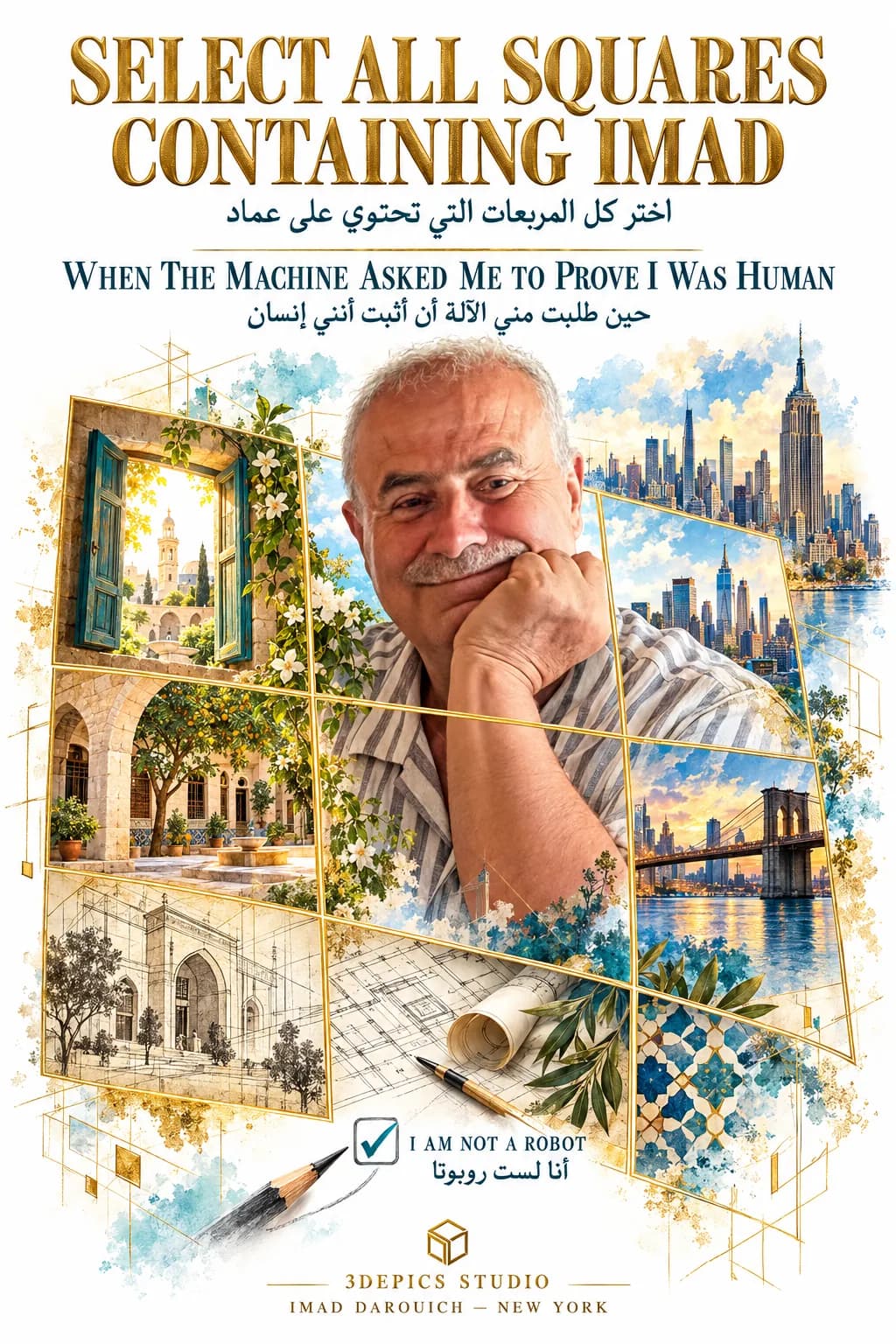
Select All Squares Containing Imad: The “I Am Not a Robot” Box
اختر كلَّ المربعات التي تحتوي على عماد
A CAPTCHA asks an architect to select the squares with buildings, and he keeps answering with domes, windows, Damascus and Brooklyn.
بقلم المهندس المعماري عماد درويش9 دقائق قراءة
The “I'm not a robot” checkbox and the image grids that ask users to pick out street lights or crosswalks come from Google's reCAPTCHA, which introduced the single-click checkbox in 2014. In this I am not a robot poem, Imad, an architect living in Brooklyn Heights, fails the test because in every square he sees a room, a dome, a bridge and the people who use them.
هذا الصباح، ظهرت أمامي عبارة صغيرة:This morning, a small sentence appeared before me:
أنا لستُ روبوتًا.I AM NOT A ROBOT.
كان المطلوب بسيطًا:The request was simple:
أن أضع علامة داخل مربع، ثم أواصل طريقي.Check a box, then continue on my way.
لكنني توقفت.But I stopped.
ليس لأنني شككت في أنني إنسان،Not because I doubted that I was human,
بل لأنني أمضيت عمرًا كاملًا أحاول ألّا أعيش داخل مربع.but because I have spent an entire lifetime trying not to live inside a box.
أنا معماري.I am an architect.
والمعماري يعرف أن المربع قد يكون غرفة،And an architect knows that a square can become a room,
وقد يكون نافذة،a window,
وقد يكون سجنًا،a prison,
وقد يصبح، إذا دخل إليه الضوء، بداية عالم.or, when light enters it, the beginning of a world.
ضغطت على العبارة.I clicked the box.
فظهرت أمامي تسع صور.Nine images appeared before me.
وقالت الآلة:The machine said:
اختر جميع المربعات التي تحتوي على مبانٍ.SELECT ALL SQUARES CONTAINING BUILDINGS.
ابتسمت.I smiled.
كيف أشرح لها أنني لا أرى المبنى كما تراه؟How could I explain that I do not see a building as it does?
هي ترى جدرانًا وسقفًا.It sees walls and a roof.
أما أنا فأرى اليد التي رسمت الخط الأول،I see the hand that drew the first line,
والعامل الذي حمل الحجر،the worker who carried the stone,
والأم التي وقفت خلف النافذة تنتظر عودة ابنها،the mother who stood behind the window waiting for her son,
والطفل الذي ركض في الممر،the child who ran through the corridor,
والغريب الذي دخل المكان فشعر، للحظة، أنه عاد إلى وطنه.and the stranger who entered the place and felt, for one moment, that he had returned home.
في المربع الأول، ظهرت واجهة زجاجية.In the first square, a glass façade appeared.
قالت الآلة: مبنى.The machine said: BUILDING.
وقلت أنا: ربما.I said: Perhaps.
فليس كل ما يرتفع فوق الأرض عمارة،Not everything that rises above the ground is architecture,
وليس كل ما يلمع حضارة.and not everything that shines is civilization.
في المربع الثاني، ظهرت قبة بعيدة.In the second square, a distant dome appeared.
رأت الآلة شكلًا نصف دائري.The machine saw a semicircular form.
أما أنا فرأيت سماءً حاول الإنسان أن ينزلها إلى الأرض.I saw a sky that humanity had tried to bring down to earth.
رأيت بغداد.I saw Baghdad.
دمشق.Damascus.
القاهرة.Cairo.
قرطبة.Córdoba.
إسطنبول.Istanbul.
ورأيت قرونًا كاملة من الهندسة والإيمان والشعر،And I saw centuries of geometry, faith, and poetry
تختبئ داخل انحناءة واحدة.hidden within a single curve.
في المربع الثالث، ظهرت نافذة.In the third square, a window appeared.
ترددت الآلة في تصنيفها.The machine hesitated to classify it.
لكنني لم أتردد.But I did not.
النافذة ليست ثقبًا في الجدار.A window is not a hole in a wall.
النافذة اعتراف من العمارةA window is architecture’s confession
بأن الإنسان لا يستطيع أن يعيش من دون ضوء،that humanity cannot live without light,
ولا يستطيع أن يبقى طويلًاand cannot remain for long
من دون أن ينظر إلى ما وراء حدوده.without looking beyond its boundaries.
ثم ظهرت صورة لجسر.Then an image of a bridge appeared.
هل يحتوي هذا المربع على عمارة؟DOES THIS SQUARE CONTAIN ARCHITECTURE?
سألتني الآلة.the machine asked.
قلت لها:I answered:
هذا ليس جسرًا فقط.This is not merely a bridge.
هذا قرار اتخذه الإنسانIt is a decision made by humanity
كي لا يسمح للنهر أن تكون له الكلمة الأخيرة.not to allow the river to have the final word.
ضغطت عليه.I selected it.
فأخبرتني أن إجابتي خاطئة.The machine told me my answer was wrong.
حاول مرة أخرى.TRY AGAIN.
ظهرت صور لإشارات المرور.Images of traffic lights appeared.
ثم السلالم.Then staircases.
ثم واجهات المتاجر.Then storefronts.
ثم أعمدة الإنارة.Then streetlights.
كانت الآلة تريد مني أن أرى المدينة أجزاءً منفصلة.The machine wanted me to see the city as separate fragments.
مربعًا هنا.A square here.
عمودًا هناك.A column there.
سيارة.A car.
طريقًا.A road.
نافذة.A window.
بابًا.A door.
أما أنا فلم أستطع.But I could not.
أنا ابن بروكلن هايتس.I am a son of Brooklyn Heights.
والذي يعيش في بروكلن هايتس لا يرى المدينة في مربعات.Those who live in Brooklyn Heights do not see the city in squares.
يراها وهي تستيقظ فوق الحجر البني.They see it awakening upon brownstone.
يراها في درجات البيوت القديمة،They see it in the steps of old houses,
وفي الأشجار التي تحفظ أسماء الذين مرّوا تحتها،in trees that remember the names of those who passed beneath them,
وفي ضوء مانهاتن حين يعبر الماء،in the light of Manhattan as it crosses the water,
وفي جسر بروكلن عندما يبدو، عند الغروب،and in the Brooklyn Bridge when, at sunset, it appears
كأنه دعاء من الفولاذ.like a prayer made of steel.
أعرف هذه الشوارع.I know these streets.
أعرف الصمت المختبئ خلف واجهاتها.I know the silence hidden behind their façades.
أعرف النوافذ التي أغلقتها الوحدة،I know the windows closed by loneliness,
والنوافذ التي فتحتها بداية جديدة.and those opened by a new beginning.
أعرف أن المدينة ليست مباني يسكنها البشر.I know that a city is not merely buildings inhabited by people.
المدينة ذاكرة تحاول ألّا تنهار.A city is a memory trying not to collapse.
لكن الآلة لم تكن مهتمة بذاكرتي.But the machine was not interested in my memory.
كانت تريد إجابة واحدة:It wanted one answer:
هل أنت إنسان؟ARE YOU HUMAN?
وأنا أيضًا كان لدي سؤال:And I, too, had a question:
كيف يمكنني أن أثبت لها إنسانيتيHow could I prove my humanity
من دون أن أخبرها من أين جئت؟without telling it where I came from?
كيف أشرح لها أنني حملت دمشق معي إلى نيويورك،How could I explain that I carried Damascus with me to New York,
لا في حقيبة،not inside a suitcase,
بل في طريقتي في النظر إلى الضوء والحجر؟but in the way I look at light and stone?
كيف أشرح لها أن البيت قد يُهدم،How could I explain that a house may be destroyed,
لكن العمارة التي تركها داخل الإنسانbut the architecture it leaves within a human being
لا تستطيع القنابل الوصول إليها؟can never be reached by bombs?
كيف أشرح لها أنني لم أصل إلى نيويورك فارغًا؟How could I explain that I did not arrive in New York empty-handed?
جئت ومعي الأزقة.I came carrying the alleys.
الأقواس.The arches.
باحات البيوت.The courtyards.
رائحة الياسمين.The fragrance of jasmine.
صوت الحجر القديم.The voice of ancient stone.
وجئت ومعي إيمان عميقAnd I came carrying a profound belief
بأن الحضارات لا تموت عندما تسقط مبانيها؛that civilizations do not die when their buildings fall;
إنها تموت فقط عندما يتوقف أبناؤها عن رواية قصتها.they die only when their children stop telling their stories.
لهذا أسستُ معهد الفن والعمارة الإسلامية، IIAA في نيويورك.This is why I founded the Institute of Islamic Art and Architecture, IIAA, in New York.
لم أؤسسه لكي نضع الماضي داخل صندوق زجاجي.I did not establish it to place the past inside a glass case.
ولم أؤسسه لكي نقف أمام التراث ونبكي.Nor did I establish it so that we could stand before our heritage and mourn.
أسسته لأنني أؤمن بأن التراث ليس قبرًا نزوره،I founded it because I believe heritage is not a grave we visit,
بل مستقبلًا لم نكمله بعد.but a future we have not yet completed.
في IIAA لا نسأل الطالب فقط:At IIAA, we do not merely ask the student:
ما اسم هذا القوس؟What is the name of this arch?
نسأله:We ask:
ما الفكرة التي جعلت الإنسان يبنيه؟What idea inspired humanity to build it?
لا نسأله فقط:We do not merely ask:
كيف رُسم هذا النمط الهندسي؟How was this geometric pattern drawn?
نسأله:We ask:
كيف استطاع خط واحدHow could a single line
أن يجد طريقه إلى اللانهاية؟find its way toward infinity?
لا نعلّمه أن ينظر إلى الفن الإسلامي بوصفه زخرفةً جميلة.We do not teach students to see Islamic art as beautiful decoration.
نعلّمه أن يراه لغةً كاملة.We teach them to see it as a complete language.
لغةً تتحدث بها الرياضيات مع الروح،A language in which mathematics speaks to the soul,
ويتصالح فيها النظام مع الخيال،order is reconciled with imagination,
ويتحول فيها الفراغ إلى حضور،emptiness becomes presence,
والظل إلى معنى،shadow becomes meaning,
والحجر إلى ذاكرة.and stone becomes memory.
نريد أن يرى أطفال نيويورك القبةWe want the children of New York to see a dome
فلا يروا نصف دائرة فقط.and discover more than a semicircle.
أن يروا الأرابيسكTo see the arabesque
فلا يروا أوراقًا متكررة فقط.and discover more than repeating leaves.
أن يروا الخط العربيTo see Arabic calligraphy
فلا يسألوا عن معنى الكلمات وحده،and ask not only what its words mean,
بل عن السر الذي جعل الحرفbut about the secret that made the letter
يبدو كأنه يعرف طريقه إلى السماء.appear to know its way toward the heavens.
نريدهم أن يدخلوا المتحفWe want them to enter the museum
فلا يمشوا بين الأشياء كغرباء.and no longer walk among its objects as strangers.
أن يقفوا أمام مخطوطة قديمةTo stand before an ancient manuscript
ويشعروا أن يدًا امتدت إليهم عبر القرون.and feel a hand reaching toward them across the centuries.
أن ينظروا إلى نيويوركTo look at New York
لا بوصفها مدينة مكتملة،not as a completed city,
بل بوصفها فصلًا دراسيًا مفتوحًاbut as an open classroom
ينتظر أسئلتهم وأحلامهم.awaiting their questions and dreams.
عندها فهمت لماذا فشلت في الاختبار.Then I understood why I had failed the test.
الآلة أرادتني أن أحدد الأشياء.The machine wanted me to identify objects.
وأنا كنت أبحث عن المعاني.I was searching for meanings.
هي أرادتني أن أرى المربعات.It wanted me to see squares.
وأنا رأيت المدينة.I saw the city.
هي أرادت أن تعرفIt wanted to know
إن كنت أستطيع التعرّف إلى المبنى.whether I could recognize a building.
وأنا كنت أسألI was asking
إن كان المبنى قادرًا على التعرّف إلينا.whether the building could recognize us.
حاولت مرة أخيرة.I tried one final time.
ظهرت أمامي تسع صور جديدة.Nine new images appeared before me.
مسجد.A mosque.
متحف.A museum.
مدرسة.A school.
بيت قديم.An old house.
جسر بروكلن.The Brooklyn Bridge.
طفل يرسم.A child drawing.
يد تكتب حرفًا عربيًا.A hand writing an Arabic letter.
نافذة يدخل منها الضوء.A window through which light was entering.
ومربع أخير أبيض تمامًا.And one final square, entirely white.
قالت الآلة:The machine said:
اختر جميع المربعات التي تحتوي على الإنسان.SELECT ALL SQUARES CONTAINING HUMANITY.
اخترتها كلها.I selected them all.
حتى المربع الأبيض.Even the empty white square.
لأنني تعلمت من العمارةBecause architecture taught me
أن الفراغ ليس خاليًا.that emptiness is never empty.
إنه المكان الذي ينتظر الإنسان،It is the space waiting for the human being,
والفكرة،the idea,
والذكرى،the memory,
والمستقبل.and the future.
هذه المرة قبلت الآلة إجابتي.This time, the machine accepted my answer.
وظهر على الشاشة:A message appeared on the screen:
لقد تم التحقق من أنك إنسان.YOU HAVE BEEN VERIFIED AS HUMAN.
ابتسمت.I smiled.
فأنا لم أكن بحاجة إلى الآلة كي أعرف ذلك.I did not need a machine to tell me that.
يكفيني أن أقف في بروكلن هايتس،It is enough for me to stand in Brooklyn Heights,
بين ذاكرة دمشق وأفق نيويورك،between the memory of Damascus and the skyline of New York,
وأن أرى جسرًا بين حضارتينand see a bridge between two civilizations
لم يكن موجودًا قبلي.that did not exist before me.
يكفيني أن أضع خطًا على ورقة بيضاء،It is enough to place a line upon a blank page,
ثم أعلّم طفلًا كيف يحوّله إلى نافذة.then teach a child how to transform it into a window.
يكفيني أن أؤمن بأن الفن لا يزيّن الحياة؛It is enough to believe that art does not merely decorate life;
بل يثبت أننا عشْناها.it proves that we have lived it.
وأن العمارة لا تبني المكان فقط؛And that architecture does not merely construct space;
بل تمنح الذاكرة بيتًا.it gives memory a home.
أنا عماد درويش.I am Imad Darouich.
معماري وكاتب.An architect and a writer.
ابن بروكلن هايتس،A son of Brooklyn Heights,
وابن المدن التي بقيت حيّة في داخلي.and a son of the cities that remain alive within me.
ومؤسس معهد الفن والعمارة الإسلامية في نيويورك.And the founder of the Institute of Islamic Art and Architecture in New York.
لا أطلب من العالم أن يضعني داخل مربع.I do not ask the world to place me inside a box.
بل أدعوه إلى أن يعبر معي من خلاله.I invite it to pass through that box with me.
من الجدار إلى النافذة.From the wall to the window.
من الشكل إلى المعنى.From form to meaning.
من الذاكرة إلى المستقبل.From memory to the future.
ومن مدينة قسمت البشر إلى مربعات،And from a city that divided humanity into boxes,
إلى معهد يؤمن بأن الفن والعمارةtoward an institute that believes art and architecture
قادران على جمعهم من جديد.can bring us together again.
Imad carries the same two cities in Two Cities Inside Me: New York and Damascus in an Exile's Mind and in The Epic of New York: Learning to Stand Inside Another City. More in the human story collection.
بقلم
Architect Imad Darouich
المهندس المعماري عماد درويش
مهندس معماري وكاتب ومؤسس 3DEPICS، يقيم في نيويورك. يكتب أدبًا ملحميًا يعبر الحدود واللغات والجغرافيا، حيث تلتقي الفلسفة بالعمارة، والروحانية بالتاريخ، والذاكرة بالخيال.