Nizar Al-Farra: When Damascus Summoned an Architect to Defend Its Memory
نزار الفرّا: حين استدعت دمشقُ مهندسًا للدفاع عن ذاكرتها
Imad's tribute, in Arabic and English, to a Damascus architect who built cinemas and hospitals and wrote in defence of the old city.
بقلم المهندس المعماري عماد درويش9 دقائق قراءة
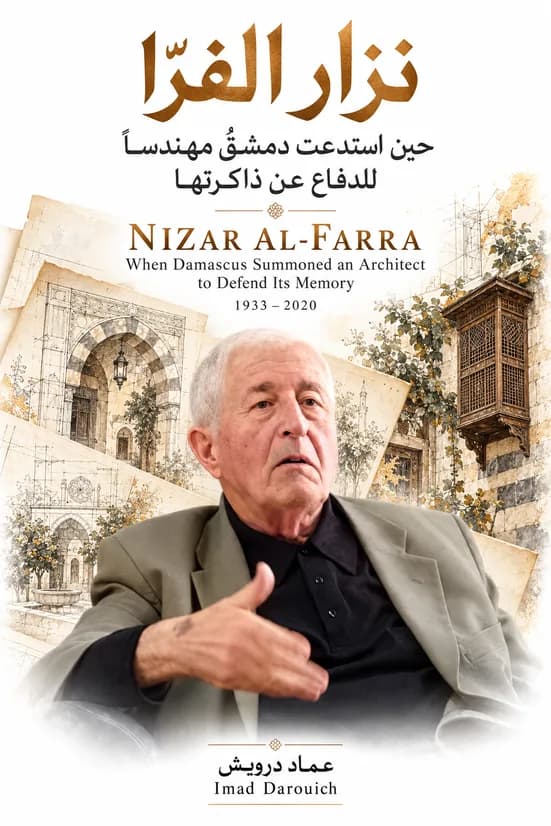
Nizar Al-Farra was a Syrian architect, born in Damascus in 1933 and died there in 2020, who studied in Paris, headed the architecture department in Damascus from 1961 to 1964 and wrote papers on preserving the old city, according to the Archive of Modern Architecture in Syria. Imad's tribute to Nizar Al-Farra reads his cinemas, fair pavilions, unbuilt bus station and hospital, and asks what replanning owes the people of an old city.
تنويه: هذه ملحمة تحيّة للمعماري نزار الفرّا، تستند إلى سيرته وفهارس أعماله وأبحاثه المنشورة في أرشيف العمارة الحديثة في سوريا «AMASyria». تُذكر المشاريع المنفّذة والمقترحات والمسابقات بحسب توصيف الأرشيف، وتُحفظ للمشاركين أدوارهم؛ أمّا الصور والمشاهد الشعرية فهي من خيالي وتأمّلي، وليست أقوالًا منسوبة إليه.Note: This epic tribute to architect Nizar Al-Farra draws on his biography and the catalogues of his projects and research published by AMASyria, the Archive of Modern Architecture in Syria. Built works, proposals, and competition entries retain their archival descriptions, with collaborators’ contributions respected; the poetic imagery and scenes are my own reflections, not attributed quotations.
أنا المعماري.I am an architect.
أعرفُ أن المدينة قد تُمحى…I know a city can be erased…
بينما تبقى أبنيتها واقفة.While its buildings remain standing.
يتغيّر الطريق إلى البيت.The way home changes.
يغيب المقعد.The bench disappears.
ويصبح المكان الذي عرف اسمك…And the place that once knew your name…
غريبًا يحتاج أن تُبرز له هويّتك.A stranger demanding to see your identity.
لهذا، حين أقرأ نزار الفرّا…That is why, when I read Nizar Al-Farra…
أسمع دمشق تقلّب أوراق قضيّتها.I hear Damascus turning the pages of its case.
Damascus, 1933.
دمشق، 1933.
ولد فيها.He was born there.
وفيها انتهت حياته عام 2020.And there his life ended in 2020.
بين التاريخين، مدينةٌ تتبدّل.Between those dates, a city changes.
ورجلٌ يحاول أن يفهم ما يحدث لجسدها.And a man tries to understand what is happening to its body.
أتخيّل دمشق في طفولته…I imagine Damascus in his childhood…
تدخل من بابٍ صغير.Entering through a small doorway.
ثم تتّسع داخل العين.Then expanding within the eye.
حتى يصبح النظر إليها مسؤوليّة.Until looking at it becomes a responsibility.
Paris… Tools for Reading the City.
باريس… أدواتٌ لقراءة المدينة.
عامٌ في معهد التخطيط العمراني بباريس سنة 1953.A year at the Institute of Urbanism in Paris in 1953.
وعامٌ في قسم الفن الإسلامي بمدرسة اللوفر سنة 1955.And a year in the Islamic Art department at the École du Louvre in 1955.
ثم شهادة العمارة من المدرسة الخاصة للعمارة، DESA، عام 1957.Then an architecture degree from the École Spéciale d’Architecture, DESA, in 1957.
وفي عودةٍ لاحقة إلى فرنسا، مؤهّل DPLG عام 1970.And on a later return to France, the DPLG qualification in 1970.
أرى بين هذه المحطّات سؤالًا تتعدّد أدواته.Between these stations, I see a question acquiring many tools.
كيف نقرأ مدينة؟How do we read a city?
من مسقطها؟Through its plan?
من زخرفتها؟Through its ornament?
أم من المسافة التي يقطعها أهلها بين الخبز والعمل والرجاء؟Or through the distance its people travel between bread, work, and hope?
أتخيّل المعرفة تعود معه إلى دمشق.I imagine knowledge returning with him to Damascus.
تقف أمام بابٍ عتيق.Standing before an ancient door.
وتنتظر أن يفتح لها المكان.Waiting for the place to let it in.
Teaching… Forming the Eye That Will Draw.
التعليم… تأسيسُ العين التي سترسم.
درّس التصميم المعماري والنظريات في المعهد العالي للفنون الجميلة، في مسار المؤسسة الذي أفضى إلى كلية العمارة.He taught architectural design and theory at the Higher Institute of Fine Arts, within the institutional path that led to the Faculty of Architecture.
وترأّس قسم العمارة بين 1961 و1964.He headed the architecture department between 1961 and 1964.
أمام المعلّم، ورقة.Before the teacher, a page.
وخلف الورقة، طالبٌ يحاول أن يصبح نفسه.Behind the page, a student trying to become himself.
أتخيّل الأستاذ يفتح نافذةً في السؤال.I imagine the teacher opening a window within the question.
فتدخل المدينة إلى القاعة.And the city enters the studio.
بضجيجها.With its noise.
بحرّها.With its heat.
وبالناس الذين لن يجلسوا في لجنة التحكيم…And with the people who will never sit on the jury…
لكنهم سيعيشون داخل الحكم.Yet will live within its judgment.
هناك تصبح الملاحظة الصغيرة ثقيلة.There, a small remark acquires weight.
فقد تغيّر خطًّا.It may change a line.
والخطُّ قد يغيّر شارعًا.And the line may change a street.
Al-Sufaraa Cinema and Al-Khaiam Cinema, 1960.
سينما السفراء وسينما الخيام، 1960.
عملان يوردهما الأرشيف بوصفهما منفّذين.Two works the archive records as built.
وأنا أتوقّف عند عمارة العتمة.And I pause before the architecture of darkness.
كيف يبني المعماري مكانًا تختفي فيه الجدران…How does an architect build a place where the walls disappear…
حين تبدأ الحكاية؟When the story begins?
صفوفٌ من الوجوه.Rows of faces.
تتّجه إلى ضوءٍ واحد.Turning toward a single light.
غرباء يدخلون فرادى…Strangers enter alone…
ثم يتنفّسون معًا عند المشهد الأخير.Then breathe together at the final scene.
هكذا تستطيع قاعةٌ أن تصنع جمهورًا.This is how a hall can create an audience.
وهكذا يصبح الفراغ ذاكرةً مشتركة.And space becomes a shared memory.
The Damascus International Fair… A City Receiving the World.
معرض دمشق الدولي… مدينةٌ تستقبل العالم.
سوق المعرض عام 1961.The fair’s market in 1961.
وجناح الصناعات اليدوية بين 1961 و1962.And the handicrafts pavilion between 1961 and 1962.
وتخطيط أرض المعرض عام 1962.And the planning of the fairgrounds in 1962.
ويرد السوق والجناح ضمن الأعمال التي هُدمت.The market and pavilion are listed among works later demolished.
أتخيّل يد الصانع تحت سقف الجناح.I imagine the craftsperson’s hand beneath the pavilion’s roof.
تنقر النحاس.Hammering copper.
وتحمل إلى الزائر زمنًا لا يُختصر في ثمن.Bringing the visitor a span of time no price can contain.
ثم أتخيّل المخطّط بعد الهدم.Then I imagine the drawing after demolition.
ما زال المدخل في مكانه.The entrance is still in its place.
وما زالت الأسهم تشير إلى أجنحةٍ غائبة.And arrows still point toward vanished pavilions.
يا لقسوة الرسم حين يبقى شاهدًا…How painful a drawing becomes when it remains a witness…
على مكانٍ لم يعد يستطيع استقبال أحد.To a place that can no longer receive anyone.
The Terminal… Architecture That Gives Departure an Order.
المحطّة… العمارة التي تنظّم الوداع.
في مسابقة محطّة انطلاق الباصات والسيارات بدمشق عام 1967، فاز مقترحه بالمركز الأول، ولم يُنفّذ.In the 1967 competition for Damascus’s car and bus terminal, his proposal won first prize and remained unbuilt.
ثم جاءت دراسةٌ جديدة عام 1974، وتُظهر فهارسها مشاركة ياسين البرغلي.A new study followed in 1974, with its catalogue identifying Yassin al-Burghli as a collaborator.
أرى المحطّة قبل أن تُبنى.I see the terminal before it is built.
حقيبةٌ تبحث عن رصيف.A suitcase searching for a platform.
وأمٌّ تؤجّل رفع يدها للوداع.And a mother delaying the moment she raises her hand goodbye.
ومسافرٌ ينظر خلفه مرّتين.And a traveler looking back twice.
كلُّ هؤلاء ينتظرون على الورق.All of them wait upon paper.
المقترح غير المنفّذ يترك في نفسي وجعًا خاصًّا.An unbuilt proposal leaves a particular ache within me.
كأن بابًا رُسم بإتقان…As though a door had been carefully drawn…
ولم يحصل على جدارٍ يُفتح فيه.Yet never received a wall in which to open.
Old Damascus… When Knowledge Becomes a Defense.
دمشق القديمة… حين تصبح المعرفة دفاعًا.
«دمشق في العصور الوسطى».“Damascus in the Middle Ages.”
وبحثٌ عن عمارة دمشق وعمرانها في القرن التاسع عشر، مرتبط بندوة عام 1973.And a paper on nineteenth-century Damascus’s architecture and urbanism, associated with a 1973 seminar.
ثم «دمشق القديمة وأهمية الحفاظ عليها»، في مؤتمر حماية دمشق وغوطتها عام 1976.Then “Old Damascus and the Importance of Preserving It,” for the 1976 conference on protecting Damascus and its Ghouta.
أقرأ العناوين.I read the titles.
فأرى المدينة تجلس أمام باحثها.And see the city sitting before its researcher.
تخلع عنها غبار الاستعجال.Removing the dust of haste.
وتكشف طبقاتها.Revealing its layers.
هذا الجدار يحمل أكثر ممّا يظهر.This wall carries more than it reveals.
وهذا الطريق عرف أقدامًا لم تحفظ الكتب أسماءها.And this road knew footsteps whose names no books preserved.
أين نضع هؤلاء حين نعيد التنظيم؟Where do we place them when we replan?
وأين تذهب المدينة…And where does the city go…
حين نحتفظ بواجهتها ونطرد حياتها؟When we preserve its facade and drive out its life?
Tall Buildings… The Trial of the Shadow.
الأبنية العالية… امتحانُ الظل.
عام 1973، بحثٌ عن معايير اختيار الأبنية العالية وتصميمها.In 1973, a paper on the criteria for selecting and designing tall buildings.
أتخيّل المعماري يرفع مقطعًا نحو السماء.I imagine the architect raising a section toward the sky.
ثم يخفض عينيه إلى الشارع.Then lowering his eyes to the street.
هناك يجب أن يكتمل الحساب.There, the calculation must be completed.
عند النافذة التي سيصلها الظل.At the window the shadow will reach.
وعند الرصيف الذي سيتلقّى الريح.And the pavement that will receive the wind.
فالارتفاع يوقّع اسمه في الهواء…For height signs its name in the air…
وتقرأ الأرض نتائجه.And the ground reads its consequences.
Al-Shami Hospital, 1977.
المشفى الشامي، 1977.
عملٌ منفّذ في سجلّه.A built work in his record.
هنا تصبح الخطوة وحدةَ قياسٍ موجعة.Here, a footstep becomes a painful unit of measurement.
ممرٌّ يقطعه السليم بسهولة…A corridor the healthy cross with ease…
قد يكون طويلًا على قلبٍ خائف.May be long for a frightened heart.
أتخيّل الضوء يصل إلى غرفة انتظار.I imagine light reaching a waiting room.
ويجلس بصمتٍ إلى جوار أهل مريض.Sitting silently beside a patient’s family.
تلك هي العمارة حين توضع أمام هشاشتنا.That is architecture brought face to face with our fragility.
كلُّ تفصيلٍ فيها يستطيع أن يخفّف…Every detail can ease…
أو يزيد.Or intensify.
The Faculty of Education at Damascus University, 1978.
كلية التربية بجامعة دمشق، 1978.
مبنى آخر يصل العمارة بالتعليم.Another building connecting architecture with education.
لكن الصورة هنا تتضاعف.But here the image multiplies.
مكانٌ يتعلّم فيه من سيعلّمون.A place where those who will teach are themselves taught.
قاعةٌ تحمل قاعاتٍ لم تُبنَ بعد.A classroom holding classrooms not yet built.
وطالبٌ سيقف غدًا…And a student who tomorrow will stand…
أمام عيونٍ لم تولد بعد.Before eyes not yet born.
كم جيلًا تستطيع نافذةٌ أن تضيء؟How many generations can a window illuminate?
The House of Research… When a Question Finds an Address.
دار الأبحاث… حين يجد السؤال عنوانًا.
تروي سيرته تأسيس مكتبٍ مع شركاء معماريين وإنشائيين عام 1975، تطوّر لاحقًا إلى «دار الأبحاث للدراسات والتنفيذ».His biography records the establishment of an office with architectural and structural partners in 1975, later developing into the House of Research for Studies and Construction.
ويضمّ سجلّه مركز تدريب اتحاد إذاعات الدول العربية وفندق كارلتون، ومجمّع سوق الخجا، ومبنى الفردوس التجاري والمكتبي.His record includes the Arab Broadcasting Federation’s training center and Carlton Hotel, Al-Khaja Market Complex, and Al-Fardus Commercial and Office Building.
وتتجاور فيه دراساتٌ للإسكان والفنادق ومشفى العباسيين، ومقترح برج دمشق، ومسابقات يلبغا وبلدية درعا وقصر المؤتمرات.Alongside them are studies for housing, hotels, and Abbasin Hospital, the Damascus Tower proposal, and competition entries for Yalbugha, Daraa City Hall, and the Convention Palace.
مدينةٌ كاملة تمرُّ فوق الطاولات.An entire city passes across the tables.
تأتي بحاجاتها المختلفة.Bringing its different needs.
تطلب غرفة.Asking for a room.
ثم سوقًا.Then a market.
ثم مكانًا يجتمع فيه الناس.Then a place where people can gather.
وأتخيّل وراء كلّ ملفٍّ ليلًا طويلًا.And behind every file, I imagine a long night.
ينتظر فيه الخطُّ أن يصبح قرارًا صالحًا للحياة.In which a line waits to become a decision fit for life.
The Archive… When Paper Resists a Second Death.
الأرشيف… حين تقاوم الورقةُ الموتَ الثاني.
رحل نزار الفرّاء عام 2020.Nizar Al-Farra died in 2020.
وبقيت الرسومات.The drawings remained.
بقيت الملاحظات عند الحواف.The notes remained at the edges.
وبقي بابٌ صغيرٌ في مسقطٍ قديم…And a small door remained in an old plan…
ينتظر عينًا تفهم لماذا وُضع هناك.Waiting for an eye to understand why it was placed there.
أنا أنحني أمام هذه الأوراق.I bow before these papers.
فقد تحمل ورقةٌ واحدة…For a single sheet may carry…
ما لم يعد الشارع قادرًا على تذكّره.What the street can no longer remember.
وقد يحفظ خطٌّ باهت…And a fading line may preserve…
فرصةً أخرى كي نفهم مدينتنا.Another chance to understand our city.
يا نزار الفرّاء،Nizar Al-Farra,
أحيّيك من داخل هذه المهنة.I salute you from within this profession.
من موضع اليد المتردّدة قبل اعتماد المخطّط.From the place of the hesitant hand before a plan is approved.
ومن موضع العين التي تنظر إلى بيتٍ قديم…And from the place of the eye that looks upon an old house…
فتشعر أن عليها أن تعرف أكثر، قبل أن تفعل شيئًا.And feels it must know more before doing anything.
أضع اسمك عند حافّة المسطرة…I place your name at the ruler’s edge…
كي نتذكّر، قبل أن نمدَّ خطًّا جديدًا، كم حياةً تعبر تحته.So that before extending a new line, we remember how many lives pass beneath it.
Paul Chiniarah's entry in the same 1967 bus station competition is remembered in When Shade Was Summoned to Testify to the Justice of Light, and Talal Akili's care for the old city in When Damascus Stood Behind a Ruler. More of old Damascus is in Damascus Sketch: An Epic of a City Trying to Remember Itself.
بقلم
Architect Imad Darouich
المهندس المعماري عماد درويش
مهندس معماري وكاتب ومؤسس 3DEPICS، يقيم في نيويورك. يكتب أدبًا ملحميًا يعبر الحدود واللغات والجغرافيا، حيث تلتقي الفلسفة بالعمارة، والروحانية بالتاريخ، والذاكرة بالخيال.