An Application to License the Sun: Edward Hopper and Paul Klee
طلبُ ترخيصٍ للشمس
An architect asks City Hall for a window, Hopper paints a rectangle of light on the form, and Klee's line climbs out of the box it was given.
بقلم المهندس المعماري عماد درويش5 دقائق قراءة
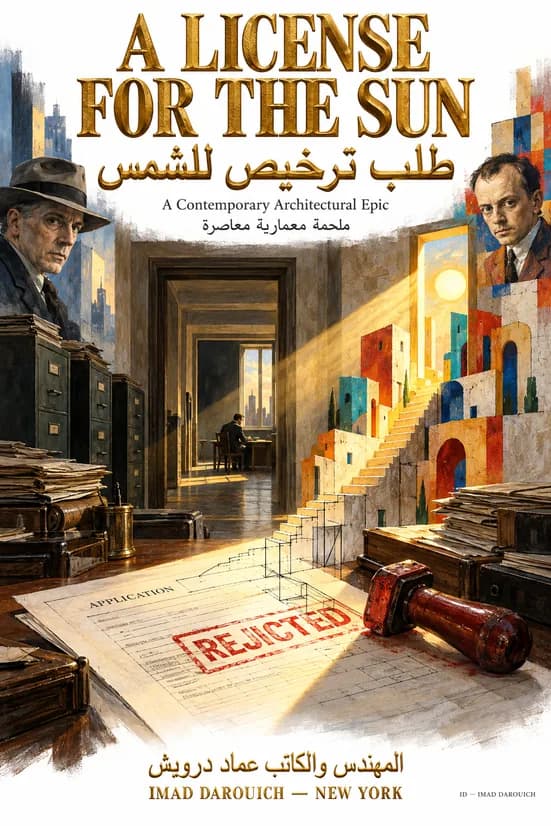
Edward Hopper (1882-1967) was an American realist painter of solitude, light and shadow, who always said his favorite thing was painting sunlight on the side of a house; Paul Klee (1879-1940) was a Swiss-born German artist who taught at the Bauhaus. In Imad's imagined story, Edward Hopper and Paul Klee help an architect whose request for a window, in a room the sun never reaches, keeps coming back stamped rejected.
A Note
تنويه
حكاية متخيّلة تجمع إدوارد هوبر وبول كلي؛ الشخصيات الفنية حاضرة في رؤيا أدبية، واللقاء والحوار من الخيال.An imagined story bringing together Edward Hopper and Paul Klee; the artists appear in a literary vision, and the encounter and dialogue are fictional.
The Introduction
المقدمة
ذهبتُ إلى البلدية لأطلب نافذةً لغرفةٍ لا تصلها الشمس.I went to City Hall to request a window for a room sunlight could not reach.
أنا عماد درويش. حملتُ المخططات، وحسابات الجدار، وصورةَ رجلٍ يقضي نهاره تحت مصباح.I am Imad Darouich. I carried the plans, the wall calculations, and a photograph of a man spending his days beneath a lamp.
قلّب الموظّف الأوراق.The clerk leafed through the papers.
قال: الملفُّ كامل. تنقصه موافقةُ الضوء.He said: The file is complete. It only lacks the light’s approval.
ظننتُ أنه يمزح.I thought he was joking.
دفع إليّ استمارة.He pushed a form toward me.
في أعلاها: «طلبُ ترخيصٍ للشمس».At the top: “Application to License the Sun.”
The Epic
الملحمة
سألته: مَن يوقّع؟I asked: Who signs?
قال: الشمس. أو مَن ينوب عنها.He said: The sun. Or its authorized representative.
أشار إلى ممرّ طويل.He pointed to a long corridor.
مشيتُ فيه حتى وصلتُ إلى غرفةٍ يجلس فيها إدوارد هوبر.I followed it until I reached a room where Edward Hopper was sitting.
أمامه لوحةُ رجلٍ وحيد، يسقط الضوءُ على وجهه.Before him was a painting of a solitary man, light falling across his face.
قلتُ: أحتاج هذا الضوء.I said: I need that light.
نظر إلى صورة الرجل في ملفّي.He looked at the photograph of the man in my file.
ثم أزاح كرسيّه، وأجلسني أمام اللوحة.Then he moved his chair and seated me before the painting.
انتظرتُ أن يشرح.I waited for an explanation.
قال: ابقَ قليلًا.He said: Stay a while.
بقيتُ.I stayed.
بعد دقائق، شعرتُ بثقل الغرفة التي جئتُ من أجلها.After a few minutes, I felt the weight of the room I had come to represent.
كيف يصير النهارُ طويلًا حين لا يترك أثرًا على الجدار.How long a day becomes when it leaves no trace upon the wall.
كيف ينظر الإنسان إلى الساعة، لأنه فقد السماء.How a person watches the clock because the sky is gone.
أخذ هوبر الاستمارة، ورسم مستطيلًا مضيئًا.Hopper took the form and painted a rectangle of light.
قال: خذه.He said: Take it.
عدتُ إلى الموظّف.I returned to the clerk.
رفع الورقة أمام عينيه.He held the sheet before his eyes.
قال: الضوءُ خارج الخانة.He said: The light is outside the designated box.
ختمها: «مرفوض».He stamped it: “Rejected.”
كانت بقعةُ الشمس تمتدّ تحت الختم.The patch of sunlight spread beneath the stamp.
سألته: أترى ذلك؟I asked: Do you see it?
غطّاها بملفّ آخر.He covered it with another file.
قال: راجع قسمَ الحدود.He said: Consult the Department of Boundaries.
هناك وجدتُ بول كلي يرسم خطًّا صغيرًا.There I found Paul Klee drawing a small line.
عرضتُ عليه الورقة.I showed him the form.
قرأ سبب الرفض، ثم وضع قلمه داخل الخانة.He read the reason for rejection, then placed his pencil inside the box.
مشى الخطُّ إلى حافّتها، وتسلقها.The line walked to its edge and climbed over it.
تابعتُه بعيني.I followed it with my eyes.
صار سلّمًا. ثم شارعًا. ثم واجهةَ بيت.It became a staircase. Then a street. Then the façade of a house.
وفي الواجهة، ظهرت نافذتي.My window appeared in that façade.
قال كلي: أين الرجل؟Klee asked: Where is the man?
أخرجتُ صورته.I took out his photograph.
وضعها خلف النافذة.He placed it behind the window.
انحنى الرجلُ في الصورة، كأنه يحاول أن يرى الخارج.The man in the photograph leaned forward, as though trying to see outside.
للمرة الأولى، رأيتُ وجهه كاملًا.For the first time, I saw his whole face.
حملتُ الورقة إلى الموظّف.I carried the sheet back to the clerk.
هذه المرة، لم يقرأها.This time, he did not read it.
قال: تغيّر المخطّط. يجب أن تبدأ من جديد.He said: The plan has changed. You must start again.
خلفه كانت نافذةٌ واسعة.Behind him stood a wide window.
دخلت منها الشمسُ بلا ختم.Sunlight entered through it without a stamp.
نظرتُ إلى الضوء على مكتبه.I looked at the light on his desk.
قلتُ: ومَن رخّص هذه؟I asked: And who licensed that one?
أغلق الستارة.He closed the blind.
ساد الصمت.Silence filled the room.
ثم مدَّ يده نحو صورة الرجل.Then he reached for the man’s photograph.
قال: عليه أن يحضر بنفسه.He said: He must appear in person.
قلتُ: لا يستطيع مغادرة الغرفة.I said: He cannot leave the room.
كتب على الملفّ: «تعذّر إثبات وجود المستفيد».He wrote on the file: “Unable to establish the beneficiary’s existence.”
عندها فهمتُ.Then I understood.
كنتُ أحاول إثبات حاجة إنسانٍ إلى الشمس، أمام رجلٍ أغلقها كي يُكمل عمله.I was trying to prove a person’s need for sunlight before a man who had shut it out to finish his work.
The Ending
الخاتمة
عدتُ إلى الغرفة.I returned to the room.
سألني صاحبها: هل وافقوا؟Its occupant asked: Did they approve?
وضعتُ الأوراق جانبًا، وجلستُ قربه.I set the papers aside and sat beside him.
لم أجد جوابًا يليق بانتظاره.I could find no answer worthy of his waiting.
أخرجتُ لوحةَ هوبر، ورسمَ كلي.I took out Hopper’s painting and Klee’s drawing.
علّقناهما على الجدار.We hung them on the wall.
نظر طويلًا إلى النافذة المرسومة.He gazed for a long time at the painted window.
ثم أشار إلى موضعٍ بجوارها.Then he pointed to a place beside it.
قال: هنا أريد الحقيقية.He said: Here is where I want the real one.
فتحتُ دفتري، وأعدتُ قياس الجدار.I opened my sketchbook and measured the wall again.
وفي خانة «سبب الطلب»، كتبتُ:In the box marked “Reason for Application,” I wrote:
«الرجلُ موجود. وقد اختار مكانَ نافذته».“The man exists. He has chosen where his window will be.”
هذه المرة، تركتُ الأوراق عنده.This time, I left the papers with him.
خرجتُ أحمل القياسات، وصوتَه.I left carrying the measurements and his voice.
كان عليَّ أن أعود غدًا.I had to return tomorrow.
فقد صار خلف الملفّ وجهٌ أعرفه.For now there was a face I knew behind the file.
Two New York towers shaped by daylight and windows are read in Solar Carve: When the Sun Became an Architect and Lantern House: When the Window Became a Lantern. Officials tape over a painted scream in The City That Banned the Scream.
بقلم
Architect Imad Darouich
المهندس المعماري عماد درويش
مهندس معماري وكاتب ومؤسس 3DEPICS، يقيم في نيويورك. يكتب أدبًا ملحميًا يعبر الحدود واللغات والجغرافيا، حيث تلتقي الفلسفة بالعمارة، والروحانية بالتاريخ، والذاكرة بالخيال.