When Stone Asked for a Statement: 181 Montague Street, Brooklyn
حين طلبَ الحجرُ كشفَ حساب
A statue climbs down from a pediment in Brooklyn Heights and asks for a statement in the name of the hand that carved it.
بقلم المهندس المعماري عماد درويش5 دقائق قراءة
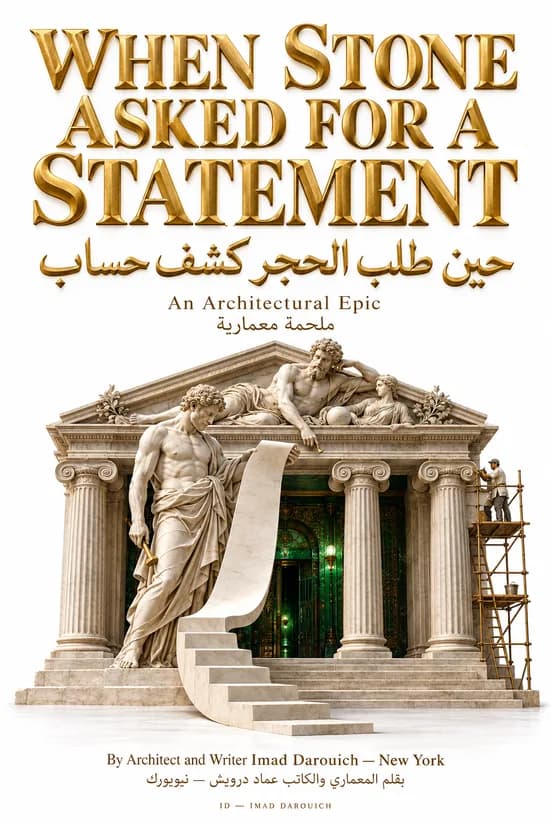
181 Montague Street in Brooklyn Heights is the People's Trust Company Building, a neoclassical bank completed in 1906 to designs by Mowbray & Uffinger, with four Corinthian columns and reclining figures carved in its pediment; it became a New York City landmark in 2017. Imad's imagined prose poem starts from a photograph of 181 Montague Street and lets one statue come down to ask about the people who carve and carry stone.
A Note
تنويه
ملحمة متخيّلة مستوحاة من الصورة؛ شخصياتها وأحداثها رمزية، وليست وصفًا لممارسات المصرف الظاهر فيها.An imagined epic inspired by the photograph; its characters and events are symbolic, not an account of the pictured bank’s practices.
The Beginning
البداية
بين عمارتين، رأيتُ واجهةً تحمل سماءها الخاصة.Between two buildings, I saw a façade carrying its own sky.
مثلثًا من الحجر، تسكنه أجسادٌ لا تشيخ.A triangle of stone, inhabited by bodies that never age.
وتحته أربعة أعمدة.Beneath it, four columns.
واقفةٌ كأنها تنتظر حكمًا.Standing as though awaiting a verdict.
في الوسط، ضوءٌ أخضر.At the center, a green light.
وعند الباب، رجلٌ ينظر إلى هاتفه.At the door, a man looking at his phone.
رفعتُ رأسي إلى التماثيل.I raised my eyes toward the statues.
كان أحدها ينظر إلى شيءٍ أبعد من الشارع.One was looking toward something beyond the street.
فجأةً، التفتَ إليّ.Suddenly, it turned toward me.
The Epic
الملحمة
قال: أأنتَ معماري؟It said: Are you an architect?
قلتُ: نعم.I said: Yes.
قال: إذن ساعدني على النزول.It said: Then help me down.
وضعتُ سلّمًا من خيالي على الواجهة.I leaned a ladder of imagination against the façade.
نزل التمثال ببطء.The statue descended slowly.
وفي كل درجةٍ، تساقط عامٌ من كتفيه.At every rung, a year fell from its shoulders.
وصل إلى الرصيف حافيًا.It reached the sidewalk barefoot.
لم يلتفت أحد.No one turned.
في نيويورك، يستطيع حجرٌ أن يمشي، ما دام لا يعطّل المرور.In New York, a stone can walk as long as it does not hold up traffic.
دخلنا.We entered.
قال التمثال: أريد كشف حساب.The statue said: I would like a statement.
سأله الموظف: باسم مَن؟The clerk asked: In whose name?
قال: باسم اليد التي نحتتني.It said: In the name of the hand that carved me.
بحث الموظف.The clerk searched.
قال: الاسم غير موجود.He said: The name is not here.
أخرج التمثال من صدره إزميلًا صغيرًا.The statue drew a small chisel from its chest.
ووضعه على الطاولة.It laid it on the counter.
قال: هذا توقيعه.It said: This is his signature.
قال الموظف: نحتاج إلى وثيقة.The clerk said: We need a document.
رفع التمثال ذراعه.The statue raised its arm.
تحتها، بقي أثر ضربةٍ أخطأت موضعها.Beneath it remained the mark of a misplaced blow.
قال: يومها كانت يده ترتجف من الجوع.It said: That day, his hand was trembling with hunger.
ثم أشار إلى ثنيةٍ في ردائه الحجري.Then it pointed to a fold in its stone robe.
وهذه أكملها بعدما نام طفله.And this, he finished after his child fell asleep.
كان يعمل على ضوءٍ يكفي لوجه واحد.He worked by a light barely enough for one face.
أعطاه لي.He gave it to me.
وسأل الموظف مرةً أخرى: ما رقم الحساب؟And the clerk asked again: What is the account number?
عندها سكت التمثال.Then the statue fell silent.
رأيتُ الغبار يخرج من فمه.I saw dust escape its mouth.
غبارًا ناعمًا، كأنّ اسمًا يتفتّت.Fine dust, as though a name were crumbling.
أردتُ أن أتكلم.I wanted to speak.
لكنني تذكّرتُ رسوماتي.But I remembered my drawings.
كم واجهةً وقّعتُها، ولم أكتب اسم اليد التي بنتها؟How many façades had I signed without naming the hand that built them?
كم مرّةً أعجبتني استقامةُ الحجر، وغاب عنّي ظهرُ حامله؟How often had I admired the stone’s straight line and overlooked the back that carried it?
أخذ التمثال إزميله.The statue took back its chisel.
وخرجنا.We walked out.
على الزجاج، انعكس وجهه بجوار الضوء الأخضر.In the glass, its face appeared beside the green light.
كان الوجه متعبًا الآن.The face looked tired now.
لقد تعلّم الحجرُ، في دقائق، ما يحتاج الإنسان عمرًا ليحتمله.In minutes, stone had learned what a person takes a lifetime to bear.
عند السقالات، توقّف.It stopped beside the scaffolding.
سمع خطوةً فوق الألواح.It heard a footstep on the planks.
رفع رأسه.It looked up.
عاملٌ يمدّ يده إلى الواجهة.A worker was reaching toward the façade.
كانت أصابعه بيضاء من الغبار.His fingers were white with dust.
قال التمثال: هذه اليد أعرفها.The statue said: I know that hand.
قلتُ: صاحبها لم يولد حين نُحتَّ.I said: Its owner was not born when you were carved.
قال: أعرف تعبها.It said: I know its weariness.
عاد التمثال إلى مكانه تحت المثلث.The statue returned to its place beneath the pediment.
لكنّه غيّر اتجاه وجهه.But it changed the direction of its face.
صار ينظر إلى العامل.It now watched the worker.
وأنا فتحتُ دفتر رسومي.And I opened my sketchbook.
رسمتُ الأعمدة، والزجاج، والضوء.I drew the columns, the glass, and the light.
ثم تركتُ تحت الرسم مكانًا لاسمٍ آخر.Then I left room beneath the drawing for another name.
اسمِ مَن سيحمل الحجر.The name of whoever would carry the stone.
وقبل أن أمضي، ناديتُ العامل.Before leaving, I called to the worker.
رفَعَ رأسه.He raised his head.
سألتُ العامل عن اسمه.I asked the worker his name.
قاله، ثم عاد إلى الحجر.He spoke it, then returned to the stone.
كتبتُه تحت الرسم.I wrote it beneath the drawing.
للمرة الأولى، صار للواجهة توقيعان.For the first time, the façade had two signatures.
واحدٌ رسم ارتفاعها.One had drawn its height.
وآخرُ صعد إليها حين تعبت.The other had climbed to it when it grew weary.
فوقنا، انحنى التمثال قليلًا.Above us, the statue leaned forward slightly.
سقطت من يده ذرّةُ غبار على الصفحة.A grain of dust fell from its hand onto the page.
تركتُها حيث وقعت.I left it where it landed.
ومضيتُ أحمل الرسم، كأنني أحمل شهادةَ ميلاد.I walked away carrying the drawing as though it were a birth certificate.
عند آخر الشارع، التفتُّ.At the end of the street, I turned.
كان العامل يرفع حجرًا صغيرًا إلى موضعه.The worker was lifting a small stone into place.
انتظرتُ حتى استقرّ.I waited until it settled.
ثم أغلقتُ دفتري.Then I closed my sketchbook.
في تلك الليلة، حين سألني ابني عمّا رسمتُ، فتحتُ الصفحة.That night, when my son asked what I had drawn, I opened the page.
أشرتُ أولًا إلى الاسم.I pointed first to the name.
ثم إلى المبنى.Then to the building.
On the same street, the Brooklyn Trust Company Building is read from another photograph in Scaffolding Around the Chest of Time. For the city's architecture at book length, read New York: Where Architecture Meets Civilizations, in the buildings and cities collection.
بقلم
Architect Imad Darouich
المهندس المعماري عماد درويش
مهندس معماري وكاتب ومؤسس 3DEPICS، يقيم في نيويورك. يكتب أدبًا ملحميًا يعبر الحدود واللغات والجغرافيا، حيث تلتقي الفلسفة بالعمارة، والروحانية بالتاريخ، والذاكرة بالخيال.