100 Eleventh Avenue: When the Façade Became a Second Sky
100 الحادي عشر أفينيو: حين أصبحت الواجهة سماءً ثانية
An architect stands before Jean Nouvel's tower in Chelsea and finds a thousand windows, each holding a different piece of New York's sky.
بقلم المهندس المعماري عماد درويش10 دقائق قراءة
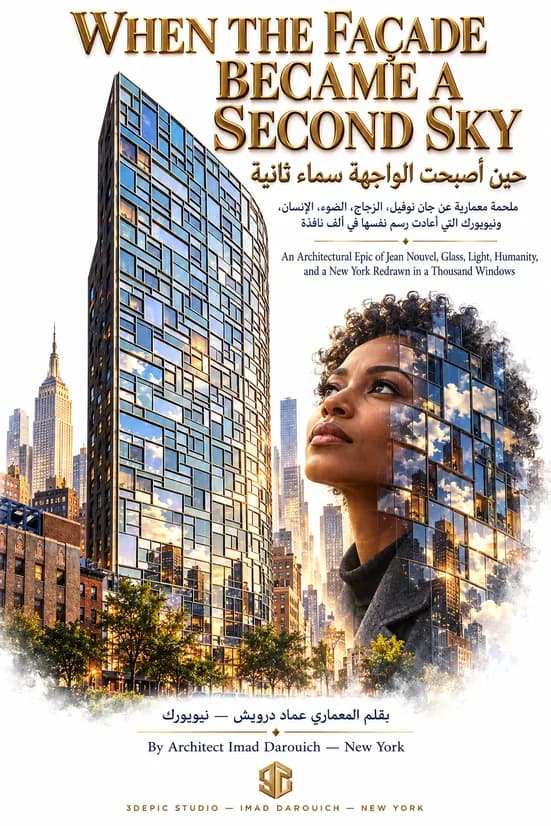
100 Eleventh Avenue is a 23-story residential tower by Jean Nouvel at 19th Street in Chelsea, Manhattan, completed in 2010, whose curtain wall sets more than 1,600 different windowpanes at varying angles. Imad's essay reads 100 Eleventh Avenue in ten chapters, from a façade that refuses the repeated window to the Hudson entering a living room and the sunset as the last resident.
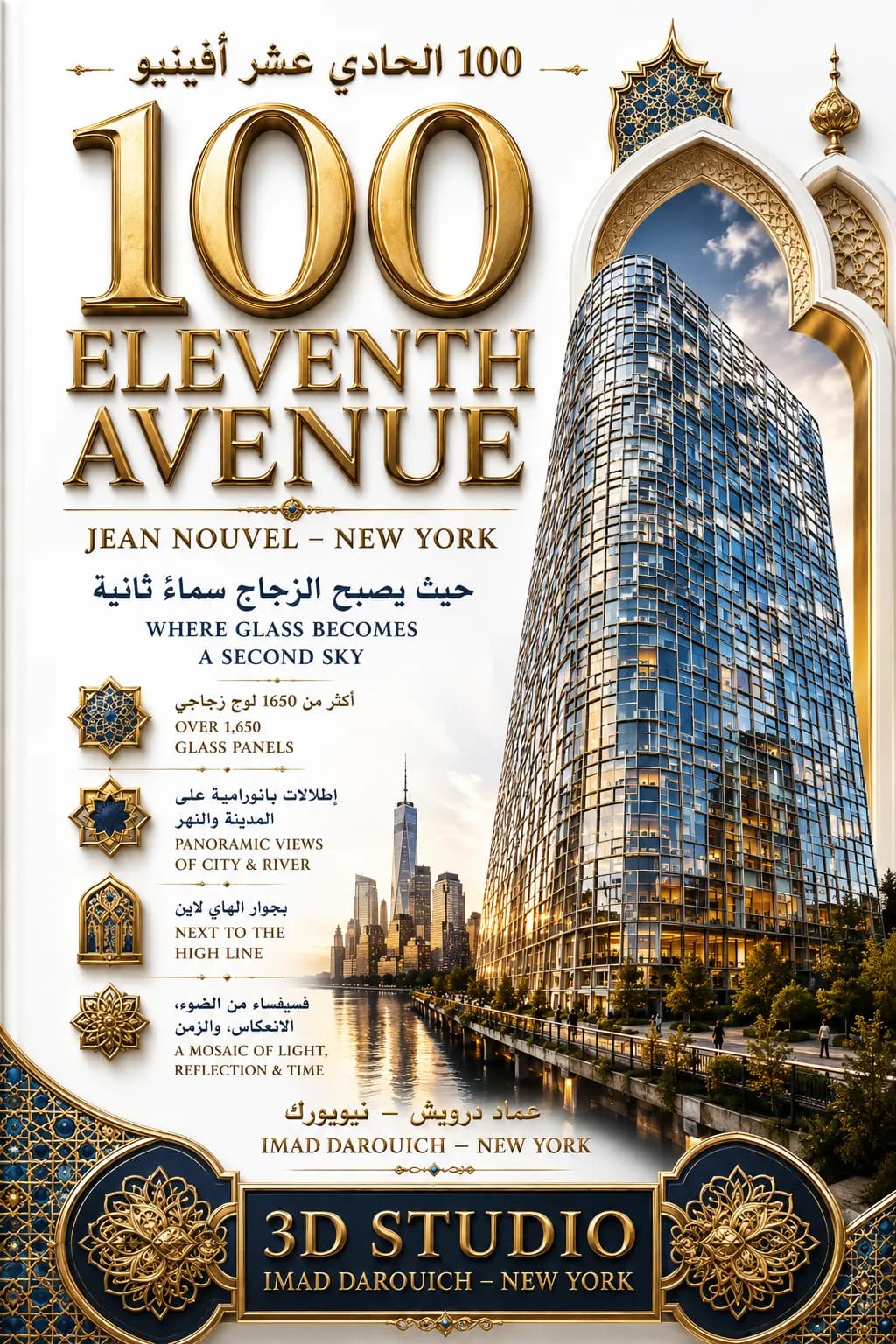
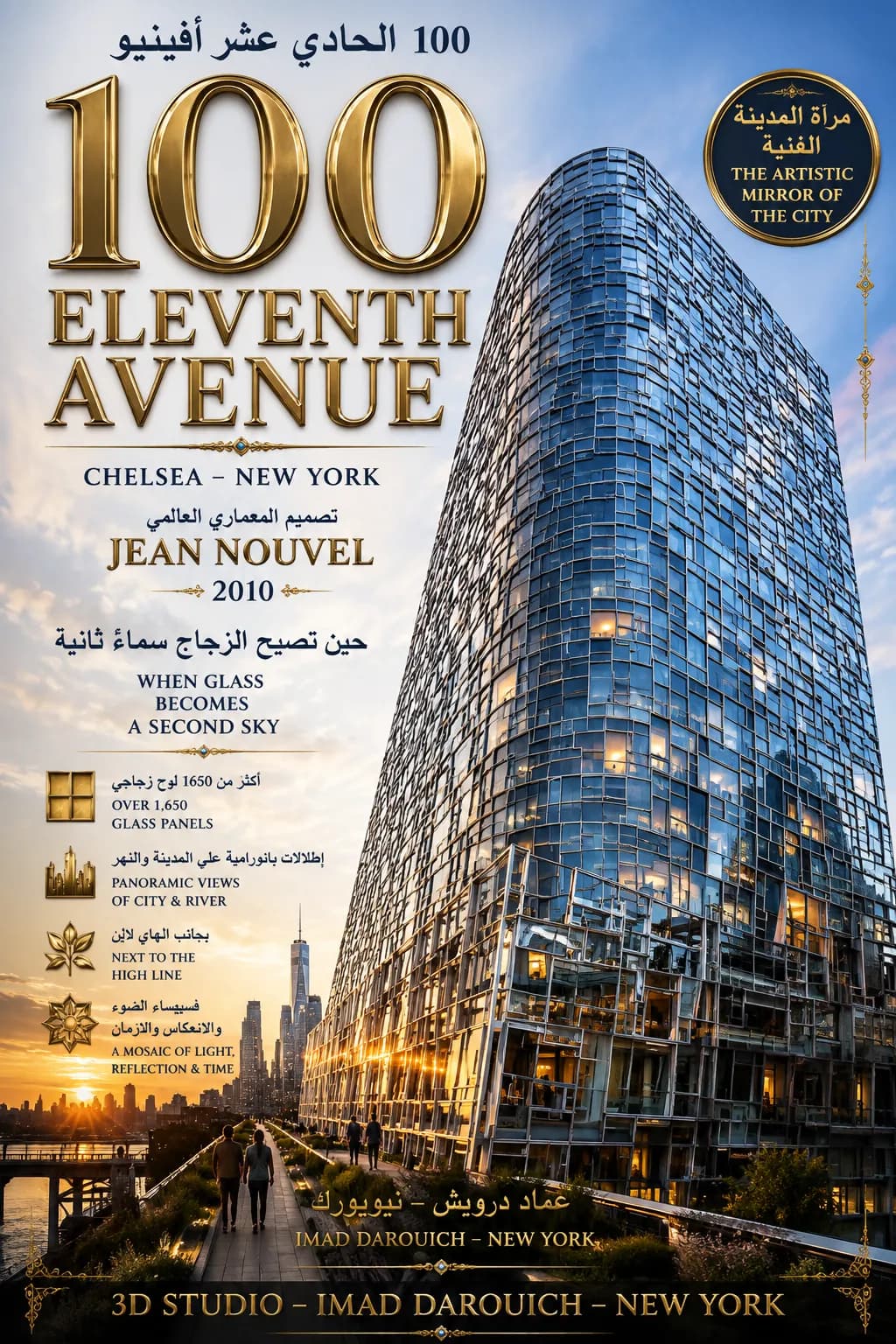
An Architectural Epic of Jean Nouvel, Glass, Light, Humanity, and a New York Redrawn in a Thousand Windows
ملحمة معمارية عن جان نوفيل، الزجاج، الضوء، الإنسان، ونيويورك التي أعادت رسم نفسها في ألف نافذة
The Beginning: I Did Not See a Façade; I Saw a Thousand Eyes
البداية: لم أرَ واجهة، رأيتُ ألف عين
كمعماري، اعتدتُ أن أبدأ قراءة المبنى من واجهته.As an architect, I have learned to begin reading a building through its façade.
لكنني أمام 100 Eleventh Avenue لم أجد واجهة بالمعنى التقليدي.But before 100 Eleventh Avenue, I did not find a façade in the traditional sense.
وجدتُ سطحًا يتغير كلما تحركتُ أمامه.I found a surface that changed whenever I moved before it.
زجاجٌ لا يريد أن يكون متشابهًا.Glass refusing to become repetitive.
نوافذ لا تقف في صفوف عسكرية.Windows refusing to stand in military rows.
انعكاسات تدخل وتخرج من المبنى.Reflections entering and leaving the building.
سماءٌ تتكسر إلى مئات القطع.A sky breaking into hundreds of fragments.
ونيويورك تنظر إلى نفسها من خلاله.And New York looking at itself through it.
قلت في داخلي:I said to myself:
هذا ليس جدارًا.This is not a wall.
هذه عينٌ معمارية ضخمة، صنعت لنفسها مئات الحدقات.This is an enormous architectural eye that created hundreds of pupils for itself.
وهنا بدأت ملحمتي.And here my epic began.
Chapter One: Jean Nouvel and the Rebellion Against the Repeated Window
الفصل الأول: جان نوفيل والتمرد على النافذة المتكررة
في العمارة، التكرار مريح.In architecture, repetition is comfortable.
نافذة.A window.
ثم نافذة مثلها.Then another identical window.
ثم عشرات النوافذ.Then dozens more.
شبكة منتظمة.A regular grid.
إيقاع واضح.A clear rhythm.
لكن جان نوفيل اختار طريقًا آخر.But Jean Nouvel chose another path.
كأنه سأل:As though he asked:
لماذا يجب أن ترى كل شقة نيويورك بالطريقة نفسها؟Why should every apartment see New York in the same way?
لماذا يجب أن تكون النافذة مجرد نسخة من أختها؟Why should one window merely copy its neighbor?
لماذا لا تصبح الواجهة مجموعة اختلافات؟Why should the façade not become a collection of differences?
وهكذا بدأت الفسيفساء.And so the mosaic began.
ليست فسيفساء من حجر ملون.Not a mosaic of colored stone.
بل من الزجاج.But of glass.
والحديد.And steel.
والسماء.And sky.
والمدينة.And city.
Chapter Two: Sixteen Hundred and Fifty Ways of Seeing New York
الفصل الثاني: ألف وستمائة وخمسون طريقة لرؤية نيويورك
قيل إن الواجهة تتكون من أكثر من 1650 لوحًا زجاجيًا.The façade has been described as containing more than 1,650 glass panels.
لكن الرقم وحده لا يهمني.But the number alone does not interest me.
ما يهمني هو المعنى وراء الرقم.What interests me is the meaning behind it.
كل لوح يلتقط شيئًا مختلفًا.Each panel captures something different.
قطعة من السماء.A fragment of sky.
طرف غيمة.The edge of a cloud.
ضوء سيارة.The light of a car.
جزءًا من هدسون.A piece of the Hudson.
ظل إنسان يمر في الشارع.The shadow of a person passing below.
وهكذا يصبح المبنى آلة لجمع المدينة.And so the building becomes a machine for collecting the city.
لا يجمعها في صورة واحدة.It does not collect it into a single image.
بل يكسرها.It breaks it.
ثم يعيد تركيبها.Then assembles it again.
مثل ذاكرة الإنسان تمامًا.Exactly like human memory.
Chapter Three: When the Window Acquired a Personality
الفصل الثالث: حين أصبحت النافذة شخصية
أحب النافذة.I love the window.
ربما لأنها أكثر عناصر العمارة إنسانية.Perhaps because it is one of architecture’s most human elements.
الباب يقول: ادخل.The door says: Enter.
الجدار يقول: توقف.The wall says: Stop.
أما النافذة فتقول:But the window says:
انظر.Look.
وهذا المبنى جعل النظر جزءًا من تكوينه.This building made looking part of its composition.
كل نافذة تمنح عينًا مختلفة.Each window gives a different eye.
كل زاوية تغير المشهد.Each angle changes the view.
وهنا يتحول الساكن من مستخدم للمبنى إلى مشارك في معماره.Here the resident changes from a user of architecture into a participant in it.
لأن المدينة التي يراها من نافذته ليست المدينة نفسها التي يراها جاره.Because the city seen through one window is not exactly the city seen by the neighbor.
العمارة هنا لا تصنع المشهد فقط؛ إنها تصنع طريقة النظر إليه.Architecture here does not merely create the view; it creates a way of seeing it.
Chapter Four: The Steel That Drew Chaos
الفصل الرابع: الحديد الذي رسم الفوضى
أقف أمام الشبكة المعدنية.I stand before the metallic framework.
وأراها تبدو غير منتظمة.And it appears irregular.
لكن الفوضى المعمارية الجيدة ليست غياب النظام.But good architectural disorder is not the absence of order.
إنها نظام أكثر تعقيدًا.It is a more complex order.
هناك عقل خلف الاختلاف.There is intelligence behind variation.
هناك قرار خلف كل ميل.There is a decision behind every angle.
وهذا يذكرني دائمًا بأن العمارة لا تصبح حرة حين نتخلى عن النظام.This always reminds me that architecture does not become free when we abandon order.
بل حين نصنع نظامًا يستطيع استيعاب الحرية.It becomes free when we create an order capable of containing freedom.
هنا الحديد لا يسجن الزجاج.Here steel does not imprison glass.
إنه يمنحه إيقاعًا.It gives it rhythm.
والزجاج بدوره يجعل الحديد أخف.And glass, in return, makes steel lighter.
مادة تحمل الأخرى.One material carries the other.
ومادة تحرر الأخرى.And one material liberates the other.
Chapter Five: The Hudson Enters the Living Room
الفصل الخامس: هدسون يدخل غرفة المعيشة
هناك فرق بين أن تسكن قرب النهر،There is a difference between living near a river,
وأن يدخل النهر بصريًا إلى بيتك.And allowing the river to enter your home visually.
في هذا المبنى، النافذة ليست حدًا.In this building, the window is not a boundary.
إنها دعوة.It is an invitation.
هدسون يدخل مع الضوء.The Hudson enters with the light.
السماء تدخل.The sky enters.
الغروب يدخل.Sunset enters.
حتى العاصفة تصبح جزءًا من الديكور.Even a storm becomes part of the interior.
وأتخيل ساكنًا يجلس قرب الزجاج.I imagine a resident sitting beside the glass.
لا يحتاج لوحة كبيرة على الجدار.He does not need a large painting on the wall.
نيويورك أمامه ترسم نفسها.New York paints itself before him.
وتغير اللوحة كل دقيقة.And the painting changes every minute.
Chapter Six: Stories Behind the Glass
الفصل السادس: حكايات خلف الزجاج
لكنني لا أريد أن أكتب عن المبنى كشيء فقط.But I do not want to write about the building merely as an object.
أريد الإنسان داخله.I want the human being inside it.
أتخيل امرأة تستيقظ قبل المدينة.I imagine a woman waking before the city.
تقترب من النافذة.She approaches the window.
لم تشرق الشمس بعد.The sun has not yet risen.
هدسون رمادي.The Hudson is gray.
والمدينة بين النوم واليقظة.And the city is suspended between sleep and waking.
ثم يصل أول خيط من الضوء.Then the first thread of light arrives.
يضرب لوحًا واحدًا.It strikes one panel.
ثم آخر.Then another.
ثم تنتشر النار الذهبية على الفسيفساء.Then golden fire spreads across the mosaic.
وفي طابق آخر، طفل يضع يده على الزجاج.On another floor, a child places his hand against the glass.
يسأل أباه:He asks his father:
أين تنتهي نيويورك؟Where does New York end?
ينظر الأب بعيدًا.The father looks into the distance.
ثم يقول:Then says:
ربما لا تنتهي.Perhaps it does not.
وفي تلك اللحظة يصبح المبنى جزءًا من حكاية عائلة.At that moment, the building becomes part of a family story.
وهذه هي العمارة الحقيقية بالنسبة إليّ.This is real architecture to me.
ليست الصورة التي يلتقطها المصور.It is not the photograph taken by the photographer.
بل الذكرى التي يحتفظ بها الطفل بعد ثلاثين عامًا.It is the memory the child keeps thirty years later.
Chapter Seven: Sunset Is the Last Resident
الفصل السابع: الغروب هو الساكن الأخير
هناك ساكن لا يدفع إيجارًا.There is one resident who pays no rent.
لكنه يأتي كل مساء.Yet he arrives every evening.
الغروب.Sunset.
يدخل من الغرب.It enters from the west.
يمشي على الزجاج.It walks across the glass.
يصبغ بعض الألواح ذهبًا.It paints some panels gold.
ويترك بعضها أزرق.It leaves others blue.
ويجعل بعضها مرآة.It turns others into mirrors.
ثم يختفي.Then disappears.
كمعماري، أحب هذه اللحظة.As an architect, I love this moment.
لأنها تذكرني بأننا لا نصمم وحدنا.Because it reminds me that we do not design alone.
الشمس شريكتنا.The sun is our partner.
الغيوم شركاؤنا.Clouds are our partners.
المطر شريكنا.Rain is our partner.
والليل يكمل الرسم بعد أن نغادر المكتب.And night completes the drawing after we leave the studio.
Chapter Eight: Is the Façade a Painting or a City?
الفصل الثامن: هل الواجهة لوحة أم مدينة؟
كلما نظرت إلى المبنى، تغير.Every time I look at the building, it changes.
وهنا أسأل:And here I ask:
أين ينتهي المبنى وتبدأ نيويورك؟Where does the building end and New York begin?
حين تنعكس المدينة على الزجاج،When the city is reflected in the glass,
تصبح المدينة جزءًا من الواجهة.The city becomes part of the façade.
وحين يضيء الداخل ليلًا،When the interior glows at night,
يصبح السكان جزءًا من المشهد الخارجي.The residents become part of the exterior scene.
الداخل يخرج.The inside moves outward.
والخارج يدخل.The outside moves inward.
والحد الفاصل بينهما يصبح أقل وضوحًا.And the boundary between them becomes less certain.
ربما لهذا أحب الزجاج حين يُستخدم بفكر.Perhaps this is why I love glass when it is used thoughtfully.
إنه مادة تستطيع أن تقول نعم ولا في اللحظة نفسها.It is a material capable of saying yes and no at the same time.
أنا موجود.I am here.
وأنا غير موجود.And I am not here.
أنا جدار.I am a wall.
وأنا سماء.And I am sky.
Chapter Nine: Architecture Cannot Be Seen from One Point
الفصل التاسع: العمارة لا تُرى من نقطة واحدة
هذا درس آخذه معي من هذا المبنى.This is another lesson I take from this building.
لا تحكم على العمارة من صورة واحدة.Never judge architecture from a single photograph.
تحرك.Move.
اقترب.Come closer.
ابتعد.Step away.
انظر صباحًا.Look in the morning.
عد مساءً.Return in the evening.
راقبها تحت المطر.Watch it in the rain.
ثم شاهدها حين تضربها الشمس.Then see it when sunlight strikes it.
فالعمارة تعيش في الزمن.Architecture lives in time.
والصورة تجمدها.A photograph freezes it.
أما الإنسان الذي يمشي حولها،But the person walking around it,
فيعيد إليها الزمن.Restores time to it.
وهذا المبنى يحتاج الحركة لكي يُقرأ.This building needs movement in order to be read.
كل خطوة تكشف واجهة جديدة.Every step reveals another façade.
كل زاوية تكتب جملة أخرى.Every angle writes another sentence.
Chapter Ten: What Did I Take from Jean Nouvel?
الفصل العاشر: ماذا أخذت أنا من جان نوفيل؟
أقف للمرة الأخيرة أمام 100 Eleventh Avenue.I stand one final time before 100 Eleventh Avenue.
وأسأل نفسي كمعماري:And I ask myself as an architect:
ماذا أخذت من هذا المشروع؟What did I take from this project?
لم آخذ شكل الواجهة.I did not take the form of the façade.
ولا أريد نسخ شبكة النوافذ.Nor do I want to copy its window grid.
التقليد ليس احترامًا للمعماري.Imitation is not respect for an architect.
الفهم هو الاحترام.Understanding is respect.
وأنا أفهم من جان نوفيل هنا شيئًا مهمًا:And from Jean Nouvel here, I understand something important:
لا تجعل الواجهة جوابًا واحدًا.Do not make a façade a single answer.
دعها تسأل.Let it question.
دعها تتغير.Let it change.
دع الضوء يعيد تصميمها.Let light redesign it.
دع المدينة تدخل إليها.Let the city enter it.
دع الإنسان يرى شيئًا مختلفًا كلما عاد إليها.Let a person discover something different each time they return.
فالعمارة التي تنتهي من أول نظرة،Architecture exhausted by the first glance,
قد تكون جميلة.May be beautiful.
لكن العمارة التي تدعوك للنظر مرة ثانية،But architecture that invites a second look,
ثم ثالثة،Then a third,
ثم عاشرة،Then a tenth,
هي العمارة التي تبدأ بالسكن في الذاكرة.Is architecture that begins to inhabit memory.
The Ending: When New York Took Its Portrait from Glass
النهاية: حين أخذت نيويورك صورتها من الزجاج
أبتعد عن المبنى.I walk away from the building.
لكنني ألتفت مرة أخرى.But I turn once more.
الشمس منخفضة.The sun is low.
هدسون خلفي.The Hudson is behind me.
الهاي لاين قريب.The High Line is near.
والواجهة أمامي تحمل عشرات النسخ من السماء.And the façade before me carries dozens of versions of the sky.
هنا نافذة زرقاء.Here, a blue window.
هناك نافذة ذهبية.There, a golden one.
وهناك أخرى لا أعرف إن كنت أرى من خلالها الداخل،And another where I cannot tell whether I am seeing the interior,
أم أرى نفسي.Or seeing myself.
وفجأة أفهم المبنى بطريقة مختلفة.Suddenly, I understand the building differently.
إنه ليس فسيفساء زجاجية فقط.It is not merely a glass mosaic.
إنه فسيفساء من النظرات.It is a mosaic of gazes.
جان نوفيل نظر إلى نيويورك.Jean Nouvel looked at New York.
المعماريون نظروا إلى المبنى.Architects looked at the building.
السكان ينظرون إلى المدينة.Residents look at the city.
والمدينة تنظر إلى نفسها في الزجاج.And the city looks at itself in the glass.
وأنا، عماد درويش، أقف أمام كل هذه النظرات،And I, Imad Darouich, stand before all these gazes,
وأكتب.And I write.
لأنني أؤمن أن العمارة لا تصبح ملحمة لأنها كبيرة.Because I believe architecture does not become an epic because it is large.
ولا لأنها باهظة.Nor because it is expensive.
ولا لأن اسم معماري شهير وُضع تحت رسوماتها.Nor because a famous architect’s name appears beneath its drawings.
تصبح ملحمة حين تجعل الإنسان يرى شيئًا كان أمامه دائمًا،It becomes an epic when it makes a person see something that was always before him,
ولكن بعين جديدة.But with a new eye.
وهذا ما فعله هذا المبنى بي.That is what this building did to me.
جعلني أنظر إلى النافذة مرة أخرى.It made me look at the window again.
إلى الزجاج مرة أخرى.At glass again.
إلى الانعكاس مرة أخرى.At reflection again.
وإلى نيويورك مرة أخرى.And at New York again.
ثم كتبت آخر سطر في دفتري:Then I wrote the final line in my notebook:
حين تعجز المدينة عن رؤية نفسها كاملة، تأتي العمارة وتحطم المرآة إلى ألف قطعة، لكي تمنح كل قطعة سماءً مختلفة.When a city cannot see itself whole, architecture breaks the mirror into a thousand pieces, so that every fragment may hold a different sky
Nouvel's other buildings are in Jean Nouvel: The Architect Who Refused to Have One Style, his dome in Abu Dhabi meets Monet in When Concrete Bloomed in the Sky, and the streets around the tower fill Meatpacking & the High Line: When the City Became an Open Text.
بقلم
Architect Imad Darouich
المهندس المعماري عماد درويش
مهندس معماري وكاتب ومؤسس 3DEPICS، يقيم في نيويورك. يكتب أدبًا ملحميًا يعبر الحدود واللغات والجغرافيا، حيث تلتقي الفلسفة بالعمارة، والروحانية بالتاريخ، والذاكرة بالخيال.