When Rumi Asked Me About Home
حين سألني الرومي عن البيت
An architect holding the key to a house that no longer stands meets Rumi at a doorway in Konya, and the talk moves from the lost house to the living.
By Architect Imad Darouich7 min read
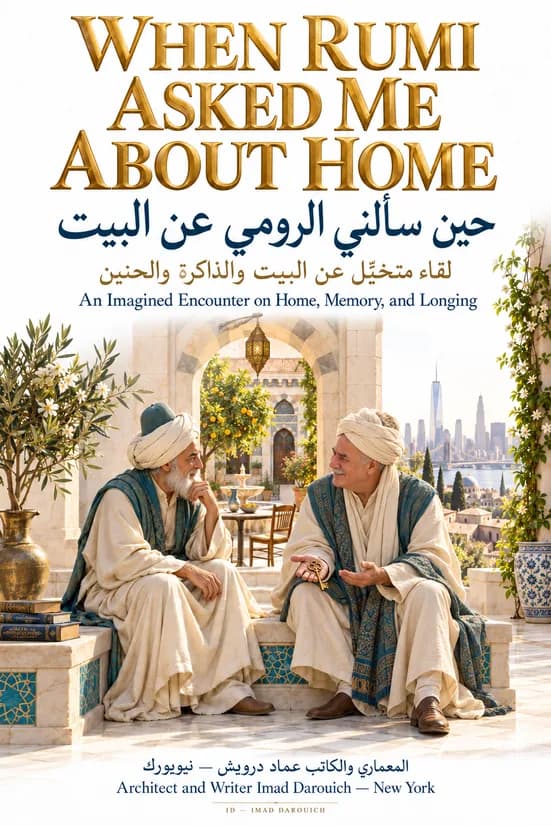
Jalal al-Din Rumi (1207-1273) was a Sufi mystic and poet whose family fled west when he was young; he settled in Konya at nineteen, and his Masnavi is counted among the greatest poems in Persian. This Rumi poem about home is Imad's own: he imagines meeting Rumi at a doorway in Konya with the key to a house that no longer stands, and every word given to Rumi is Imad's.
A Note
تنويه
هذا لقاء أدبي متخيَّل بيني وبين جلال الدين الرومي. الحوار من تأليفي، وليس اقتباسًا من أقواله أو كتبه.This is an imagined literary meeting between Jalal al-Din Rumi and me. The dialogue is my own, not a quotation from his sayings or books.
The Introduction
المقدّمة
في مساءٍ بنيويورك، وجدتُ مفتاحًا قديمًا بين أوراقي.One evening in New York, I found an old key among my papers.
لم يعد يفتح بابًا.It no longer opened a door.
لكنّه فتح فيَّ بيتًا كاملًا.But it opened an entire house within me.
سمعتُ خطواتٍ في الممر.I heard footsteps in the hallway.
ورائحة طعامٍ تأتي من المطبخ.And smelled food coming from the kitchen.
كدتُ أنادي.I almost called out.
ثم تذكّرتُ أن البيت لم يعد قائمًا.Then I remembered that the house no longer stood.
وضعت المفتاح على رسمٍ لمبنى جديد.I placed the key on a drawing of a new building.
وغفوت.And fell asleep.
رأيتني عند بابٍ في قونية.I found myself at a doorway in Konya.
كان رجلٌ جالسًا قربه.A man sat beside it.
رفعتُ المفتاح.I held up the key.
وقبل أن أسأله عن الباب، قال:Before I could ask him about the door, he said:
مَن تنتظر أن تجده في الداخل؟“Whom are you hoping to find inside?”
كان جلال الدين الرومي.It was Jalal al-Din Rumi.
The Meeting
اللقاء
قلت: بيتنا.I said, “Our home.”
قال: سألتك عن إنسان.He said, “I asked you about a person.”
نظرتُ إلى المفتاح.I looked at the key.
قلت: أمّي وهي تنادينا إلى الطعام.I said, “My mother calling us to eat.”
أبي في مكانه المعتاد.“My father is in his usual place.”
ونحن، قبل أن تتفرّق بنا البلاد.“And all of us, before different countries scattered us.”
أفسح لي مكانًا بجانبه.He made room for me beside him.
قال: اجلس.He said, “Sit.”
أنت تحمل أكثر مما يحتمل جيبك.“You are carrying more than your pocket can hold.”
قلت: أنا معماري.I said, “I am an architect.”
أستطيع أن أرسم ذلك البيت من الذاكرة.“I can draw that house from memory.”
أعرف مكان كلّ نافذة.“I know where every window stood.”
وعدد الدرجات.“And the number of steps.”
حتى الشقّ في جدار المدخل.“Even the crack in the entrance wall.”
قال: ولو بنيته كما كان، هل يعود كلّ شيء؟He asked, “If you rebuilt it exactly as it was, would everything return?”
قلت: لا.I said, “No.”
قال: ما الذي لن يعود؟He asked, “What would not return?”
قلت: الزمن.I said, “Time.”
ومن غابوا.“And those who are gone.”
صمتَ حتى انتهيتُ من النظر إلى الأرض.He remained silent until I had finished staring at the ground.
ثم قال: إذن أنت تحاول أن تطلب من الجدران ما لا تستطيع إعطاءه.Then he said, “You are asking the walls to give you something they cannot.”
قلت: وهل أتخلّى عن البيت؟I asked, “Should I let go of the house?”
قال: ماذا تقصد؟He asked, “What do you mean?”
قلت: أخاف أن أفرح هنا.I said, “I am afraid to be happy here.”
أن أعتاد شارعًا جديدًا.“To grow familiar with a new street.”
أن أحبّ مكانًا آخر.“To love another place.”
كأنّني بذلك أخون ما فقدت.“As though doing so would betray what I lost.”
قال: حين يضحك حفيدك، هل تطلب منه أن يسكت؟He asked, “When your grandson laughs, do you ask him to stop?”
قلت: لا. أريد أن يضحك أكثر.I said, “No. I want him to laugh more.”
قال: لماذا تسمح له بالحياة، وتمنعها عن نفسك؟He asked, “Why do you allow him to live, and deny yourself the same?”
رفعتُ رأسي.I raised my head.
كان السؤال بسيطًا.The question was simple.
ولم أستطع تجاوزه.And I could not get past it.
قلت: لأن الحزن آخر ما بقي لي من بعضهم.I said, “Because grief is all I have left of some of them.”
قال: ألم يتركوا لك شيئًا آخر؟He asked, “Did they leave you nothing else?”
تذكّرتُ يدًا تسحب كرسيًّا لضيف.I remembered a hand pulling out a chair for a guest.
وصوتًا يسأل إن كنّا قد أكلنا.And a voice asking whether we had eaten.
وتعبًا لم نكن نراه ونحن صغار.And an exhaustion we had not noticed as children.
قلت: تركوا كثيرًا.I said, “They left a great deal.”
قال: فامنح بعضه لمن يعيشون معك.He said, “Then give some of it to those who live with you.”
اجعل لهم نصيبًا من الحنان الذي تلقيته.“Let them share in the tenderness you received.”
لا تتركه كلّه محبوسًا في الذكرى.“Do not leave all of it locked inside memory.”
قلت: أكتب عنهم.I said, “I write about them.”
قال: وماذا تفعل بعد أن تكتب؟He asked, “And what do you do after you write?”
قلت: أبحث عن الكلمات التي تليق بهم.I said, “I search for words worthy of them.”
قال: هل تتذكّر طعامًا كانت أمّك تعدّه؟He asked, “Do you remember a meal your mother used to make?”
ابتسمتُ.I smiled.
قلت: نعم.I said, “Yes.”
قال: أعدّه لأهلك.He said, “Make it for your family.”
واحكِ لهم عنها وأنت تضعه على الطاولة.“And tell them about her as you set it on the table.”
دعهم يعرفونها في شيءٍ يستطيعون تذوّقه.“Let them know her through something they can taste.”
شعرتُ بالجوع فجأة.Suddenly, I felt hungry.
كان الحديث عن الفقد قد أعادني إلى مائدة.Our talk of loss had brought me back to a table.
قلت: لكنّ الغضب لا يتركني.I said, “But anger will not leave me.”
ما حدث لم يكن عادلًا.“What happened was not fair.”
هناك من هدم.“Someone destroyed.”
وهناك من دفع الثمن.“And others paid the price.”
قال: لا أطلب منك أن تسمّي الظلم عدلًا.He said, “I am not asking you to call injustice fair.”
قلت: إذن ماذا أفعل بالغضب؟I asked, “Then what do I do with the anger?”
قال: أين تضعه الآن؟He asked, “Where do you put it now?”
تذكّرتُ مساءً رفعتُ فيه صوتي على من أحبّ.I remembered an evening when I had raised my voice at someone I loved.
لم يكن سبب غضبي.They were not the cause of my anger.
لكنّه كان أمامي.But they were there in front of me.
قلت: أحيانًا يصل إلى المكان الخطأ.I said, “Sometimes it reaches the wrong place.”
قال: ابدأ بحماية هذا المكان.He said, “Begin by protecting that place.”
حين تعود إلى أهلك، أخبرهم بما يؤلمك.“When you return to your family, tell them what hurts.”
دعهم يقتربون.“Let them come close.”
لا تجعلهم يخافون الاقتراب.“Do not make them afraid to approach.”
هبّت ريحٌ باردة.A cold wind rose.
أغلقتُ يدي على المفتاح.I closed my hand around the key.
قال: يؤلمك؟He asked, “Does it hurt?”
قلت: حوافّه حادّة.I said, “Its edges are sharp.”
قال: افتح يدك قليلًا.He said, “Open your hand a little.”
فتحتُها.I opened it.
بقي المفتاح.The key remained.
خفّ الألم.The pain eased.
نظرتُ إليه.I looked at him.
قال: لم تفقده.He said, “You have not lost it.”
للمرّة الأولى، لم أشعر أن عليّ شرح حزني.For the first time, I did not feel I had to explain my grief.
جلستُ بجانبه.I sat beside him.
والمفتاح على كفّي المفتوحة.The key rested on my open palm.
قلت: هل سأشعر يومًا أنني وصلت؟I asked, “Will I ever feel that I have arrived?”
قال: أين تريد أن تصل؟He asked, “Where do you want to arrive?”
قلت: إلى مكانٍ لا أشعر فيه أن نصف حياتي بعيد.I said, “Somewhere I do not feel that half my life is far away.”
نظر إلى الباب خلفنا.He looked at the door behind us.
قال: قد يبقى البعيد بعيدًا.He said, “What is far away may remain far away.”
لكنّ القريب يحتاج إليك أيضًا.“But those who are near need you too.”
مَن ينتظرك الآن؟“Who is waiting for you now?”
تذكّرتُ وجوه أهلي.I thought of my family’s faces.
قلت: هناك من ينتظر أن أجلس معه.I said, “Someone is waiting for me to sit with them.”
قال: اذهب إليه.He said, “Go to them.”
قلت: ولم ينتهِ حديثنا.I said, “But our conversation is not finished.”
ابتسم.He smiled.
قال: أكمله هناك.He said, “Continue it there.”
The Ending
الخاتمة
استيقظتُ أمام الرسم.I woke before the drawing.
كان المفتاح فوق الورق.The key lay on the paper.
أخذته.I picked it up.
ووضعته في مكانٍ أراه.And placed it somewhere I could see it.
ثم اتّصلتُ بأهلي.Then I called my family.
قلت: تعالوا نجتمع هذا الأسبوع.I said, “Let us get together this week.”
سأعدّ لكم طعامًا من بيتنا القديم.“I will make you a meal from our old home.”
وسأحكي لكم عمّن كانوا يجلسون حول مائدته.“And tell you about those who used to sit around its table.”
بعد المكالمة، عدتُ إلى الرسم.After the call, I returned to the drawing.
وسّعتُ مكان المائدة.I made more room for the table.
وأضفتُ كرسيًّا.And added a chair.
ثم وضعتُ القلم.Then I put down my pencil.
كان عندي بيتٌ ينبغي أن أعود إليه.There was a home I needed to return to.
Rumi's life is told in Jalal al-Din Rumi: The Epic of the Man Who Made Love a Path to God, and an architect draws a home for a woman who lost hers in Somewhere I Can Stop Leaving: A Poem About Hassan Fathy and Home. A poet of Nishapur appears in Omar Khayyam: When Four Lines Could Barely Hold the Universe.
Written by
Architect Imad Darouich
المهندس المعماري عماد درويش
Architect, author and founder of 3DEPICS, based in New York. He writes epic literature that crosses borders, languages and geographies, where philosophy meets architecture, spirituality meets history and memory meets imagination.