 3DEPICS
The New Mu'allaqa
المعلقة الجديدة
Standing at the ruins like the poets of old, Imad asks how time can erase cities and still leave memory.
By Architect Imad DarouichUpdated 2 min read
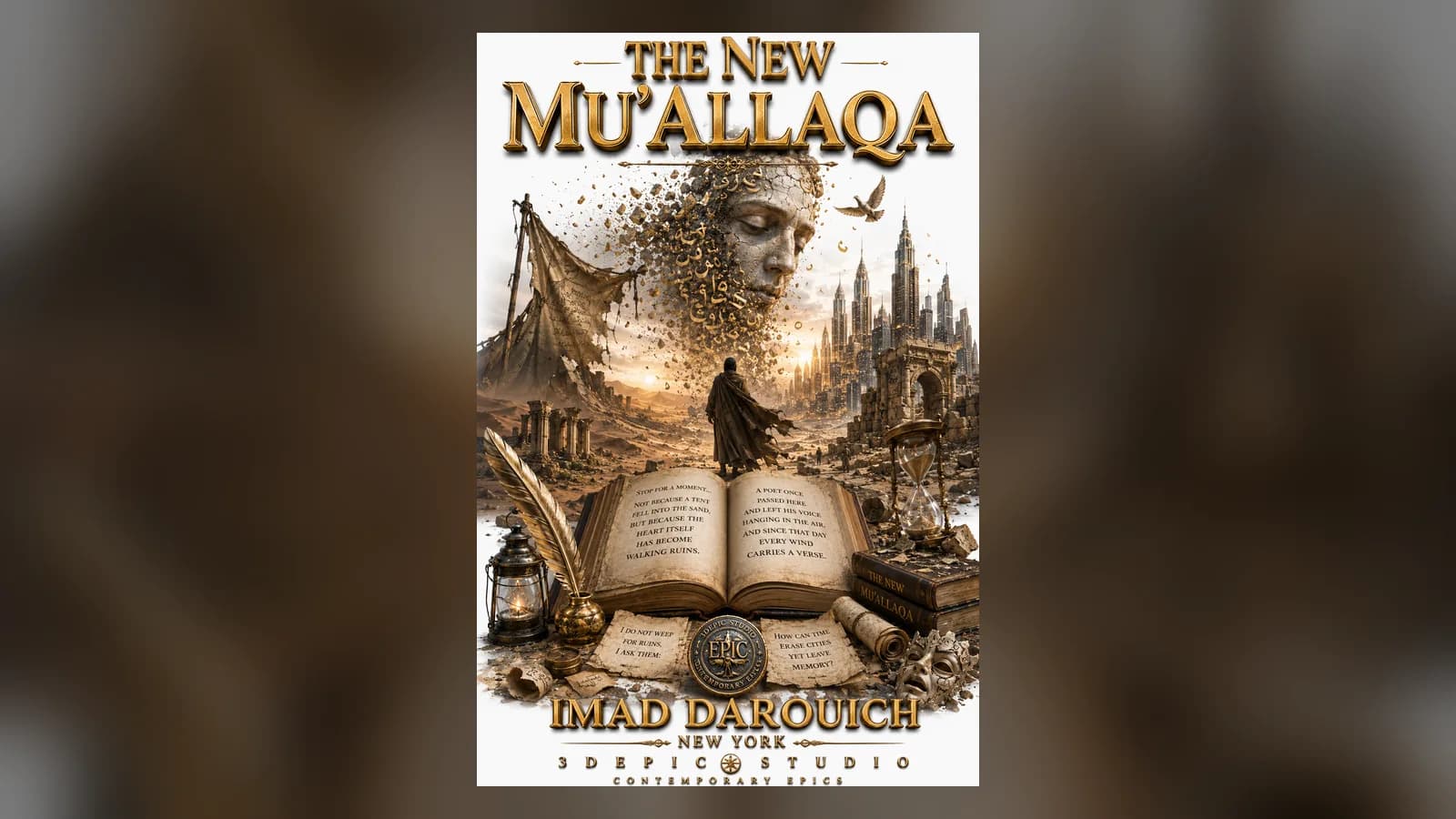
This poem in the spirit of the Muallaqat opens as the old odes did, with a call to stop at the ruins, though here the ruin is the heart itself. Imad, born between a desert that has known his name for thousands of years and a city of glass that reflects his face, rides the horse of the wind after a meaning that escaped from poems and leaves a new ode for later readers.
قِفوا قليلاً…Stop for a moment…
ليس لأن خيمةً سقطت في الرمل،not because a tent fell into the sand,
بل لأن القلب نفسهbut because the heart itself
صار أطلالاً تمشي.has become walking ruins.
مرَّ هنا شاعرٌ قديمA poet once passed here
وترك صوته معلقاً في الهواء،and left his voice hanging in the air,
ومنذ ذلك اليومand since that day
كلُّ ريحٍ تحمل بيتاً من الشعر.every wind carries a verse.
أنا لا أبكي الأطلال،I do not weep for ruins,
أنا أسألها:I ask them:
كيف يمكن للزمنhow can time
أن يمحو المدنerase cities
ويبقي الذكرى؟yet leave memory?
ولدتُ بين صحراءI was born between a desert
تعرف اسمي منذ آلاف السنين،that knows my name for thousands of years,
ومدينةٍ من زجاجand a city of glass
لا تعرف اسميthat does not know my name
لكنها تعكس وجهي كل يوم. yet reflects my face every day.
في الليلAt night
أسمع خطى العشاق القدامىI hear the footsteps of ancient lovers
تمرّ تحت نوافذ العالم،passing beneath the windows of the world,
كأن التاريخas if history
لم ينتهِ بعد.has not ended yet.
ركبتُ جواد الريحI mounted the horse of wind
لا لألحق بامرأة،not to chase a woman,
بل لألحق بمعنىbut to chase a meaning
هرب من القصائد.that escaped from poems.
رأيتُ امرأةI saw a woman
تشبه الفجرwho resembled dawn
حين يفتح عينيه فوق الصحراء،opening its eyes over the desert,
ففهمتُand I understood
لماذا يولد الشعر.why poetry is born.
يا ليلO night
كم مدينةًhow many cities
نامت على كتفكslept on your shoulder
وهي تظنthinking
أنها خالدة.they were eternal.
أيها العالمO world
إن القصيدةthe poem
ليست حجراًis not a stone
يُعلّق على جدار،hung on a wall,
بل نافذةbut a window
تنظر منها البشريةthrough which humanity looks
إلى قلبها.into its own heart.
فإن قرأتم هذه الكلماتSo if you read these words
بعد زمنٍ طويل،after a long time,
تذكّرواremember
أن شاعراًthat a poet
وقف بين الصحراء والمدينةstood between desert and city
وكتبand wrote
معلقةً جديدةa new Mu‘allaqa
كي يبقى الصوتso the voice
حياً. alive.
بقلم المهندس المعماري عماد درويشBy Architect Imad Darouich · New York
For more on the poets of the hanging odes, read The Future Odes: Poems Hung on the Walls of Hearts and The Epic of Labid ibn Rabi’a: Poet of Asceticism and Mortality, both in the literature and art collection.

Written by
بقلم المهندس المعماري عماد درويش
Architect and author based in New York. He writes contemporary epics: long-form books about architects, buildings, cities and faith, in Arabic and English.