When the City Stepped Down from Its Blueprint: From Copenhagen to Tripoli
حين نزلت المدينة من مخطّطها
An architect finishes drawing a city, hears knocking under the paper, and finds an old man sitting in the gap he left between two buildings.
By Architect Imad Darouich4 min read
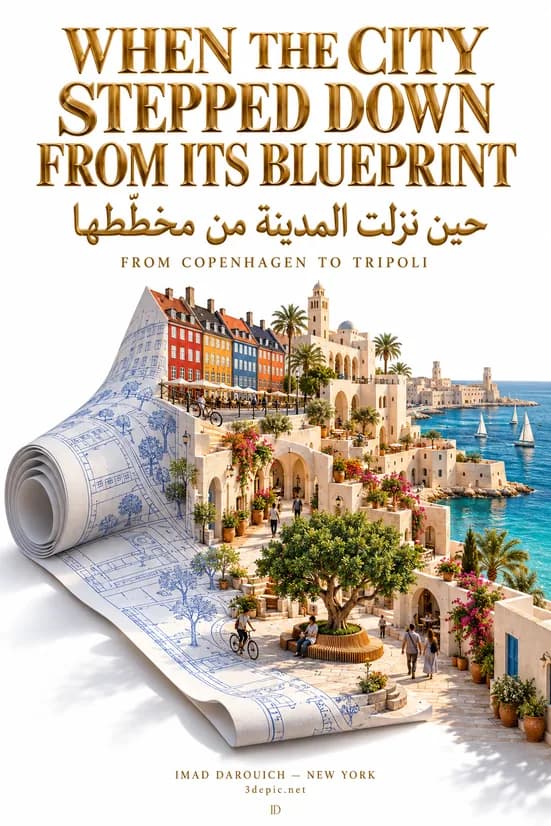
Humanizing cities means designing streets around people on foot and on bicycles before cars, an idea closely tied to Copenhagen and to the Danish architect Jan Gehl. Imad's prose poem on humanizing cities, in Arabic and English, travels from Copenhagen to Zawiyat al-Dahmani, a district of Tripoli in Libya, and imagines a residents' meeting where a mother, a child and an old man redraw an architect's plan.
From Copenhagen to Tripoli: An Epic of Reclaiming the Human
من كوبنهاجن إلى طرابلس: ملحمة استعادة الإنسان
A Note
تنويه
هذه ملحمة أدبية مستوحاة من مقال آركي نت عن أنسنة المدن، المقتبس من محاضرة المعماري خالد الفكي؛ أحداثها متخيَّلة، والتطوير المذكور لطرابلس مقترح، وليس إنجازاً منفَّذاً.This literary epic draws inspiration from ArchiNet’s article on urban humanization, adapted from architect Khaled Al-Feki’s lecture; its events are imagined, and the development described for Tripoli is a proposal, not a completed project.
The Beginning
البداية
في تلك الليلة، أنهيتُ رسم المدينة.That night, I finished drawing the city.
أغلقتُ آخر شارع. وضبطتُ ارتفاع آخر برج.I completed the last street. Set the height of the last tower.
ثم سمعتُ طرقاً تحت الورقة.Then I heard knocking beneath the paper.
رفعتُها.I lifted it.
كان شيخٌ جالساً في الفراغ الذي تركتُه بين مبنيين.An old man sat in the gap I had left between two buildings.
قال: «أين أجلس حين ينتهي رسمك؟»“Where will I sit when your drawing is finished?” he asked.
بحثتُ في المخطّط عن مقعد.I searched the plan for a bench.
وجدتُ سبعمئة مكانٍ للسيارات.I found seven hundred places for cars.
ولم أجد مكاناً لركبتيه.I found no place for his aching knees.
The Epic
الملحمة
خرجتُ إلى الشارع أحمل مسطرتي كمن يحمل اعترافاً.I went into the street carrying my ruler like a confession.
كانت الأرصفة نحيلةً إلى حدّ أن امرأةً نزلت إلى الطريق كي تمرّ عربة طفلها.The sidewalks were so narrow that a woman stepped into the road to push her child’s stroller past.
مرّت سيارة. انكمشت الأم. اتّسع الطريق.A car passed. The mother drew back. The road claimed more room.
رأيتُ خطّي الأسود على الورقة يتحوّل إلى خوفٍ في جسدها.I saw my black line on paper become fear in her body.
عندها فهمتُ لماذا كانت المدينة تطرق من الأسفل.Then I understood why the city had been knocking from below.
لقد دفنتُ أهلها تحت دقّة الرسم.I had buried its people beneath the precision of the drawing.
فتحتُ نافذةً نحو كوبنهاجن.I opened a window toward Copenhagen.
دخل منها طفلٌ يركب درّاجة.A child rode through it on a bicycle.
لم يحمل معه مدينةً جاهزة.He brought no ready-made city.
حمل سؤالاً: «لماذا يحتاج اللعب إلى إذنٍ من المحرّك؟»He brought a question: “Why must play ask an engine for permission?”
وضعتُ السؤال في حقيبتي، وسافرتُ إلى طرابلس.I put the question in my bag and traveled to Tripoli.
هناك، كان البحر قريباً.There, the sea was close.
لكن الشارع لم يجد طريقاً إلى رئتيه.But the street could find no way to breathe it in.
في زاوية الدهماني، تخيّلتُ المباني تخلع شرفاتها وتنزل إلى اجتماع السكان.In Zawiyat al-Dahmani, I imagined the buildings taking off their balconies and coming down to a residents’ meeting.
حضرت امرأة تحمل أكياساً أثقل من يومها.A woman arrived carrying bags heavier than her day.
وحضر طفلٌ يرسم ملعباً على ظهر مخالفة مرور.A child arrived drawing a playground on the back of a parking ticket.
وجاء الشيخ الذي طرق تحت ورقتي.And the old man who had knocked beneath my paper came too.
ترك عصاه على الطاولة.He laid his cane on the table.
صارت العصا مقياس الرسم.The cane became the drawing’s scale.
قالت المرأة: «أريد أن أصل إلى بيتي دون أن أقاتل الشارع».“I want to reach my home without fighting the street,” the woman said.
وقال الطفل: «أريد أرضاً لا تطرد الكرة».“I want ground that does not chase the ball away,” the child said.
أما الشيخ، فطلب أن يرى وجهاً يعرفه قبل المساء.The old man asked to see a familiar face before evening.
لم يطلب أحدٌ برجاً.No one asked for a tower.
أخرجتُ ممحاتي.I took out my eraser.
هذه المرّة، لم أمسح بيتاً لأوسّع الطريق.This time, I erased no home to widen the road.
مسحتُ غروري الذي سمّيته ضرورة.I erased the arrogance I had called necessity.
أفسحتُ ممراً لعربة الطفل.I made room for the stroller.
وضعتُ مقعداً حيث يستطيع الشيخ أن يلمح باب صديقه.I placed a bench where the old man could see his friend’s door.
وتركتُ للشجرة تربةً تبلغ جذورها.And I left the tree soil deep enough for its roots.
كانت تعديلاتٍ صغيرة.They were small changes.
لكن المدينة ارتجفت، كجسدٍ يعود إليه الدم.But the city trembled like a body receiving blood again.
في رؤيتي، خرج السكان بعد اكتمال العمل.In my vision, the residents came out after the work was done.
جلست المرأة. وللمرّة الأولى، لم يكن جلوسها انتظاراً.The woman sat. For the first time, sitting did not mean waiting.
مرّ الطفل بدرّاجته، فرفع الشيخ يده.The child rode past on his bicycle, and the old man raised his hand.
من تلك التحية القصيرة، بدأ الحيّ يستعيد أسماءه.From that brief greeting, the neighborhood began recovering its names.
رفعتُ عيني إلى الشجرة.I looked up at the tree.
كان ظلّها يصل إلى المقعد قبلنا.Its shade reached the bench before we did.
شعرتُ بخشوعٍ لم تمنحه لي واجهةٌ عظيمة.I felt a reverence no monumental facade had ever given me.
كأن الرحمة، بعدما عجزتُ عن رسمها، جاءت بنفسها وجلست.As though mercy, after I had failed to draw it, had come and taken a seat.
The Ending
الخاتمة
عدتُ إلى مكتبي، وعلّقتُ المخطّط على الجدار.I returned to my desk and hung the plan on the wall.
تركتُ فيه باباً غير مرسوم.I left one door undrawn.
كلّما ظننتُ أن المدينة اكتملت، دخل منه إنسانٌ نسيتُه.Whenever I thought the city complete, someone I had forgotten entered through it.
ومنذ ذلك اليوم، حين يسألني أحدهم: «ماذا بنيت؟»Since that day, whenever someone asks me, “What did you build?”
أتذكّر الشيخ يترك عصاه قرب المقعد، لأن صديقه وصل.I remember the old man setting his cane beside the bench because his friend had arrived.
وأقول: «وسّعتُ المكان حتى استطاعت الحياة أن تجلس».And I say, “I widened the place until life could sit down.”
Two books ask the same question at full length: Yona Friedman: The City Written by Its Inhabitants and Moshe Safdie: The Epic of Architecture That Brought Humanity Back to the Heart of the City, both in the architects collection.
Written by
Architect Imad Darouich
المهندس المعماري عماد درويش
Architect, author and founder of 3DEPICS, based in New York. He writes epic literature that crosses borders, languages and geographies, where philosophy meets architecture, spirituality meets history and memory meets imagination.