The City That Abolished the Echo: Bach and Mozart
المدينةُ التي ألغت الصدى
In a city where echoes are banned, Bach plays a silenced organ, Mozart hums past the lines on the floor, and an architect pulls the panels off a wall.
By Architect Imad Darouich4 min read
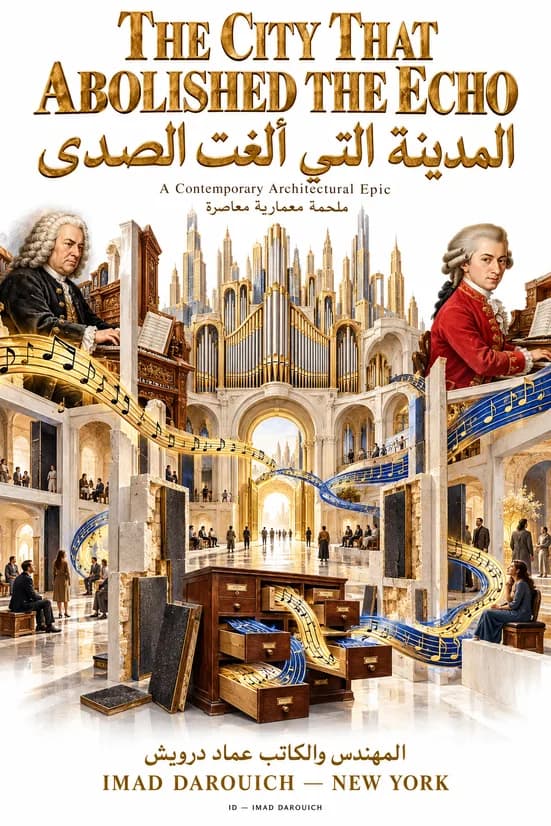
Johann Sebastian Bach (1685-1750) was a German composer known for his mastery of counterpoint, and Wolfgang Amadeus Mozart (1756-1791) was born in Salzburg six years after Bach died; Mozart came to know Bach's music in 1782 and 1783 through Gottfried van Swieten. In Imad's imagined story of Bach and Mozart, a city has abolished echoes, and an architect strips the sound-absorbing panels from a hall so a note can return.
A Note
تنويه
حكاية متخيّلة تجمع الموسيقيَّين يوهان سباستيان باخ وولفغانغ أماديوس موزارت؛ اللقاء والحوار والأحداث من الخيال.An imagined story bringing together the composers Johann Sebastian Bach and Wolfgang Amadeus Mozart; the encounter, dialogue, and events are fictional.
The Introduction
المقدمة
ناديتُ ابني من آخر الممرّ.I called my son from the end of the corridor.
تحرّكت شفتاي، ولم يصل إليه شيء.My lips moved, but nothing reached him.
جرّبتُ التصفيق.I tried clapping.
التقت يداي. وسقط الصوتُ عند قدميَّ كقطعة زجاج.My hands met. The sound fell at my feet like a shard of glass.
على الجدار إعلان:On the wall stood a notice:
«أُلغيت الأصداء. على كلّ صوتٍ أن يلتزم بحدود صاحبه».“Echoes have been abolished. Every sound must remain within its owner’s boundaries.”
The Epic
الملحمة
ذهبتُ إلى مكتب السمع.I went to the Office of Hearing.
خلف الموظّف خزائنُ صغيرة، في كلّ واحدةٍ صوت.Behind the clerk stood small cabinets, each containing a sound.
ضحكةٌ في درج.A laugh in a drawer.
نداءٌ في علبة.A call in a box.
وبكاءٌ عليه ختم: «خاص».And weeping stamped: “Private.”
قلتُ: صوتي لا يصل إلى ابني.I said: My voice cannot reach my son.
قال: هل لديك موافقةٌ على الوصول؟He said: Do you have permission to reach him?
قلتُ: إنّه ابني.I said: He is my son.
دفع نحوي استمارة.He pushed a form toward me.
«صلةُ القرابة لا تُغني عن التصريح».“Kinship does not replace authorization.”
في القاعة المجاورة، كان باخ يجلس أمام أرغنٍ صامت.In the adjoining hall, Bach sat before a silent organ.
ضغط مفتاحًا.He pressed a key.
اهتزَّ أنبوبٌ طويل، ثم انحنى كأنّه يحاول أن يسمع نفسه.A tall pipe trembled, then bent as though trying to hear itself.
قال باخ: فصلوا الأصواتَ كي يسهل ضبطها.Bach said: They separated the voices to make them easier to control.
أشار إلى المفاتيح.He pointed to the keys.
كلُّ نغمةٍ وحدها. لا تستطيع أن تجيب أختها.Each note was alone. Unable to answer another.
بدأ يعزف بيديه.He began playing with both hands.
رأيتُ الأصواتَ تتقدّم نحو بعضها، وتُوقَف عند خطوطٍ مرسومة على الأرض.I saw the voices move toward one another and stop at lines drawn across the floor.
أنا معماري. عرفتُ تلك الخطوط.I am an architect. I recognized those lines.
حدودُ غرفٍ بُنيت قبل أن يسأل أحدٌ كيف سيعيش الناسُ فيها.The boundaries of rooms built before anyone asked how people would live inside them.
من آخر القاعة، جاء موزارت يحمل ورقةَ موسيقى.From the far end of the hall, Mozart came carrying a sheet of music.
نظر إلى الخطوط، ثم بدأ يدندن.He looked at the lines, then began to hum.
ظهرت نغمةٌ خفيفة، وقفزت فوق الحدّ الأوّل.A light note appeared and leaped over the first boundary.
رفع الموظّف صافرتَه.The clerk raised his whistle.
نفخ.He blew.
لم يسمعه أحد.No one heard him.
ظلَّ وجهُه يحمرّ، والصافرةُ تحبس صوته.His face kept reddening while the whistle trapped his sound.
اقترب منه موزارت.Mozart stepped toward him.
سأله: كيف ستأمرنا بالتوقّف إذا مُنع صوتُك من الوصول؟He asked: How will you order us to stop if your voice is forbidden to reach us?
أشار الموظّف إلى دفتره.The clerk pointed to his ledger.
كتب: «الموسيقى تُثير الفوضى».He wrote: “Music causes disorder.”
قرأ باخ الجملة.Bach read the sentence.
ثم وضع أمامه ورقةً تتقاطع فيها الأصوات دون أن يمحو أحدُها الآخر.Then he placed before him a score in which voices crossed without erasing one another.
قال: اسمع كيف يمكن أن يلتقوا.He said: Listen to how they can meet.
The Turning
التحوّل
قستُ القاعة.I measured the hall.
كانت جدرانُها مغطّاةً بطبقاتٍ تبتلع كلَّ ما يلمسها.Its walls were covered with layers that swallowed everything touching them.
نزعتُ لوحًا.I removed a panel.
ظهر الحجر.The stone emerged.
ضرب باخ نغمةً واحدة.Bach played a single note.
وصلت إلى الجدار، وعادت.It reached the wall and returned.
رفع رأسه.He raised his head.
أجابها موزارت.Mozart answered it.
للمرة الأولى، صار للصوت طريقُ عودة.For the first time, sound had a way back.
نزعتُ لوحًا ثانيًا.I removed a second panel.
فتح الحارسُ بابًا.The guard opened a door.
وفي الخارج، سمع رجلٌ ضحكةَ امرأة، فالتفت.Outside, a man heard a woman laugh and turned.
سمعت أمٌّ طفلَها ينادي، فقامت.A mother heard her child calling and rose.
وتحت الطاولة، بدأ درجُ البكاء يرتجف.Beneath the desk, the drawer of weeping began to tremble.
The Ending
الخاتمة
فتح الموظّف ذلك الدرج.The clerk opened that drawer.
خرج منه صوتٌ يعرفه.A voice he knew emerged.
بقي واقفًا، ويدُه على المقبض.He stood still, his hand on the handle.
ثم جلس.Then he sat down.
لم يسأل عن التصريح.He did not ask for a permit.
أكمل باخ البناءَ بالنغمات.Bach continued building with notes.
وترك موزارت بينها ممرًّا للفرح.And Mozart left between them a passage for joy.
يا ربّ، اجعل لنا آذانًا تتّسع لما لا تعرف كيف تُجيب عنه.O Lord, give us ears spacious enough for what we do not know how to answer.
عدتُ إلى الممرّ.I returned to the corridor.
ناديتُ ابني.I called my son.
جاءني صوتُه من الغرفة:His voice came from the room:
«أنا هنا».“I am here.”
وقفتُ قليلًا.I stood for a moment.
جدرانٌ كثيرةٌ بنيتُها في حياتي.I had built many walls in my life.
لكنّ ذلك اليوم، اكتملت عمارتُها بكلمتين عبرتاها.But that day, their architecture became complete through two words that passed through them.
For another concert hall in a city that has lost its hearing, read The Silent Symphony, and for a building shaped around sound, the Walt Disney Concert Hall poem. Vermeer and Chopin meet in a sealed museum in The Museum That Confiscated the Pulse.
Written by
Architect Imad Darouich
المهندس المعماري عماد درويش
Architect, author and founder of 3DEPICS, based in New York. He writes epic literature that crosses borders, languages and geographies, where philosophy meets architecture, spirituality meets history and memory meets imagination.