The Clock Without Hands: An Arabic Poem About Time
الساعة بلا عقارب
A city wakes to find every clock without hands, and in the Museum of Time a hurried man learns what time has been measuring.
By Architect Imad Darouich11 min read
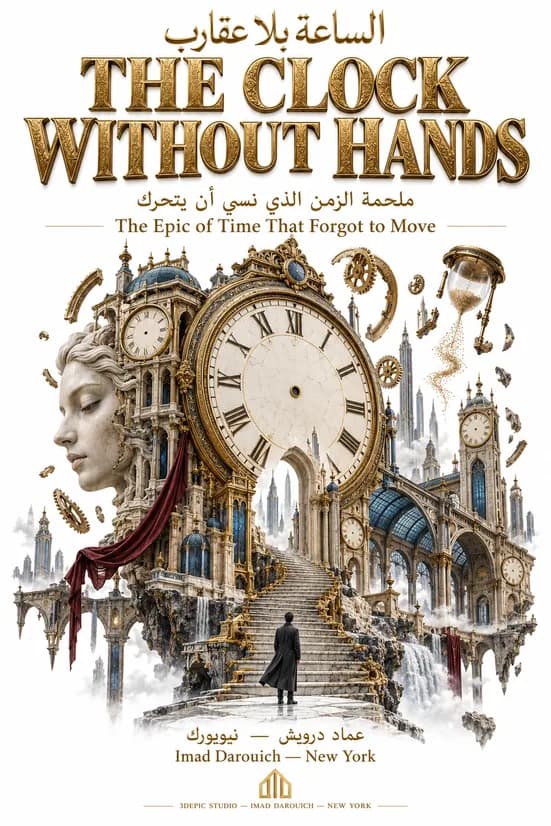
The Clock Without Hands is an Arabic poem about time by Imad Darouich, told in Arabic and English over ten short chapters. One morning every clock in a city loses its hands, and a man in a hurry walks into the Museum of Time, where a giant golden clock speaks to him. He meets a minute on trial for being lost, a child who does not know his age and an old man waiting for yesterday.
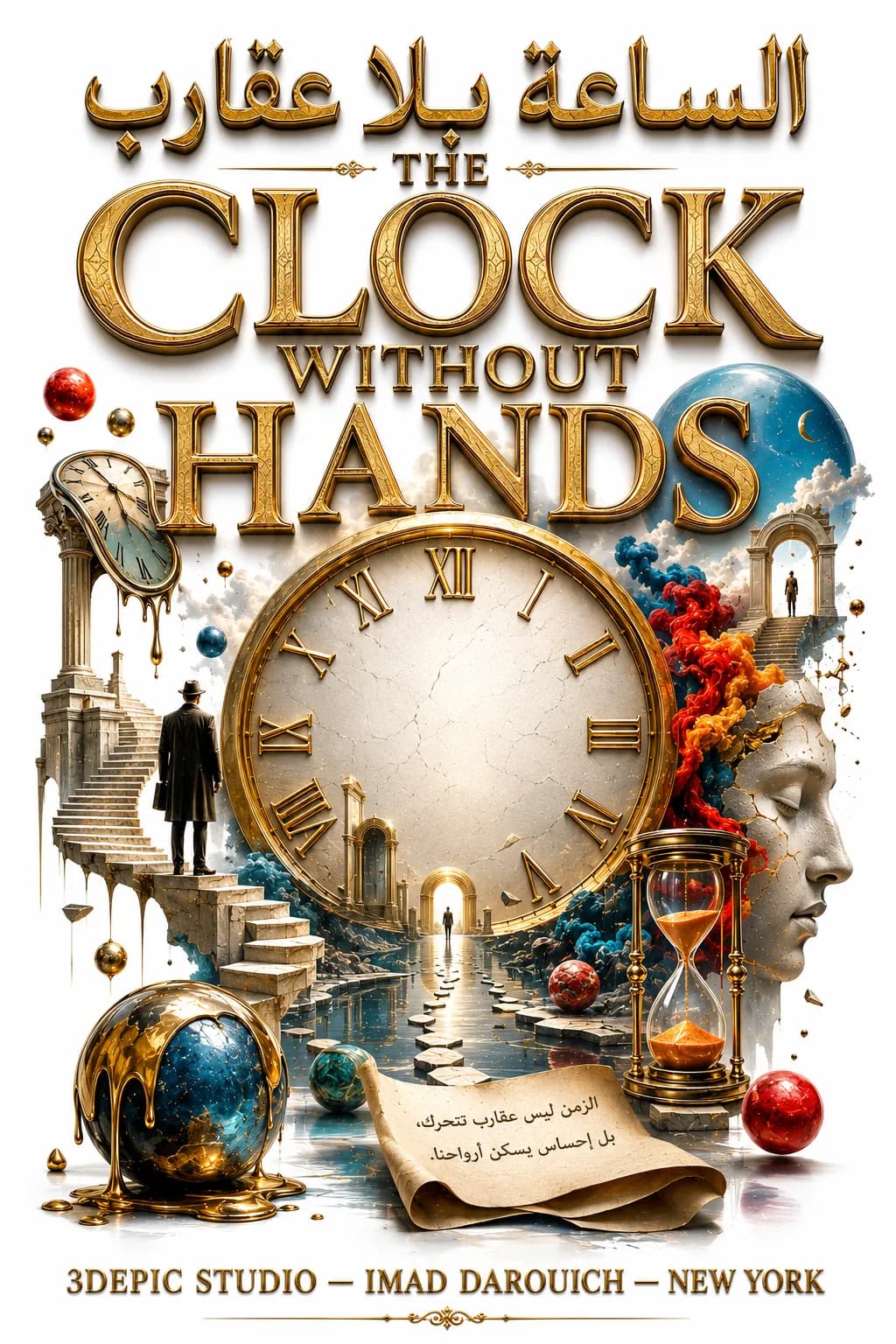
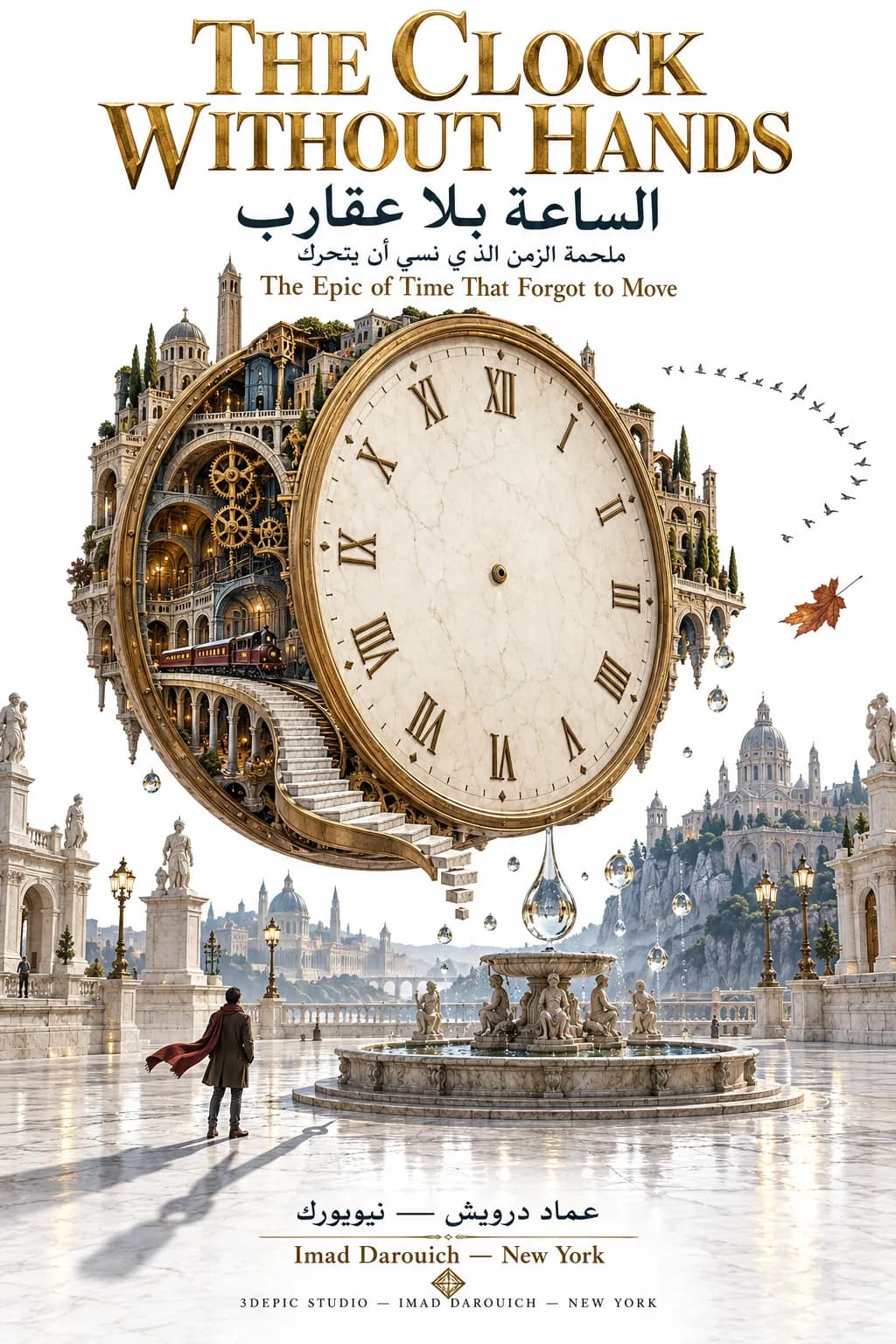
The Epic of Time That Forgot to Move
ملحمة الزمن الذي نسي أن يتحرّك
البداية: The Beginning
في صباحٍ لم يكن يحمل تاريخًا، استيقظت المدينة واكتشفت أن جميع ساعاتها ما زالت تعمل… لكن الزمن اختفى.On a morning that carried no date, the city awoke to discover that all its clocks were still working… yet time itself had disappeared.
كانت الأرقام موجودة.The numbers were still there.
كانت الدوائر معلّقة فوق الأبراج، وفي المحطات، وعلى جدران المدارس والمستشفيات.The circles still hung above towers, inside stations, and upon the walls of schools and hospitals.
لكن العقارب اختفت.But the hands had vanished.
لا أحد عرف متى حدث ذلك.No one knew when it had happened.
وكيف يمكن معرفة متى حدث شيء، إذا لم يعد هناك شيء يشير إلى «متى»؟And how could anyone know when something happened, if nothing remained to point toward “when”?
في وسط المدينة كان هناك مبنى قديم يسمّى:At the center of the city stood an old building called:
متحف الزمن.The Museum of Time.
وفي قلبه عُلّقت ساعة هائلة من الذهب.At its heart hung an enormous golden clock.كان قطرها أكبر من باب قصر.Its diameter was larger than a palace gate.وكانت أرقامها محفورة كأنها وصايا تركتها حضارة ماتت منذ آلاف السنين.Its numbers were carved like commandments left by a civilization dead for thousands of years.لكن الساعة لم يكن لها عقرب واحد.
Yet the clock possessed not a single hand.وتحتها لوحة صغيرة:Beneath it was a small plaque:«هذه الساعة لا تقيس الزمن.إنها تقيس الإنسان.»“This clock does not measure time.It measures the human being.”ومن هنا بدأت الحكاية.And here the story began.
The Man Who Arrived Late to Time
الرجل الذي وصل متأخرًا إلى الزمن
دخل رجل المتحف مسرعًا.A man rushed into the museum.كان يلهث، ويحمل حقيبة جلدية وساعة صغيرة في يده.He was panting, carrying a leather case and a small watch in his hand.سأل الحارس:
He asked the guard:«كم الساعة؟»“What time is it?”نظر الحارس إليه طويلًا.The guard stared at him for a long moment.ثم قال:Then he said:«منذ متى وأنت تسأل هذا السؤال؟»“How long have you been asking that question?”ضحك الرجل.The man laughed.«منذ أن أصبحت لديّ مواعيد.»“Since I began having appointments.”قال الحارس:The guard replied:«وهنا تبدأ المشكلة.»“And that is where the problem begins.”اقترب الرجل من الساعة العملاقة.The man approached the enormous clock.
كانت الأرقام واضحة.The numbers were clear.واحد.One.اثنان.Two.ثلاثة.Three.حتى اثني عشر.All the way to twelve.لكن لا شيء يتحرك بينها.But nothing moved between them.قال الرجل:The man said:«إنها معطلة.»“It is broken.”فجاءه صوت من داخل الساعة:A voice came from inside the clock:«بل أنت المعطّل.»
“No. You are.”تراجع الرجل.The man stepped backward.لم يكن خلف الساعة أحد.There was no one behind it.اقترب ثانية.He approached again.قال الصوت:The voice said:«قضيت حياتك تركض كي لا تتأخر. أخبرني الآن: إلى أين كنت ذاهبًا؟»“You spent your life running so you would not be late. Tell me now: where were you going?”فتح الرجل فمه.The man opened his mouth.وللمرة الأولى في حياته…And for the first time in his life…لم يجد جوابًا.He had no answer.
The Museum That Knew No Date
متحف لا يعرف التاريخ
بدأ الرجل يتجول في القاعات.The man began wandering through the halls.وجد ساعة شمسية بلا شمس.He found a sundial without sunlight.وساعة رملية لا يسقط رملها.An hourglass whose sand refused to fall.وتقويمًا يحمل آلاف الصفحات البيضاء.And a calendar containing thousands of blank pages.سأل موظفة المتحف:He asked a museum attendant:«ما تاريخ اليوم؟»“What is today’s date?”قالت:She answered:«اليوم.»
“Today.”قال:He said:«أعرف. ولكن أي يوم؟»“I know. But which day?”ابتسمت.She smiled.«اليوم الوحيد الذي ستملكه فعلًا.»“The only day you will ever truly possess.”نظر إلى التقويم.He looked at the calendar.حاول أن يجد عيد ميلاده.He tried to find his birthday.لم يجده.He could not.حاول أن يجد يوم زواجه.He tried to find his wedding day.لم يجده.It was gone.
بحث عن يوم وفاة أبيه.He searched for the day his father died.
حتى ذلك اليوم اختفى.Even that day had vanished.
وفجأة فهم شيئًا مخيفًا:Suddenly he understood something terrifying:
نحن لا نحفظ الأيام.We do not preserve days.
نحن نحفظ ما فعلته الأيام بنا.We preserve what days did to us.
The Clock That Refused to Point
الساعة التي رفضت أن تشير
عاد الرجل إلى الساعة الذهبية.The man returned to the golden clock.قال لها:
He said to it:«لماذا لا تملكين عقارب؟»“Why do you have no hands?”أجابته:It answered:«لأن البشر حوّلوا العقارب إلى سياط.»“Because humans turned clock hands into whips.”صمت.He fell silent.قالت:It continued:«تستيقظ لأن الساعة قالت لك استيقظ.»“You wake because the clock tells you to wake.”«تأكل لأنها قالت لك كُل.»“You eat because it tells you to eat.”«تركض لأنها قالت تأخرت.»“You run because it tells you that you are late.”«وتخاف لأنها تذكّرك بأن النهاية تقترب.»“And you fear because it reminds you that the end approaches.”
قال الرجل:The man said:
«لكننا نحتاج إلى الزمن.»“But we need time.”
ضحكت الساعة.The clock laughed.
وكان ضحكها يشبه اصطدام معدن بعيد بمعدن.Its laughter sounded like distant metal striking metal.
قالت:It said:
«أنتم تحتاجون إلى النظام.»“You need order.”
«أما الزمن فلا يحتاج إليكم.»“But time does not need you.”
The City That Lost Its Appointments
مدينة فقدت مواعيدها
في الخارج بدأت الفوضى.Outside, disorder began.توقفت القطارات لأن أحدًا لم يعرف موعد المغادرة.Trains stopped because no one knew when to depart.جلس الموظفون أمام أبواب المكاتب.Workers sat outside their offices.وقف العرسان أمام قاعات الزواج لا يعرفون إن كانوا قد وصلوا مبكرين أم متأخرين.Brides and grooms stood outside wedding halls, unable to know whether they had arrived early or late.الأطباء لم يعرفوا بداية المناوبات.Doctors no longer knew when their shifts began.والمدارس لم تعرف متى تقرع الأجراس.Schools no longer knew when to ring their bells.لكن شيئًا غريبًا حدث.Yet something strange happened.بدأ الناس ينظرون إلى السماء.People began looking at the sky.شيء لم يفعلوه منذ سنوات.Something they had not done for years.رأوا الشمس تتحرك.
They watched the sun move.رأوا الظلال تطول.They watched shadows lengthen.سمعوا الطيور تعود قبل الغروب.They heard birds returning before sunset.وبدأ الأطفال يلعبون دون أن يسألوا:Children began playing without asking:«كم بقي لنا؟»“How much time do we have left?”لأول مرة…For the first time…لم يكن اليوم جدولًا.The day was not a schedule.كان حياة.It was life.
The Trial of the Missing Minute
محاكمة الدقيقة المفقودة
وفي قبو المتحف كانت هناك محكمة.In the museum basement stood a courtroom.على منصة القاضي جلست ساعة رملية.An hourglass sat upon the judge’s bench.وفي القفص وقفت دقيقة واحدة.Inside the dock stood a single minute.اتهمها الناس بأنها ضاعت.The people accused it of being lost.قال رجل الأعمال:The businessman said:«بسببك خسرت صفقة.»“Because of you, I lost a deal.”قال الطبيب:The doctor said:«بسببك تأخر العلاج.»“Because of you, treatment was delayed.”قال العاشق:
The lover said:«بسببك لم أقل لها إنني أحبها.»“Because of you, I never told her I loved her.”رفعت الدقيقة رأسها.The minute raised its head.وقالت:And said:«أنا لم أضع.»“I was never lost.”ساد الصمت.Silence filled the courtroom.قالت:It continued:«أنتم الذين أضعتموني.»“You were the ones who lost me.”ثم التفتت إلى العاشق:Then it turned toward the lover:«كنت معك آلاف الدقائق. لماذا انتظرت الأخيرة؟»“I was with you for thousands of minutes. Why did you wait for the last one?”
لم يجب.He could not answer.
فصدر الحكم:And the verdict was pronounced:
الدقيقة بريئة.The minute was innocent.
الإنسان مذنب بتهمة التأجيل.Humanity was guilty of postponement.
The Child Who Did Not Know His Age
الطفل الذي لم يعرف عمره
في إحدى القاعات جلس طفل.A child sat in one of the halls.سأله الرجل:The man asked him:«كم عمرك؟»
“How old are you?”قال الطفل:The child answered:«لا أعرف.»“I don’t know.”«ألا تعرف عدد سنواتك؟»“You don’t know how many years old you are?”هز رأسه.He shook his head.ثم سأل الرجل:Then he asked the man:«وأنت، كم بقي من عمرك؟»“And you, how much of your life remains?”تجمد الرجل.The man froze.قال:He said:«لا أعرف.»“I don’t know.”
ابتسم الطفل.The child smiled.
«إذن نحن في العمر نفسه.»“Then we are the same age.”
كانت الجملة بسيطة.The sentence was simple.
لكنها سقطت على الرجل كحجر.Yet it fell upon the man like a stone.
فهم أن الإنسان يعرف ما مضى من عمره…He understood that a human being knows how much life has passed…
ولا يعرف مقدار ما بقي.But never how much remains.
ومع ذلك يعيش وكأن المخزن ممتلئ.Yet he lives as though the storehouse were full.
The Old Man Who Waited for Yesterday
العجوز الذي انتظر الأمس
في آخر الممر جلس شيخ أمام باب مغلق.At the end of a corridor, an old man sat before a closed door.قال الرجل:The man asked:«ماذا تنتظر؟»“What are you waiting for?”قال الشيخ:The old man replied:«الأمس.»“Yesterday.”ضحك الرجل.The man laughed.لكن الشيخ لم يضحك.The old man did not.قال:He said:«هناك امرأة خلف هذا الباب.»
“There is a woman behind this door.”«كانت زوجتي.»“She was my wife.”«قلت لها ذات مساء إنني سأجلس معها غدًا.»“One evening I told her I would sit with her tomorrow.”«وفي الصباح ماتت.»“In the morning, she died.”ثم أشار إلى الباب.Then he pointed toward the door.«ومنذ ذلك اليوم أنتظر الغد الذي وعدتها به.»“Since that day, I have been waiting for the tomorrow I promised her.”جلس الرجل بجانبه.The man sat beside him.ولم يقل شيئًا.He said nothing.فبعض الأحزان لا تحتاج إلى حكمة.Some grief needs no wisdom.تحتاج فقط إلى شخص يجلس بجانبها.It needs only someone willing to sit beside it.
The Day Every Clock Stopped
اليوم الذي توقفت فيه جميع الساعات
عند منتصف يومٍ لا يعرف أحد أنه منتصفه، توقفت جميع الساعات نهائيًا.At the middle of a day no one knew was its middle, every clock stopped completely.
حتى دقات القلوب بدت للناس مختلفة.Even heartbeats seemed different.
خرج الملايين إلى الشوارع.Millions walked into the streets.
كانوا ينتظرون كارثة.They expected catastrophe.
لكن الشمس استمرت.Yet the sun continued.
الريح استمرت.The wind continued.
الأنهار استمرت.The rivers continued.
الأطفال كبروا.Children grew.
الأوراق سقطت.Leaves fell.
وولد أطفال جدد.New children were born.
ومات آخرون.Others died.
عندها فهمت المدينة الإهانة الكبرى:Then the city understood the great humiliation:
الكون لم يكن ينتظر ساعاتهم.The universe had never been waiting for their clocks.
كانت الساعات هي التي تحاول اللحاق بالكون.The clocks had merely been trying to keep up with the universe.
The Door Behind Twelve
الباب الموجود خلف الرقم اثني عشر
عاد الرجل إلى المتحف.The man returned to the museum.اقترب من الساعة.He approached the clock.هذه المرة لاحظ شيئًا لم يره من قبل.This time he noticed something he had never seen before.خلف الرقم اثني عشر كان هناك باب صغير.Behind the number twelve was a tiny door.فتحه.He opened it.لم يجد تروسًا.He found no gears.ولا نوابض.No springs.ولا محركات.No mechanisms.وجد غرفة بيضاء.He found a white room.وفي وسطها مرآة.
At its center stood a mirror.اقترب منها.He approached it.رأى نفسه.He saw himself.لكن صورته كانت تتغير بسرعة.But his reflection was changing rapidly.طفلًا.A child.شابًا.A young man.رجلًا.A grown man.شيخًا.An old man.ثم كرسيًا فارغًا.Then an empty chair.صرخ:He screamed:
«أوقفوا الساعة!»“Stop the clock!”
جاءه صوتها:The clock answered:
«ليس لدي عقارب كي أوقفها.»“I have no hands to stop.”
«إذن أوقفوا الزمن!»“Then stop time!”
قالت:It said:
«ليس الزمن هو الذي يتحرك.»“Time is not what moves.”
ثم صمتت.Then it fell silent.
نظر الرجل إلى المرآة.The man looked into the mirror.
وفهم.And understood.
نحن الذين نتحرك.We are the ones moving.
When Man Discovered He Was the Hand
حين اكتشف الإنسان أنه هو العقرب
خرج الرجل من الغرفة.The man left the room.
وقف أمام الساعة للمرة الأخيرة.He stood before the clock one final time.
نظر إلى الأرقام.He looked at the numbers.
لم تعد تبدو له أرقامًا.They no longer looked like numbers.
بدت كمحطات.They looked like stations.
الولادة.Birth.
الطفولة.Childhood.الحب.Love.الخسارة.Loss.النجاح.Success.الندم.Regret.الشيخوخة.Old age.الرحيل.Departure.وفجأة رأى ظلّه يسقط فوق وجه الساعة.Suddenly he saw his shadow fall across the clock face.كان طويلًا ونحيلًا.It was long and thin.يمتد من المركز نحو أحد الأرقام.
Stretching from the center toward one of the numbers.ارتجف.He trembled.لقد أصبح ظلّه عقرب الساعة.His shadow had become the clock’s hand.عندها فهم السر.Then he understood the secret.الساعة لم تكن ناقصة.The clock had never been incomplete.كانت تنتظره.It had been waiting for him.الإنسان هو العقرب.The human being is the hand.والحياة هي الدائرة.And life is the circle.أما الزمن…As for time…فهو ذلك السر الذي لا نراه، بينما نتحرك داخله.It is the mystery we cannot see while moving within it.
النهاية: The Ending
خرج الرجل من متحف الزمن.The man left the Museum of Time.
للمرة الأولى لم ينظر إلى ساعته.For the first time, he did not look at his watch.
رأى امرأة تضحك.He saw a woman laughing.
فتوقف ليسمع ضحكتها.He stopped to hear her laughter.
رأى طفلًا يركض خلف حمامة.He saw a child chasing a pigeon.
فتوقف ليراه.He stopped to watch.
رأى شيخًا يجلس وحيدًا.He saw an old man sitting alone.
فجلس إلى جانبه.He sat beside him.
كانت الشمس تغيب.The sun was setting.لكنه لم يسأل:But he did not ask:«كم الساعة؟»“What time is it?”لأنه عرف أخيرًا أن السؤال الأكبر لم يكن:For he finally understood that the greater question had never been:كم بقي من الوقت؟How much time remains?بل:But rather:ماذا فعلت بالوقت الذي مرّ؟What did you do with the time that passed?رفع عينيه نحو برج المتحف.He raised his eyes toward the museum tower.كانت الساعة الذهبية تلمع تحت آخر ضوء.The golden clock shone beneath the final light.بلا عقارب.
Without hands.بلا حركة.Without movement.بلا وعد.Without promise.وفجأة أدرك الحقيقة الأخيرة:And suddenly he understood the final truth:لم تكن العقارب مفقودة.The hands had never been missing.كان هو العقرب منذ البداية.He had been the hand from the beginning.كان يدور حول دائرة الحياة، يظن أنه يقيس الزمن…He had been circling the face of life, believing he was measuring time…بينما الزمن، بصمته الهائل،While time, in its immense silence,كان يقيسه هو.had been measuring him.
Imad's poem about money, The Immaterial Currency, is built the same way, in ten chapters. The Persistence of Memory reads Dalí's melting clocks, and The Jeweler of Time Before the Court of History puts Time itself on trial.
Written by
Architect Imad Darouich
المهندس المعماري عماد درويش
Architect, author and founder of 3DEPICS, based in New York. He writes epic literature that crosses borders, languages and geographies, where philosophy meets architecture, spirituality meets history and memory meets imagination.