The Birth of Epics: How the Contemporary Epic Began
ولادة الملحمة المعاصرة
Why the epic came back, and why its hero today may be an architect facing a city or a reader facing a screen.
بقلم المهندس المعماري عماد درويش8 دقائق قراءة
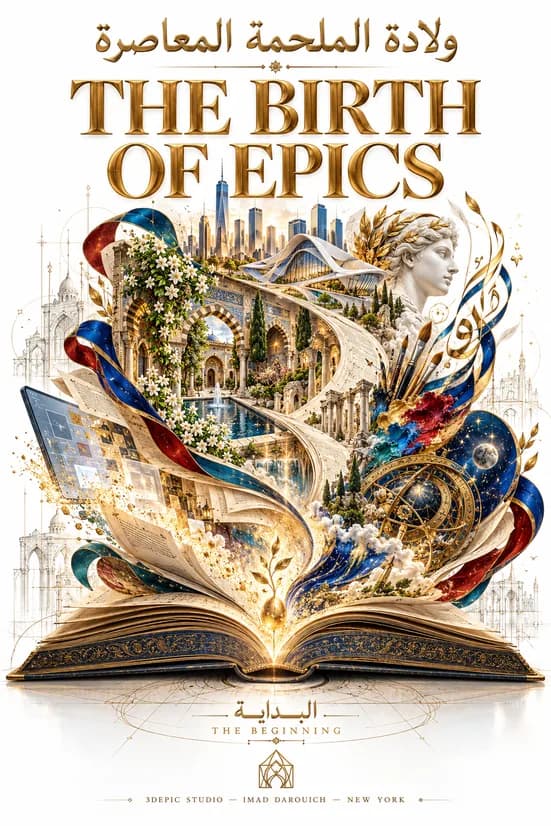
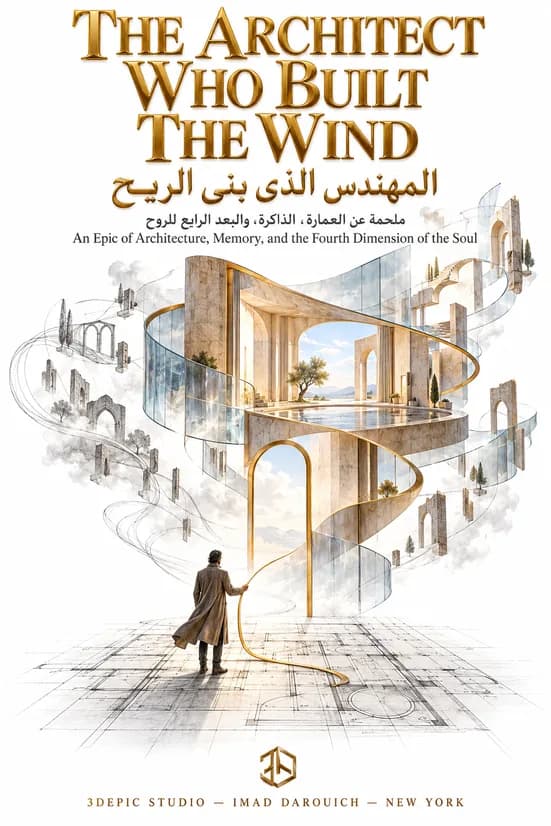
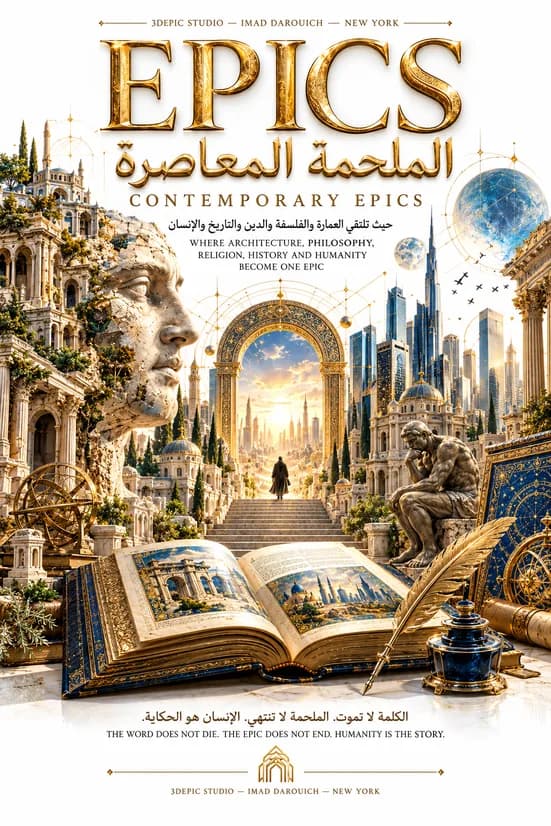
3DEPICS is a bilingual library of contemporary epics in Arabic and English by the New York architect Imad Darouich. In The Birth of Epics, Imad asks what is a modern epic and answers in ten chapters: its hero may be an architect facing a city, an artist before a painting or an ordinary person in a fast-changing world, and its pages join architecture, art, faith, philosophy and surrealism.
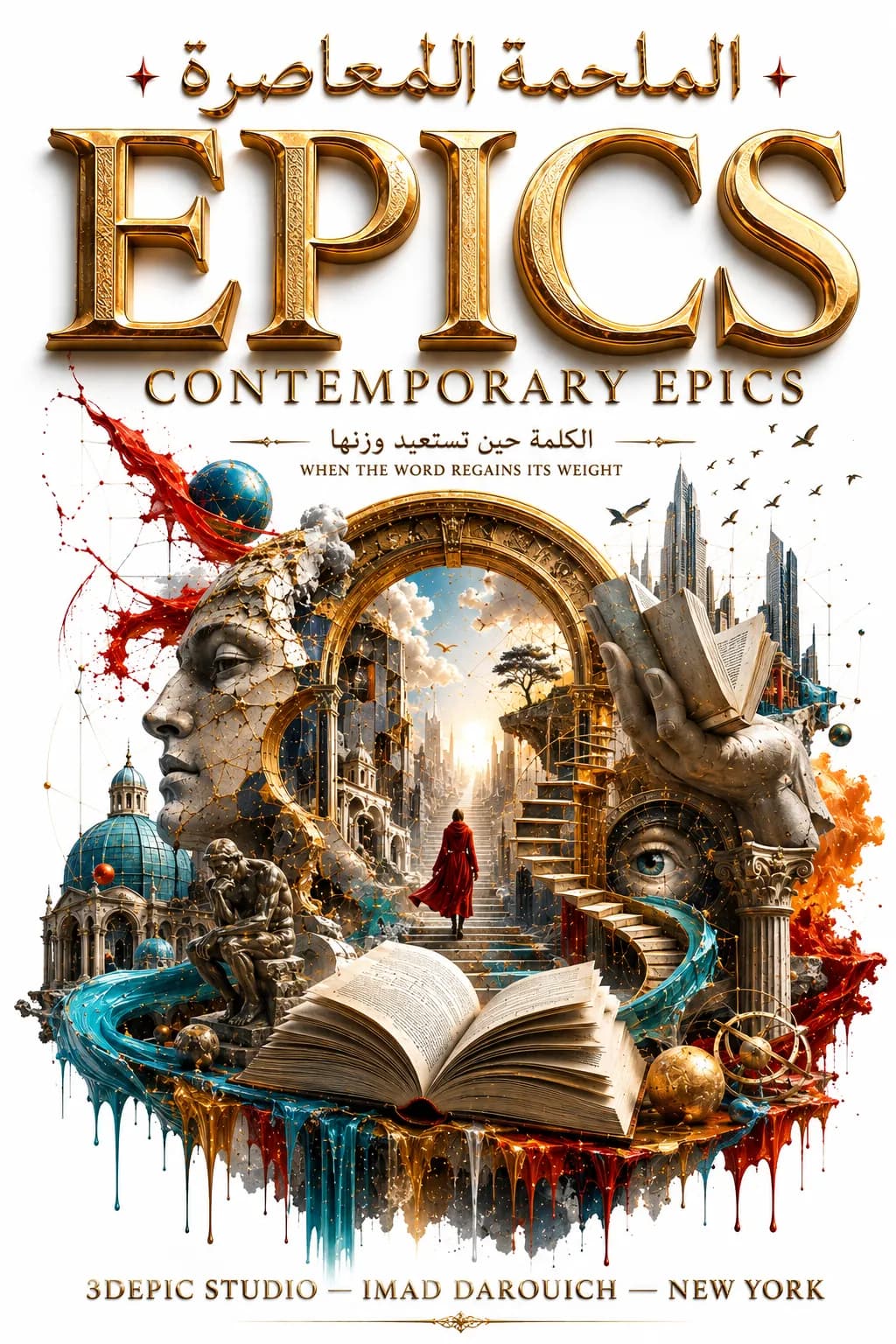
The Beginning
البداية
لم تولد الملحمة المعاصرة من رغبة في إنشاء مجموعة كتب جديدة فقط.Contemporary Epics was not born merely from a desire to create a new collection of books.
ولم تبدأ من سؤالٍ تجاري عن ماذا يريد السوق.It did not begin with a commercial question about what the market wants.
بدأت من سؤالٍ ثقافي أكبر.It began with a larger cultural question.
ماذا حدث للكلمة في زمن السرعة؟What happened to the written word in an age of speed?
وماذا حدث للكتاب حين أصبحت الشاشة رفيق الإنسان الدائم؟What happened to the book when the screen became humanity’s constant companion?
وهل تستطيع الملحمة أن تعود دون أن تقلّد الماضي؟Can the epic return without imitating the past?
من هنا بدأت الحكاية.From here, the story began.
الفصل الأول، السؤال الذي سبق المشروع
Chapter One: The Question Before the Project
كل مشروع حقيقي يبدأ بسؤال.Every meaningful project begins with a question.
وسؤالنا كان عن مصير الأدب نفسه.Our question concerned the destiny of literature itself.
العالم لم يعد يقرأ بالطريقة نفسها.The world no longer reads in the same way.
الزمن أصبح أسرع.Time has accelerated.
والصورة أصبحت أكثر حضورًا.The image has become more dominant.
والمعلومة أصبحت متاحة في لحظة.Information has become available in an instant.
لكن وفرة المعلومات لم تعنِ وفرة المعنى.Yet an abundance of information has not meant an abundance of meaning.
وهنا رأينا ضرورة العودة إلى شكل أدبي يستطيع حمل الأسئلة الكبرى.Here we saw the need to return to a literary form capable of carrying great questions.
كانت الملحمة هي الجواب.The epic became the answer.
لكن ليس كما كانت.But not as it once was.
بل كما يمكن أن تكون اليوم.As it could become today.
الفصل الثاني، لماذا الملحمة؟
Chapter Two: Why the Epic?
لأن الملحمة لم تكن يومًا مجرد قصة طويلة.Because the epic was never merely a long story.
كانت وعاءً لذاكرة الإنسان.It was a vessel for human memory.
حملت المدن والحروب والهجرات والأحلام.It carried cities, wars, migrations, and dreams.
وحملت أسئلة الخير والشر.It carried questions of good and evil.
والقوة والعدالة.Power and justice.
والحب والموت.Love and death.
والإنسان والمصير.Humanity and destiny.
لكن بطل الملحمة اليوم تغيّر.Yet the hero of the epic has changed.
لم يعد بالضرورة ملكًا أو محاربًا.He is no longer necessarily a king or warrior.
قد يكون معماريًا أمام مدينة.He may be an architect facing a city.
أو فنانًا أمام لوحة.An artist before a painting.
أو مفكرًا أمام سؤال.A thinker before a question.
أو إنسانًا عاديًا أمام عالم يتغير بسرعة.Or an ordinary person facing a rapidly changing world.
لهذا احتجنا إلى الملحمة المعاصرة.That is why we needed the Contemporary Epic.
الفصل الثالث، إعادة تعريف الأدب
Chapter Three: Redefining Literature
لا نريد للأدب أن يعيش داخل حدود ضيقة.We do not want literature to live within narrow boundaries.
فالحياة نفسها لا تعترف بهذه الحدود.Life itself does not recognize such boundaries.
الإنسان لا يعيش الفلسفة منفصلة عن السياسة.Humanity does not experience philosophy separately from politics.
ولا الدين منفصلًا عن الأخلاق.Nor religion separately from ethics.
ولا العمارة منفصلة عن المجتمع.Nor architecture separately from society.
ولا الفن منفصلًا عن الذاكرة.Nor art separately from memory.
لهذا تتقاطع الحقول داخل ملاحمنا.That is why disciplines intersect within our epics.
يدخل التاريخ في الأدب.History enters literature.
وتدخل العمارة في الفلسفة.Architecture enters philosophy.
ويدخل الفن في الذاكرة.Art enters memory.
وتدخل الأسئلة الروحية في التجربة الإنسانية.Spiritual questions enter human experience.
ومن هذا التداخل يولد شكل مختلف للكتابة.From this convergence, a different form of writing emerges.
الفصل الرابع، العمارة عندما أصبحت لغة
Chapter Four: When Architecture Became Language
كان للعمارة مكان أساسي في ولادة المشروع.Architecture held an essential place in the birth of the project.
لأن العمارة ليست جدرانًا فقط.Because architecture is not merely walls.
المبنى يحمل فكرة.A building carries an idea.
والمدينة تحمل ذاكرة.A city carries memory.
والباب يحمل قرارًا.A door carries a decision.
والنافذة تحدد علاقتنا بالعالم الخارجي.A window defines our relationship with the world outside.
من هنا أصبحت العمارة قابلة للقراءة.From here, architecture became something that could be read.
أصبح المبنى نصًا.The building became a text.
وأصبحت المدينة كتابًا.The city became a book.
وأصبح المعماري أحد رواة الحضارة.The architect became one of civilization’s storytellers.
وهكذا ولدت ملاحم العمارة.Thus the Architectural Epics were born.
الفصل الخامس، عندما دخل الفن إلى الحكاية
Chapter Five: When Art Entered the Story
ثم جاءت اللوحة.Then came the painting.
لكننا لم نرد وصفها فقط.But we did not want merely to describe it.
أردنا الدخول إليها.We wanted to enter it.
ماذا كان يرى الفنان؟What did the artist see?
ماذا كان يخاف؟What did the artist fear?
ماذا كان يريد أن يقول؟What was the artist trying to say?
ولماذا بقي عمله بعد رحيله؟Why did the work remain after the artist was gone?
من هنا تحولت اللوحة إلى حكاية.From here, the painting became a story.
واللون إلى ذاكرة.Color became memory.
والظل إلى سؤال.Shadow became a question.
والجمال إلى موقف.Beauty became a stance.
وهكذا ولدت الملاحم الفنية.Thus the Artistic Epics were born.
الفصل السادس، الإيمان والفلسفة والسؤال
Chapter Six: Faith, Philosophy, and the Question
هناك أسئلة أقدم من المدن.Some questions are older than cities.
من نحن؟Who are we?
لماذا نحن هنا؟Why are we here?
ما الخير؟What is good?
ما العدل؟What is justice?
ما الحقيقة؟What is truth?
وما علاقة الإنسان بخالقه؟And what is humanity’s relationship with its Creator?
لهذا دخلت الفلسفة والدين إلى المشروع.That is why philosophy and religion entered the project.
لا بوصفهما زينة فكرية.Not as intellectual decoration.
بل لأنهما في قلب التجربة الإنسانية.But because they stand at the heart of human experience.
في الفلسفة نبحث عن السؤال.In philosophy, we search for the question.
وفي الإيمان نقترب باحترام من المعنى والمسؤولية والأخلاق.In faith, we approach meaning, responsibility, and ethics with respect.
وهنا تصبح الكتابة رحلة داخل الإنسان نفسه.Here writing becomes a journey into the human being.
الفصل السابع، السريالية كلغة للواقع
Chapter Seven: Surrealism as a Language of Reality
لماذا السريالية؟Why surrealism?
لأن الواقع نفسه أصبح أحيانًا أكثر غرابة من الخيال.Because reality itself has sometimes become stranger than imagination.
نعيش بين العالم الحقيقي والرقمي.We live between physical and digital worlds.
بين الذاكرة والصورة.Between memory and image.
بين المدينة والشاشة.Between the city and the screen.
بين ما نراه وما نشعر به.Between what we see and what we feel.
لهذا أصبحت السريالية وسيلة لإعادة تركيب الواقع.Surrealism therefore became a means of reconstructing reality.
قد يخرج درج من كتاب.A staircase may rise from a book.
وقد تصبح الساعة مدينة.A clock may become a city.
وقد يتحول الوجه إلى عمارة.A face may transform into architecture.
ليست الغاية الهروب من الحقيقة.The purpose is not to escape truth.
بل رؤيتها من زاوية أخرى.It is to see it from another angle.
الفصل الثامن، الكتاب كعمل متكامل
Chapter Eight: The Book as a Complete Work
في EPICS لا ينتهي العمل عند كتابة النص.At EPICS, the work does not end when the text is written.
الغلاف جزء من الملحمة.The cover is part of the epic.
والخط جزء منها.Typography is part of it.
والصورة جزء منها.The image is part of it.
والفراغ بين الكلمات جزء منها.The space between words is part of it.
نريد أن يبدأ الكتاب قبل الصفحة الأولى.We want the book to begin before the first page.
أن يبدأ من اللحظة التي يراه فيها القارئ.To begin the moment the reader sees it.
ثم ينتقل من العين إلى الفكر.Then move from the eye to the mind.
ومن الفكر إلى الذاكرة.From the mind to memory.
لهذا نقدّم الأعمال بصيغ رقمية ومطبوعة.That is why we present the works in digital and print formats.
لكن الهدف واحد.But the goal remains one.
أن يصبح الكتاب تجربةً كاملة.To make the book a complete experience.
الفصل التاسع، التكنولوجيا دون فقدان الإنسان
Chapter Nine: Technology Without Losing the Human
ولدت EPICS في عصر الأدوات الرقمية الجديدة.EPICS was born in an age of new digital tools.
ولا يمكن لمشروع معاصر أن يتجاهل عصره.A contemporary project cannot ignore its own age.
لكن التكنولوجيا ليست المؤلف.Technology is not the author.
وليست الفكرة.Nor is it the idea.
وليست الضمير.Nor the conscience.
إنها أداة.It is a tool.
يمكن استخدامها لتوسيع الخيال.It can be used to expand imagination.
ولبناء عوالم بصرية جديدة.To construct new visual worlds.
ولتجريب أشكال مختلفة للسرد والتصميم.To explore different forms of storytelling and design.
لكن الإنسان يبقى في المركز.But the human being remains at the center.
لأنه هو الذي يسأل.Because the human asks.
وهو الذي يختار.The human chooses.
وهو الذي يتحمل مسؤولية المعنى.And the human bears responsibility for meaning.
الفصل العاشر، ولادة الملحمة المعاصرة
Chapter Ten: The Birth of the Contemporary Epic
وهكذا لم تولد EPICS في لحظة واحدة.And so EPICS was not born in a single moment.
ولدت من تراكم الأسئلة.It was born from accumulated questions.
من العمارة.From architecture.
ومن الفن.From art.
ومن الأدب.From literature.
ومن التاريخ.From history.
ومن الفلسفة.From philosophy.
ومن الإيمان.From faith.
ومن تجربة الإنسان المعاصر نفسه.From the experience of contemporary humanity itself.
ولدت من الرغبة في ألا تصبح الكلمة مجرد شيء آخر نمر عليه بسرعة.It was born from the desire that the word not become merely another thing we scroll past.
ومن الإيمان بأن الكتاب ما زال قادرًا على أن يحمل عالمًا.And from the belief that a book can still carry an entire world.
لسنا هنا لإعادة إنتاج الماضي.We are not here to reproduce the past.
نحن هنا لنواصل ما بدأه الإنسان منذ أول حكاية.We are here to continue what humanity began with its first story.
أن يحفظ تجربته.To preserve its experience.
أن يسأل.To question.
أن يتذكر.To remember.
وأن يترك شيئًا خلفه.And to leave something behind.
هذه هي ولادة الملحمة المعاصرة.This is the birth of Contemporary Epics.
ليست ولادة نوع أدبي مغلق.Not the birth of a closed literary genre.
بل ولادة مساحة مفتوحة.But the birth of an open space.
مساحة تلتقي فيها الكلمة بالصورة.A space where the word meets the image.
والعمارة بالفلسفة.Architecture meets philosophy.
والفن بالتاريخ.Art meets history.
والإيمان بالسؤال.Faith meets questioning.
والماضي بالمستقبل.The past meets the future.
وفي مركز كل ذلك يقف الإنسان.And at the center of it all stands the human being.
The Ending
الخاتمة
لم تولد EPICS لكي تضيف المزيد من الكلمات إلى عالم ممتلئ بالكلمات.EPICS was not born to add more words to a world already overflowing with words.
ولدت لكي تعيد للكلمة وزنها.It was born to restore weight to the word.
وللصورة معناها.Meaning to the image.
وللكتاب حضوره.Presence to the book.
وللقارئ مكانه كشريك في التجربة.And to the reader, a place as a partner in the experience.
الملحمة لم تمت.The epic did not die.
لقد انتظرت عصرًا جديدًا لتولد من جديد.It waited for a new age to be born again.
The Story of Contemporary Epics tells the same beginning as an introduction to the project. The manifesto is the book Contemporary Epics: A Manifesto, Epics, and a Contemporary Human Experience, and the about page introduces 3DEPICS and Imad.
بقلم
Architect Imad Darouich
المهندس المعماري عماد درويش
مهندس معماري وكاتب ومؤسس 3DEPICS، يقيم في نيويورك. يكتب أدبًا ملحميًا يعبر الحدود واللغات والجغرافيا، حيث تلتقي الفلسفة بالعمارة، والروحانية بالتاريخ، والذاكرة بالخيال.