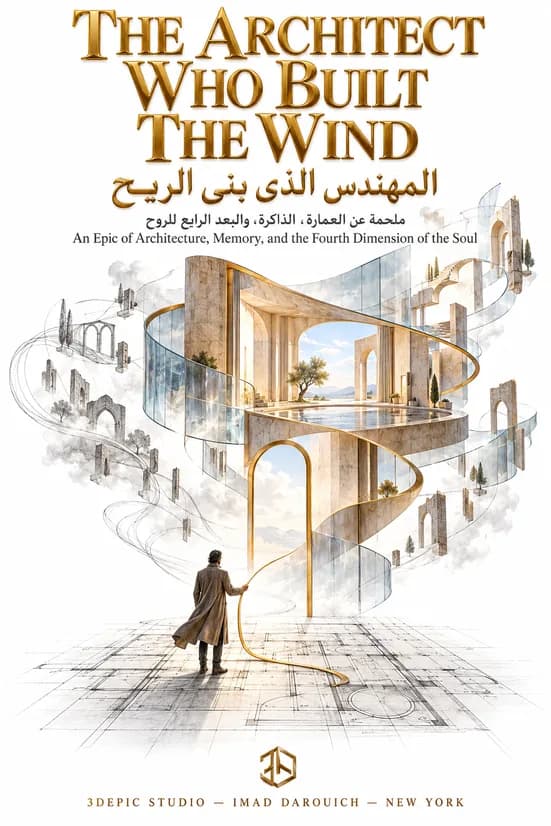
The Epic of the Last Architect
ملحمة المعماري الأخير
When software designs a perfect city in seconds, Imad fears less for the architect's job than for the architect's memory of why we build.
بقلم المهندس المعماري عماد درويشحُدّث في 4 دقائق قراءة

Imad wrote this poem on AI in architecture after watching software generate an entire city in seconds, with Ottoman domes, Japanese façades and curved towers. He sets that perfection against Old Aleppo, the alleys of Fez and the domes of Mimar Sinan, and concludes that the machine can design faster but cannot understand a person's need for shade, safety and calm.
في زمن الذكاء الاصطناعي…In the age of artificial intelligence…
لم يعد السؤال:The question is no longer:
هل تستطيع الآلة أن تصمم؟Can the machine design?
بل:But rather:
هل ما زال الإنسان يعرف لماذا كان يبني؟Does humanity still remember why it once built?
كنت أجلس وحدي ليلةًOne night I sat alone
أراقب الشاشة أمامي.Watching the screen before me.
البرامج تولّد مدنًا كاملةSoftware generated entire cities
في ثوانٍ معدودة.Within mere seconds.
قباب عثمانية.Ottoman domes.
واجهات يابانية.Japanese facades.
أبراج زها حديدية منحنيةCurved towers in the style of Zaha Hadid
تخرج من العدمEmerging from nothingness
كأنها مخلوقات بحرية رقمية.Like digital sea creatures.
ضغطت زرًا واحدًا فقط.I pressed only one button.
فأنجبت الآلة And the machine gave birth
مدينةً كاملة.To an entire city.
شوارع.Streets.
أنهارًا صناعية.Artificial rivers.
مكتباتLibraries.
ناطحات سحاب.Skyscrapers.
وحتى ظلال الأشجار.Even the shadows of trees.
كل شيء كان مثاليًا.Everything was perfect.
وهنا خفت.And there I became afraid.
ليس من الذكاء الاصطناعيNot of artificial intelligence.
بل من الإنسان الذي سيصدّق هذا الكمال.But of the human who would believe in this perfection.
تذكرت فجأةSuddenly I remembered
كيف كان المعماريون القدماءHow ancient architects
يبنون المدن ببطء يشبه الصلاة.Built cities with a slowness resembling prayer.
في حلب القديمةIn Old Aleppo
كان الحجر يعرفStone knew
اسم الحرفي الذي نحته.The name of the craftsman who carved it.
وفي فاسAnd in Fez
كانت الأزقة الضيقةThe narrow alleys
تفهم حركة الشمس أكثر من كثير من المهندسين اليوم.Understood the movement of the sun better than many engineers today.
أما في إسطنبولAs for Istanbul
فإنMimar Sinan
كان يبني القباب
كما لو أنه يحاولAs though he were trying
تخفيف ثقل السماء عن البشر.To lighten the weight of the sky upon humanity.
الرجل لم يكن يرسم مبنى فقط.The man was not merely drawing a building.
بل كان يرسم علاقة الإنسان بالله.He was drawing humanity’s relationship with God.
أما اليوم…But today…
فكثير من المعماريينMany architects
يرسمون مبانيهمDraw their buildings
كما يرسم المؤثرون صور الإنستغرام.Like influencers compose Instagram
photos.
كل شيء يجب أن يكون قابلاً للنشر.Everything must be publishable.
قابلاً للبيع.Sellable.
قابلاً للإضاءة الليلية.Capable of nighttime illumination.
حتى المساجد أحيانًاEven mosques sometimes
بدت كأنها صالات عرض فاخرة.Look like luxury showrooms.
وفي دبيAnd in Dubai
شعرت أحيانًاI sometimes felt
أن الأبراج لم تعد تسكن البشر.That towers no longer house humans.
بل البشر هم من يسكنون داخل الأبراجRather, humans dwell inside towers
كأنهم ملفات إلكترونية محفوظة في السحاب.Like electronic files stored in the cloud.
واجهات زجاجية ضخمة.Massive glass facades.
ردهات تشبه المطارات.Lobbies resembling airports.
وأشجار داخليةAnd indoor trees
تموت بصمت تحت التكييف المركزي.Dying silently beneath central air conditioning.
وفي نيويوركAnd in New York City
رأيت الناسI saw people
يصعدون يوميًاAscending daily
داخل آلاف النوافذ المضيئة.Inside thousands of illuminated windows.
لكنني لم أرَ بيتًا واحدًاYet I did not see a single home
يشبه بيت جدتي في دمشق.Resembling my grandmother’s home in Damascus.
هناكThere
كان الضوء يدخل بخجل.Light entered modestly.
وكانت الأشجارAnd the trees
تحرس الصمت الداخلي للبيت.Guarded the home’s inner silence.
أما هناBut here
فالمدينة لا تنام أبدًا.The city never sleeps.
لأنها تخاف من الصمت.Because it fears silence.
وفي تلك الليلةAnd that night
أغلقت الحاسوب فجأة.I suddenly closed the computer.
وشعرت أن الشاشةAnd felt the screen
تنظر إليّ بسخرية.Looking at me mockingly.
كأن الذكاء الاصطناعي يسألني:As if artificial intelligence were asking me:
إذا كنتُ أستطيعIf I can
أن أصمم أسرع منك…Design faster than you…
وأرسم أجمل منك…Draw more beautifully than you…
وأنتج ألف فكرة في دقيقة…And generate a thousand ideas in one minute…
فما الذي بقي لك أيها المعماري؟Then what remains for you, architect?
وفي تلك اللحظةAt that moment
فهمت الإجابة أخيرًا.I finally understood the answer.
المعماري الحقيقيThe true architect
ليس من يرسم الأشكال فقط.Is not the one who merely draws forms.
بل من يفهم الإنسان.But the one who understands humanity.
يفهم خوفه من العتمة.Understands his fear of darkness.
وحاجته إلى الظل.His need for shade.
ورغبته القديمةAnd his ancient desire
في أن يشعر بالأمان داخل جدار.To feel safe within a wall.
الآلة قد تبني مدينة كاملة. The machine may build an entire city.
لكنها لا تعرفBut it does not know
كيف تبني الطمأنينة.How to build serenity.
ولا كيف تجعل الضوءNor how to make light
يدخل إلى البيتEnter a home
كما تدخل الأمThe way a mother enters
إلى غرفة طفلها النائم.Her sleeping child’s room.
ومنذ تلك الليلةAnd since that night
لم أعد أخافI no longer fear
أن يأخذ الذكاء الاصطناعي وظيفة المعماري.Artificial intelligence taking the architect’s job.
بل أخافRather, I fear
أن ينسى المعماري نفسهThat architects themselves may forget
أنه كان يومًاThat once upon a time
شاعرًا يبني بالحجر.He was a poet building with stone.
More epics on this subject are in the library's Ideas & Philosophy collection, and more essays in the journal's Ideas & Philosophy section.
بقلم
Architect Imad Darouich
المهندس المعماري عماد درويش
مهندس معماري وكاتب ومؤسس 3DEPICS، يقيم في نيويورك. يكتب أدبًا ملحميًا يعبر الحدود واللغات والجغرافيا، حيث تلتقي الفلسفة بالعمارة، والروحانية بالتاريخ، والذاكرة بالخيال.