The Shed: When Architecture Learned to Move
ذا شِد: حين تعلّمت العمارة أن تتحرك
As an architect, Imad learned that buildings stand still; at Hudson Yards he met one that moves on wheels.
By Architect Imad Darouich10 min read
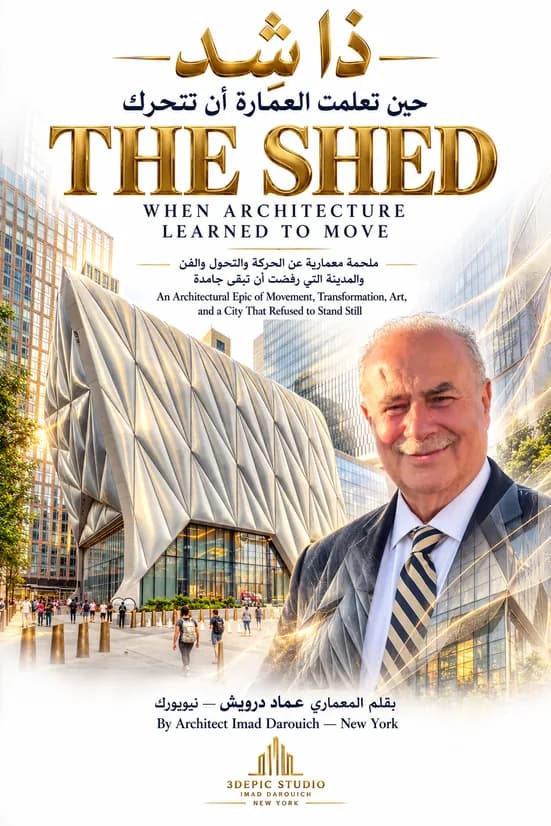
The Shed is a cultural center at 545 West 30th Street in Hudson Yards, Manhattan, designed by Diller Scofidio + Renfro with the Rockwell Group and opened on April 5, 2019; its steel shell, clad in ETFE, rolls on six-foot wheels to cover the plaza or leave it open. Imad's epic, a reading of The Shed Hudson Yards in Arabic and English, follows that moving shell through ten chapters and asks what architecture owes a future it cannot foresee.
An Architectural Epic of Movement, Transformation, Art, and a City That Refused to Stand Still
ملحمة معمارية عن الحركة والتحوّل والفن والمدينة التي رفضت أن تبقى جامدة
The Beginning: When I Saw a Building Refuse to Remain a Building
البداية: حين رأيت مبنى يرفض أن يبقى مبنى
كمعماري، تعلّمت أن المبنى يقف.As an architect, I learned that a building stands.
تتحرك داخله الحياة، لكنه يبقى.Life moves within it, but it remains.
ثم وقفت أمام ذا شِد في هدسون ياردز.Then I stood before The Shed at Hudson Yards.
ورأيت المعادلة تنقلب.And I saw the equation reversed.
هنا يتحرك المبنى نفسه.Here, the building itself moves.
افتتح ذا شِد عام 2019، وصممه Diller Scofidio + Renfro بالتعاون مع Rockwell Group.The Shed opened in 2019, designed by Diller Scofidio + Renfro in collaboration with Rockwell Group.
غلافه الخارجي الخفيف يستطيع الانزلاق على عجلات ومسارات ضخمة ليخلق فضاءً مغطى، ثم يتراجع ليعيد الساحة إلى المدينة.Its lightweight outer shell can glide on enormous wheels and rails to create a covered space, then retract to return the plaza to the city.
وهنا توقفت.And here I stopped.
لأنني لم أعد أمام واجهة.Because I was no longer facing a façade.
كنت أمام قرار معماري يتحرك.I was facing an architectural decision in motion.
Chapter One: Why Must a Building Remain Still?
الفصل الأول: لماذا يجب أن يبقى المبنى ثابتًا؟
هذا أول سؤال طرحه عليّ ذا شِد.This was the first question The Shed asked me.
نحن نبني الجدران لكي تثبت.We build walls to remain fixed.
نحسب الأحمال.We calculate loads.
نقاوم الرياح.We resist wind.
نثبت الأعمدة في الأرض.We anchor columns to the ground.
ثم يأتي هذا المبنى ويقول:Then this building comes and says:
ماذا لو كانت الحركة جزءًا من الثبات؟What if movement were part of stability?
ماذا لو لم يكن التغيير عدوًا للعمارة؟What if change were not architecture’s enemy?
بل وظيفتها؟But its function?
وهنا تبدأ فلسفة المشروع بالنسبة إليّ.Here the project’s philosophy begins for me.
إنه لا يتحرك للفرجة فقط.It does not move merely for spectacle.
يتحرك لأن الفن نفسه يتغير.It moves because art itself changes.
الموسيقى تحتاج فضاءً.Music needs one kind of space.
المسرح يحتاج آخر.Theater needs another.
المعرض يحتاج ثالثًا.An exhibition needs a third.
والمدينة تحتاج أحيانًا ألا يكون هناك مبنى أصلًا.And sometimes the city needs there to be no building at all.
هذه الفكرة قوية.This idea is powerful.
أن يعرف المبنى متى يظهر، ومتى يتراجع.That a building knows when to appear, and when to retreat.
Chapter Two: The Skin That Became a Wing
الفصل الثاني: الجلد الذي أصبح جناحًا
أنظر إلى الغلاف الخارجي.I look at the outer shell.
خفيف.Light.
شفاف جزئيًا.Partly translucent.
مضيء.Luminous.
ومختلف عن الكتل الحجرية الثقيلة التي عرفتها العمارة قرونًا.And unlike the heavy masonry masses architecture knew for centuries.
يتكون الغلاف من وسائد ETFE خفيفة تسمح للكتلة بأن تبدو أقرب إلى جلد مضيء منها إلى جدار تقليدي.The shell uses lightweight ETFE cushions, allowing the mass to appear more like luminous skin than a conventional wall.
وهنا أقول لنفسي:Here I tell myself:
لقد تغير معنى الواجهة.The meaning of façade has changed.
لم تعد الواجهة وجه المبنى فقط.The façade is no longer merely the face of a building.
أصبحت عضوًا متحركًا.It has become a moving organ.
تفتح.It opens.
تغلق.It closes.
تتقدم.It advances.
وتنسحب.And retreats.
كأن المبنى يملك رئتين.As though the building possessed lungs.
Chapter Three: The Wheel That Carried Architecture
الفصل الثالث: العجلة التي حملت العمارة
نحن نضع العجلات تحت السيارات.We place wheels beneath cars.
والقطارات.Trains.
والآلات.Machines.
لكن هنا وضعت العجلات تحت العمارة.But here, wheels were placed beneath architecture.
وهذه الفكرة وحدها تكفي لتجعلني أتوقف طويلًا.That idea alone is enough to make me stop for a long time.
فالهيكل الخارجي يتحرك على عجلات ضخمة، ويمكنه أن يمتد نحو 120 قدمًا ليحوّل الساحة إلى فضاء مغطى.The outer structure moves on enormous wheels and can extend about 120 feet to transform the plaza into a covered space.
لم تعد العجلة تنقل الإنسان إلى المبنى.The wheel no longer transports the human to the building.
بل تنقل المبنى نفسه.It transports the building itself.
يا لها من مفارقة جميلة.What a beautiful paradox.
الحجر كان رمز العمارة القديمة.Stone symbolized ancient architecture.
والعجلة كانت رمز الحركة.The wheel symbolized movement.
وفي ذا شِد تزوج الاثنان.In The Shed, the two were married.
Chapter Four: The Building That Breathes
الفصل الرابع: المبنى الذي يتنفس
حين يمتد الغلاف، يتغير حجم المكان.When the shell extends, the size of the place changes.
وحين يعود، تتغير علاقة المبنى بالساحة.When it retracts, the building’s relationship with the plaza changes.
لهذا لا أراه آلة فقط.That is why I do not see it merely as a machine.
أراه كائنًا يتنفس.I see a breathing creature.
شهيق.Inhale.
زفير.Exhale.
تمدد.Expansion.
انكماش.Contraction.
والفن هو الهواء الذي يدخل إليه.Art is the air entering it.
النص الأصلي يقول إن ذا شِد بيت للفن يتنفس مع المدينة، ويتمدد عندما يحتاج الحدث إلى الفضاء ويتراجع عندما يحتاج الشارع إلى الحرية.The original text describes The Shed as a house for art that breathes with the city, expanding when an event needs space and retracting when the street needs freedom.
وأنا كمعماري أرى في هذه العبارة مشروعًا كاملًا.As an architect, I see an entire project inside that sentence.
Chapter Five: The Art That Refused a Single Room
الفصل الخامس: الفن الذي رفض الغرفة الواحدة
المتحف التقليدي يقول للفن:The traditional museum tells art:
هذه قاعتك.This is your gallery.
المسرح يقول:The theater says:
هذه خشبتك.This is your stage.
قاعة الموسيقى تقول:The concert hall says:
هذه مقاعد جمهورك.These are your audience seats.
أما ذا شِد فيقول:But The Shed says:
قل لي ماذا تريد، وسأحاول أن أتغير.Tell me what you need, and I will try to change.
ومنذ افتتاحه استضاف معارض وحفلات وعروضًا تجريبية تجمع بين المسرح والرقص والسينما والتكنولوجيا والفنون المختلفة.Since opening, it has hosted exhibitions, concerts, and experimental performances spanning theater, dance, cinema, technology, and multiple artistic disciplines.
وهذا هو الفرق.That is the difference.
العمارة التقليدية تطلب من الفن أن يتكيف معها.Traditional architecture asks art to adapt to it.
وهنا تحاول العمارة أن تتكيف مع الفن.Here, architecture tries to adapt to art.
Chapter Six: When Space Became a Machine
الفصل السادس: حين أصبح الفراغ آلة
أدخل إلى الداخل.I enter.
وأتخيل الجدران تتحرك.I imagine the walls shifting.
المسرح يتسع.The theater expands.
المعرض يتغير.The gallery changes.
والسقف لم يعد نهاية ثابتة.The roof is no longer a fixed ending.
في الداخل توجد مساحات عرض واستوديوهات وفضاءات أداء قابلة للتكيّف مع أنواع مختلفة من الفن.Inside are galleries, studios, and performance spaces capable of adapting to different forms of art.
هنا يصبح الفراغ نفسه أداة.Here space itself becomes a tool.
مثل آلة موسيقية.Like a musical instrument.
يمكن ضبطها.It can be tuned.
وتغيير صوتها.Its voice can change.
وتغيير حجمها.Its scale can change.
بحسب من سيعزف داخلها.Depending on who will perform within it.
Chapter Seven: Night Turns the Machine into a Lantern
الفصل السابع: الليل يحوّل الآلة إلى فانوس
في النهار أقرأ التقنية.By day, I read the technology.
الفولاذ.Steel.
العجلات.Wheels.
المسارات.Rails.
ETFE.ETFE.
لكن الليل يغيّر القراءة.But night changes the reading.
حين يضيء الغلاف شبه الشفاف، تتحول الآلة إلى فانوس حضري ضخم.When the translucent shell glows, the machine becomes an enormous urban lantern.
وهنا أحب العمارة أكثر.Here I love the architecture more.
لأن التقنية اختفت خلف الشعر.Because technology disappears behind poetry.
أفضل التكنولوجيا في العمارة هي التي تؤدي عملها ثم تسمح لنا أن ننساها.The best technology in architecture performs its work and then allows us to forget it.
لا أريد أن أقف أمام مبنى وأرى المحرك فقط.I do not want to stand before a building and see only the motor.
أريد أن أرى الضوء الذي جعله المحرك ممكنًا.I want to see the light the motor made possible.
Chapter Eight: Is Architecture Art or Machine?
الفصل الثامن: هل العمارة فن أم آلة؟
ذا شِد يضعني أمام سؤال قديم بصورة جديدة.The Shed places an old question before me in a new form.
هل العمارة فن؟Is architecture art?
أم هندسة؟Or engineering?
أم آلة؟Or machine?
أم مسرح للحياة؟Or a stage for life?
المشروع نفسه يطرح السؤال: هل يمكن للمبنى أن يكون كائنًا ذا جلد وروح، وهل تستطيع الثقافة أن تعيش داخل هيكل لا يعرف الثبات؟The project itself raises the question of whether a building can possess skin and soul, and whether culture can inhabit a structure that refuses permanence.
وأنا لا أريد اختيار إجابة واحدة.I do not want to choose one answer.
العمارة العظيمة ربما تكون كل ذلك معًا.Great architecture may be all of these at once.
فنًا حين ننظر إليها.Art when we look at it.
هندسة حين نحسبها.Engineering when we calculate it.
آلة حين تتحرك.A machine when it moves.
وحياة حين يدخل الناس إليها.And life when people enter it.
Chapter Nine: The City Must Receive Something
الفصل التاسع: المدينة التي يجب أن تحصل على شيء
هنا أصل إلى النقطة التي تهمني دائمًا كمعماري.Here I arrive at the point that always matters to me as an architect.
ماذا يعطي المشروع للمدينة؟What does the project give the city?
ليس ماذا يأخذ منها.Not what does it take from it.
الأرض غالية.Land is expensive.
الموقع استثنائي.The location is extraordinary.
والعمارة أيقونية.The architecture is iconic.
لكن الساحة العامة مهمة أيضًا.But public space matters too.
ولهذا يعجبني أن الغلاف يستطيع الانسحاب.That is why I value the shell’s ability to retract.
كأن المبنى يقول:As though the building says:
لست مضطرًا إلى احتلال كل شيء طوال الوقت.I do not need to occupy everything all the time.
أحيانًا يمكنني أن أتنحى.Sometimes I can step aside.
وتعود المساحة إلى الناس.And the space returns to the people.
هذا درس معماري وأخلاقي.That is both an architectural and ethical lesson.
Chapter Ten: What Did I Take from the Shed?
الفصل العاشر: ماذا أخذت أنا من ذا شِد؟
بعد أن أنظر إلى المشروع طويلًا، أسأل نفسي:After looking at the project for a long time, I ask myself:
ماذا أخذت أنا، عماد درويش المعماري، من ذا شِد؟What did I, Imad Darouich the architect, take from The Shed?
لم آخذ شكله.I did not take its form.
ولا أريد تقليد واجهته.Nor do I want to imitate its façade.
أخذت مبدأً.I took a principle.
Do not design only for the scenario you already know.
لا تصمم للمشهد الذي تعرفه فقط.
صمم لما لا تعرفه بعد.Design for what you do not yet know.
هذه فكرة كبيرة.That is a powerful idea.
لأننا نحن المعماريين نرسم المستقبل بأدوات الحاضر.Because we architects draw the future with the tools of the present.
لكننا لا نعرف من سيأتي.Yet we do not know who will come.
ولا أي فن سيولد.Nor what art will be born.
ولا كيف ستتغير التكنولوجيا.Nor how technology will change.
ولا ماذا ستطلب المدينة بعد عشرين عامًا.Nor what the city will demand twenty years from now.
إذن لماذا نصمم كل شيء وكأنه جواب نهائي؟So why design everything as though it were a final answer?
ربما يجب أن نترك للمبنى قدرة على السؤال.Perhaps we should leave the building the ability to question.
والتغير.To change.
والاستجابة.To respond.
The Ending: When I Walked Away and It Kept Moving in My Mind
النهاية: حين ابتعدتُ عنه وبقي يتحرك في رأسي
أبتعد عن ذا شِد.I walk away from The Shed.
أنظر خلفي.I look back.
أرى هدسون ياردز.I see Hudson Yards.
الزجاج.Glass.
الفولاذ.Steel.
الهاي لاين.The High Line.
الناس.People.
ووسط كل ذلك، مبنى قرر ألا يقبل مصيره ككتلة ثابتة.And among all of it, a building that refused to accept its fate as a fixed mass.
قال:It said:
إذا تغير الفن، سأتغير.If art changes, I will change.
إذا احتاج الجمهور مساحة، سأفتحها.If the audience needs space, I will open it.
إذا احتاجت المدينة ساحتها، سأتراجع.If the city needs its plaza, I will retreat.
وهنا أرى الفكرة التي تستحق الملحمة.Here I see the idea worthy of an epic.
ليست العجلات.It is not the wheels.
وليست الـETFE.It is not the ETFE.
وليست الآلية الهندسية وحدها.Nor the engineering mechanism alone.
الفكرة الأعمق هي التواضع أمام المستقبل.The deeper idea is humility before the future.
أن يعترف المعماري بأنه لا يعرف كل ما سيحدث.For the architect to admit that he does not know everything that will happen.
وأن يصمم مبنى يستطيع أن يعيش مع ما لا يعرفه.And to design a building capable of living with what he cannot foresee.
يا ذا شِد.O Shed.
أنت لا تقول إن العمارة يجب أن تتحرك كلها على عجلات.You do not say that all architecture should move on wheels.
بل تقول شيئًا أهم.You say something more important.
The architectural mind itself must never stop moving.
إن العقل المعماري نفسه يجب ألا يتوقف عن الحركة.
فالمبنى الذي لا يستطيع الاستماع إلى الزمن،For a building unable to listen to time,
سيصبح يومًا شاهدًا على زمن انتهى.Will one day become a witness to an age that ended.
أما المبنى الذي يستطيع التغير،But a building capable of change,
فقد يملك فرصة أن يبقى معاصرًا حتى بعد أن يشيخ معماره.May have a chance to remain contemporary even after its architecture grows old.
وأكتب في دفتري كلمتي الأخيرة:And in my notebook, I write my final words:
في ذا شِد لم أرَ مبنى يتحرك فقط.In The Shed, I did not merely see a building that moves.
رأيت العمارة تتخلى للحظة عن كبريائها القديم، وتعترف بأن الحياة أسرع منها.I saw architecture surrender, for a moment, its ancient pride and admit that life moves faster than it does.
ولهذا صنعت لنفسها عجلات.And so it gave itself wheels.
Two more Hudson Yards buildings are read at book length in The Vessel: When Stairs Became Architecture and Void Became Poetry and 10 Hudson Yards: When the Skyscraper Became a Gateway to the City. Little Island, a park a short way down the Hudson, has its own piece in When the River Raised a Garden and Humanity Reclaimed the Sky.
Written by
Architect Imad Darouich
المهندس المعماري عماد درويش
Architect, author and founder of 3DEPICS, based in New York. He writes epic literature that crosses borders, languages and geographies, where philosophy meets architecture, spirituality meets history and memory meets imagination.