The Museum That Hid the Sun Within Its Roof: Louis Kahn's Kimbell
لويس كان: المتحف الذي أخفى الشمس في سقفه
In an imagined Court of Shadows the sun accuses Kahn of letting it burn the paintings, and his answer is the Kimbell's vaulted roof.
By Architect Imad Darouich9 min read
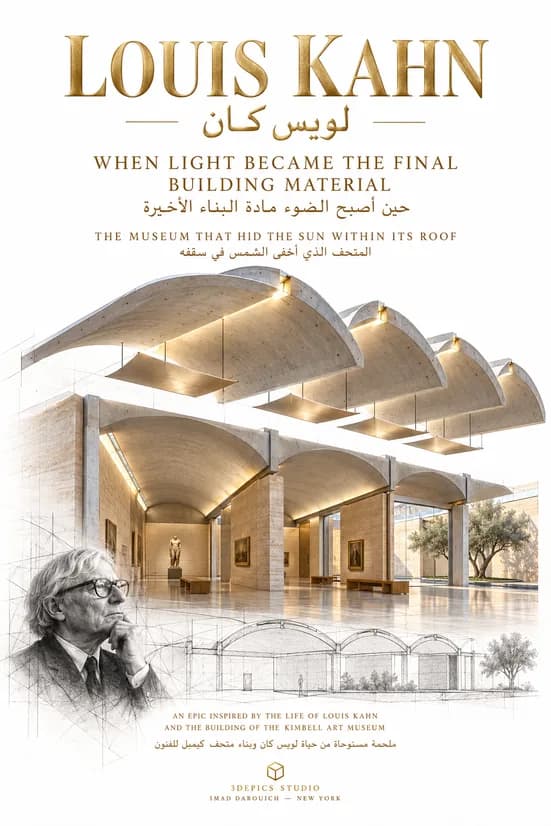
The Kimbell Art Museum in Fort Worth, Texas, was designed by Louis Kahn, who was hired in 1966; building began in 1969 and the museum opened in October 1972 under rows of concrete vaults with slits of daylight. Imad's epic follows Kahn through an imagined Court of Shadows, then to the opening and to his death at New York's Penn Station in 1974.
تنويهDisclaimer
تستند هذه الملحمة إلى حياة المعماري لويس كان وإلى الوقائع التاريخية المرتبطة بتصميم متحف كيمبل في فورت وورث بولاية تكساس.This epic draws upon the life of architect Louis Kahn and the historical events surrounding his design of the Kimbell Art Museum in Fort Worth, Texas.
أما المحكمة والحوارات والمشاهد الواردة في النص، فهي معالجة أدبية متخيلة تستكشف عالمه المعماري والإنساني.The trial, dialogue, and scenes in this text are part of an imaginative literary interpretation created to explore his architectural and human world.
في عام 1966، وصل إلى لويس كان طلب غريب.In 1966, Louis Kahn received a strange request.
أرادوا متحفًا للفن.They wanted a museum for art.
لكنهم لم يريدوا قصرًا ضخمًا.But they did not want a monumental palace.
أرادوا مكانًا هادئًا.They wanted a quiet place.
مكانًا يستطيع فيه الإنسان أن يقف أمام لوحة.A place where a person could stand before a painting.
من دون أن يهزمه المبنى.Without being defeated by the building.
فتح كان دفتره.Kahn opened his notebook.
لم يرسم واجهة.He did not draw a façade.
كتب سؤالًا:He wrote a question:
ماذا يريد المتحف أن يكون؟What does the museum want to be?
في تلك الليلة، استُدعي إلى محكمة الظلال.That night, he was summoned before the Court of Shadows.
كانت المحكمة تحت الأرض.The court was beneath the earth.
لم يكن فيها مصباح.There was no lamp inside it.
ولا نافذة.No window.
وكان القاضي كتلةً من الخرسانة.The judge was a mass of concrete.
جلس فوق منصة لا يصل إليها الضوء.It sat upon a platform untouched by light.
سأل القاضي:The judge asked:
لماذا ترفض الظلام؟Why do you reject darkness?
قال كان:Kahn answered:
أنا لا أرفضه.I do not reject it.
فالضوء لا يظهر من دون ظل.Light cannot appear without shadow.
قال القاضي:The judge said:
إذن لماذا فتحت سقف المتحف؟Then why did you open the museum’s roof?
أجاب كان:Kahn replied:
لأن العمل الفني لا يحتاج إلى ضوء يهاجمه.Because a work of art does not need light that attacks it.
يحتاج إلى ضوء يقترب منه بهدوء.It needs light that approaches gently.
ضرب القاضي الخرسانة بمطرقته.The judge struck the concrete with his gavel.
دخلت الشمس إلى القاعة.The Sun entered the chamber.
كانت غاضبة.It was angry.
قالت:It said:
كل نافذة تفتحها نحوي تسمح لي بإحراق ما تحتها.Every window you open toward me allows me to burn what lies beneath it.
ألوان اللوحات تخافني.The colors of paintings fear me.
والورق يشيخ بسببي.Paper ages because of me.
فكيف ستدعوني إلى المتحف؟How will you invite me into the museum?
قال كان:Kahn answered:
لن أسمح لك بالدخول مباشرة.I will not allow you to enter directly.
سأكسر حدتك.I will soften your force.
وسأوزعك فوق السقف.I will spread you across the ceiling.
ستدخلين كشعاع.You will enter as a beam.
لكنّك ستصلين إلى اللوحة كهمس.But you will reach the painting as a whisper.
دخل السقف إلى المحكمة.The Roof entered the court.
كان منحنِيًا.It was curved.
لكنه لم يكن نصف دائرة كاملة.But it was not a perfect semicircle.
كان قبوًا هندسيًا دقيقًا.It was a precisely shaped vault.
تكرر مرةً بعد أخرى.It repeated again and again.
كأن المتحف نوتة موسيقية من الخرسانة.As though the museum were a musical score written in concrete.
سأله القاضي:The judge asked:
هل أنت سقف؟Are you a roof?
قال:It answered:
أنا بناء للضوء.I am a structure for light.
في أعلاي فتحة ضيقة.At my crown is a narrow opening.
وتحتها عاكس معدني.Beneath it hangs a metal reflector.
تدخل الشمس من الأعلى.Sunlight enters from above.
ثم تنقسم.Then it divides.
تنساب فوق انحنائي.It flows across my curve.
وتنزل إلى الجدران بلا عنف.And descends toward the walls without violence.
قال القاضي:The judge said:
إذن أنت تخفي مصدر الضوء.Then you conceal the source of light.
قال السقف:The Roof answered:
لكي يظهر أثره.So that its effect may appear.
دخلت لوحة إلى المحكمة.A painting entered the court.
كان وجهها مغطى بقماش.Its face was covered with cloth.
سألها القاضي:The judge asked:
ممن تختبئين؟From whom are you hiding?
قالت:It answered:
من المبنى.From the building.
تخيفني المتاحف التي تصرخ أكثر من الأعمال التي تعرضها.I fear museums that shout louder than the works they display.
تجعلني بعض القاعات ضيفةً داخل استعراض معماري.Some galleries make me a guest inside an architectural performance.
نظر القاضي إلى كان.The judge looked at Kahn.
قال:It said:
هل ستجعل مبناك يصمت؟Will you make your building silent?
قال كان:Kahn replied:
سأجعله يتكلم بصوت منخفض.I will make it speak softly.
فالصمت المعماري ليس غيابًا.Architectural silence is not absence.
إنه مساحة يتركها المبنى لما جاء ليحميه.It is the space a building leaves for what it was created to protect.
وُلد لويس كان عام 1901.Louis Kahn was born in 1901.
جاء طفلًا مهاجرًا إلى الولايات المتحدة.He came to the United States as an immigrant child.
نشأ في فيلادلفيا.He grew up in Philadelphia.
لم تأته الشهرة مبكرًا.Fame did not come to him early.
أمضى سنوات طويلة يرسم ويعلّم ويبحث.He spent many years drawing, teaching, and searching.
كانت مبانيه الكبرى ما تزال بعيدة.His great buildings were still far away.
رأى زملاءه يتقدمون.He watched his peers advance.
وبقي يسأل الحجر أسئلة لا تجلب المال بسرعة.He continued asking stone questions that did not bring quick profit.
ما الذي يجعل الغرفة غرفة؟What makes a room a room?
متى يصبح الجدار أكثر من حاجز؟When does a wall become more than a barrier?
وكيف يعرف المبنى ما يريد أن يكون؟And how does a building know what it wants to be?
مرّت الأعوام.The years passed.
تأخر النجاح.Success came late.
لكن التأخر لم يجعل أسئلته أصغر.But delay did not make his questions smaller.
جعلها أعمق.It made them deeper.
حين بدأ تصميم متحف كيمبل، لم يحاول إثبات شبابه.When he began designing the Kimbell, he did not try to prove his youth.
استخدم ما منحته السنوات.He used what the years had given him.
الهدوء.Calm.
والاختصار.Restraint.
والقدرة على حذف ما لا يحتاج إليه المكان.And the ability to remove what the place did not need.
قسم المتحف إلى وحدات متكررة.He divided the museum into repeated units.
صفوف من الأقبية الهادئة.Rows of quiet vaults.
بينها أفنية.Courtyards between them.
وماء.Water.
وأشجار.Trees.
ومداخل لا تستعرض سلطتها على الزائر.Entrances that did not display their authority over the visitor.
استخدم الخرسانة.He used concrete.
والحجر الجيري.Travertine.
والخشب.Wood.
والمعدن.Metal.
والزجاج.Glass.
لكن مادته الأساسية لم تصل في شاحنة.But his primary material did not arrive on a truck.
جاءت من السماء.It came from the sky.
بدأ البناء عام 1969.Construction began in 1969.
وكلما ارتفع قبو، ظهر سؤال جديد.As each vault rose, a new question appeared.
هل يستطيع السقف أن يحمل؟Can the roof support?
وأن ينير؟And illuminate?
وأن يمنح المكان إيقاعه؟And give the space its rhythm?
هل يستطيع العنصر الواحد أن يؤدي أكثر من وظيفة؟Can one element perform more than one task?
كان جواب كان واضحًا.Kahn’s answer was clear.
العنصر العظيم لا يخدم شكل المبنى فقط.A great element does not serve only the building’s appearance.
يخدم بنيته.It serves its structure.
وضوءه.Its light.
وحركته.Its movement.
وذاكرة من يدخله.And the memory of those who enter it.
افتُتح متحف كيمبل عام 1972.The Kimbell Art Museum opened in 1972.
دخل الناس.People entered.
رفعوا رؤوسهم.They raised their heads.
لم يروا الشمس.They did not see the Sun.
رأوا نورها فقط.They saw only its light.
كان ينتشر فوق الخرسانة.It spread across the concrete.
ناعمًا.Softly.
فضيًا.Silvery.
كأن السقف لا يعكس الضوء.As though the ceiling did not reflect light.
بل يتذكره.But remembered it.
عادت محكمة الظلال.The Court of Shadows returned.
وقف المتحف أمامها.The museum stood before it.
سأله القاضي:The judge asked:
من بناك؟Who built you?
قال المتحف:The museum answered:
رجل أمضى حياته يبحث عن أصل الغرفة.A man who spent his life searching for the origin of the room.
سأله:It asked:
وأين هو الآن؟Where is he now?
قال المتحف:The museum replied:
ما يزال حيًا.He is still alive.
بقي أمام لويس كان أقل من عامين.Louis Kahn had less than two years remaining.
في مارس عام 1974، كان عائدًا من رحلة عمل في آسيا.In March 1974, he was returning from a working journey in Asia.
وصل إلى محطة بنسلفانيا في نيويورك.He arrived at Pennsylvania Station in New York.
مدينة هائلة.An immense city.
آلاف الوجوه.Thousands of faces.
وآلاف الخطوات التي لا تنتظر أحدًا.Thousands of footsteps that waited for no one.
هناك، توفي وحيدًا.There, he died alone.
كان في الثالثة والسبعين.He was seventy-three.
توقفت رحلته في محطة.His journey ended in a station.
بين قطار وصل.Between a train that had arrived.
وقطار سيغادر.And a train that would depart.
مات الرجل الذي سأل طوال حياته عما تريده المباني.The man who spent his life asking what buildings wanted had died.
ولم تستطع المحطة أن تسأله ماذا يريد هو.And the station could not ask what he wanted.
وصل خبر رحيله إلى متحف كيمبل.News of his death reached the Kimbell.
كان الصباح قد بدأ.Morning had begun.
دخل الضوء من فتحات السقف.Light entered through the roof openings.
ارتطم بالعواكس.It touched the reflectors.
ثم توزع فوق الأقبية.Then spread across the vaults.
لم يتوقف.It did not stop.
لم يعرف أن معماره مات.It did not know its architect had died.
أو ربما عرف.Or perhaps it knew.
ولهذا دخل في ذلك اليوم أكثر هدوءًا.And that is why it entered more quietly that day.
انعقدت المحكمة للمرة الأخيرة.The court assembled for the final time.
قال القاضي:The judge declared:
مات المعماري.The architect is dead.
فمن سيشرح المبنى الآن؟Who will explain the building now?
قال الضوء:Light answered:
المبنى الذي يحتاج إلى صاحبه كي يشرحه لم يكتمل بعد.A building that needs its creator to explain it is not yet complete.
نظر القاضي إلى متحف كيمبل.The judge looked at the Kimbell Art Museum.
كان صامتًا.It was silent.
لكن الضوء كان يتحرك فوق سقفه.But light was moving across its ceiling.
فهمت المحكمة.The court understood.
لم يترك لويس كان جوابًا مكتوبًا فقط.Louis Kahn did not leave only a written answer.
ترك غرفةً تجيب كل صباح.He left a room that answers every morning.
هذه هي ملحمة لويس كان.This is the epic of Louis Kahn.
لم تكن معركته مع الظلام.His struggle was not against darkness.
كانت مع الضوء الذي يُستخدم بلا معنى.It was against light used without meaning.
لم يرد مباني تلمع.He did not want buildings that merely shone.
أراد مباني تعرف لماذا يدخلها الضوء.He wanted buildings that knew why light entered them.
لا ندرس لويس كان لنكرر أقبية كيمبل.We do not study Louis Kahn to repeat the Kimbell’s vaults.
ندرس كيف بدأ بالسؤال.We study how he began with a question.
وكيف جمع الإنشاء والضوء والمادة في فكرة واحدة.How he united structure, light, and material within one idea.
نتعلم أن الضوء ليس فراغًا بين الجدران.We learn that light is not the emptiness between walls.
إنه مادة.It is a material.
له اتجاه.It has direction.
وشدة.Intensity.
وزمن.Time.
وذاكرة.And memory.
ارسم غرفتك.Draw your room.
ثم لا تسأل عن شكلها أولًا.Then do not ask first about its shape.
اسأل أين سيولد فيها الصباح.Ask where morning will be born within it.
أين سيقف الظل؟Where will the shadow stand?
ماذا سيحدث للجدار عند الظهيرة؟What will happen to the wall at noon?
وكيف سيتغير المكان قبل الغروب؟How will the space change before sunset?
قد يصل الضوء من فتحة صغيرة.Light may arrive through a narrow opening.
لكنه يستطيع أن يمنح المبنى كله معنى.Yet it can give meaning to the entire building.
وقد يرحل المعماري وحيدًا في محطة مزدحمة.An architect may die alone in a crowded station.
لكن إذا عرف أين يضع الضوء،But if he knew where to place the light,
فلن يبقى وحيدًا في الذاكرة.He will not remain alone in memory.
Kahn stands beside Tadao Ando in When Light Taught Stone to Breathe, and his life is told in full in Louis Kahn: The Epic of the Architect Who Made Light Dwell Within Stone, part of the architects collection.
Written by
Architect Imad Darouich
المهندس المعماري عماد درويش
Architect, author and founder of 3DEPICS, based in New York. He writes epic literature that crosses borders, languages and geographies, where philosophy meets architecture, spirituality meets history and memory meets imagination.