Kaktus Towers: When One Floor Refused to Obey the Next
برجا كاكتوس: حين رفض الطابق أن يطيع الطابق
Two towers in Copenhagen are told to rise straight, and the second floor turns a little.
By Architect Imad Darouich3 min read
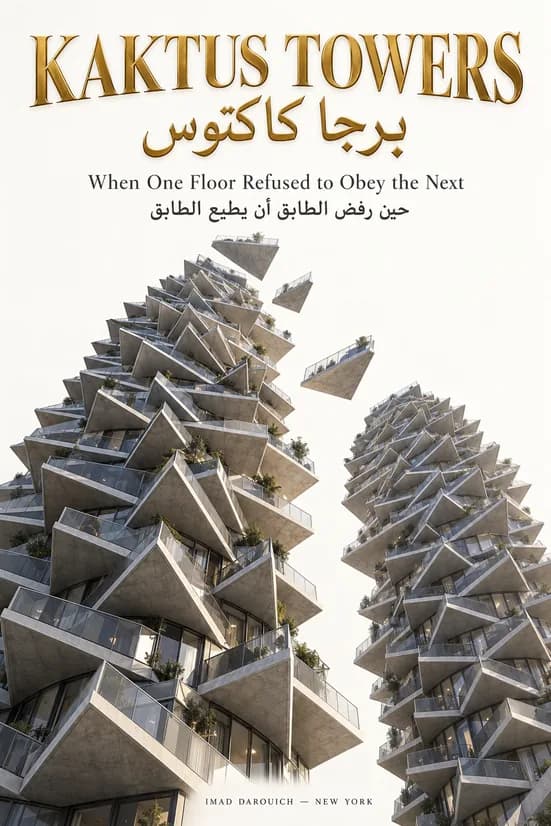
Kaktus Towers are two residential towers at Kalvebod Brygge in Copenhagen, near Dybbølsbro station, designed by the Bjarke Ingels Group (BIG) and opened in 2022; their rotated floor plates give them the spiky outline behind the name. Imad's Kaktus Towers Copenhagen poem, in Arabic and English, tells how one floor turned out of line and asks when repeating a floor serves a building and when it confines the people who live there.
A Note
تنويه
هذه ملحمة مستوحاة من برجي كاكتوس السكنيين في كوبنهاغن، من تصميم مكتب BIG.
أشرف على المشروع بياركه إنغلز مع ديفيد زاهله وجوليا فريتولي وفريق من المعماريين والمهندسين. يرتفع البرجان إلى نحو 80 مترًا، ويضمان 495 مسكنًا حول نواة مركزية. لكل مسكن شرفة خاصة، وتلتف بلاطات الطوابق تدريجيًا، فتمنح الواجهة شكلها الحاد والمتغير.This epic is inspired by Copenhagen’s residential Kaktus Towers, designed by BIG. Bjarke Ingels led the project with David Zahle, Giulia Frittoli, and a team of architects and engineers. Rising to about 80 metres, the towers contain 495 homes around central cores. Each home has a private terrace, while the shifting floor plates give the façades their sharp, changing form.
The Epic
الملحمة
في كوبنهاغن، صدر أمرٌ إلى برجين: اصعدا مستقيمين.In Copenhagen, two towers received an order: rise straight.
رُسم لهما طابقٌ أول، وقيل للبقية: كرّروه.A first floor was drawn, and the others were told: repeat it.
لكن الطابق الثاني دار قليلًا.But the second floor turned slightly.
التفت الثالث ليرى ما حدث.The third turned to see what had happened.
ثم بدأ البرجان يصعدان، طابقًا بعد طابق، خارج صفّ الطاعة.Then the towers began to rise, floor by floor, out of the line of obedience.
في مكتب BIG، لم تكن تلك الحركة نزوة قلم.At BIG, that movement was no whim of the pen.
ترك المعماريون في قلب كل برج نواةً ثابتة.The architects held a steady core at the heart of each tower.
وحولها جعلوا البلاطات تتبدّل، والشرفات تفتح زواياها على المدينة.Around it, they shifted the floor plates and opened the terraces toward the city.
هكذا وُلدت الأشواك.That is how the spines were born.
من بعيد، يبدو البرجان كأنهما يستعدّان للدفاع عن نفسيهما.From a distance, the towers seem ready to defend themselves.
ومن شرفةٍ في الأعلى، يخرج ساكنٌ بكوب قهوته.On a terrace above, a resident steps out with a cup of coffee.
يمدّ يده إلى الدرابزين.He rests a hand on the railing.
وفجأة يصير الشوك مكانًا صالحًا لصباحٍ هادئ.And suddenly, a spine becomes a place for a quiet morning.
يا بياركه إنغلز،Bjarke Ingels,
لقد وضعتَ في هذا المشروع سؤالًا يصعب إغلاقه بمسطرة:you placed in this project a question no ruler can settle:
متى يكون تكرار الطابق اقتصادًا في البناء،when does repeating a floor serve the building,
ومتى يصبح سجنًا لخيال من يسكنه؟and when does it imprison the imagination of those who live there?
أجاب البرجان بالحركة.The towers answered by turning.
وأجابت النواة بالثبات.The cores answered by holding firm.
وبين الاثنين نشأت تلك العمارة:Between them, this architecture took shape:
بيتٌ له نظام،a home with order,
ووجهٌ لا يظهر مرتين بالطريقة نفسها.and a face that never appears quite the same way twice.
عند القاعدة، ترتفع أرض خضراء يلتقي عندها الناس.At their base, an elevated green ground gives people a place to meet.
وفوقها تصعد مئات الشرفات، كلٌّ منها تقتطع لصاحبها زاويةً من السماء.Above it, hundreds of terraces rise, each carving out its own angle of sky.
وحين أغلقت المدينة دفاترها مساءً، بقي البرجان واقفين.When the city closed its books at dusk, the towers remained standing.
لم يعتذرا عن زواياهما.They did not apologize for their angles.
فقد تعلّما أن الثبات ليس أن تتشابه الطوابق،They had learned that strength does not require every floor to look alike,
بل أن تعرف ما الذي يحملها وهي تدور.but requires knowing what holds them as they turn.
Imad follows the architect who led the project in two books, Bjarke Ingels: The Architect Who Taught the City to Play and Bjarke Ingels: The Architect Who Turned Sustainability into an Urban Adventure, both in the architects collection.
Written by
Architect Imad Darouich
المهندس المعماري عماد درويش
Architect, author and founder of 3DEPICS, based in New York. He writes epic literature that crosses borders, languages and geographies, where philosophy meets architecture, spirituality meets history and memory meets imagination.