 3DEPICS
The Epic of Hassan Khalouf Al-Sabbagh: When a House Returned to Time
ملحمة حسن خلوف الصبّاغ: حين خرج البيت من الأرشيف وعاد ملكاً للزمن
A photograph taken by the Euphrates in 1925 travels to Berlin and back, and a grandson finds his grandfather standing at his door.
By Architect Imad DarouichUpdated 4 min read
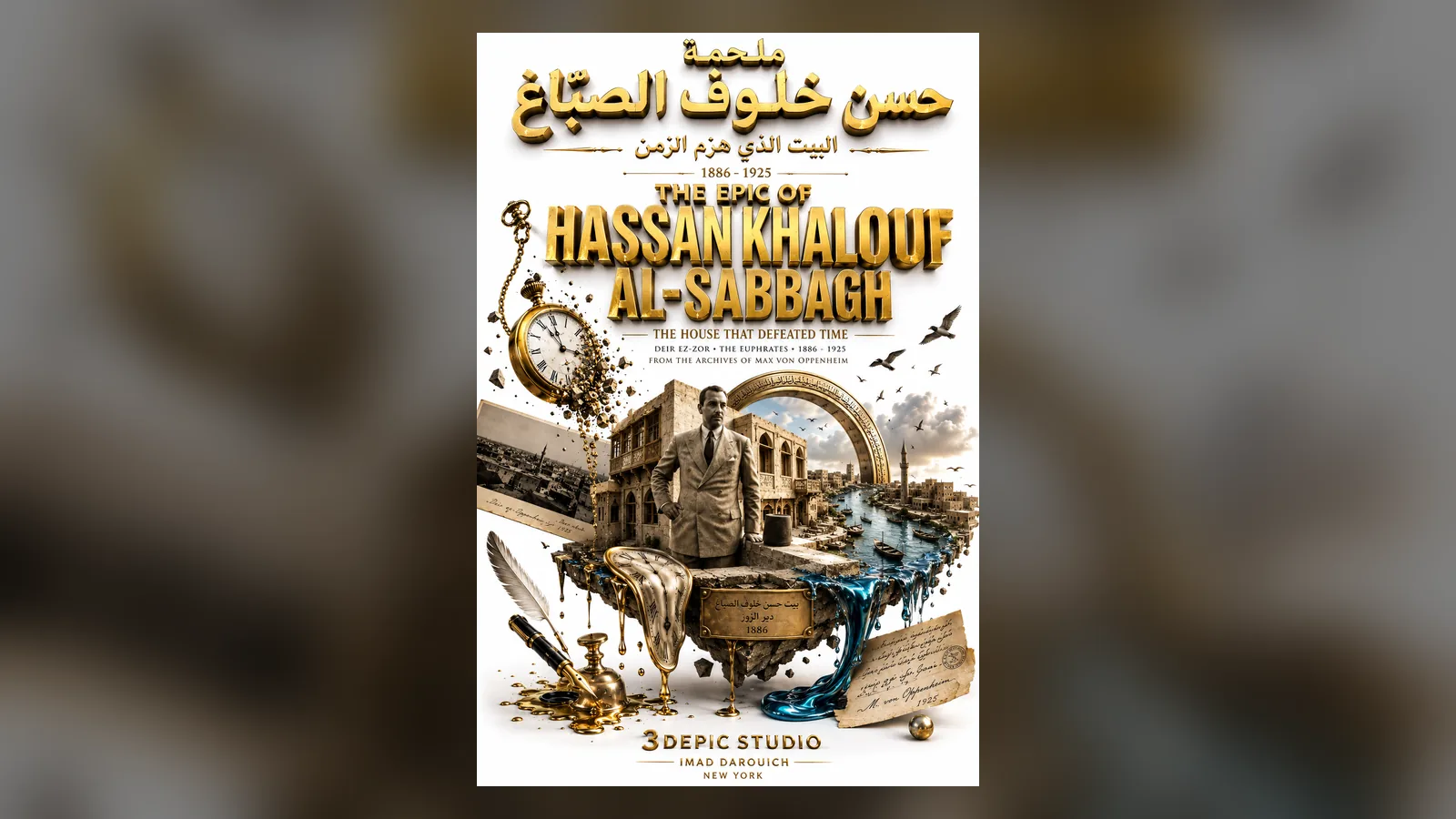
This prose poem follows a historic house in Deir ez-Zor, built in 1886 beside the Euphrates by Hassan Khalouf Al-Sabbagh of one of the city's founding families. The German orientalist Max von Oppenheim photographed it in 1925, the picture waited in an archive in Berlin, and nearly a century later it reached the builder's grandson, Marwan, to whom Imad speaks.
ليس كلُّ بيتٍ يُكتبُ له أن يعيش مئةً وأربعين عاماً. Not every house is destined to live for one hundred and forty years.
وليس كلُّ رجلٍ يخرجُ من صورةٍ التُقطت عام 1925 ليصافح أحفادَه بعد قرنٍ كامل. Nor does every man step out of a photograph taken in 1925 to shake hands with his descendants a century later.
وليس كلُّ أرشيفٍ في برلين يستطيع أن يحتجز روحَ دير الزور. Nor can every archive in Berlin imprison the soul of Deir ez-Zor.
قبل أن تُولد جمهورياتٌ وتسقط إمبراطوريات. Before republics were born and empires collapsed.
وقبل أن تعرف المنطقة النفط والحدود والأسلاك الشائكة. Before the region knew oil, borders, and barbed wire.كان بيتُ حسن خلوف الصبّاغ قائماً هناك. The house of Hassan Khalouf Al-Sabbagh already stood there.
يراقب الفرات وهو يعبر الأرض كملكٍ عجوز. Watching the Euphrates cross the land like an ancient king.
لا كنهرٍ من ماء. Not as a river of water.
بل كنهرٍ من التاريخ. But as a river of history.
فالفرات ليس نهراً فحسب. For the Euphrates is not merely a river.
إنه أبٌ من آباء الحضارة. He is one of the fathers of civilization.
وشاهدٌ على آلاف الممالك التي جاءت ورحلت. A witness to thousands of kingdoms that came and departed.
كان الفرات يمرُّ تحت نوافذ البيت. The Euphrates passed beneath the house’s windows.
ويرى القوافل القادمة من حلب والموصل وبغداد. And watched caravans arriving from Aleppo, Mosul, and Baghdad.
ويرى التجار والشيوخ والفرسان. He saw merchants, elders, and horsemen.
ويرى أبناء دير الزور وهم يبنون المدينة حجراً فوق حجر. And saw the people of Deir ez-Zor build their city stone by stone.
ومن بينهم كانت عائلة الصبّاغ. Among them stood the Al-Sabbagh family.
واحدةً من العائلات المؤسسة. One of the founding families.
التي لم تكتب اسمها بالحبر. Who did not write its name in ink.
بل كتبته بالعمل والهيبة والكرامة. But with labor, dignity, and honor.ثم جاء المستشرق الألماني ماكس فون أوبنهايم. Then came the German orientalist Max von Oppenheim.
يجمع الحكايات والصور والوثائق. Collecting stories, photographs, and documents.
وكان يظن أنه يوثّق مدينة. He thought he was documenting a city.
لكنه في الحقيقة كان يوثّق زمناً كاملاً. But in truth, he was documenting an entire age.
وحين رفع عدسته نحو بيت حسن خلوف الصبّاغ. And when he raised his camera toward the house of Hassan Khalouf Al-Sabbagh.
لم يكن يلتقط صورة. He was not taking a photograph.
بل كان يجمّد لحظةً من الخلود. He was freezing a moment of eternity.
أرى حسن خلوف الصبّاغ في تلك الصورة. I see Hassan Khalouf Al-Sabbagh in that photograph.
واقفاً ببدلته الأنيقة. Standing in his elegant suit.
وكأن الزمن توقف احتراماً له. As though time itself paused out of respect.
لا يبدو رجلاً من الماضي. He does not appear to be a man of the past.
بل يبدو كأنه خرج لتوّه من باب التاريخ. He looks as if he has just stepped out of history’s doorway.
ويقول لنا: And says to us:
“الأعمار قصيرة. “Lives are short.
أما الأثر فطويل.” But legacy is long.”
يا مروان… O Marwan…
أيُّ سحرٍ هذا؟ What magic is this?
بعد مئة عامٍ تقريباً. After nearly a century.
تسافر صورةُ الجد من دير الزور إلى برلين. Your grandfather’s image travels from Deir ez-Zor to Berlin.
ثم تعود من برلين إلى حفيده. Then returns from Berlin to his grandson.
كأن الفرات نفسه أرسل رسولاً عبر الزمن. As if the Euphrates himself sent a messenger through time.
ليقول: To say:
“الأسماء الحقيقية لا تضيع.” “True names are never lost.”
وفي لحظةٍ من جنون الذاكرة الجميل. And in a moment of beautiful madness.
أكاد أرى الفرات يخرج من مجراه. I almost see the Euphrates leave his riverbed.
ويرتدي عباءةً من الضوء. And wear a cloak of light.
ويمشي بين شوارع دير الزور القديمة. Walking through the old streets of Deir ez-Zor.
يطرق أبواب البيوت العتيقة. Knocking on ancient doors.
وينادي أصحابها واحداً واحداً. Calling their owners one by one.
فيخرج حسن خلوف الصبّاغ. And Hassan Khalouf Al-Sabbagh emerges.
ويخرج معه البناؤون والتجار والشعراء والفرسان. Alongside builders, merchants, poets, and horsemen.
فتتحول المدينة كلها إلى موكبٍ من الذكريات المضيئة. And the entire city becomes a procession of luminous memories.
هذا ليس بيتاً عمره 1886 فقط. This is not merely a house built in 1886.
هذا شاهدُ عهدٍ عثماني. It is a witness to the Ottoman era.
وشاهدُ ولادة الدولة السورية الحديثة. A witness to the birth of modern Syria.
وشاهدُ الاحتلالات والثورات والتحولات. A witness to occupations, revolts, and transformations.
وشاهدُ بقاء دير الزور رغم كل ما مرّ بها. A witness to Deir ez-Zor’s endurance through everything.
فيا مروان خلوف الصبّاغ. So, Marwan Khalouf Al-Sabbagh.
لا تفتخر لأنك وجدت صورةً لجدك. Do not be proud merely because you found your grandfather’s photograph.
بل افتخر لأن التاريخ وجدك أنت. Be proud because history found you.
واختارك لتكون أمين هذه الذاكرة. And chose you to guard this memory.
فالرجال نوعان. For there are two kinds of men.
رجالٌ يمرّون في التاريخ. Those who pass through history.
ورجالٌ يمرّ التاريخ من خلالهم. And those through whom history itself passes.
وأحسب أن حسن خلوف الصبّاغ كان من الصنف الثاني. And I believe Hassan Khalouf Al-Sabbagh belonged to the latter.
وأن الفرات ما زال يحفظ اسمه. And that the Euphrates still remembers his name.
كما يحفظ أسماء المدن التي أحبّها. Just as he remembers the cities he loved.
لأن البيوت العظيمة لا تسكن الأرض فقط… بل تسكن الزمن نفسه. Great houses do not inhabit land alone… they inhabit time itself.
بقلم المهندس المعماري عماد درويشBy Architect Imad Darouich · New York, 2026
For more houses and cities that keep their memory, read Bayt Nizam: Architecture of the Soul in Damascus and The Book of Stone and Spirit: Poems of Buildings in Syria, both in the buildings and cities collection.

Written by
بقلم المهندس المعماري عماد درويش
Architect and author based in New York. He writes contemporary epics: long-form books about architects, buildings, cities and faith, in Arabic and English.