When the Wind Entered the Architect's Studio: Eastgate Centre, Harare
حين دخلت الريحُ مكتبَ المعماري
An architect stands before Mick Pearce's Eastgate Centre and asks where a building leaves room for the wind, the light and the tired body.
By Architect Imad Darouich4 min read
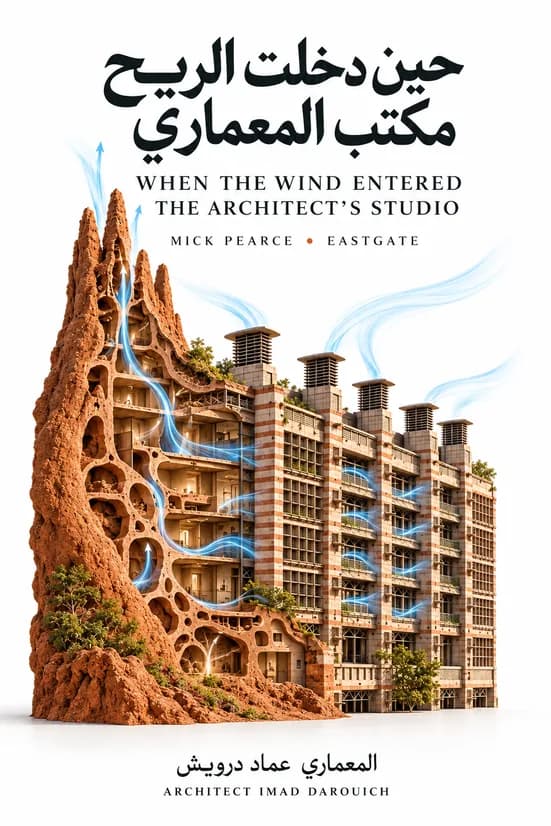
The Eastgate Centre is an office and shopping building in central Harare, Zimbabwe, designed by the architect Mick Pearce with the engineers Arup and opened in 1996; Pearce modelled its natural cooling on the way termite mounds keep air moving. Imad's Eastgate Centre Harare poem, in Arabic and English, imagines the wind walking into Pearce's studio and asks what every line on a drawing means for the people who will live with it.
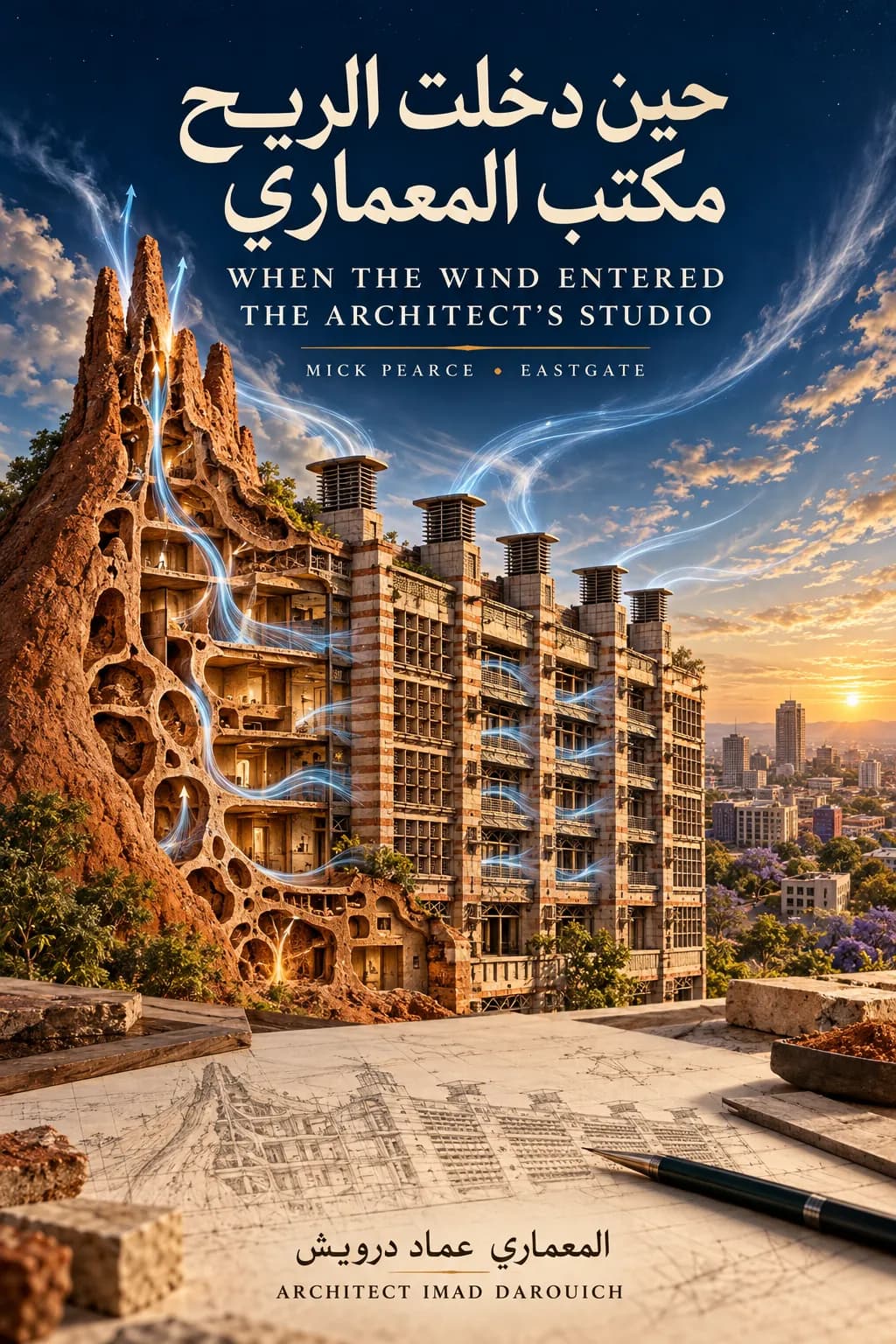
تنويه: هذه الملحمة تأملٌ بصوتي، كمعماري، في تجربة ميك بيرس ومركز إيستغيت في هراري، زيمبابوي، المكتمل عام 1996؛ حيث ألهمت تلال النمل الأبيض فكرة التهوية والتبريد. النظام يستفيد من الكتلة الحرارية وبرودة الليل، ويستخدم مراوح؛ أما الرئات والحوارات الآتية فهي لغة الشعر.A note: This epic is a reflection in my voice, as an architect, on Mick Pearce and Eastgate Centre in Harare, Zimbabwe, completed in 1996, where termite mounds inspired an approach to ventilation and cooling. The system uses thermal mass, cool night air, and fans; the lungs and conversations that follow belong to poetry.
أنا معماري.I am an architect.
أعرف كيف يُرفع الجدار.I know how a wall is raised.
لكنني أقف طويلًا أمام من علّمه التنفّس.But I stand in wonder before someone who taught it to breathe.
في تلك الكتلة الترابية، رأيت سؤالًا يهزّ طاولة الرسم.In that mound of earth, I saw a question shake the drawing board.
ماذا لو كانت أصغرُ حياةٍ تحت أقدامنا، أوسعَ معرفةً من غرورنا؟What if the smallest life beneath our feet knew more than our arrogance?
كان النمل الأبيض يحفر.The termites were digging.
وكان في الحفر درسٌ لم ينتظر جامعة.And within that digging lay a lesson that had never waited for a university.
ممرٌّ للهواء.A passage for air.
منفذٌ للاختناق.An escape from suffocation.
وحياةٌ تستمرّ لأن الطريق لم يُغلق.And life continuing because the passage remained open.
انحنى ميك بيرس أمام التراب.Mick Pearce bent toward the earth.
ومن ذلك الانحناء، ارتفعت فكرة.From that act of bending, an idea rose.
أحبّ هذه اللحظة.I love that moment.
لحظةَ يصبح فيها الإنصاتُ أداةَ بناء.The moment listening becomes a building tool.
ولحظةَ تتراجع فيها الأنا، ليتّسع المخطّط.The moment the ego steps back, allowing the plan to grow.
أتخيّل الريح تدخل مكتبه.I imagine the wind entering his studio.
تبعثر الأوراق.Scattering his papers.
تمرّ فوق المسطرة.Passing over his ruler.
ثم تسأله:Then asking him:
أين تركتَ لي مكانًا؟Where have you left room for me?
ذلك سؤالٌ أضعه اليوم على طاولتي.That is a question I place upon my own desk today.
أين مكان الريح؟Where is the wind’s place?
أين طريق الضوء؟Where is the light’s passage?
وأين يذهب تعب الإنسان حين يعود إلى بيته؟And where does a person’s weariness go when they return home?
في إيستغيت، صار الليل جزءًا من الفكرة.At Eastgate, the night became part of the idea.
وصارت كتلة المبنى شريكًا في التعامل مع الحرارة.And the building’s mass became a partner in managing heat.
وأنا أرى في ذلك صورةً تليق بالعمارة:And in this, I see an image worthy of architecture:
أن يحتفظ الجدارُ بشيءٍ من الليل، ليعين الإنسان على النهار.A wall keeping something of the night to help a person through the day.
يا لها من وصيةٍ للخرسانة.What a calling for concrete.
ويا لها من مسؤوليةٍ على عاتق الحجر.What a responsibility laid upon stone.
فالحرارة التي نهملها في الرسم، يسكنها أحدٌ بجسده.The heat we neglect in a drawing is endured by someone’s body.
والنافذة التي نضعها بلا تفكير، يعيش خلفها عمر.Behind a window we place without thought, an entire life unfolds.
والقرار الصغير على الورق، قد يصبح تعبًا يوميًّا في غرفة.A small decision on paper can become daily hardship in a room.
لهذا أحمل قلمي بحذر.That is why I hold my pencil with care.
كلُّ خطٍّ احتمالُ حياة.Every line holds the possibility of a life.
وكلُّ فراغٍ أمانة.Every space is entrusted to us.
أتذكّر فناءً قديمًا.I remember an old courtyard.
ظلًّا يصل قبل الظهيرة.Shade arriving before noon.
وماءً يترك برودته في الهواء.Water leaving its coolness in the air.
كانت بيوتٌ تعرف كيف تستقبل الفصول.There were homes that knew how to welcome the seasons.
وأريد لعمارتنا أن تستعيد تلك القدرة على الإصغاء.I want our architecture to regain that ability to listen.
أن نجلس أمام الموقع قبل أن نفرض عليه شكلًا.To sit before a site before imposing a form upon it.
أن نقرأ الشمس.To read the sun.
أن نتتبّع الظل.To follow the shade.
أن نفهم من أين يأتي الهواء، ولمن نبني.To understand where the air comes from, and whom we are building for.
ميك بيرس، في تجربتك ما يعيدني إلى أصل مهنتي.Mick Pearce, something in your work brings me back to the heart of my profession.
إلى الإنسان الذي سيجلس قرب النافذة.To the person who will sit beside the window.
إلى العامل الذي سيقضي نهاره في الداخل.To the worker who will spend the day inside.
إلى الأرض التي تدفع ثمن قراراتنا.To the earth that bears the cost of our decisions.
أريد مبنى يستحقّ الأرض التي يقف عليها.I want a building worthy of the earth it stands upon.
ومساحةً يخرج منها الإنسان أقلَّ تعبًا.And a space from which a person emerges less weary.
وحجرًا يجد فيه الهواءُ طريقه.And stone through which the air can find its way.
فقد يكون أعظمُ ما نبنيه…For perhaps the greatest thing we build…
مكانًا تستطيع فيه الحياةُ أن تواصل أنفاسها.Is a place where life can keep breathing.
Hassan Fathy, the Egyptian architect who brought mud brick back into building, is the subject of Somewhere I Can Stop Leaving: A Poem About Hassan Fathy and Home, and The Human at the Heart of Design: Organic Architecture as an Invitation to Life asks what it means to build for people. More readings of buildings are in the buildings and cities collection.
Written by
Architect Imad Darouich
المهندس المعماري عماد درويش
Architect, author and founder of 3DEPICS, based in New York. He writes epic literature that crosses borders, languages and geographies, where philosophy meets architecture, spirituality meets history and memory meets imagination.