 3DEPICS
The Epic of the Eastern Door of the Umayyad Mosque
ملحمة الباب الشرقي للجامع الأموي
For fourteen centuries caliphs, scholars, travelers and children carrying bread have passed through one door in Damascus.
By Architect Imad DarouichUpdated 4 min read
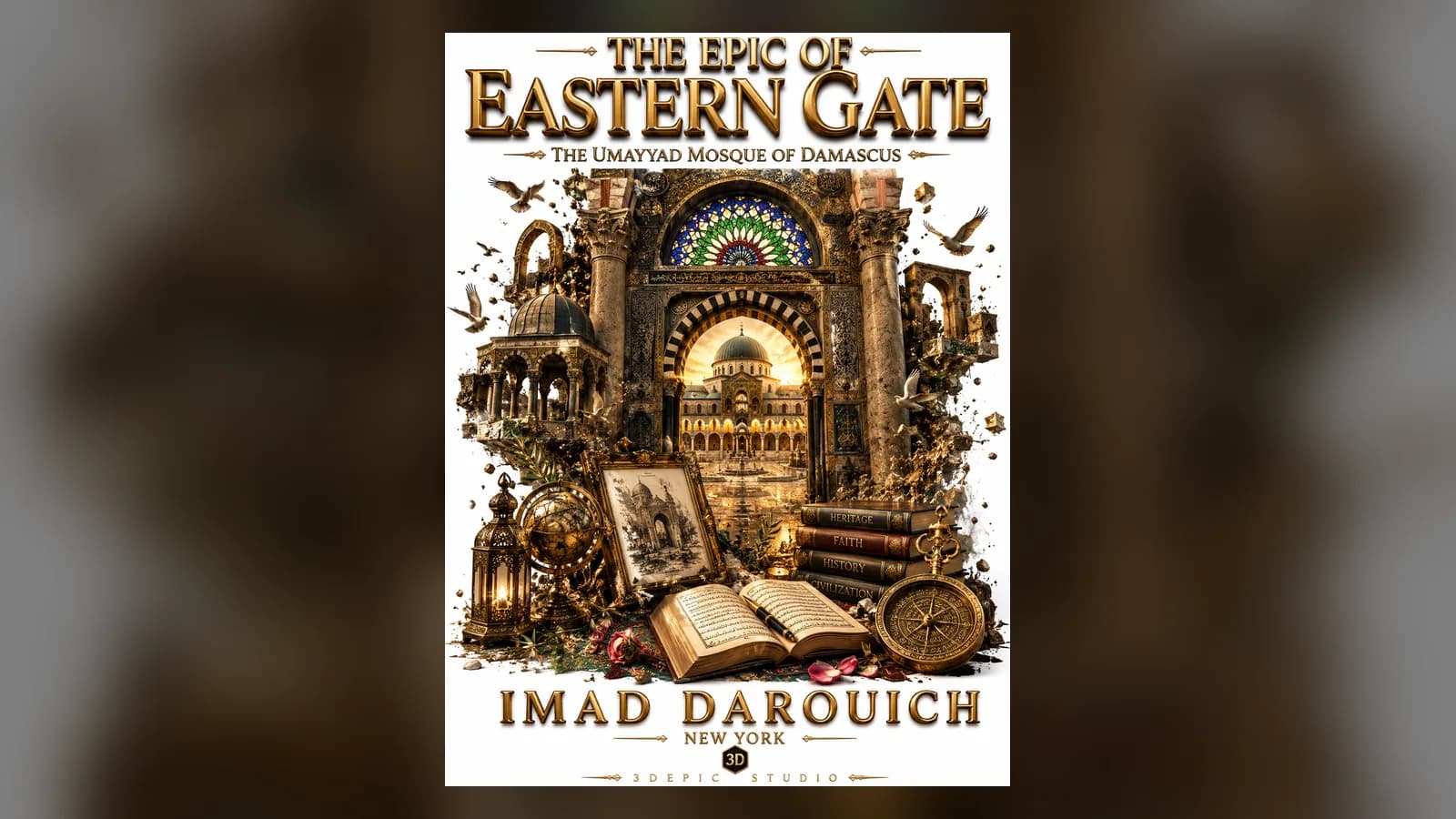
This prose epic stands at the eastern door of the Umayyad Mosque in Damascus and reads it as a hinge between two ages. Imad recalls the Caliph Al-Walid ibn Abd al-Malik, who began the mosque in 705, the scholars Al-Awza'i, Al-Nawawi and Ibn Taymiyyah, Tamerlane's army in 1401, and the travelers Ibn Battuta and Mark Twain, under mosaics that try to paint paradise.
هذا ليس باباً.This is not a door.
إنه مفصلٌ بين زمنين.It is a hinge between two ages.
كل من مرّ من هناEvery soul who passed here
لم يكن يدخل مسجداً فقط،was not entering a mosque alone,
بل كان يدخل قلب دمشق.but entering the heart of Damascus.
هنا، تحت هذه الأقواس المزينة بالفسيفساء،Here, beneath these arches woven with mosaics,
يتحول الحجر إلى ذاكرة.stone transforms into memory.
وتصبح الأعمدة شهوداً على ألف وأربعمئة عام من الحياة.And the columns become witnesses to fourteen centuries of life.
عندما بدأت الحكاية
عام 705 ميلادية In the year 705 AD
وقف الخليفة الأموي الوليد بن عبد الملك هنا.The Umayyad Caliph Al-Walid ibn Abd al-Malik stood here.
الوليد بن عبد الملك(668–715) Al-Walid ibn Abd al-Malik (668–715)
هو الخليفة الأموي الذي جعل دمشق عاصمة حضارية للعالم الإسلاميwas the Umayyad ruler who transformed Damascus into a cultural capital of the Islamic world,
وأمر ببناء الجامع الأموي على أنقاض كنيسة يوحنا المعمدان.and ordered the construction of the Umayyad Mosque on the site of the Church of John the Baptist.
أراد أن يكون المسجد صورةً عن الجنة.He wanted the mosque to resemble paradise.
لذلك استُدعيت الحجارة من أنطاكية،So stones were brought from Antioch,
والفسيفساء من القسطنطينية،mosaics from Constantinople,
والحرفيون من كل أرجاء البحر المتوسط.and artisans from across the Mediterranean.
قيل إن الإمبراطور البيزنطي أرسل مئة فنان ليعملوا هنا.It is said the Byzantine emperor sent one hundred artists to work here.
مدينة العلماء
مرّ من هذه الأبواب علماء الشام.Through these doors passed the scholars of Syria.
الإمام الأوزاعي(707–774) Imam Al-Awza‘i (707–774)
فقيه الشام الكبير ومؤسس أحد أقدم المذاهب الفقهية في الإسلام،the great jurist of Syria and founder of one of the earliest schools of Islamic law,
كان يمشي في أزقة دمشق متواضعاً رغم علمه الواسع.who walked the streets of Damascus with humility despite his vast knowledge.
بعد قرون،Centuries later,
جلس في دمشق عالم آخر.another scholar lived in the city.
الإمام النووي(1233–1277) Imam Al-Nawawi (1233–1277)
عالم الحديث والفقه الشهير،a renowned scholar of Hadith and jurisprudence,
الذي كتب كتاب رياض الصالحينwho authored the famous book Riyad al-Salihin
الذي ما زال يقرأ في كل العالم الإسلامي.still read across the Muslim world.
وفي القرن الرابع عشرAnd in the fourteenth century
خطب في دمشق عالمٌ جدليٌّ قوي.a powerful and controversial scholar preached here.
ابن تيمية(1263–1328) Ibn Taymiyyah (1263–1328)
المفكر الإسلامي الذي واجه الغزو المغولي ودعا إلى إصلاح الفكر الديني.the Islamic thinker who confronted the Mongol invasions and called for religious reform.
دمشق تحت العواصف
في عام1401 In the year 1401
وصل إلى دمشق جيش رهيب.a terrifying army reached Damascus.
جيش تيمورلنك.The army of Tamerlane.
تيمورلنك(1336–1405) Tamerlane (1336–1405)
القائد المغولي الذي بنى واحدة من أعظم إمبراطوريات آسيا الوسطى،the Mongol conqueror who built one of the greatest empires of Central Asia,
دخل دمشق بالنار والسيوف.entered Damascus with fire and swords.
لكن المسجد الأموي بقي واقفاً. Yet the Umayyad Mosque remained standing.
وكأن الحجر نفسه رفض أن يسقط. As if the stone itself refused to fall.
عندما مرّ الرحالة
في القرن الرابع عشرIn the fourteenth century
دخل دمشق رجل من طنجة.a traveler from Tangier entered Damascus.
ابن بطوطة(1304–1369) Ibn Battuta (1304–1369)
أعظم رحالة في التاريخ الإسلامي،the greatest traveler in Islamic history,
الذي قطع أكثر من مئة ألف كيلومتر عبر العالم القديم.who traveled over one hundred thousand kilometers across the known world.
كتب عن دمشق قائلاً إنها مدينة تفيض بالعلم والجمال.He wrote that Damascus overflowed with knowledge and beauty.
وبعده بخمسة قرونFive centuries later
وصل كاتب أمريكي إلى دمشق.an American writer arrived in Damascus.
مارك توين(1835–1910) Mark Twain (1835–1910)
الأديب الساخر الشهير،the famous satirical writer,
الذي وصف دمشق بأنهاwho described Damascus as
“أقدم مدينة مأهولة في العالم.”“the oldest inhabited city on earth.”
السقف الذي يشبه السماء
انظر إلى هذا السقف.Look at this ceiling.
الفسيفساء ليست زخرفة فقط.The mosaics are not mere decoration.
إنها محاولة لرسم الجنة.They are an attempt to paint paradise.
أشجار ذهبيةGolden trees
أنهار خضراءGreen rivers
مدن معلقة في الضوء.Cities suspended in light.
الفنان الأموي لم يكن يرسم حجراً.The Umayyad artist was not painting stone.
كان يرسم الحلم.He was painting a dream.
الباب الذي لا يشيخ
منذ أربعة عشر قرناًFor fourteen centuries
يمر الناس من هنا.people have passed through here.
خلفاء.Caliphs.
علماء.Scholars.
فقراء.The poor.
أطفال يحملون الخبز.Children carrying bread.
العالم كله مرّ من هنا.The whole world has passed here.
لكن الحجر بقي.Yet the stone remains.
والقوس بقي.And the arch remains.
والنور الذي يدخل من البابAnd the light that enters through the door
ما زال هو نفسه منذ ألف عام.is the same light that shone a thousand years ago.
دمشق
دمشق ليست مدينة.Damascus is not a city.
إنها طبقات من الزمن.It is layers of time.
كل حجر فيهاEvery stone in it
هو صفحة من كتاب التاريخ.is a page from the book of history.
وهذا الباب الشرقيAnd this eastern door
ليس مدخلاً لمسجد فقط.is not merely the entrance to a mosque.
إنه مدخلٌ إلى روح دمشق نفسها.It is an entrance into the very soul of Damascus.
بقلم المهندس المعماري عماد درويشBy Architect Imad Darouich · New York
For more on the mosque and its city, read The Mosque: Architecture of the Soul and Islamic Art and Damascus: The Book of Presence and Absence; the second is in the buildings and cities collection.
Written by
بقلم المهندس المعماري عماد درويش
Architect and author based in New York. He writes contemporary epics: long-form books about architects, buildings, cities and faith, in Arabic and English.